
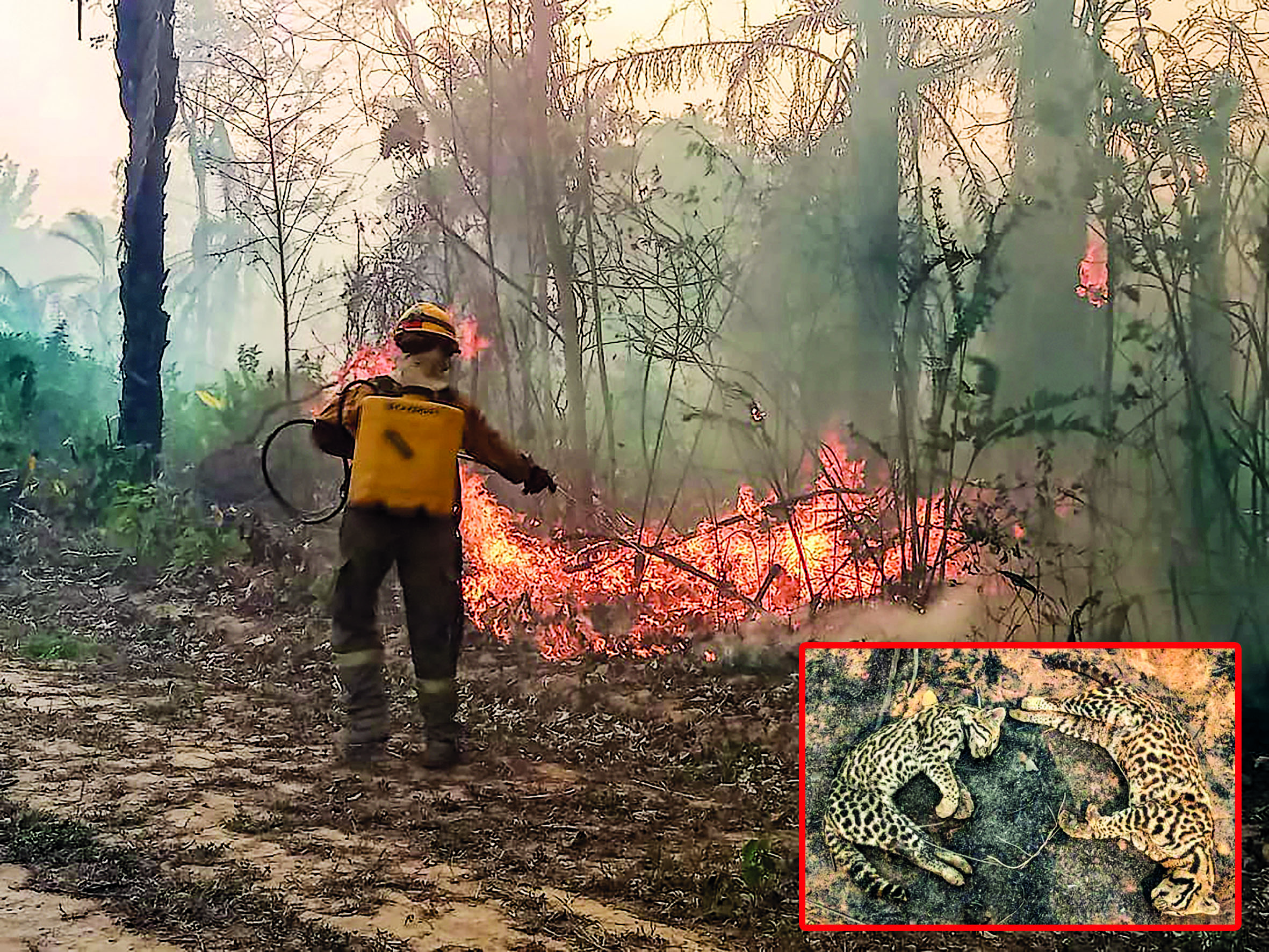
The prolonged forest fire registered in several regions of the country will have consequences that will be reflected in the reduction of the production of some foods.
Given the delayed reaction to stop fires in the country
- The consequences of thousands of hectares of forest burned and thousands of other dead animals will cause low production of some foods and diseases, said Vicky Ossio of Senda Verde.
- Most of the food for La Paz comes from Alto Beni and Palos Blancos, and several of these places are burned. Likewise, Ossio pointed out that about six million animals have died.
The loss of thousands of hectares of forest due to devastating fires and uncontrolled logging, in addition to thousands of dead animals and pollution will bring a “complicated food crisis” to the country, which will be reflected in the low production of some foods and possible presence of diseases, said the co-founder of the Senda Verde wild animal shelter, Vicky Ossio.
“What we have experienced has been a collective suicide, we are killing ourselves, this should not have happened, the only thing that can guarantee our life is nature”, but “about six million animals have died, how many million of pollinators, of insects, have they died? So, now we are facing a “terrible food crisis,” because we need all of them to survive,” Osorio told EL DIARIO.
According to Ossio, among some of the actions that should be done for resilience are continuing to mitigate all fires, planning repopulation of flora and fauna, in addition to thinking as a country about changing strategies for progress.
For his part, the biologist and researcher at the Autonomous University of Beni José Ballivián, Vincent Vos, agreed that “the fires will have terrible consequences.” Likewise, he said that at the level of South America, 96% of the continent’s biodiversity was lost.
Despite the late reaction in mitigation efforts, the intense rains put out the forest fires that were suffocating part of Bolivia, but their emergency has now jumped to intense storms on the horizon, the central government reported yesterday.
Ante tardía reacción para detener incendios en el país
- Las consecuencias de miles de hectáreas de bosque quemadas y otros miles de animales muertos ocasionarán baja producción de algunos alimentos y enfermedades, dijo Vicky Ossio de Senda Verde.
- La mayor parte de alimentos para La Paz provienen de Alto Beni y Palos Blancos, y varios de estos lugares están quemados. Asimismo, Ossio puntualizó que han muerto como seis millones de animales.
La pérdida de miles de hectáreas de bosque por los devastadores incendios provocados y el chaqueo sin control, además de otros miles de animales muertos y la contaminación traerán una “crisis alimenticia complicada” al país, que se reflejará en la poca producción de algunos alimentos y posible presencia de enfermedades, sostuvo la cofundadora del refugio de animales silvestres Senda Verde, Vicky Ossio.
“Lo que hemos vivido ha sido un suicidio colectivo, nos estamos matando a nosotros mismos, no debió haber sucedido esto, lo único que nos puede garantizar la vida es la naturaleza”, pero “han muerto como seis millones de animales, ¿cuántos millones de polinizadores, de insectos, han muerto?, entonces, ahora se nos viene una “crisis alimenticia terrible”, porque necesitamos de todos ellos para sobrevivir”, dijo Osorio a EL DIARIO.
Según Ossio, entre algunas de las acciones que deberían hacerse para la resilencia está el continuar con la mitigación de todos los incendios, planificar repoblación de flora y fauna, además de pensar como país en el cambio de estrategia para el progreso.
Por su parte, el biólogo e investigador de la Universidad Autónoma de Beni José Ballivián, Vincent Vos, coincidió en que “los incendios traerán terribles consecuencias”. Asimismo, dijo que a nivel de Sudamérica, se perdió el 96% de la biodiversidad del continente.
A pesar de la tardía reacción en las labores de mitigación, las intensas lluvias apagaron los incendios forestales que asfixiaban parte de Bolivia, pero su emergencia ahora saltó hacia intensos temporales en puertas, informó ayer el Gobierno central.
https://www.eldiario.net/portal/2023/11/26/perdida-de-la-biodiversidad-originara-crisis-alimentaria/

 Bolivian Thoughts | Pensamientos Bolivianos (Bilingual/Bilingüe)