By Álvaro Rosales, Unitel:
Chamber of Commerce:
The president of the CNC also raised other proposals to the Rodrigo Paz administration, such as the need to make transparent the real situation of fuel imports, payments made, and available volumes
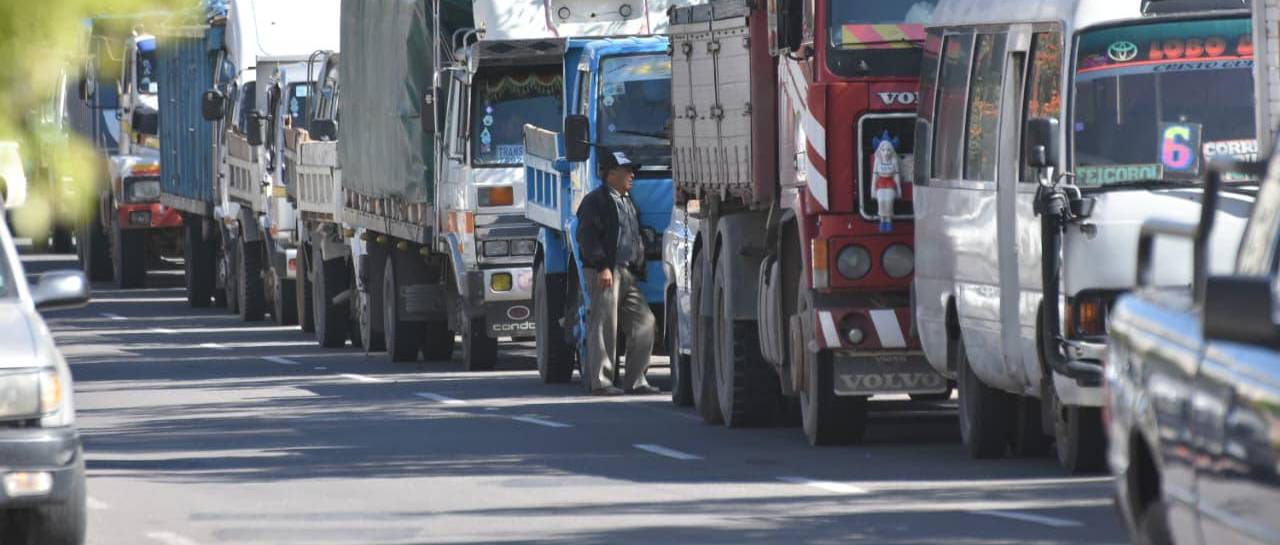
[Photo: APG] / Photo taken in La Paz, where lines continue to persist
The president of the National Chamber of Commerce (CNC), Eduardo Olivo, stated that Bolivia must allow the private sector to import fuels as a structural measure to confront the supply failures that have been occurring for several days across the national territory.
“Bolivia needs to allow the private sector to import and supply consumers directly,” the executive said in a video released this Friday, considering that the liberalization of fuel imports must be assumed as “an unavoidable structural decision.”
Olivo referred to this issue in a context in which lines are multiplying in search of timely supply, a matter that has different sectors of the national productive apparatus uneasy as they watch the same problems that were recorded during the administration of Luis Arce begin to reappear, among them the reactivation of the diesel black market.
For the CNC leader, the current “closed scheme” has proven to be inefficient, and opening the market does not respond to an ideological position but rather to a national economic urgency, thus asking the authorities to make more decisions instead of giving explanations.
Likewise, he considered that the supply problem is not an isolated event, but the result of the lack of foresight, planning, and execution of timely measures.
Meanwhile, the Minister of Hydrocarbons, Marcelo Blanco, said that they are in continuous operation to restore supply, adding that there is active distribution, monitoring in the field, and permanent control to guarantee that fuel reaches where it has to go.
For his part, the president of YPFB, Sebastián Daroca, reported that during the day 2 million liters of diesel were dispatched from Senkata to La Paz and El Alto, and also stated that a significant volume of fuel is being imported through April 28, with more than 1,200 tanker trucks in transit.
The CNC complemented its proposal with the need for an immediate, effective, and public emergency plan aimed at guaranteeing fuel for the productive sectors, prioritizing the food chain, transportation, and the activities that sustain national supply.
“The country has the right to know the real situation of fuel imports, payments made, available volumes, and the certainty of supply in the coming weeks and months,” Olivo added in his statement, emphasizing that each day of paralysis generates losses exceeding 54 million dollars due to delays in the flow of international cargo.
Por Álvaro Rosales Melgar, Unitel:
Cámara de Comercio:
El presidente de la CNC elevó también otros planteamientos a la administración de Rodrigo Paz como la necesidad de transparentar la situación real de las importaciones de combustible, pagos realizados y volúmenes disponibles
[Foto: APG] / Foto tomada en La Paz, donde las filas persisten
El presidente de la Cámara Nacional de Comercio (CNC), Eduardo Olivo, planteó que Bolivia debe permitir la importación de combustibles por parte del sector privado como una medida estructural para enfrentar las fallas en el abastecimiento que se vienen registrando desde hace varios días en territorio nacional.
“Bolivia necesita permitir que el sector privado importe y abastezca directamente a los consumidores”, sostuvo el ejecutivo en un video difundido este viernes al considerar que la liberación de la importación de carburantes debe asumir como “una decisión estructural impostergable”.
Olivo hizo referencia a este tema en un escenario en el que proliferan las filas en busca de un abastecimiento oportuno, tema que tiene intranquilos a diferentes sectores del aparato productivo nacional que ven cómo vuelven a asomar los mismos problemas que se registraron durante la gestión de Luis Arce, entre ellos la reactivación del mercado negro del diésel.
Para el dirigente de la CNC, el actual ‘esquema cerrado’ ha demostrado ser ineficiente y que abrir el mercado no responde a una postura ideológica, sino a una urgencia económica nacional, pidiendo así a las autoridades tomar más decisiones en lugar de dar explicaciones.
Asimismo, contempló que el problema del abastecimiento no es un hecho aislado, sino el resultado de la falta de previsión, planificación y ejecución de medidas oportunas.
Mientras tanto, el ministro de Hidrocarburos, Marcelo Blanco expresó que se encuentran en operación continua para restablecer el abastecimiento, agregando que hay distribución activa, seguimiento en territorio y control permanente para garantizar que el combustible llegue donde tiene que llegar.
Por su parte, el presidente de YPFB, Sebastián, Daroca informó que durante la jornada se despacharon 2 millones de litros de diésel desde Senkata hacia La Paz y El Alto, así como reportó que se está importando un volumen importante de combustible hasta el 28 de abril, con más de 1.200 cisternas en tránsito.
La CNC complementó su planteamiento con la necesidad de un plan de emergencia inmediato, efectivo y público, con miras a garantizar combustible para los sectores productivos, priorizando la cadena alimentaria, el transporte y las actividades que sostienen el abastecimiento nacional.
“El país tiene derecho a conocer la situación real de las importaciones de combustible, pagos realizados, volúmenes disponibles y la certeza del abastecimiento en las próximas semanas y meses”, agregó Olivo en su declaración al resaltar que que cada día de paralización genera pérdidas superiores a 54 millones de dólares por retrasos en el flujo de carga internacional.


Leave a Reply