By Vision 360:
Government Repeals Regulation on Base Milk Price and Allows Industries and Producers to Define New Sales Terms
Ministerial Resolution 170/2026 states that the purpose is to prevent speculation and monitor cost variations for both producers and consumers.
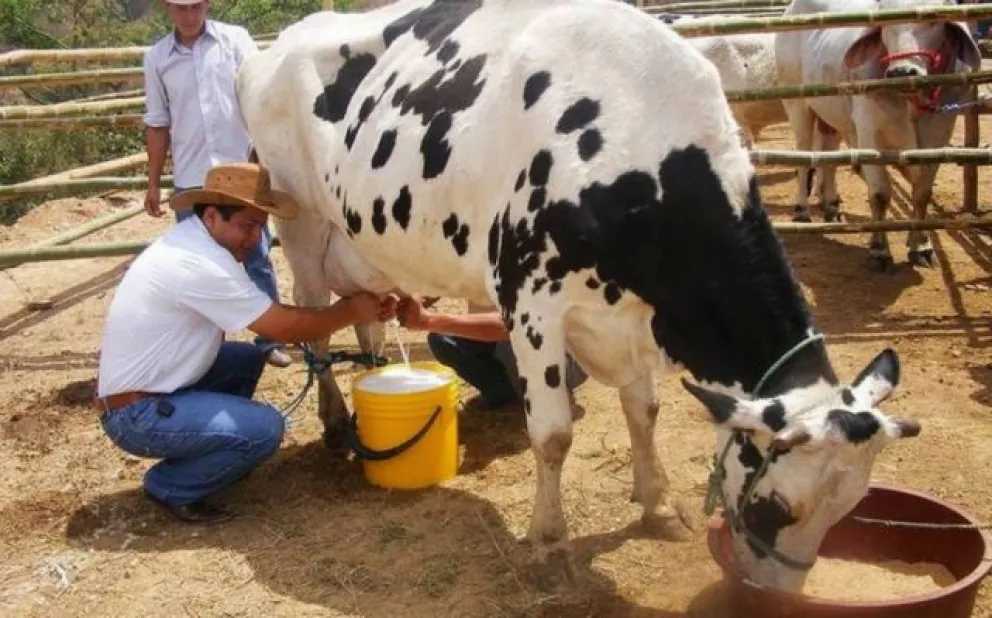
This measure came amid complaints from dairy producers, who had expressed their rejection of the regulation because it did not take into account real production costs, generating a distortion. Photo: El País
The national government has repealed Bi-Ministerial Resolution No. 003/2025, which regulated the base price of raw milk by dairy zone and the prices of pasteurized white fluid milk or white fluid milk sold to final consumers at agencies, thereby allowing producers and industries in the sector to define new sales conditions.
Through Resolution 175/2026, signed by acting Minister of Productive Development Mauricio Zamora, the government orders the repeal of Bi-Ministerial Resolution No. 003/2025, issued on May 2, 2025.
In a second point, it instructs the decentralized agency PRO-BOLIVIA to immediately implement mechanisms for strategic follow-up and price monitoring throughout the entire dairy chain.
The objective of this system is to prevent acts of speculation, monitor cost variations for both producers and consumers, and guarantee that the supply of essential dairy products for the Bolivian population remains constant and timely under a state surveillance system, the document states.
In addition, it orders the institutionalization of the Permanent Negotiation Table, which will operate under the supervision and coordination of PRO-BOLIVIA.
This measure was adopted in a context of complaints from dairy producers, who voiced their opposition to the regulation because it failed to reflect real production costs, thereby creating a distortion.
In recent hours, several citizens reported increases in prices: the 900 ml whole milk bag rose to Bs 8.90 and Bs 9.70; the lactose-free milk bag to Bs 10.50; and butter to Bs 23.50.
Bi-Ministerial Resolution No. 003/2025, approved during the government of former president Luis Arce, modified the price of raw milk by dairy zone: for the Altiplano zone (departments of La Paz, Oruro, and Potosí), at Bs 4.55 per liter; for the Valley zone (departments of Cochabamba, Chuquisaca, and Tarija), at Bs 4.50 per liter; and for the Tropical zone (departments of Santa Cruz, Beni, Tropical Cochabamba, Chaco Cruceño, Chaco Tarijeño, and Chaco Chuquisaqueño), at Bs 4.45 per liter.
In the case of white UHT fluid milk, the final consumer price at agencies, in 900 ml to 1,000 ml presentations, had a defined maximum price of Bs 6.80.
The resolution that the government has now repealed was framed around considering the agricultural sector as strategic for food production. “In order to guarantee its production and supply at a fair price, the State will take the necessary measures to ensure the timely and adequate availability of sufficient strategic food products capable of satisfying the nutritional needs of the Bolivian people,” the regulation stated.
Within that framework, the Vice Ministry of Industrialization Policies instructed PRO-BOLIVIA to immediately formulate and present regulations governing raw materials and finished products in the dairy complex, among other aspects.
This decision had been based on agreements between representatives of dairy producers nationwide and the national government, the Ministry of Productive Development and Plural Economy, and the Ministry of Rural Development and Lands, through which the base price of raw milk was agreed upon.
The document states that the industries PIL Andina S.A., ANDIL, SOALPRO, DELIZIA, Flor de Leche, PIL Tarija, PROLAC, EBA and others, together with the Ministry of Productive Development and Plural Economy, through the Vice Ministry of Industrialization Policies and PRO-BOLIVIA, agreed on the price of the selected dairy product (pasteurized white fluid milk or white UHT fluid milk) for the final consumer at agencies.
According to the resolution, these prices were nationwide in scope and mandatory for all industries established within national territory.
Likewise, the prices were applicable to milk production units located within a radius of 150 kilometers from processing plants. Only at distances greater than 150 kilometers could raw milk prices be lower due to transport, quality, and/or handling reasons.
A dairy industry able to demonstrate its status as an exporter and required to meet foreign demand could agree with the dairy producer on an export price for raw milk in accordance with the external market.
This price applied only in a complementary manner to the prices established for raw milk. The export price was activated only when there was a purchase-sale agreement with the producer, and this arrangement did not affect the volumes destined for the domestic market.
Por Vision 360:
Gobierno deja sin efecto regulación del precio base de la leche y permite que industrias y productores definan nuevas condiciones de venta
La Resolución Ministerial 170/2026 establece que el propósito es evitar la especulación y vigilar las variaciones de costos tanto para el productor como para el consumidor.
Esta medida se dio en una coyuntura de reclamos de los productores lecheros, quienes expresaban su rechazo a la regulación debido a que no contemplaba los costos reales de producción, lo que generaba una distorsión. Foto: El País
El Gobierno nacional dejó sin efecto la Resolución Bi Ministerial Nº 003/2025, que regulaba el precio base de la leche cruda por zona lechera y los precios de la leche fluida blanca pasteurizada o leche fluida blanca al consumidor final en agencias, dando lugar a que los productores e industrias del sector definan las nuevas condiciones de venta.
A través de la Resolución 175/2026, firmada por el ministro interino de Desarrollo Productivo, Mauricio Zamora, se instruye dejar sin efecto la Resolución Bi Ministerial Nº 003/2025, emitida el 2 de mayo de 2025.
En un segundo punto, instruye a la entidad desconcentrada PRO-BOLIVIA la implementación inmediata de mecanismos de seguimiento estratégico y monitoreo de precios de toda la cadena láctea.
El objetivo de este sistema es prevenir actos de especulación, vigilar las variaciones de costos al productor y al consumidor, y garantizar que el abastecimiento de productos lácteos esenciales para la población boliviana se mantenga constante y oportuno bajo un sistema de vigilancia estatal, menciona el documento.
Además, dispone la institucionalización de la Mesa de Concertación Permanente, la cual estará bajo la supervisión y coordinación de PRO-BOLIVIA.
Esta medida se dio en una coyuntura de reclamos de los productores lecheros, quienes expresaban su rechazo a la regulación debido a que no contemplaba los costos reales de producción, lo que generaba una distorsión.
En las últimas horas, varios ciudadanos reportaron el incremento de precios de la bolsa de leche entera de 900 ml a Bs 8,90 y Bs 9,70; la bolsa de leche deslactosada a Bs 10,50; y la mantequilla a Bs 23,50.
La Resolución Bi Ministerial Nº 003/2025, aprobada durante el Gobierno del expresidente Luis Arce, modificó el precio de la leche cruda por zona lechera: para la zona del Altiplano (departamentos de La Paz, Oruro y Potosí), en Bs 4,55 el litro; para la zona del Valle (departamentos de Cochabamba, Chuquisaca y Tarija), en Bs 4,50 el litro; y para la zona del Trópico (departamentos de Santa Cruz, Beni, Trópico de Cochabamba, Chaco Cruceño, Chaco Tarijeño y Chaco Chuquisaqueño), en Bs 4,45 por litro.
En el caso de la leche fluida blanca UHT, el precio al consumidor final en agencias, en presentaciones de 900 ml a 1.000 ml, tenía un precio máximo definido de Bs 6,80.
La resolución que el Gobierno dejó sin efecto se enmarcaba en considerar al sector agropecuario como estratégico para la producción de alimentos. “A fin de garantizar su producción y abastecimiento a precio justo, el Estado tomará las medidas necesarias para garantizar la oferta oportuna y adecuada de alimentos estratégicos suficientes que permitan satisfacer las necesidades de alimentación del pueblo boliviano”, señalaba la norma.
En ese marco, el Viceministerio de Políticas de Industrialización instruyó a PRO-BOLIVIA la formulación y presentación inmediata de una normativa que regule la materia prima y los productos terminados del complejo lácteo, entre otros aspectos.
Esta decisión se enmarcaba en acuerdos entre los representantes de los productores lecheros a nivel nacional y el Gobierno nacional, el Ministerio de Desarrollo Productivo y Economía Plural y el Ministerio de Desarrollo Rural y Tierras, mediante los cuales se acordó el precio base de la leche cruda.
El documento menciona que las industrias PIL Andina S.A., ANDIL, SOALPRO, DELIZIA, Flor de Leche, PIL Tarija, PROLAC, EBA y otras, junto con el Ministerio de Desarrollo Productivo y Economía Plural, a través del Viceministerio de Políticas de Industrialización y PRO-BOLIVIA, acordaron el precio del producto lácteo seleccionado (leche fluida blanca pasteurizada o leche fluida blanca UHT) al consumidor final en agencias.
Según la resolución, estos precios eran de alcance nacional y de cumplimiento obligatorio para todas las industrias establecidas en territorio nacional.
Asimismo, los precios eran aplicables a las unidades de producción de leche ubicadas dentro de un radio de 150 kilómetros de las plantas de transformación. Únicamente a distancias mayores a los 150 kilómetros, los precios de la leche cruda podían ser inferiores por razones de transporte, calidad y/o manipuleo.
La industria láctea que demostrara su condición de exportadora y debiera cumplir con la demanda externa podía acordar con el productor lechero un precio de exportación para la leche cruda acorde al mercado externo.
Este precio se aplicaba únicamente de manera complementaria a los precios para la leche cruda. El precio de exportación solo se activaba cuando existía un convenio de compra-venta con el productor, y este acuerdo no afectaba los volúmenes destinados al mercado interno.


Leave a Reply