
By Daniel Salazar Castellanos, Bloomberg Linea; Eju.tv:
Bolivia could face an “imminent collapse of air connectivity”; understand why
Amid the dollar shortage Bolivia has been facing for months, the Andean country faces other significant challenges, such as the high cost of fuel (US$3.75 per gallon) and “the lack of adequate bilateral agreements,” according to ALTA
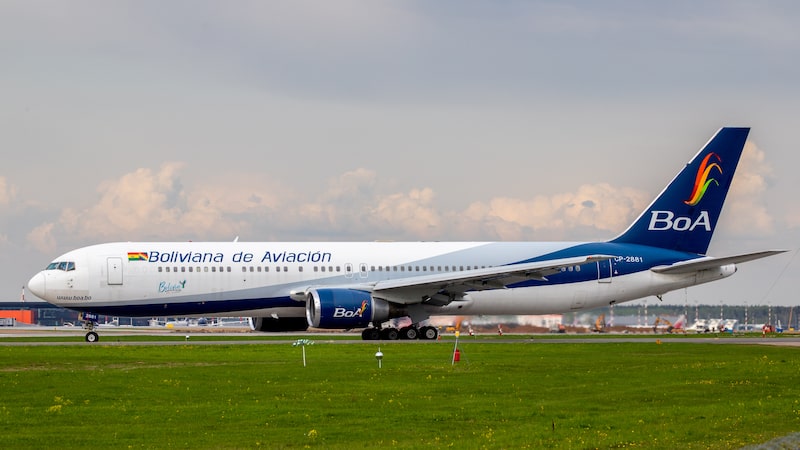
Bolivia could face an “imminent collapse of air connectivity” due to escalating measures that place airlines in an “unsustainable position” amid the dollar shortage in the Andean country, the Latin American and Caribbean Air Transport Association (ALTA) and the Bolivian Airline Association (ALA Bolivia) warned on Wednesday.
The measures imposed by YPFB Aviación, responsible for selling aviation fuels (Jet Fuel and Av Gas), include requiring payments from companies to be split 50% in Bolivianos (BOB) and 50% in U.S. dollars, payments in cash, and the return of previously made advances, according to these sources.
“These measures have been rejected by the airlines, and some are already evaluating the cancellation of their operations in Bolivia, a scenario that would have catastrophic consequences for the country’s connectivity,” they stated.
They explained that for over a year, airlines in Bolivia have implemented strategies to adapt to the shortage of foreign currency, “while also bearing high costs for international remittances, which in some cases exceed 30%.”
However, “the imposition of payments exclusively in dollars, in a context of limited foreign currency availability in the Bolivian financial system, has pushed the sector into an unprecedented crisis.”
According to them, these measures “represent a direct blow to the sustainability of air operations in the country.”
“If this situation is not reversed, Bolivia faces a collapse in its air connectivity, which would impact millions of citizens, the national economy, and foreign trade,” they said in a statement.
This year, Bolivia has experienced a 4.9% slowdown in total passenger traffic compared to 2023, particularly affecting the domestic market with an estimated 7.9% decline, while the international segment shows a 5.8% growth, according to ALTA data.
ALTA projects that domestic traffic will reach 5.1 million passengers this year, down from 5.5 million the previous year, “highlighting the difficulties in recovering the domestic market,” the association stated in a report published on December 2.
The travel and tourism industry contributed 5.7% to the country’s Gross Domestic Product (GDP) in 2019, and this figure is expected to reach 5.5% in 2024.
ALTA and ALA Bolivia pointed out that “total exports in 2023 amounted to US$13.6 billion, of which 24% were transported by air. Despite its low volume, air transport is the second most important means in terms of value, after land transport.”
To counter the situation, they call for establishing sustainable conditions for airlines, allowing payments in Bolivianos and eliminating any cash payment requirements.
They also demand ensuring priority access to foreign currency for the aviation sector at the official exchange rate, stabilizing operations, and avoiding onerous fees.
Additionally, they urge the initiation of “immediate dialogue between authorities, suppliers, and airlines to find viable and sustainable solutions.”
The number of active international routes in the country decreased from 23 in 2017 to 19 in 2023. The airlines operating international routes have also dropped from 11 to 10 over the same period.
Por Daniel Salazar Castellanos, Bloomberg Linea; Eju.tv:
Bolivia enfrentaría un “colapso inminente de la conectividad aérea”; entienda por qué
En medio de la escasez de dólares a la que se enfrenta Bolivia desde hace meses, el país andino tiene otros retos significativos como el alto costo de combustible (US$3,75 por galón) y “la falta de acuerdos bilaterales adecuados”, según ALTA
Bolivia se enfrentaría a un “colapso inminente de la conectividad aérea” ante la escalada de medidas que colocan a las aerolíneas en una “posición insostenible” en medio de la escasez de dólares en el país andino, advirtieron este miércoles la Asociación Latinoamericana y del Caribe de Transporte Aéreo (ALTA) y la Asociación de Líneas Aéreas de Bolivia (ALA Bolivia).
Las medidas que han sido impuestas por YPFB Aviación, que tiene a su cargo la venta de combustibles de aviación (Jet Fuel y Av Gas), van desde la exigencia de pagos a las empresas divididos entre un 50% en bolivianos (BOB) y 50% en dólares estadounidenses, pagos en efectivo y la devolución de anticipos previamente realizados, según esas fuentes.
“Estas medidas han sido rechazadas por las aerolíneas y algunas ya evalúan la cancelación de sus operaciones en Bolivia, un escenario que tendría consecuencias catastróficas para la conectividad del país”, señalaron.
Explicaron que desde hace más de un año las aerolíneas en Bolivia han implementado estrategias para adaptarse a la escasez de divisas, “a su vez asumiendo costos elevados por remesas internacionales, que en algunos casos superan el 30%”.
Sin embargo, “la imposición de pagos exclusivamente en dólares, en un contexto de limitada disponibilidad de divisas en el sistema financiero boliviano, ha llevado al sector a una crisis sin precedentes”.
Según expresaron, estas medidas “representan un golpe directo a la sostenibilidad de las operaciones aéreas en el país”.
“De no revertirse esta situación, Bolivia enfrenta un colapso en su conectividad aérea, que afectaría a millones de ciudadanos, la economía nacional y el comercio exterior”, dijeron en un comunicado.
Bolivia ha experimentado este año una desaceleración del 4,9% en el tráfico total de pasajeros en comparación con 2023, afectado especialmente por el mercado doméstico, con una caída estimada del 7,9%, mientras que el segmento internacional muestra un crecimiento del 5,8%, según cifras de ALTA.
ALTA proyecta que el tráfico doméstico alcance los 5,1 millones de pasajeros este año, menor a los 5,5 millones del año anterior, “evidenciando las dificultades en la recuperación del mercado interno”, dijo en un reporte divulgado el pasado 2 de diciembre.
La industria de viajes y turismo contribuyó en 2019 con un 5,7% al Producto Interno Bruto (PIB) del país, y en 2024 esta llegaría al 5,5%.
ALTA y ALA Bolivia señalaron que “las exportaciones totales en 2023 ascendieron a US$13.600 millones, de las cuales el 24% se transportaron por vía aérea. A pesar de su bajo volumen, el transporte aéreo es el segundo medio más importante en términos de valor, después del terrestre”.
Para contrarrestar la situación, piden establecer condiciones sostenibles para las aerolíneas, permitiendo pagos en bolivianos y eliminando cualquier exigencia de pago en efectivo.
Además, reclaman garantizar acceso prioritario a divisas para el sector de la aviación a la tasa de cambio oficial, estabilizando las operaciones y evitando comisiones onerosas.
E iniciar “un diálogo inmediato entre autoridades, proveedores y aerolíneas para encontrar soluciones viables y sostenibles”.
Las rutas internacionales activas en el país pasaron de 23 en 2017 a 19 en 2023. Y las aerolíneas que operan rutas internacionales han disminuido de 11 a 10 en el mismo período.

 Bolivian Thoughts | Pensamientos Bolivianos (Bilingual/Bilingüe)