
Brújula Digital, El Diario:
According to survey
Intercultural people are seen as responsible for fires
- “The image is associated with peasants related to the MAS who settle illegally in lowlands and who burn forests to create farmland. Not only do they deforest, attacking biodiversity; but they pollute the air in cities,” says Diagnosis in its conclusions.
Most people warn that the intercultural sector is responsible for the fires that affected a large part of the country intensely last week due to the smoke generated, according to a study by Diagnosis.
The smoke caused by forest fires and burning even caused classes to be suspended last week in different areas of the departments of Santa Cruz, La Paz and Cochabamba. Last night, the Government reported that all the fires have already been controlled.
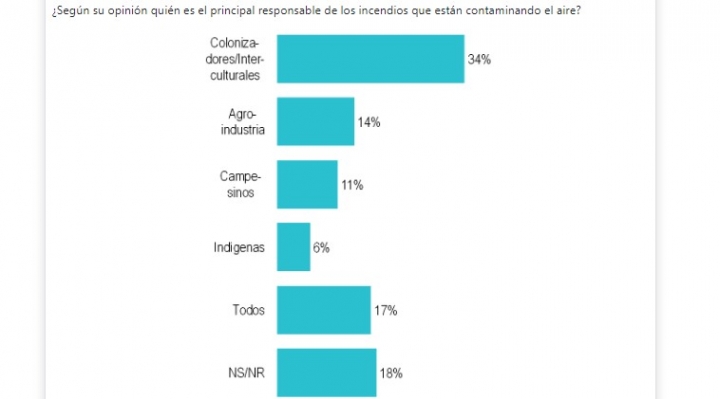
“In your opinion, who is mainly responsible for the fires that are polluting the air?” Diagnosis asked in its survey. The results were the following: 34% blamed the interculturalists or colonizers; 18% do not know or do not respond; 17% say they are all; 14% identify the agroindustry, 11% the farmers and 6% the indigenous people.
The technical sheet indicates that the survey was carried out between October 21 and 22, 2023. The universe was men and women from 18 to 65 years old. The sample reached 1,800 surveys in the urban and rural areas of the nine departments. The margin of sampling error is +/- 2.31%. The method used is face-to-face surveys in homes, in digital format.
“The image is associated with peasants related to the MAS who settle illegally in lowlands and who burn forests to create farmland. Not only do they deforest, attacking biodiversity; but they pollute the air in cities,” says Diagnosis in its conclusions.
The study explains that this image is present mainly in the middle classes opposed to the MAS in the lowlands. The image of the “colonizer” of the highlands (Aymara or Quechua) related to the MAS, who “invades” the lowlands, sowing destruction and generating pollution in its wake, reinforces the anti-masista and “anti-popular” stance in the middle classes.
“The majority of Bolivians blame the ‘interculturals’ for the chaqueos and environmental pollution in the cities. They are seen as ‘invaders’ of highlands related to the MAS, who destroy nature and fill cities with smoke. This perception is associated with the reinforcement of an ‘anti-popular’ and ‘anti-masista’ position in the middle classes; especially in the lowlands. In the face of this ‘invasion’, a tough hand and jail time are demanded for the destroyers of the forests that pollute the air of the country and the cities,” the study adds.
Last week it was reported that coca crops were found in the El Choré sector on an area close to 20 hectares. The Minister of Government also reported that people were found starting fires in the department of Santa Cruz. Seven people were arrested for illegal burning. (Brujula Digital)
Según encuesta
Los interculturales son vistos como responsables de incendios
- “La imagen se asocia a campesinos afines al MAS que se asientan ilegalmente en tierras bajas y que para habilitar tierras de cultivo queman bosques. No sólo deforestan atentando contra la biodiversidad; sino que contaminan el aire en las ciudades”, sostiene Diagnosis en sus conclusiones.
La mayor parte de las personas advierte que el sector intercultural es responsable de los incendios que afectaron con intensidad la semana pasada, en gran parte del país por la humareda originada, según un estudio de Diagnosis.
La humareda originada por incendios forestales y quemas incluso hizo suspender, durante la semana pasada, las clases en diferentes zonas de los departamentos de Santa Cruz, La Paz y Cochabamba. Anoche, el Gobierno informó que todos los incendios ya fueron controlados.
“¿Según su opinión quién es el principal responsable de los incendios que están contaminando el aire?”, preguntó Diagnosis en su encuesta. Los resultados fueron los siguientes: el 34% responsabilizó a los interculturales o colonizadores; el 18% no sabe o no responde; el 17% dice que son todos; el 14% identifica a la agroindustria, el 11% a los campesinos y el 6% a los indígenas.
La ficha técnica indica que la encuesta fue realizada entre el 21 y 22 de octubre de 2023. El universo fue de hombres y mujeres de 18 a 65 años. La muestra alcanzó las 1.800 encuestas en las áreas urbana y rural de los nueve departamentos. El margen de error muestral es de +/- 2,31%. El método empleado son las encuestas presenciales en hogares, en soporte digital.
“La imagen se asocia a campesinos afines al MAS que se asientan ilegalmente en tierras bajas y que para habilitar tierras de cultivo queman bosques. No sólo deforestan atentando contra la biodiversidad; sino que contaminan el aire en las ciudades”, sostiene Diagnosis en sus conclusiones.
En el estudio se explica que esta imagen está presente principalmente en las clases medias contrarias al MAS de tierras bajas. La imagen del “colonizador” de tierras altas (aimara o quechua) afín al MAS, que “invade” las tierras bajas sembrando a su paso la destrucción y generando contaminación, refuerza la postura antimasista y “anti popular” en las clases medias.
“La mayoría de los bolivianos culpan a los ‘interculturales’ de los chaqueos y de la contaminación ambiental en las ciudades. Se los ve como ‘invasores’ de tierras altas afines al MAS, que destruyen la naturaleza y llenan de humo a las ciudades. Esta percepción se asocia al refuerzo de una postura ‘antipopular’ y ‘antimasista’ en las clases medias; sobre todo en las de tierras bajas. Frente a esta ‘invasión’ se demanda mano dura y cárcel para los destructores de los bosques que contaminan el aire del país y de las ciudades”, añade el estudio.
La semana pasada se informó que en el sector de El Choré se encontró cultivos de coca en una extensión cercana a las 20 hectáreas. El Ministro de Gobierno también informó que se halló a gente que iniciaba incendios en el departamento de Santa Cruz. Siete personas fueron aprehendidas por quemas ilegales. (Brújula Digital)

 Bolivian Thoughts | Pensamientos Bolivianos (Bilingual/Bilingüe)