By Jimena Mercado, AGENCIA DE NOTICIAS AMBIENTALES, Erbol:
Ruth Alípaz: Illegal Mining Continues in Amazon Rivers Despite Agro-Environmental Court Rulings
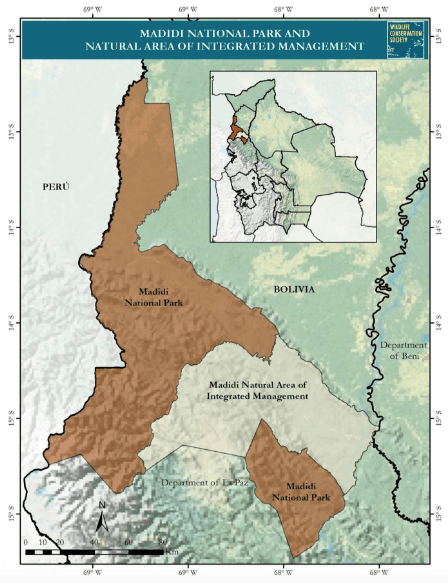
Despite Environmental Order No. SP-TAA 012/2025, issued by the Full Chamber of the Agro-Environmental Court on September 30, 2025, which established urgent environmental precautionary measures to halt illegal mining and protect the Tuichi River, located within the Madidi National Park and Integrated Management Natural Area (PNANMI Madidi), gold mining activities continue, indigenous leader Ruth Alípaz denounced.
The Cooperative Oversight and Control Authority (AFCOOP), under the Ministry of Labor, ordered through Administrative Resolution DCF 001/2026 of May 20 the suspension of mining administrative procedures related to the protected area of Madidi National Park and Integrated Management Area.
“What draws our attention is that this resolution comes, or should have come, after the court order. In reality, it is complying with a provision of an Agro-Environmental Court order that also extended to other rivers, such as the Beni River and the rivers of the municipalities of San Buenaventura and Rurrenabaque,” Alípaz Cuqui said in an interview with ANA.
The AFCOOP resolution was approved amid strong criticism of the government’s agreement with the National Federation of Mining Cooperatives (Fencomin), which offers mining rights for gold extraction and even opens protected areas under very flexible conditions.
“Our analysis is that the Agro-Environmental Court has in fact ordered a suspension of the administrative procedures that were being processed both by AFCOOP and the Mining Administrative Jurisdictional Authority (AJAM),” explained Alípaz, who is also spokesperson for the National Coordinator for the Defense of Indigenous Native Peasant Territories and Protected Areas (Contiocap).
Environmental Order No. SP-TAA 012/2025, dated September 30, 2025, was issued under the authorship of Reporting Magistrate Richard Cristhian Méndez Rosales, who at that time served as president of the Full Chamber of Bolivia’s Agro-Environmental Court.
However, the indigenous representative noted that information requests submitted by attorney Rodrigo Herrera regarding the situation of gold-mining cooperatives and other mining actors inside Madidi Park confirmed the illegality of the operations.
The requests sought information on the administrative requirements fulfilled by the gold-mining cooperatives, including their legal status, the granting of environmental licenses, whether AJAM had granted them mining rights, whether the National Service of Protected Areas (Sernap) had authorized them, and whether the National Institute of Agrarian Reform (INRA) had completed the corresponding land-titling processes for the mining areas.
“The Ministry of Environment and Water says that what it has done is adapt the cooperatives, placing them into an environmental adjustment process, which means they did not have Sernap authorization, did not have legal status granted by AFCOOP, and did not have land regularization from INRA,” she questioned.
Ministerial Resolution 069/2026, issued on April 30 by the Ministry of Mining and Metallurgy, approves the “Regulation for the Simplified Adjustment of Mining Rights,” eliminating the environmental license as a mandatory requirement for mining cooperative operations, as well as the requirement for prior, free, and informed consultation before carrying out extractive activities.
However, the leader emphasized that farming and indigenous communities coexist within Madidi’s protected area, and therefore the prohibition on new settlements and extractive activities such as mining remains in force.
Madidi National Park is home to indigenous and farming communities that have inhabited the territory since before its official creation in 1995. The park contains between 31 and 33 established communities, with an estimated total population of nearly 4,000 residents distributed across different ecological zones.
Por Jimena Mercado, AGENCIA DE NOTICIAS AMBIENTALES, Erbol:
Ruth Alípaz: la minería ilegal continúa en ríos amazónicos a pesar de fallos del Tribunal Agroambiental
A pesar que el auto ambiental No. SP-TAA 012/2025 emitido por la Sala Plena del Tribunal Agroambiental el 30 de septiembre de 2025, por el que se dicta medidas cautelares ambientales urgentes para frenar la minería ilegal y proteger el río Tuichi, situado dentro del Parque Nacional y Área Natural de Manejo Integrado Madidi (PNANMI Madidi), las actividades auríferas continúan, denunció la lideresa indígena Ruth Alípaz.
La Autoridad de Fiscalización y Control de Cooperativas (AFCOOP), dependiente del Ministerio de Trabajo, dispuso mediante resolución administrativa DCF 001/2026 del 20 de mayo, paralizar los trámites administrativos mineros vinculados al área protegida Parque Nacional y Área de Manejo Integrado Madidi.
“Lo que nos llama la atención es que esta resolución se da o debiera haberse dado después del auto, en realidad está dando un cumplimiento a una disposición a un auto del Tribunal Agroambiental, que ampliaba además hacia otros ríos, como el río Beni y los ríos del municipio de San Buenaventura y Rurrenabaque”, señaló Alípaz Cuqui en entrevista con ANA.
La resolución de AFCOOP se aprobó en medio de fuertes cuestionamientos al acuerdo del Gobierno con la Federación Nacional de Cooperativas Mineras (Fencomin), por ofrecer derechos mineros para la extracción del oro, incluso abrir las áreas protegidas en condiciones muy flexibles.
“En nuestro análisis es que justamente el Tribunal Agroambiental a dictado una suspensión, una sentencia de suspensión de los trámites administrativos que estarían en gestión tanto en la AFCOOP como en la Autoridad Jurisdiccional Administrativa Minera (AJAM)”, explicó la también vocera de la Coordinadora Nacional de Defensa de Territorios Indígenas Originarios Campesinos y Áreas Protegidas (Contiocap).
El auto ambiental No. SP-TAA 012/2025 del 30 de septiembre de 2025 fue emitido bajo la ponencia del Magistrado Relator Richard Cristhian Méndez Rosales, quien en ese momento ejercía como presidente de la Sala Plena del Tribunal Agroambiental de Bolivia
Sin embargo, la representante indígena señaló que a solicitud de información que realizó el abogado Rodrigo Herrera, sobre la situación de las cooperativas auríferas u otros actores mineros al interior del Parque Madidi, las respuestas confirmaron sobre la ilegalidad de las operaciones.
Se solicitó informar sobre los requisitos de trámites administrativos que cumplieron las cooperativas auríferas, sobre su personería jurídica, otorgación de licencias ambientales, si la AJAM les otorgó derechos mineros, si el Sernap dio la autorización y sí el Instituto Nacional de Reforma Agraria (INRA) realizó los saneamientos correspondientes para las áreas mineras.
“El Ministerio de Medio Ambiente y Agua dice que lo que han hecho, es adecuar a las cooperativas, que han entrado a un proceso de adecuación ambiental, lo que sgnifica que no tenían permiso del Sernap, no tenían su personería jurídica otorgada por la AFCOOP, no tenían el saneamiento por el INRA”, cuestionó.
La resolución ministerial 069/2026 del 30 de abril emitida por el Ministerio de Minería y Metalurgia, aprueba el “Reglamento de adecuación de derechos mineros simplificado”, elimina la licencia ambiental como requisito obligatorio para las operaciones de cooperativas mineras, así como la consulta previa, libre e informada para ejecutar operaciones extractivas.
Sin embargo, la lideresa enfatizó que, al interior del Madidi, dentro del área protegida conviven comunidades campesinas e indígenas, y por ende la vigencia de la prohibición de nuevos asentamientos, de actividades extractivas, como la minería.
En el Parque Nacional Madidi existen comunidades indígenas y campesinas que habitan este territorio desde antes de su creación oficial en 1995 y alberga entre 31 y 33 comunidades consolidadas, con una población total estimada de casi 4.000 habitantes distribuidos en diferentes pisos ecológicos.


Leave a Reply