By Antonio Saravia, Vision 360:
That cushion would allow them to shore up international reserves and return the dollars owed to the financial system. This would make deep reforms both possible and bearable. There is no other path. Will they do it?
Enough already. The benefit of the doubt ends here. Patience has run out and there is nothing left but to raise one’s voice and say things as they are, even though one would sincerely wish they were different.
The country is going nowhere because the government is going nowhere. The improvisation and political weakness of the Paz-Lara ticket, which we all wanted to ignore in the hope that somehow they would find the formula, have now settled shamelessly into every crevice. The government has no direction, no compass, and the loose threads are becoming more evident by the day.
And it is not as if anyone expected that after twenty years of obscurantism, Rodrigo Paz’s government would turn us in six months into Switzerland, Paraguay, or even into what we ourselves were before Evo. No, the loss of patience has nothing to do with having expected a bonanza or respectable macroeconomic indicators in a short time. We knew things would be hard and we were willing to give the new president and his team all the support they needed. But that patience and that support are earned day by day by showing courage and sending signals that progress is being made (even if only little by little) in the right direction. Yet none of that has happened. It has been six months of stumbling, patchwork measures, retreats before the COB, dismissals, resignations, corruption scandals, and reckless spending as if nothing were happening here. They are not the MAS, of course, and their manners are much better (except for the vice president’s, naturally), but in terms of public policy and macroeconomic direction there are no substantial differences.
And what is this compass that we demand? It has two components: the first is macroeconomic stability and the second is the liberalization of markets for the creation of wealth.
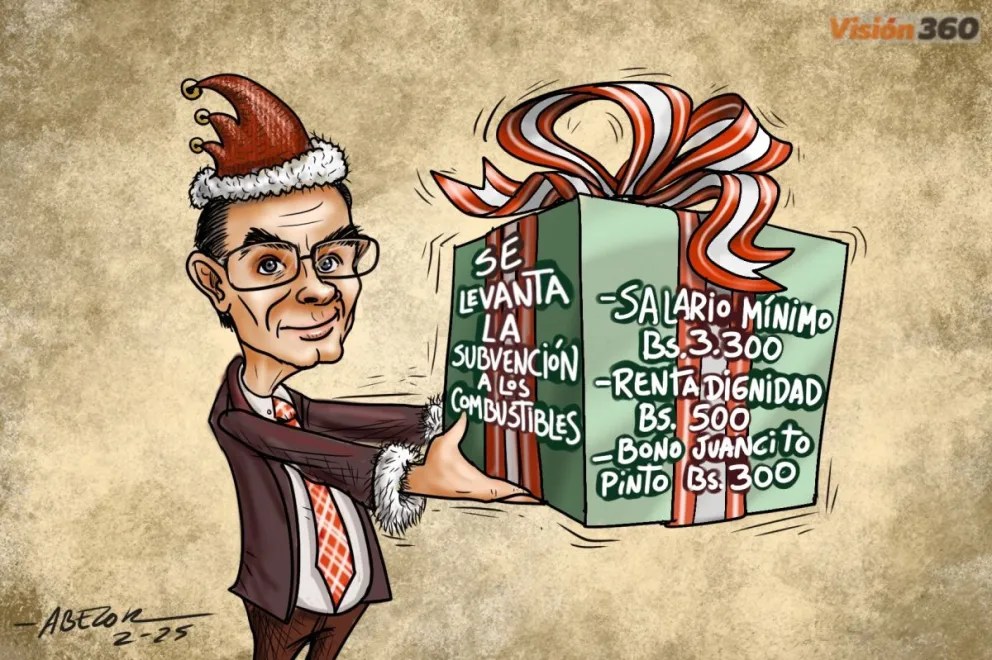
In terms of macroeconomic stability, the only achievement so far was the elimination of the fuel subsidy, which is what allowed the government to move from a fiscal deficit of 12% in 2025 to projecting one of 9% for this year. This implies a reduction of one quarter of the fiscal deficit, which yes, is good news, but is completely insufficient. The fiscal gap remains enormous. A 9% fiscal deficit is greater than the average deficit of the last twelve years.
But the worst part is that the effort to reduce the deficit by three points was made by the citizen, not by the government. The burden of eliminating the subsidy — the gasolinazo — is carried by the people, not by politicians. To this day the government has not eliminated a single public company, not one, even though it knows perfectly well that all are inefficient and the great majority are loss-making. Nor has there been any effort to reduce the state bureaucracy. All the MAS ministries are still alive and kicking (two of them were downgraded to vice ministries, but they did not disappear), and the sewer-government remains, in essence, intact.
If the government does not make the effort to reduce the fiscal deficit significantly (it should be aiming for a 4% deficit in the first year and then eliminating it completely in the second), then it will have to keep borrowing from the Central Bank and the latter will have to keep printing money and creating inflation. Without closing the fiscal deficit through a shock policy, there is no possibility of macroeconomic stability. But, of course, this government is the summit of gradualism.
So gradualist is it that now it tells us it needs 90 days, three months, to obtain reports on what to do with the public companies. Do they really need three months to know that Quipus is useless and should be shut down? Or Cartonbol or Papelbol or the San Buenaventura plant? This is already an insult. According to completed reports from Populi, public companies produced aggregate losses in 2023 alone of around $1.7 billion — which is very similar to what the fuel subsidy was swallowing every year.
International reserves are languishing, there is no clear announcement of what the exchange-rate regime will be, interim appointments remain the norm, and the spending spree continues. One example is enough: the 2026 budget will be Bs 390 billion, which represents 80% of GDP. Yes, 80% of GDP. As you can see, nothing has changed here; the government remains just as elephantine as it was during the MAS administration. So, in short, no macroeconomic stability whatsoever.
And what about market liberalization? More of the same. The clearest example is YPFB and the gasoline scandal. The government has already gone through three YPFB presidents and two hydrocarbons ministers and no one is willing to bell the cat. Nor will they. The problems with the “destabilized” gasoline (they are certainly good at inventing euphemisms) and the lines will continue as long as the government insists that a state monopoly handle exclusively the importation and commercialization of fuels. YPFB is the most corrupt, clientelist, and inefficient company we have, and that will not be solved by playing musical chairs with its presidents. Cronenbold’s resignation letter made that very clear. The government has to eliminate YPFB and completely open fuel imports to private actors at the price determined by the market. Period. But of course, they have not the slightest intention of doing so. Patience, then, is running out because citizens can no longer endure being hostages to a corrupt company and a cowardly government that refuses to dismantle it.
Export quotas remain, price controls remain, subsidies remain, and although there has been timid progress in eliminating taxes, they do not plan to cut them significantly because they simply cannot. If they keep spending with both hands as indicated in the 2026 budget, they will need to keep reaching into the citizen’s pocket (the few who are still operating in the formal sector).
So here we are, facing a horizon that looks anything but good. With very little patience left, but still with hope. The last thing we want is for the MAS to regroup after seeing the ineffectiveness of an alternative political wager, and that is why we keep praying for Rodrigo to do well. Have no doubt, we want this government to hit the mark, but with this course the mission looks more impossible by the day.
The government needs to call in Tuto, Samuel, and the key sector leaders (leaving the COB out, of course) to meet behind closed doors and without cameras, and forge a national alliance that will allow it to carry out the deep reforms we need. That table should generate agreements on the elimination of public companies (including YPFB), the reduction of bureaucracy, and the necessary steps to reform the Constitution. With that political backing, it should then establish a top-level commission (including even former presidents) to go to Washington DC and produce a rescue agreement with the IMF for some $3 billion. That cushion would allow them to shore up international reserves and return the dollars owed to the financial system. This would make deep reforms both possible and bearable. There is no other path. Will they do it?
Por Antonio Saravia, Vision 360:
Ese colchón le permitiría apuntalar las reservas internacionales y devolver los dólares que se le deben al sistema financiero. Esto haría que las reformas profundas sean posibles y llevaderas. No hay otro camino. ¿Lo harán?
Ya estuvo. Hasta acá llega el beneficio de la duda. Se acabó la paciencia y no queda más que alzar la voz y decir las cosas como son, aunque uno quisiera, de corazón, que fueran distintas.
El país no va a ningún lado porque el gobierno no va a ningún lado. La improvisación y la debilidad política de la candidatura Paz-Lara, que todos quisimos ignorar con la esperanza de que de alguna manera encontrarían la fórmula, se han instalado en todo resquicio sin pudor alguno. El gobierno no tiene rumbo, no tiene norte y las hilachas son cada vez más evidentes.
Y no es que uno estaba esperando que después de veinte años de oscurantismo el gobierno de Rodrigo Paz nos convirtiera en seis meses en Suiza, Paraguay o incluso en nosotros mismos antes de Evo. No, la perdida de la paciencia no tiene que ver con haber estado esperando una bonanza o indicadores macroeconómicos decorosos en corto tiempo. Sabíamos que la cosa iba a ser dura y estábamos dispuestos a darle al nuevo presidente y su equipo todo el aguante que necesitase. Pero esa paciencia y ese aguante se ganan día a día mostrando valentía y dando las señales de que se avanza (aunque fuera de a poco) en la dirección correcta. Pues nada de eso. Han sido seis meses de tumbos, medidas parche, retrocesos ante la COB, dimisiones, renuncias, escándalos de corrupción y gastadera como si aquí no estuviera pasando nada. No son el MAS, claro, y los modales son mucho mejores (exceptuando los del vice, por supuesto), pero en términos de política pública y rumbo macroeconómico no hay diferencias substanciales.
Y ¿cuál es ese norte que reclamamos? Tiene dos componentes: el primero es la estabilidad macroeconómica y el segundo es la liberalización de los mercados para la creación de riqueza.
En términos de estabilidad macroeconómica el único logro hasta ahora fue la eliminación del subsidio a los combustibles, que fue lo que le permitió al gobierno pasar de un déficit fiscal del 12% en 2025 a proyectar uno de 9% para este año. Esto implica una reducción de una cuarta parte del déficit fiscal, que sí, es una buena noticia, pero que es completamente insuficiente. La brecha fiscal sigue siendo altísima. ¡Un déficit fiscal del 9% es mayor al déficit promedio de los últimos doce años!
Pero lo peor de todo es que el esfuerzo por reducir el déficit en tres puntos lo hizo el ciudadano, no el gobierno. La mochila de la eliminación del subsidio o el gasolinazo la cargan los ciudadanos, no los políticos. Hasta el día de hoy el gobierno no ha eliminado una sola empresa pública, ni una sola, sabiendo perfectamente que todas son ineficientes y la gran mayoría deficitarias. Tampoco se ha hecho un esfuerzo en reducir la burocracia estatal. Todos los ministerios del MAS siguen vivitos y coleando (dos de ellos pasaron a ser viceministerios, pero no desaparecieron) y el gobierno cloaca sigue, en esencia, intacto.
Si el gobierno no hace el esfuerzo por reducir el déficit fiscal de forma significativa (habría que proponerse un déficit de 4% el primer año para después eliminarlo completamente el segundo), entonces tendrá que seguir prestándose del Banco Central y este tendrá que seguir emitiendo y creando inflación. Sin cerrar el déficit fiscal con una política de shock no hay posibilidades de estabilidad macroeconómica. Pero, claro, este gobierno es el summum del gradualismo.
Tan gradualista es que ahora nos dice que necesitan 90 días, tres meses, para obtener reportes de qué hacer con las empresas púbicas. ¿En serio necesitan tres meses para saber que Quipus no sirve para nada y debe cerrarse? ¿O Cartonbol o Papelbol o la planta de San Buenaventura? Esto ya es una falta de respeto. De acuerdo con reportes, ya terminados, de Populi, las empresas públicas produjeron solo el 2023 pérdidas globales de alrededor de $1.700 millones, ¡que es muy parecido a lo que se comía el subsidio a los combustibles cada año!
Las reservas internacionales languidecen, no hay anuncio claro de cuál será el régimen cambiario, los puestos interinos siguen siendo la norma y la gastadera continúa. Para muestra un botón: el presupuesto del 2026 será de Bs 390.000 millones, lo cual representa un 80% del PIB. Sí, ¡un 80% del PIB! Como ven, aquí no ha cambiado nada, el gobierno sigue siendo tan elefantiásico como lo fue durante el gobierno del MAS. Así que, nada, de estabilidad macroeconómica, nada.
Y ¿qué hay de la liberalización de los mercados? Pues más de lo mismo. La mayor muestra es YPFB y el escándalo de la gasolina. El gobierno lleva ya tres presidentes de YPFB y dos ministros de hidrocarburos y nadie le pone el cascabel al gato. Y no se lo pondrán. Los problemas con la gasolina “desestabilizada” (en inventarse eufemismos sí que son buenos) y las colas seguirán mientras el gobierno insista en que un monopolio estatal se ocupe exclusivamente de la importación y comercialización de los combustibles. YPFB es la empresa más corrupta, clientelar e ineficiente que tenemos y eso no lo resolverán jugando al carrusel de presidentes. La carta de renuncia de Cronenbold lo dejó muy claro. El gobierno tiene que eliminar YPFB y abrir completamente la importación de combustibles a los privados al precio que determine el mercado. Punto. Pero, claro, no tienen las mínimas intenciones de hacerlo. La paciencia, entonces, se acaba porque los ciudadanos no aguantamos más ser rehenes de una empresa corrupta y de un gobierno cobarde que no la elimina.
Siguen los cupos a las exportaciones, los controles de precios, los subsidios, y aunque hay tímidos avances en eliminar impuestos no tienen planeado recortarlos de manera significativa porque simplemente no pueden. Si siguen gastando a manos llenas como indica el presupuesto 2026, necesitarán seguir metiéndole mano al bolsillo del ciudadano (a los pocos que aún siguen operando en el sector formal).
Así que aquí estamos, de frente a un horizonte que no pinta nada bien. Ya con muy poca paciencia, pero aún con esperanza. Lo último que queremos es que el MAS se rearticule al ver la inoperancia de una apuesta política alternativa y por eso seguimos rezando para que a Rodrigo le vaya bien. No tengan duda, queremos que este gobierno dé en el clavo, pero, con este rumbo, la misión parece cada vez más imposible.
El gobierno necesita llamar a Tuto, a Samuel y a los líderes sectoriales claves (dejando afuera a la COB, por supuesto) para reunirse a puertas cerradas y sin cámaras, y generar una alianza nacional que le permita llevar a cabo las reformas profundas que necesitamos. Esa mesa debería generar acuerdos sobre la eliminación de empresas públicas (incluyendo YPFB), la reducción de la burocracia y los pasos necesarios para reformar la Constitución. Con esa espalda política debería después constituir una comisión de altísimo nivel (que incluya incluso expresidentes) para ir a Washington DC y producir un acuerdo de rescate con el FMI por unos $3.000 millones. Ese colchón le permitiría apuntalar las reservas internacionales y devolver los dólares que se le deben al sistema financiero. Esto haría que las reformas profundas sean posibles y llevaderas. No hay otro camino. ¿Lo harán?
https://www.vision360.bo/noticias/2026/04/27/45072-perdiendo-la-paciencia


Leave a Reply