By La Patria:

Jaime Dunn, analyst
According to Dunn, the projected fiscal deficit is 11%; the analyst warns about the urgent need for cuts in public spending.
Economic analysis: Dunn highlights need for cuts
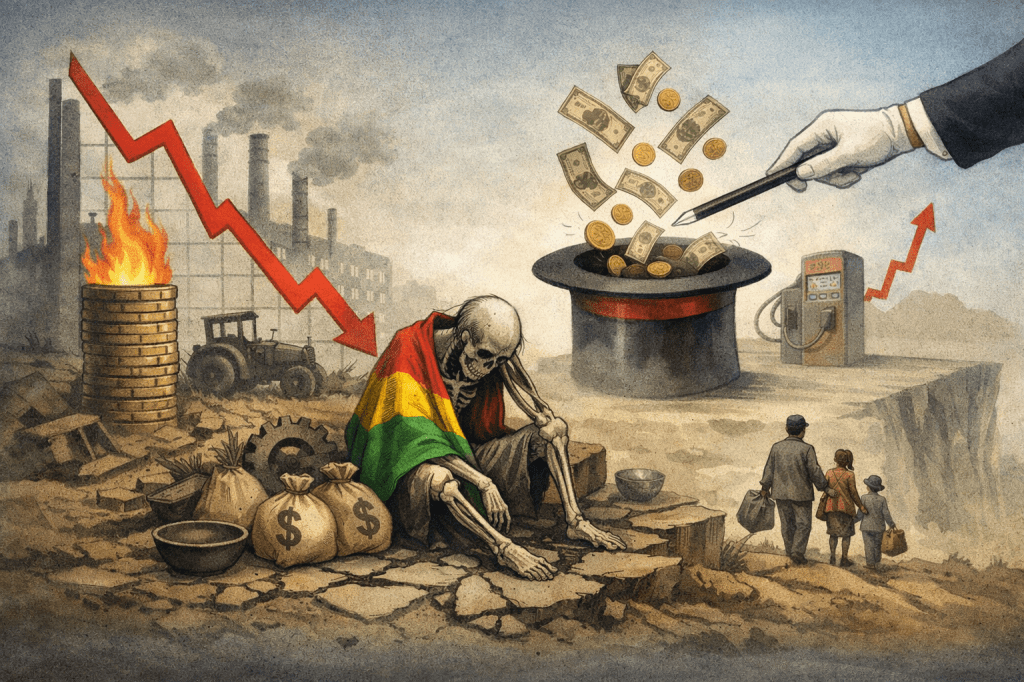
Economic analyst Jaime Dunn questioned the economic policy of the government of President Rodrigo Paz Pereira. In an interview with LA PATRIA, Dunn pointed out that so far there is no clear definition of the course the administration intends to follow in the face of the crisis. He also stressed the urgent need to carry out a cut in public spending.
Lack of a clear strategy in the face of the crisis
Dunn stated that the Executive has still not determined whether its strategy is aimed at managing the current crisis or undertaking long-term structural changes. “What we have seen so far are more measures to treat the symptoms and not the disease,” he said.
General State Budget and its limitations
Regarding the General State Budget, the analyst acknowledged progress in the presentation of clearer and more understandable data. However, he considered this to be insufficient. “The crisis will not be solved with clarity alone, but with actions. This budget sends us the message that the government has decided to manage the crisis this year,” he indicated.
Origin of the economic problem
Dunn explained that the origin of the economic problem lies in a complex energy scenario. This scenario is characterized by the lack of natural gas, as well as the limited capacity for fuel production and imports, which has resulted in a chronic fiscal deficit.
Necessary measures to confront the crisis
In that context, he warned that the solution requires deep measures, such as a drastic reduction in public spending. According to him, this measure is not currently being applied. “A gradualism has been chosen that carries many risks, because someone has to finance that wait in order to make decisions,” he noted.
Political impact and external factors
Dunn also warned about how this approach can weaken political support over time. In addition, he mentioned that external factors, such as international conflicts, can negatively impact the economy.
Fiscal deficit projections
The analyst questioned the magnitude of the projected fiscal deficit. He indicated that, beyond the official figures close to 9%, the real calculations could place it at around 11%. This would reflect the absence of substantial improvements compared to the previous administration.
Urgent decisions in light of the severity of the crisis
Dunn emphasized that the severity of the crisis demands decisions of the same magnitude. This includes cuts in public spending, salaries, state investment, and the restructuring of loss-making state-owned companies.
Por La Patria:
Jaime Dunn, analista
Según Dunn, el déficit fiscal proyectado es del 11%, el analista advierte sobre la necesidad urgente de recortes en el gasto público
Análisis económico: Dunn destaca necesidad de recortes
El analista económico Jaime Dunn cuestionó la política económica del gobierno del Presidente Rodrigo Paz Pereira. En una entrevista con LA PATRIA, Dunn señaló que hasta el momento no existe una definición clara sobre el rumbo que se pretende seguir frente a la crisis. Además, destacó la urgente necesidad de realizar un recorte de gasto público.
Falta de estrategia clara ante la crisis
Dunn afirmó que el Ejecutivo aún no ha determinado si su estrategia apunta a administrar la crisis actual o a encarar cambios estructurales de largo plazo. “Lo que vemos hasta hoy son más medidas para tratar los síntomas y no la enfermedad”, sostuvo.
Presupuesto General del Estado y sus limitaciones
Respecto al Presupuesto General del Estado, el analista reconoció avances en la presentación de datos más claros y comprensibles. Sin embargo, consideró que esto resulta insuficiente. “La crisis no se va a resolver solo con claridad, sino con acciones. Este presupuesto nos da el mensaje de que el gobierno ha decidido administrar la crisis este año”, indicó.
Origen del problema económico
Dunn explicó que el origen del problema económico radica en un complejo escenario energético. Este escenario se caracteriza por la falta de gas natural, así como por la limitada capacidad de producción e importación de combustibles, lo que ha derivado en un déficit fiscal crónico.
Medidas necesarias para enfrentar la crisis
En ese contexto, advirtió que la solución pasa por medidas de fondo, como una reducción drástica del gasto público. Según él, esta medida no se está aplicando actualmente. “Se ha optado por un gradualismo que tiene muchos riesgos, porque alguien tiene que financiar esa espera para tomar decisiones”, señaló.
Impacto político y factores externos
Dunn también alertó sobre cómo este enfoque puede debilitar el respaldo político con el tiempo. Además, mencionó que factores externos, como conflictos internacionales, pueden impactar negativamente en la economía.
Proyecciones del déficit fiscal
El analista cuestionó la magnitud del déficit fiscal proyectado. Indicó que, más allá de las cifras oficiales cercanas al 9%, los cálculos reales podrían situarlo alrededor del 11%. Esto reflejaría la ausencia de mejoras sustanciales respecto a la pasada gestión.
Decisiones urgentes ante la gravedad de la crisis
Dunn enfatizó que la gravedad de la crisis exige decisiones de la misma magnitud. Esto incluye recortes en gasto público, salarios, inversión estatal y la reestructuración de empresas estatales deficitarias.
https://lapatria.bo/dinero-negocios/dunn-destaca-la-necesidad-de-recortes-en-el-gasto-publico/


Leave a comment