
By Ernesto Estremadoiro, El Deber; Eju.tv:
Klaus Frerking: “Agriculture is stagnating; we need legal security to produce”
The next president of the CAO warns that the lack of diesel, export restrictions, and the absence of biotechnology are severely impacting the sector.
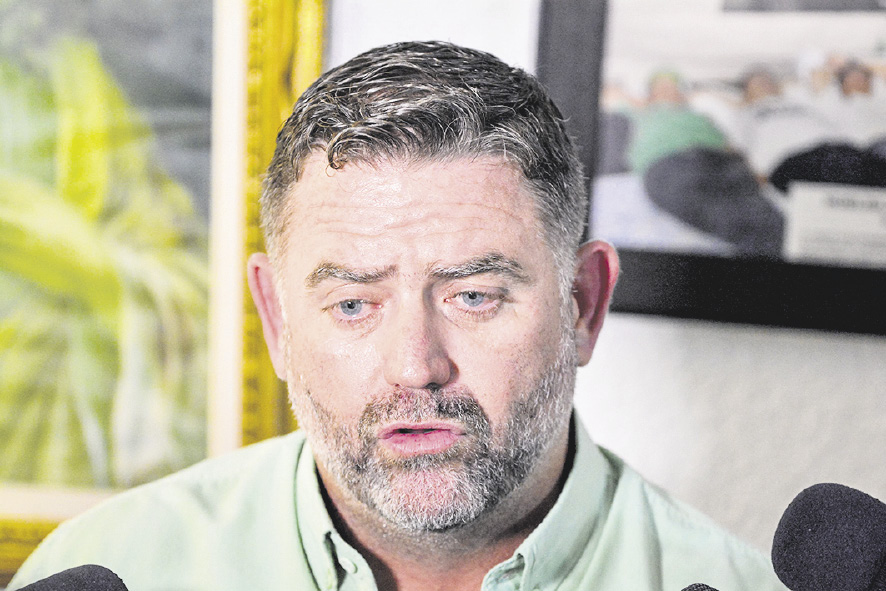
The Bolivian agricultural sector faces a complex outlook. Klaus Frerking, recently elected president of the Eastern Agricultural Chamber (CAO), takes on the challenge of representing more than 70,000 producers in Santa Cruz amid a crisis marked by legal uncertainty, fuel shortages, and state regulations.
How long have you been involved in agricultural leadership?
Well, I’ve been in this sector for many years. I’m 41 years old and started in 2015 with my association of cattle and dairy farmers, Agalech. I own La Esperanza farm in Okinawa. Later, I became president of the Departmental Milk Federation (Fedeple). Then, I served as secretary at Fegasacruz, and now I am vice president of the Eastern Agricultural Chamber (CAO), working alongside the outgoing president, José Luis Farah.
When will you assume the presidency of CAO?
The official swearing-in will be on March 13. I will be joined by Yamil Nacif, president of Asocebu, as first vice president, and Rodrigo Suárez, president of CREA Bolivia, as second vice president.
During this decade in leadership, what do you consider the main problems in the agricultural sector?
The main problem is the lack of legal security. In four years, the government has issued only eight titles for medium and large properties, and all have been community-owned.
Price regulations also affect producers. For example, the dairy sector has been under regulations for 13 years regarding milk sales, and in 2024, 100 production units closed in the country.
The situation remains uncertain due to diesel shortages, the lack of foreign currency, land invasions, and the absence of biotechnology. Neighboring countries are advancing, while Bolivia lags. This discourages producers, who, instead of focusing on production, must deal with these obstacles.
What is the current outlook for milk production?
Bolivia produces 1.8 million liters of milk per day, with Santa Cruz contributing 1.2 million, more than 70% of the total.
However, costs have increased—corn has reached Bs150 per quintal, and sorghum, Bs120. Additionally, we have endured two years of unprecedented drought, the worst in the last 30 years. This impacts protein production, including pork, poultry, eggs, and milk.
How has the weather affected the summer harvest?
The weather has been favorable. However, due to fuel shortages, some areas had to plant late. It is crucial to respect agricultural cycles because plants require specific sunlight and moisture conditions. The government cannot impose arbitrary planting dates, as each region has its own crop calendar.
When you take over as CAO president, what will be your first actions?
We have already held a congress where critical issues like export bans, fuel shortages, and the seventh provision were discussed. We are working with the multisectoral committee to find solutions.
It is important for people to understand that the agricultural sector is stagnant. We have not increased our land area or productivity per hectare. Before considering expanding the agricultural frontier, we need to incorporate biotechnology to improve yields on the same amount of land. Bolivia has enormous production potential, but we need the right conditions to develop it.
How many producers does CAO currently represent?
CAO represents 70,000 producers in Santa Cruz, covering sectors such as protein production (milk, pork, poultry, eggs), crops (soy, corn, cotton), and agribusiness (sugar). We are also part of Confeagro, the National Confederation of Agricultural Producers.
Diesel shortages remain a problem. How does this affect the sector?
The soybean harvest, the country’s largest, is about to begin. If diesel is not available on time, production will be lost. The soybean plant does not wait—if the grain falls to the ground, it can no longer be collected. We need guarantees to keep the supply chain from collapsing.
Have you been able to discuss fuel supply issues with YPFB?
We have had countless meetings, but there has been no progress. We need 1.5 million liters of diesel daily to keep the production system running, but we continue to face difficulties. Additionally, export restrictions have caused deficits in products like corn. In 2011, corn exports were banned despite a surplus, and now we have a shortfall of 700,000 tons per year.
How does smuggling impact the sector?
It is a serious and ongoing problem. Trucks have been found transporting large volumes of meat and other products to neighboring countries. So far this year, 20% more animals have been put on the market, but prices have not dropped. This shows that the problem is not production but inflation and the lack of control over smuggling.
Por Ernesto Estremadoiro, El Deber; Eju.tv:
Klaus Frerking: “El agro está estancado, necesitamos seguridad jurídica para producir”
El próximo presidente de la CAO advierte que la falta de diésel, las restricciones a las exportaciones y la ausencia de biotecnología están afectando gravemente al sector
El agro boliviano enfrenta un panorama complejo. Klaus Frerking, recientemente electo presidente de la Cámara Agropecuaria del Oriente (CAO), asume el reto de representar a más de 70.000 productores en Santa Cruz en medio de una crisis marcada por la incertidumbre jurídica, la escasez de combustible y las regulaciones estatales.
¿Cuánto tiempo lleva en la dirigencia productiva?
Bueno, llevo muchos años en este sector. Tengo 41 años y comencé en 2015 en mi asociación de ganaderos y lecheros, Agalech. Tengo mi predio La Esperanza, ubicada en Okinawa. Luego asumí la presidencia de la Federación Departamental de Leche (Fedeple). Posteriormente, fui secretario en Fegasacruz y ahora soy vicepresidente de la Cámara Agropecuaria del Oriente (CAO), acompañando al actual presidente saliente José Luis Farah.
¿Cuándo asumirá como presidente de la CAO?
La posesión oficial será el 13 de marzo. Me acompañarán Yamil Nacif, presidente de Asocebu, como primer vicepresidente, y Rodrigo Suárez, presidente de los grupos CREA Bolivia, como segundo vicepresidente.
En esta década como dirigente ¿Cuáles considera que son los principales problemas del sector agropecuario?
El principal problema es la falta de seguridad jurídica. En cuatro años de Gobierno, entregó ocho títulos de mediana y gran propiedad, y todos han sido comunitarios.
Hay regulaciones de precios que afectan a los productores. Por ejemplo, el sector lechero lleva 13 años bajo regulaciones en la venta de leche y en 2024 cerraron 100 unidades productivas en el país.
La situación es incierta debido a la escasez de diésel, la falta de dólares, los avasallamientos y la ausencia de biotecnología. Los países vecinos avanzan, pero Bolivia está rezagada. Esto desmotiva a los productores, quienes, en lugar de enfocarse en producir, deben lidiar con estos obstáculos.
En cuanto a la producción de leche, ¿cuál es el panorama?
Bolivia produce 1,8 millones de litros de leche por día, de los cuales Santa Cruz aporta 1.2 millones, más del 70% de la producción.
Pero los costos subieron, el maíz alcanzó los Bs150 por quintal y el sorgo, Bs120. Además, venimos de dos años de sequía sin precedentes en los últimos 30 años. Esto golpea la producción de proteínas como cerdo, pollo, huevo y leche.
¿Cómo ha impactado el clima en la campaña de verano?
El clima ha sido benigno. No obstante, debido a la falta de combustible, algunas zonas tuvieron que sembrar tarde. Es fundamental respetar los ciclos agrícolas, ya que las plantas requieren condiciones específicas de sol y humedad. El gobierno no puede imponer fechas de siembra arbitrarias porque cada región tiene su propio calendario de cultivos.
Cuando asuma la presidencia de la CAO, ¿cuáles serán sus primeras acciones?
Ya hemos tenido un congreso en el que se han discutido problemas críticos como el corte de exportaciones, la escasez de combustible y la disposición séptima. Con el comité multisectorial estamos buscando soluciones.
Es importante que la población entienda que el sector agropecuario está estancado. No hemos crecido en superficie ni en productividad por hectárea. Antes de pensar en expandir la frontera agrícola, necesitamos incorporar biotecnología para mejorar los rendimientos en la misma cantidad de tierra. Bolivia tiene un enorme potencial productivo, pero necesitamos condiciones adecuadas para desarrollarlo.
¿A cuántos productores agrupa actualmente la CAO?
La CAO representa a 70.000 productores en Santa Cruz, abarcando sectores como la producción de proteínas (leche, cerdo, pollo, huevo), cultivos (soya, maíz, algodón) y la agroindustria (azúcar). También formamos parte de Confeagro, la Confederación de Agropecuarios Nacionales.
El desabastecimiento de diésel sigue siendo un problema. ¿Cómo afecta esto al sector?
La cosecha de soya, que es la más grande del país, está a punto de comenzar, y si no hay diésel oportuno, se perderá la producción. La planta de soya no espera: si el grano cae al suelo, ya no se puede recoger. Necesitamos garantías para trabajar y evitar un colapso en la cadena productiva.
¿Han podido dialogar con YPFB para garantizar el suministro de combustible?
Hemos tenido incontables reuniones, pero no avanzamos. Necesitamos 1,5 millones de litros de diésel diarios para mantener en marcha el aparato productivo. Pero seguimos enfrentando dificultades. Además, restricciones a la exportación han causado déficits en productos como el maíz. En 2011, se prohibió la exportación de maíz cuando había excedente y ahora somos deficitarios en 700.000 toneladas por año.
¿Cómo afecta el contrabando al sector?
Es un problema serio y constante. Se han encontrado camiones transportando grandes volúmenes de carne y otros productos a países vecinos. Solo en lo que va del año, el 20% más de animales han sido ofertados en el mercado, pero los precios no bajan. Esto demuestra que el problema no está en la producción, sino en la inflación y en la falta de control del contrabando.

 Bolivian Thoughts | Pensamientos Bolivianos (Bilingual/Bilingüe)