
By Paulo Lizarraga, Vision 360:
There are more than 500 ovens built in rural settlements
This activity, according to the Municipality of San Rafael de Velasco and indigenous chiefs, is carried out at the expense of the destruction of the Chiquitano dry forest.
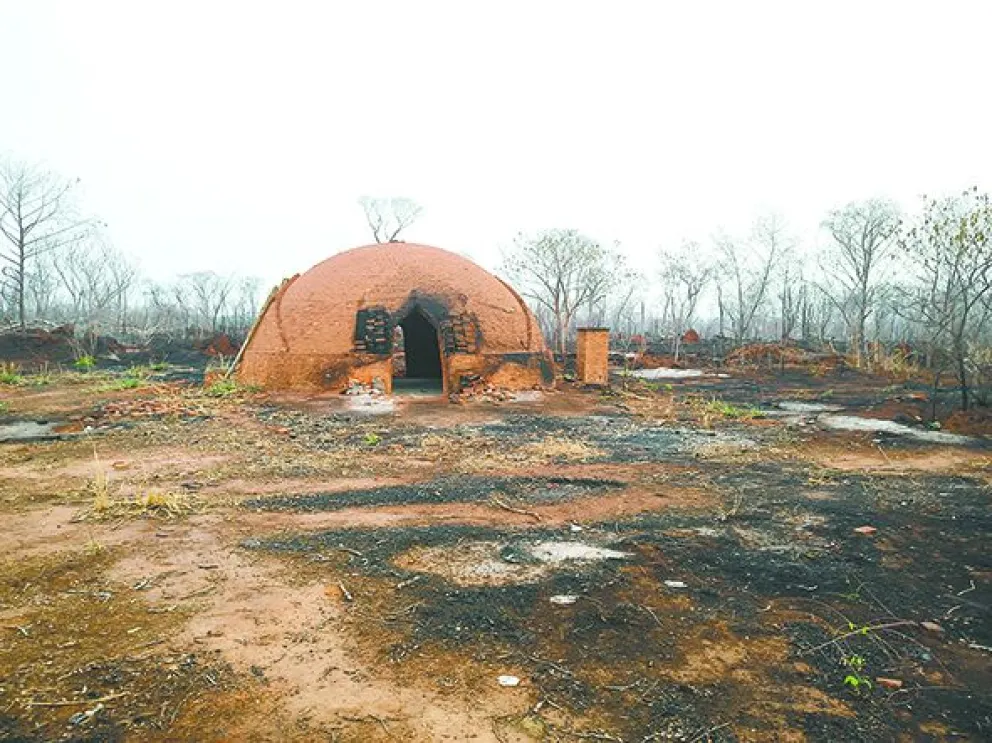
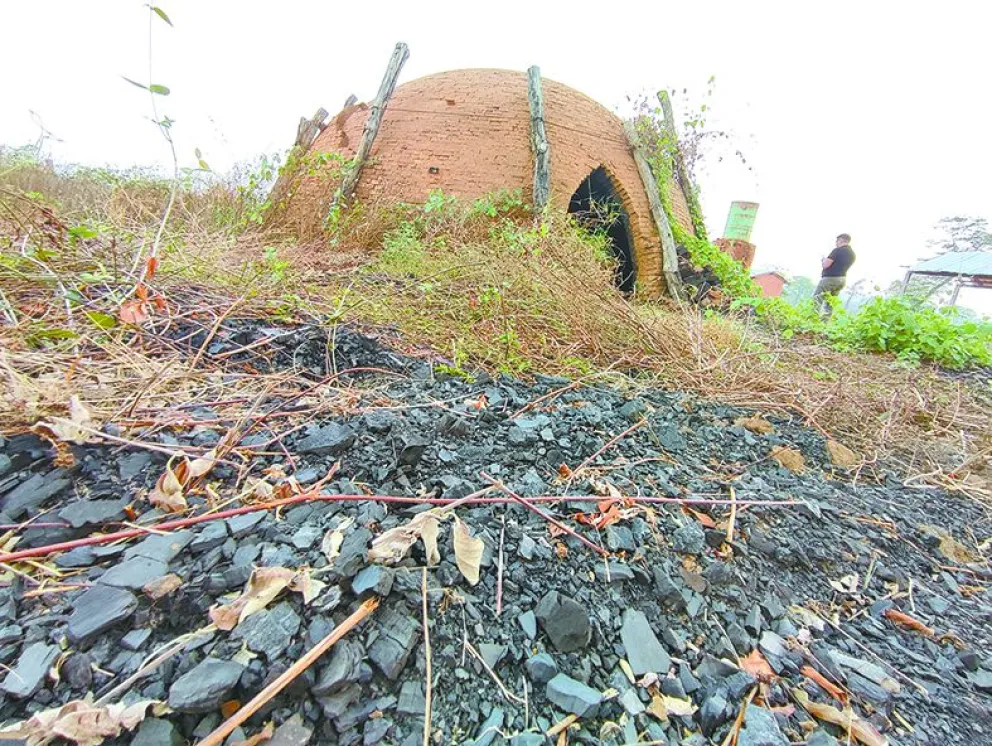
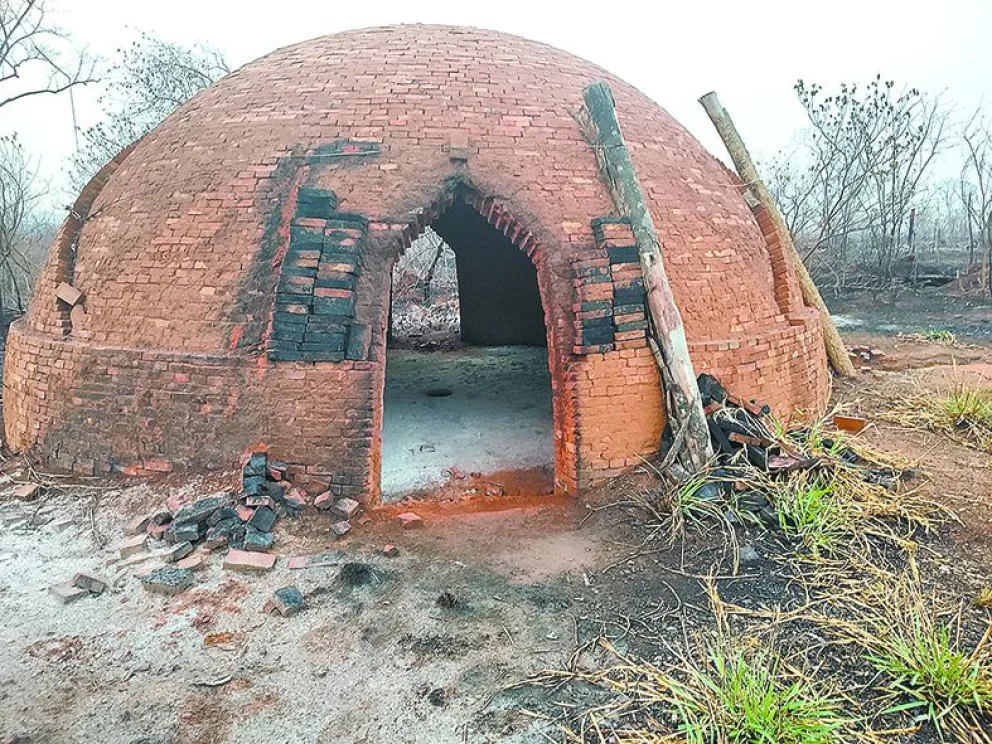
View of one of the artisanal ovens where fine woods are burned to make charcoal. Photos: Paulo Lizárraga / Visión 360
Precious and semi-precious wood species from the Chiquitano dry forest are reduced to mere charcoal for trade. These woods, cut into logs, are placed in ovens built by intercultural communities settled in various parts of San Rafael de Velasco, a municipality in the department of Santa Cruz.
“They’re burning our forests to make barbecue. They’re exporting charcoal from forests where the wood is precious or semi-precious,” complains the mayor of San Rafael de Velasco, Humberto Jorge Vargas.
Explains that over 500 ovens have been built in this area, most operating without authorization, in secrecy. According to the authority, this activity—referred to as “charcoal piracy”—has become one of the main ways for settlers to generate income. However, these earnings end up in private pockets, providing no benefits to the municipality and damaging the environment.
“Obviously, no income is generated, and it’s even worse when it’s illegal. Smuggling doesn’t bring foreign currency to the country, and charcoal and forest resource piracy doesn’t benefit national governments either,” Vargas explains.
San Rafael de Velasco is located 544 kilometers from the city of Santa Cruz de la Sierra, just over seven hours away by car. It was one of the most important settlements during colonial times and the second town founded by the Jesuit Order in Bolivia.
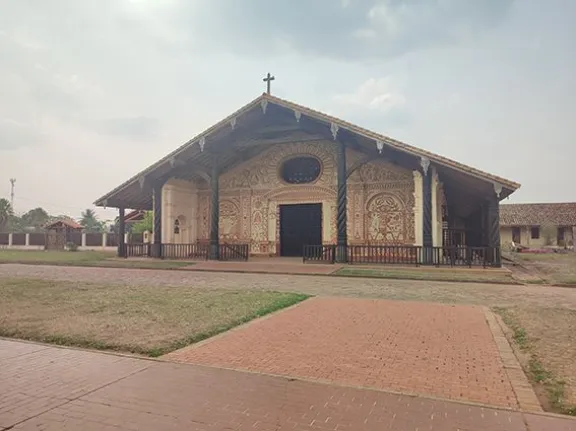
It’s composed of 22 communities. In recent years, part of this territory has been occupied by multiple rural settlements, whose main economic activities are tied directly to charcoal trade.
This activity, according to the Municipality of San Rafael de Velasco and indigenous leaders, is carried out at the expense of the Chiquitano dry forest, the largest in South America. This area is “home to valuable timber species like cedar, oak, ipe, and morado wood.” This characteristic has now become one of its main threats.
“We have morado, precious by excellence; we have tajibo, oak, cedar, curupaú, soto, sirari, and cuchi—all are precious and semi-precious woods, harvestable,” Vargas explains.
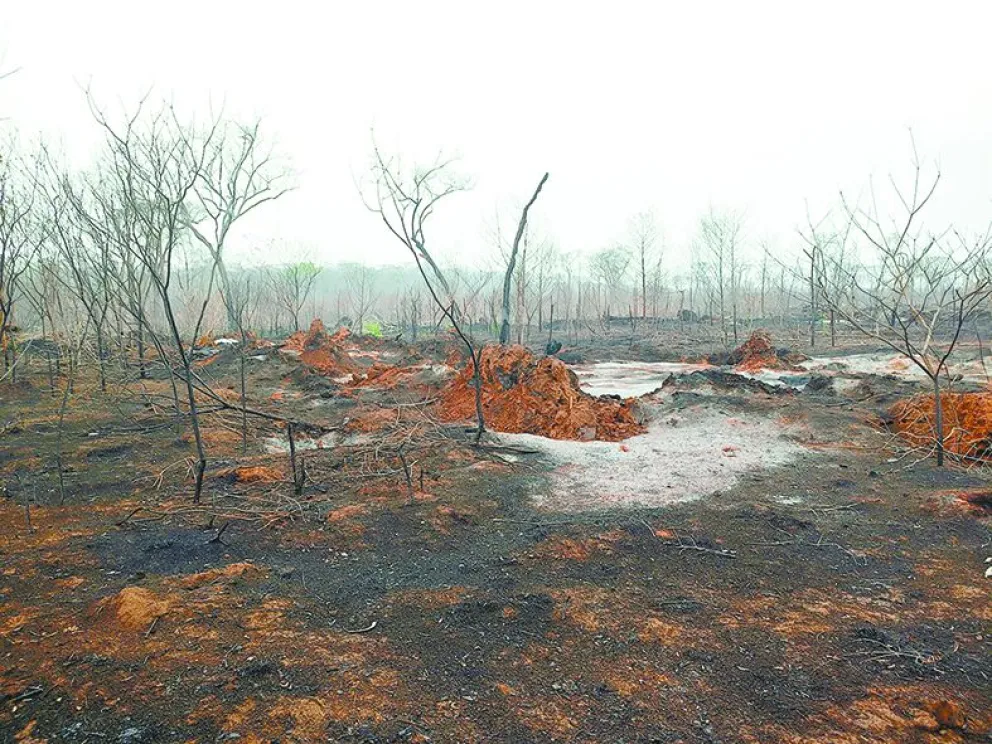
In San Rafael de Velasco, Visión 360 toured indigenous and farming communities such as Santa Teresita del Surutú and Pradera del Surutú. It documented the severe damage caused by months of relentless fires, along with the silent, uncontrolled activity of “carbon pirates.”
The red Chiquitano soil turns black and white due to erosion from burning, and ashes from vegetation and trees are scattered along the path.
In addition to being evidence of devastating fires, the ashes also serve as proof of the destruction of trees such as oak, cedar, curupay, and mainly morado, among others.
In Pradera del Surutú, Don Julio Egüez Aguilera, the great chief of the Association of Indigenous Communities of San Rafael de Velasco, explains that some tree species used for charcoal production, like morado, are now endangered. He asserts that they could be an economic resource in another way.
“Endangered species include the morado; unfortunately, the other day, we discovered in the community I mentioned, they were preparing this species as material for making charcoal, when this wood could instead be used by our artisans and turned into economic resources in other ways,” says Egüez.
Alejandro Vaca Díez, chief of the Santa Teresita del Surutú community, recalls that just 10 years ago, the Chiquitano forest “was still intact,” and now all the wood extracted goes toward charcoal production.
“The forest was still intact. It’s different now; if you go further into the woods, there’s nothing left—they clear everything for charcoal. Some communities only focus on this. They cut down everything: curupaú, quebracho, all types of wood; they don’t care about the type, as long as it can be used for charcoal,” Vaca Díez laments.
Amid these memories, the chief, visibly upset, firmly asserts that those who start the fires and profit from the charcoal sales “are interculturales, campesino communities aligned with the government.” “They don’t need permits for clearing,” he denounces.
San Rafael de Velasco and its communities primarily engage in cattle ranching, according to local authorities. However, due to recent forest fires, the town has suffered significant losses and damage.
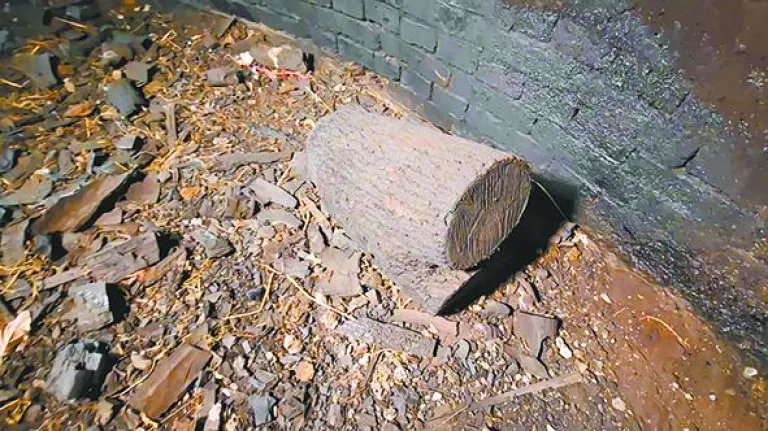
Furthermore, every day, residents of this municipality watch helplessly as trucks filled with charcoal leave. It seems this material is being sold in the eastern capital.
The Kilns and the “Pirates”
Built in an artisanal way, with bricks and some wooden beams, and shaped like domes. This is how the kilns were constructed, where precious and semi-precious woods are burned to be sold as charcoal.
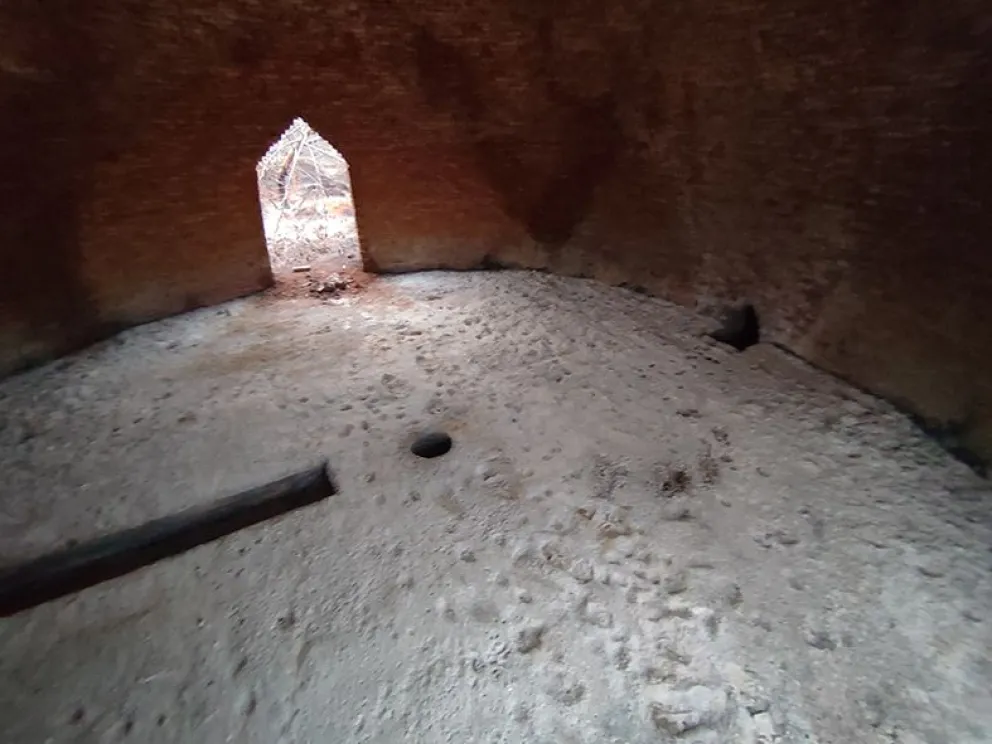
Inside the kilns, there are trench-like grooves on the ground and a central hole, through which the fire is lit from outside these brick domes.
“Just like this kiln, there are a series of kilns throughout the forest, in different communities. The way of producing charcoal is by clearing the forest, placing the wood logs, lighting them, and making charcoal,” explains the mayor of San Rafael de Velasco. “A lot of forest has to be cut down to make charcoal,” he adds.
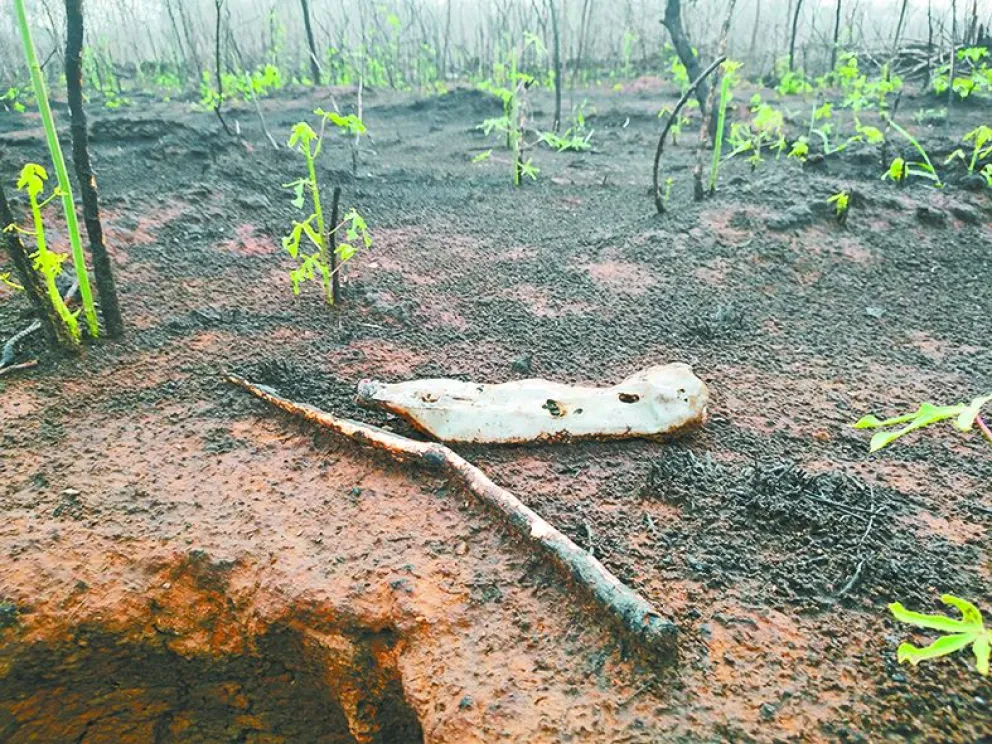
According to the mayor, the trees are cut into several pieces and then inserted into the ovens to be burned and turned into charcoal for subsequent commercialization.
“It’s a crude way of generating income, because they set the forest on fire to make charcoal when we know that the different woods we have in Chiquitania are precious or semi-precious woods that can be used in other ways and given added value in products like furniture or construction wood,” the mayor expresses with anger.
He reiterates that there are approximately 500 ovens in the municipality. “They are everywhere. I estimate that it must be about one hectare (of trees) for each oven; I think it depends on the size; there are various sizes,” he says.
A “lax” and weak law
The regulations exist, but there’s no one to enforce them, Vargas denounces. “I believe that the law is very lax, very weak. In reality, there are regulations for everything in the country, but there’s no one to enforce them because there’s no one to make them comply,” he assures.
According to Chief Vaca Díez, the Authority for Supervision and Social Control of Forests and Land (ABT) is responsible for overseeing and controlling these activities. However, the indigenous leader states that the public entity “turns a blind eye” to communities aligned with the government, while demanding a series of requirements from indigenous peoples to engage in these economic activities.
“So the charcoal that comes out of here, part of it is legal and the other part illegal, and who is to blame for that? It’s the state, the ABT. There are no restrictions (for burning) for peasant communities, but if someone from an indigenous community goes to request (permission), they are asked for several requirements and are not granted (it). They control, but the ABT turns a blind eye because everyone is aligned with that. If you don’t do the work or are against it, you’ll be fired tomorrow. That is the reality in our country,” he says.
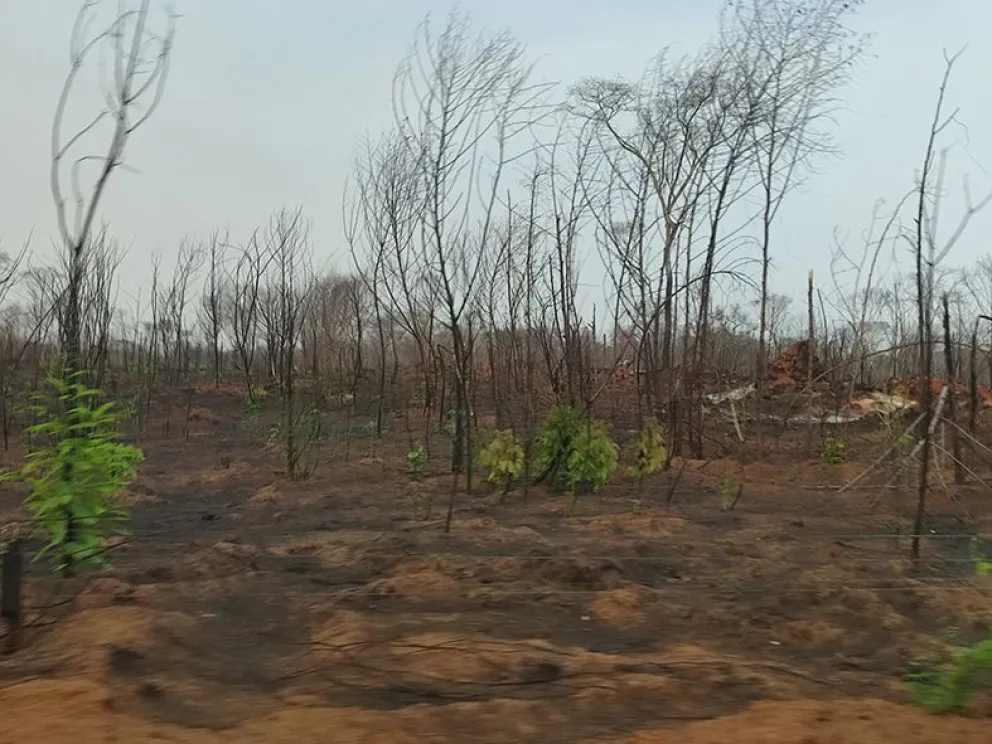
For chief Julio Egüez, it is essential to raise awareness among recently settled peasant communities to protect and conserve the chiquitano dry forests, which have existed in the region for over three centuries.
He explains that the main consequences of uncontrolled fires and charcoal production are significant losses of flora and fauna. In light of this situation and the inaction of authorities, he suggests creating spaces to promote awareness. “We need to encourage newly established communities to learn to conserve the forests that have always been here, even before the Republic of Bolivia,” he asserts optimistically, though he cannot hide his indignation at seeing the ashes of trees in the forest of his ancestors, his grandparents.
“They are burning our forests to make barbecue. They export charcoal from the forests where the wood is precious or semi-precious.”
Humberto Vargas, mayor of San Rafael
After four months of work and losses, San Rafael is “fire-free”
After nearly four months of wildfires and 20 days of work, international assistance, and several days of rain, the municipality of San Rafael is “fire-free,” reported the mayor of the region, Humberto Jorge Vargas.
“We extinguished the fire; we have not had a single fire or hotspots (…). Now we can say with certainty that San Rafael is free of fire. We have done nearly 20 days of work under the guidance of two fire experts who came from Spain to provide us with directives on how to work,” he said.
International cooperation, volunteer firefighters, and the rains that fell for a few days contributed to the mitigation and subsequent extinguishing of fires in the region, which is primarily dedicated to livestock farming.
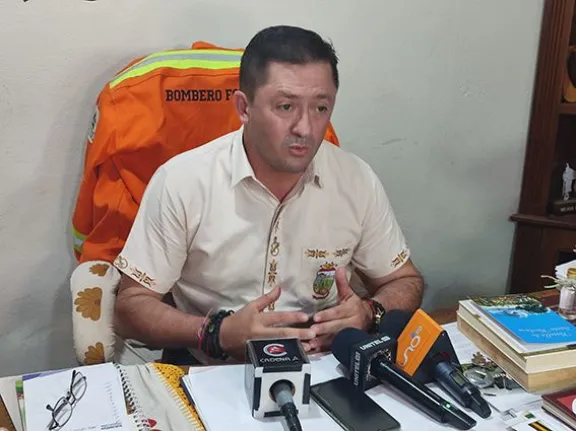
“We have done a very strong, long job for 20 days, 24/7, with the help of firefighters from Spain, and we have planned the anchoring of the gaps to the scars, and we have opened other gaps to extinguish the fire. We have achieved this through our own effort, private efforts, foundations, volunteer firefighters, and private individuals. We have managed to anchor the fire with the support of technology from the Spaniards. We have managed to conclude the work,” he assured.
600 thousand hectares affected
The Mayor lamented that 60% of the municipality has been affected by the fire that started with strength in June of this year and reached multiple communities in four departments, primarily affecting Santa Cruz. In this context, San Rafael reported at least 600 thousand hectares affected by the burns.
“We are nearing 600 thousand hectares; we are talking about 60% of the municipal territory being reached by the flames,” he said and mentioned that he became a volunteer firefighter.
The fires recorded since mid-year caused damage to at least 10.1 million hectares of forests and grasslands in the departments of Santa Cruz, Beni, Pando, and northern La Paz, according to the Tierra Foundation. Meanwhile, the National Institute of Agrarian Reform (Inra) reported that this year 9.8 million hectares were burned in the country.
Por Paulo Lizarraga, Vision 360:
Hay más de 500 hornos construidos en asentamientos campesinos
Esta actividad, de acuerdo con la Alcaldía de San Rafael de Velasco y caciques indígenas, se ejecuta a costa de la destrucción del bosque seco chiquitano.
Vista de uno de los hornos artesanales en los que queman maderas finas para hacer carbón. Fotos: Paulo Lizárraga / Visión 360
Especies madereras preciosas y semipreciosas del bosque seco chiquitano son reducidas a simplemente carbón para su comercio. Estas, cortadas en troncos, ingresan en hornos, construidos por comunidades interculturales asentadas en distintos lugares de San Rafael de Velasco, municipio del departamento de Santa Cruz.
“Están quemando nuestros bosques para hacer churrasco. Exportan carbón de los bosques, donde la madera es preciosa o semipreciosa”, reniega el alcalde de San Rafael de Velasco, Humberto Jorge Vargas.
Explica que en este territorio se construyeron más de 500 hornos, la mayoría operando sin autorización, en la clandestinidad. Según la autoridad, esta acción, a la que denomina “la piratería del carbón”, se constituye en una de las principales actividades en los asentamientos campesinos para generar dinero. Pero esas ganancias van a bolsillos particulares, no dan ningún tipo de beneficio al municipio y dañan el medioambiente.
“Obviamente (no entran ingresos), y peor si es de forma ilegal. El contrabando no deja divisas para el país, y la piratería del carbón y recursos forestales tampoco beneficia a los gobiernos nacionales”, explica Vargas.
San Rafael de Velasco está ubicado a 544 kilómetros de la ciudad de Santa Cruz de la Sierra, a algo más de siete horas de viaje en vehículo. Fue una de las poblaciones más importantes durante la época colonial y el segundo pueblo fundado por la Compañía de Jesús en Bolivia.
Está conformada por 22 comunidades. En los últimos años, parte de este territorio fue ocupado por múltiples asentamientos campesinos, cuyas principales actividades económicas están relacionadas justamente a la comercialización de carbón.
Esta actividad, según la Alcaldía de San Rafael de Velasco y caciques indígenas, se ejecuta a costa de la destrucción del bosque seco chiquitano, el más extenso de América del Sur. Este sitio es “el hogar de valiosas especies madereras como el cedro, el roble, el ipe y el morado”. Esta cualidad se ha convertido hoy en una de sus principales amenazas.
“Tenemos el morado, precioso por excelencia; tenemos el tajibo, el roble, el cedro, el curupaú, el soto, el sirari y el cuchi; todas son maderas preciosas y semipreciosas, aprovechables”, explica Vargas.
En San Rafael de Velasco, Visión 360 hizo un recorrido por comunidades indígenas y campesinas como la de Santa Teresita del Surutú y Pradera del Surutú. Evidenció el grave daño ocasionado por varios meses de inclemente fuego, también por la actividad silenciosa y sin control de “los piratas del carbón”.
El rojo suelo chiquitano se torna en blanco y negro, por la erosión generada por las quemas, y las cenizas remanentes de la vegetación y árboles permanecen desperdigadas a lo largo del trayecto.
Además de ser la muestra de los devastadores incendios, en el lugar, las cenizas son una clara evidencia de la destrucción de árboles como el roble, el cedro, el curupaú, y principalmente el morado, entre otros.
En la Pradera del Surutú, don Julio Egüez Aguilera, gran cacique de la Asociación de Comunidades Indígenas de San Rafael de Velasco, explica que algunas especies de árboles utilizados para la explotación de carbón, como el morado, se encuentran ya en peligro de extinción. Asegura que podrán significar un recurso económico, de otra forma.
“Las especies en peligro de extinción son el morado; lamentablemente la vez pasada descubrimos en la comunidad que le mencioné, preparando (esta especie como) material para hacer carbón, cuando esa madera se puede producir por nuestros artesanos, se puede convertir en recursos económicos de otra forma”, dice Egüez.
Alejandro Vaca Díez, cacique de la comunidad de Santa Teresita del Surutú, recuerda que hace tan solo 10 años el bosque chiquitano “era íntegro todavía”, y que actualmente toda la madera que extraen es para la producción de carbón.
“El bosque estaba íntegro todavía. Otra cosa es ir al otro lado, al monte, ya no hay, lo sacan todo para carbón. Y hay comunidades que solo a eso se dedican. Talan todo, el ‘curupaú’, el quebracho, todo lo que es madera, igual; a ellos no les interesa el tipo de madera, lo que les importa es que se haga para carbón”, lamenta Vaca Díez.
En medio de esos recuerdos, el cacique, molesto, asegura tajantemente que quienes inician los incendios y lucran con la venta de carbón “son interculturales, comunidades campesinas que son afines al Gobierno”. “Ellos para desmontar no necesitan permiso”, denuncia.
San Rafael de Velasco y sus comunidades se dedican principalmente a la ganadería, según cuentan las autoridades locales. Sin embargo, a causa de los últimos incendios forestales, el pueblo sufrió numerosas pérdidas y daños.
Además, cada día, los pobladores de este municipio observan con impotencia la salida de camiones repletos de carbón. Al parecer este material se comercializa en la capital oriental.
Los hornos y “los piratas”
Construidos de forma artesanal, con ladrillos y algunos palos de madera, y con una forma de cúpula. Así fueron levantados los hornos en los cuales se quema la madera preciosa y semipreciosa para ser comercializada como carbón.
Al interior de los hornos hay una especie de “canaletas” en el suelo y un hueco al centro, mediante los cuales se enciende el fuego desde el exterior de dichos domos de ladrillo.
“Así como este horno, hay una serie de hornos en todo el monte, en diferentes comunidades. La forma de producir carbón es tumbando el monte, poner los trozos de madera, prenderlos y hacer carbón”, explica el alcalde de San Rafael de Velasco. “Es bastante bosque que se tiene que talar para hacer carbón”, agrega.
De acuerdo con el burgomaestre, los árboles se cortan en varios pedazos y posteriormente se insertan en los hornos para quemarlos y convertirlos en carbón, para su posterior comercialización.
“Es una forma de generar economía de la más burda, porque se le prende fuego al monte, para hacer carbón cuando sabemos que las diferentes maderas que tenemos en la Chiquitania son maderas preciosas o semipreciosas que se pueden utilizar de otra forma y sacarle un valor agregado en productos como en muebles o madera de construcción”, expresa, con enojo, el Alcalde.
Reitera que aproximadamente hay 500 hornos en el municipio. “Están en todos lados. Calculo que debe ser una hectárea (de árboles) por cada horno, creo que depende del tamaño, hay de varios tamaños”, dice.
Una ley “laxa” y débil
La normativa existe, pero no hay quién la haga cumplir, denuncia Vargas. “Yo creo que la norma es muy laxa, muy débil. En realidad hay normas para todo en el país, pero no hay quién las cumpla, porque no hay nadie que las haga cumplir”, asegura.
Según el cacique Vaca Díez, la Autoridad de Fiscalización y Control Social de Bosques y Tierra (ABT) es la encargada de la supervisión y control de estas actividades. Pero, dice el líder indígena, la entidad pública “se hace de la vista gorda” con las comunidades afines al Gobierno, mientras que a los pueblos indígenas les exigen una serie de requisitos para incursionar en estas actividades económicas.
“Entonces el carbón que sale de acá, una parte es legal y la otra ilegal, y de eso ¿quién tiene la culpa? Es el Estado, la ABT. Para las comunidades campesinas no hay restricción (para las quemas), pero si va alguien de una comunidad indígena a solicitar (el permiso), le piden varios requisitos y no dan (…). Controlan, pero la ABT se hace la vista gorda, porque todos son afines a eso. Si tú no haces el trabajo o estás en contra, mañana estás despedido. Esa es la realidad en nuestro país”, dice.
Para el cacique Julio Egüez, se debe concientizar a las comunidades campesinas recientemente asentadas para que cuiden y conserven los bosques secos chiquitanos, ya que estos existen desde hace más de tres siglos en la región.
Explica que las principales consecuencias de los incendios y la producción de carbón sin control son las grandes pérdidas de la flora y la fauna. Ante esta situación y la inacción de las autoridades, plantea la creación de espacios para generar conciencia. “Hay que incentivar a las comunidades de reciente creación para que aprendan a conservar los bosques que siempre estuvieron aquí, incluso antes de la República de Bolivia”, asegura con optimismo, pero no puede esconder su indignación al ver las cenizas de árboles en el bosque de sus ancestros, de sus abuelos.
“Están quemando nuestros bosques para hacer churrasco. Exportan carbón de los bosques, donde la madera es preciosa o semipreciosa”.
Humberto vargas, alcalde de San Rafael
Tras 4 meses de trabajo y pérdidas, San Rafael está “libre de fuego”
Luego de casi cuatro meses de incendios y 20 días de trabajo, asesoramiento, cooperación internacional y lluvias que cayeron por varios días, el municipio de San Rafael está “libre de fuego”, informó el alcalde de dicha región, Humberto Jorge Vargas.
“Apagamos el fuego, no tenemos ni un solo incendio ni focos de calor (…). Ahora podemos decir con certeza que San Rafael está libre de fuego. Hemos hecho un trabajo de casi 20 días con la tutela de dos bomberos expertos en fuego que vinieron desde España para darnos las directrices de cómo se debe trabajar”, dijo.
La cooperación internacional, bomberos voluntarios y las lluvias que cayeron por algunos días coadyuvaron a la mitigación y posterior apagado de incendios en la región, que se dedica principalmente a la ganadería.
“Hemos hecho un trabajo muy fuerte, largo, de 20 días 24/7 con ayuda de los bomberos de España y hemos planificado el anclaje de las brechas a las cicatrices y hemos abierto otras brechas para poder liquidar el fuego y hemos logrado con esfuerzo propio, privado, de fundaciones, bomberos voluntarios y gente particular, hemos logrado anclar el fuego con el apoyo de tecnología de los españoles. Hemos logrado concluir el trabajo”, aseguró.
600 mil hectáreas afectadas
El Alcalde lamentó que el 60% del municipio haya sido alcanzado por el fuego que se inició con fuerza en junio de este año y que alcanzó a múltiples comunidades de cuatro departamentos, afectando principalmente al de Santa Cruz. San Rafael reportó, en ese contexto, al menos 600 mil hectáreas afectadas por las quemas.
“Estamos pisando las 600 mil hectáreas, estamos hablando que el 60% del territorio municipal fue alcanzado por las llamas”, dijo y contó que se constituyó en bombero voluntario.
Los incendios registrados desde mediados de año generaron un daño de al menos 10,1 millones de héctareas de bosques y pastizales en los departamentos de Santa Cruz, Beni, Pando y el norte de La Paz, según la Fundación Tierra. Por su parte, el Instituto Nacional de Reforma. Agraria (Inra) reportó que este año se quemaron en el país 9,8 millones de hectáreas.

 Bolivian Thoughts | Pensamientos Bolivianos (Bilingual/Bilingüe)