
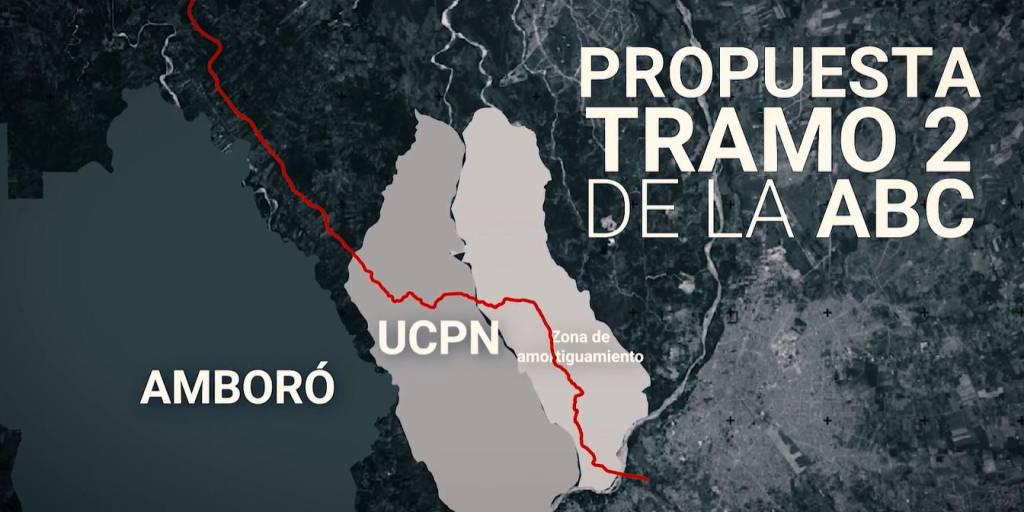
EL MAPA MUESTRA LA ZONA DE LOS ACUÍFEROS POR DONDE LA ABC PRETENDE QUE SE CONSTRUYA EL TRAMO 2 DE LA CARRETERA.
The country’s highways have become extortion routes due to the constant blockades carried out by different social sectors, say the businessmen of Santa Cruz.
Through a letter, the Committee for Santa Cruz asked the executive president of the Andean Development Corporation (CAF), Sergio Díaz, the entity that granted the credit for the construction of the Las Cruces-Buena Vista highway, to “apply the safeguards” to preserve the aquifers that exist in that region.
“…we kindly ask the entity that you chair with dignity, as the main financier of the highway project, to apply the S01 safeguards: evaluation and management of environmental and social impacts; S02: use of renewable natural resources and S03: conservation of biological diversity”, says the note sent to CAF.
The request comes amid protest actions by locals demanding the construction of the Las Cruces-Buena Vista highway in the department of Santa Cruz. After 11 days of blockade, the community members dictated a fourth intermission until September 11.
The main objection to the highway project is the affectation that it would cause, if that highway is built, to the aquifers that provide the liquid element (water) to the city of Santa Cruz de la Sierra and surrounding municipalities (metropolitan area), with an impact on more than 2.5 million people.
On February 9, 2018, the agency signed a $112 million loan contract with former President Evo Morales for the construction of the Las Cruces-Buena Vista highway, which was approved by Law 1042 of April 2018.
The civics warn that said highway project violates the Natural Heritage Conservation Unit called “Güendá-Urubó”, created through the Departmental law on March 10, 2021 as “a territory subject to legislation, management and special jurisdiction for conservation of important ecosystems for recharging the underground aquifers in Santa Cruz”.
The governor of Santa Cruz, Luis Fernando Camacho, from the Chonchocoro prison said that the destruction of the aquifers will not be allowed. “The richness of Santa Cruz’s soils, forests, and biodiversity is an invaluable heritage that must be protected,” he said.
“Our Government has presented a technical solution for the construction of the Porongo-Buena Vista highway, without damaging the Güendá-Urubó aquifer. This solution is supported by the College of Engineers and by many other professionals, but the Government and the ABC prefer conflict and are determined to follow a path that, if carried out, will irreparably destroy the aquifers and the people of Santa Cruz will be left without water in our homes,” wrote the authority.
EXTORTION
The National Chamber of Industries (CNI) and private businessmen from Santa Cruz denounced that the country’s highways have become extortion routes due to the constant blockades carried out almost daily by different social sectors.
On August 14, residents of the Santa Cruz municipality of Buena Vista installed a blockade on the new Santa Cruz-Cochabamba highway demanding the construction of the km 13 – Las Cruces – Buena Vista highway section. The Government and the Departmental Legislative Assembly argued that the project will divide the Güendá-Urubó protected area and will affect the aquifers that supply the liquid element to the capital of Santa Cruz.
“(We are) deeply concerned, we are talking about a loss of between 90 and 100 million dollars due to this 11-day blockade. The roads should be development routes, (but) today the roads have become extortion routes. We are forgetting about the dialogue. Today, Bolivians need to bring daily bread to our homes, our industries must work. The small, medium and large producers, who are affected today, cannot take their products to the markets”, indicated the president of the CNI, Pablo Camacho, to the ANF.
After 11 days, the blockades of the new Santa Cruz-Cochabamba highway decided to enter an intermediate cease and free the road.
When it seemed that the Santa Cruz department already had its main highways free, the small and medium-sized grain producers installed another blockade in San Julián, the route to Chiquitania, demanding that the Food Production Support Company (Emapa) pay for the corn they provided. (ANF).
Las carreteras del país se volvieron rutas de extorsión por los constantes bloqueos que van realizando diferentes sectores sociales, afirman los empresarios de Santa Cruz.
El Comité pro Santa Cruz mediante una carta pidió al presidente ejecutivo de la Corporación Andina de Fomento (CAF), Sergio Díaz, entidad que otorgó el crédito para la construcción de la carretera Las Cruces-Buena Vista, “aplicar las salvaguardas” para preservar los acuíferos que existen en esa región.
“…tenemos a bien solicitar a la entidad que Ud. dignamente preside, como principal financiador del proyecto carretero, aplicar las salvaguardas S01: evaluación y gestión de impactos ambientales y sociales; S02: utilización de recursos naturales renovables y S03: conservación de la diversidad biológica”, dice la nota enviada a la CAF.
El pedido surge en medio de acciones de protesta de los lugareños que exigen la construcción de la carretera Las Cruces-Buena Vista en el departamento de Santa Cruz. Tras 11 días de bloqueo, los comunarios dictaron un cuarto intermedio hasta el 11 de septiembre.
La principal objeción al proyecto carretero es la afectación que causaría, si se construye esa carretera, a los acuíferos que proveen del líquido elemento (agua) a la ciudad de Santa Cruz de la Sierra y municipios aledaños (zona metropolitana), con un impacto a más de 2,5 millones de personas.
El 9 de febrero de 2018, el organismo firmó un contrato de crédito de $us 112 millones con el expresidente Evo Morales para la construcción de la carretera Las Cruces-Buena Vista, el mismo fue aprobado mediante ley 1042 de abril de 2018.
Los cívicos advierten que dicho proyecto carretero vulnera la Unidad de Conservación de Patrimonio Natural denominado “Güendá-Urubó”, creada a través de la ley Departamental el 10 de marzo de 2021 como “un territorio sujeto a legislación, manejo y jurisdicción especial para la conservación de ecosistemas importantes para recarga de los acuíferos subterráneos en Santa Cruz”.
El gobernador cruceño, Luis Fernando Camacho, desde la cárcel de Chonchocoro dijo que no se permitirá la destrucción de los acuíferos. “La riqueza de los suelos, bosques y biodiversidad de Santa Cruz es un patrimonio invaluable que debe protegerse”, señaló.
“Nuestra Gobernación ha presentado una solución técnica para la construcción de la carretera Porongo-Buena Vista, sin dañar el acuífero Güendá-Urubó. Esa solución es respaldada por el Colegio de Ingenieros y por muchos otros profesionales, pero el Gobierno y la ABC prefieren el conflicto y están empeñados en seguir un trazo que de realizarse destruirá de manera irremediable los acuíferos y los cruceños nos quedaremos sin agua en nuestras casas”, escribió la autoridad.
EXTORSIÓN
La Cámara Nacional de Industrias (CNI) y los empresarios privados de Santa Cruz denunciaron que las carreteras del país se volvieron rutas de extorsión por los constantes bloqueos que van realizando, casi a diario, diferentes sectores sociales.
El 14 de agosto, pobladores del municipio cruceño de Buena Vista instalaron un bloqueo en la carretera nueva Santa Cruz-Cochabamba en demanda de la construcción del tramo carretero km 13 – Las Cruces – Buena Vista. La Gobernación y la Asamblea Legislativa Departamental argumentaron que el proyecto partirá el área protegida Güendá- Urubó y afectará a los acuíferos que suministran el líquido elemento a la capital cruceña.
“(Estamos) profundamente preocupados, estamos hablando entre 90 y 100 millones de dólares de pérdida por este bloqueo de 11 días. Los caminos deberían ser rutas para el desarrollo, (pero) hoy día los caminos se han vuelto en rutas de extorsión. Nos estamos olvidando del diálogo. Hoy, los bolivianos necesitamos llevar el pan de cada día a nuestros hogares, nuestras industrias deben trabajar. Los pequeños, medianos y grandes productores, que hoy se ven afectados, no pueden llevar sus productos a los mercados”, indicó el presidente de la CNI, Pablo Camacho, a la ANF.
Después de 11 días los bloqueadores de la carretera nueva Santa Cruz-Cochabamba decidieron ingresar a un cuarto intermedio y liberar la vía.
Cuando parecía que el departamento cruceño ya tenía sus principales carreteras libres, los pequeños y medianos productores de granos instalaron otro bloqueo en San Julián, ruta hacia la Chiquitania, exigiendo a la Empresa de Apoyo a la Producción de Alimentos (Emapa) el pago por el maíz que proveyeron. (ANF).
https://www.eldiario.net/portal/2023/08/26/piden-aplicar-salvaguardas-para-preservar-los-acuiferos/

 Bolivian Thoughts | Pensamientos Bolivianos (Bilingual/Bilingüe)