
By Germaine Barriga, Vision 360:
Social Conflict
While Argollo tries to distance himself from Morales and the road blockades, logistical and financial support continues to arrive from Lauca Ñ
Despite efforts by the top leader of the Bolivian Workers’ Central (COB), Mario Argollo, to portray the road blockades as being sustained solely by the resources of the mobilized sectors, support continues to come from Lauca Ñ, where former president Evo Morales is taking refuge. According to reports, money, supplies, and coca growers are being sent from the region to reinforce blockade points.
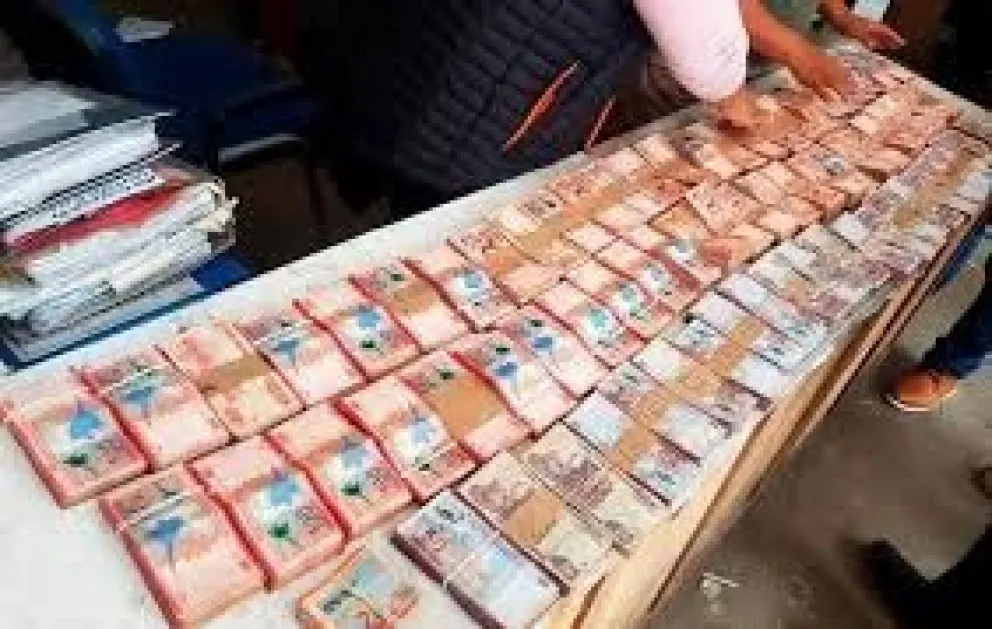
Police arrested seven people on Sunday who were traveling from Lauca Ñ carrying more than 90,000 bolivianos to support blockades in La Paz. Photo:BTV
Despite the intention of the executive secretary of the Bolivian Workers’ Central (COB), Mario Argollo, to distance himself from former president Evo Morales and to rule out the financing of the road blockades with resources from Chapare, several operations point to direct support coming from Lauca Ñ, from where not only money is being sent to the blockaders, but also people who arrive to reinforce the protests, mainly in the department of La Paz.
In the operations in which vehicles were intercepted, authorities found individuals originating from that Cochabamba province, where Morales has taken refuge in order to avoid his arrest on allegations of aggravated human trafficking, following a relationship he allegedly maintained with an underage girl.
Added to this is an instruction issued by peasant organizations directing blockaders to allow passage to vehicles transporting money, logistical support, and personnel intended to reinforce blockade points. The blockades were called by the COB and carried out by peasant federations affiliated with that organization, which are demanding the resignation of President Rodrigo Paz and have kept the department of La Paz encircled for 41 days.
Between May 13 and the first week of June, the Bolivian Police seized more than 5 million bolivianos and arrested nine people in various operations. Authorities allege that the funds were intended to finance the blockades and mobilizations demanding the president’s resignation.
On June 8, three days before Argollo denied collaboration and support from Chapare, a police operation carried out in Oruro intercepted vehicles arriving from Lauca Ñ carrying people who were allegedly on their way to reinforce blockade points in La Paz, as well as credentials, Wiphala flags, and permits allowing passage through the blockade sites.
The commander of the Special Force to Fight Crime (FELCC), Marcelo Mercado, reported that the vehicles were bound for La Paz and that officers found 90,000 bolivianos, as had been verified on previous occasions when vehicles carrying people from Chapare were detained for the same purpose: supporting the road blockade points that have now lasted for 41 days.
These recurring incidents detected by the Police, in which buses originate from Lauca Ñ—where Morales remains sheltered to avoid arrest on allegations of aggravated human trafficking stemming from a relationship with an underage girl—demonstrate, according to authorities, the former president’s direct participation in these mobilizations.
Mercado reported that last Sunday, “two vehicles were intercepted: a minibus carrying three male individuals from the province of Lauca Ñ in Cochabamba, who were found in possession of Wiphala flags and fuel, and whose final destination was the city of La Paz in order to support the blockade,” according to Valle Alto Noticias.
He further stated that several documents, records, and credentials were found and are already being investigated by the Public Prosecutor’s Office and the Special Investigations Unit of the FELCC in the city of La Paz.
“At the same location, together with those individuals, a pickup truck was also detained carrying between three and four people—one woman and three men—who were transporting more than 90,000 bolivianos from Cochabamba to Oruro,” he said.
He added that the seven detainees have been placed at the disposal of the Public Prosecutor’s Office on charges of money laundering and that authorities are awaiting the judge’s decision to determine the course of the investigations that will follow.
This is not the first time authorities have detected the presence of residents from Chapare. A document issued by the Special Federation of Peasant Workers of Cochabamba bears the heading “Authorization for Circulation Through Blockade Points.”
The document, signed by several union leaders, instructs blockaders to allow passage to vehicles carrying “support and assistance to the peasants stationed at the blockade points and participating in the mobilization of the Six Federations of the Cochabamba Tropics, destined for the city of La Paz, departing on June 2, 2026,” according to the directive.
That instruction acknowledges that the Six Federations of the Cochabamba Tropics are actively participating in the blockades, as reflected in complaints made by heavy transport drivers. Their leader, Marcelo Cruz, reported the presence of coca growers from the Cochabamba tropics on the highway to Desaguadero, where at least 20,000 vehicles are stranded, and on the old Santa Cruz highway, where he also reported the presence of coca growers at newly established blockade points.
Likewise, during the blockade carried out in Río Abajo and surrounding areas, local residents reported the presence of coca growers who, according to those accounts, pressured residents with threats to join the blockades and offered cash payments.
In El Alto, former congressman Feliciano Vegamonte; Dieter Mendoza, vice president of the Coordinating Committee of the Six Federations of the Cochabamba Tropics; Vicente Choque; and Wilma Colque, both natives of the Cochabamba Tropics, were reportedly seen on multiple occasions participating in public assemblies and taking decisions regarding the direction of the protests.
In addition, Yesenia Vargas, former executive secretary of the Carrasco Federation in the Cochabamba tropics and an ally of Morales, was arrested while allegedly coordinating the protests in La Paz. She was ordered held at the Miraflores Orientation Center for six months while the investigations continue.
Por Germaine Barriga Velarde, Vision 360:
Conflicto social
Mientras Argollo intenta marcar distancia de Morales y de los bloqueos, el apoyo logístico y económico llega desde Lauca Ñ
A pesar de los esfuerzos del máximo dirigente de la COB por mostrar que el bloqueo de carreteras se sostiene con los recursos de los sectores movilizados, desde Lauca Ñ, donde se refugia el expresidente Evo Morales, llega dinero, apoyo y cocaleros para reforzar los puntos de bloqueo.
La Policía aprehendió el domingo a siete personas que venían de Lauca Ñ en posesión de más de 90 mil Bs para apoyar los bloqueos en La Paz. Foto:BTV
A pesar de la intención del secretario ejecutivo de la Central Obrera Boliviana (COB), Mario Argollo, de marcar distancia del expresidente Evo Morales y descartar el financiamiento del bloqueo de carreteras con recursos del Chapare, algunos operativos muestran un apoyo directo desde Lauca Ñ, desde donde no solo se envía dinero para los bloqueadores, sino también personas que llegan a reforzar las protestas, principalmente en el departamento de La Paz.
En los operativos en los que fueron interceptados vehículos, se encontraban personas provenientes de esa provincia cochabambina, donde se refugia Morales para evitar su aprehensión por el presunto delito de trata de personas agravada, tras haber mantenido una relación con una menor de edad.
A ello se suma una instrucción de organizaciones campesinas para que los bloqueadores dejen pasar a los vehículos que trasladan dinero, apoyo logístico y personas para respaldar los puntos de bloqueo, instruidos por la COB y ejecutados por las federaciones de campesinos afiliadas a esa organización, que exigen la renuncia del presidente, Rodrigo Paz, y mantienen al departamento de La Paz cercado desde hace 41 días.
Entre el 13 de mayo y la primera semana de junio, la Policía Boliviana logró la incautación de más de 5 millones de Bs y la aprehensión de nueve personas en distintos operativos, presuntamente destinados al financiamiento de los bloqueos y movilizaciones que exigen la renuncia del presidente.
El pasado 8 de junio, tres días antes de que Argollo negara la colaboración y el apoyo desde el Chapare, un operativo policial realizado en Oruro interceptó vehículos provenientes de Lauca Ñ con personas que venían a reforzar los puntos de bloqueo en La Paz, además de credenciales, wiphalas y permisos para atravesar los puntos de bloqueo.
El comandante de la Fuerza Especial de Lucha Contra el Crimen (FELCC), Marcelo Mercado, informó que los vehículos tenían como destino La Paz y que se encontraron 90 mil Bs, tal como se verificó en anteriores oportunidades, cuando fueron detenidos vehículos con personas provenientes del Chapare con el mismo objetivo: respaldar los puntos de bloqueo de carreteras que hoy se extienden por 41 días.
Estos hechos recurrentes detectados por la Policía, en los que los buses provienen de Lauca Ñ, donde Morales se encuentra resguardado para evitar su aprehensión por el presunto delito de trata de personas agravada por una relación con una menor de edad, muestran la participación directa del expresidente en estas movilizaciones.
Mercado informó que el pasado domingo “fueron interceptados dos vehículos, un minibús en el que se hallan tres personas de sexo masculino, las mismas que eran de la ciudad de Cochabamba, de la provincia de Lauca Ñ, y que en sus pertenencias tenían wiphalas y combustible, además de tener como destino final la ciudad de La Paz para apoyar el bloqueo”, informó Valle Alto Noticias.
Precisó que se encontraron varios documentos, actas y credenciales que ya están siendo investigados por el Ministerio Público y la Oficina de Investigaciones Especiales de la FELCC de la ciudad de La Paz.
“Ahí mismo, junto a esas personas, se ha detenido una camioneta donde había entre tres y cuatro personas, una mujer y tres varones, las cuales portaban más de 90 mil Bs, los cuales estaban siendo trasladados desde Cochabamba hasta Oruro”, informó.
Dijo que los siete aprehendidos han sido puestos a disposición del Ministerio Público por legitimación de ganancias ilícitas y que se está a la espera de las acciones del juez para determinar el curso de las investigaciones que se realizarán.
Esta no es la primera vez que se logra detectar la presencia de habitantes del Chapare. Un documento emitido por la Federación Especial de Trabajadores Campesinos de Cochabamba lleva el rótulo de “Autorización de circulación por los puntos de bloqueo”.
El documento, que lleva la firma de varios dirigentes, instruye a los bloqueadores a dar paso a vehículos que llevan “apoyo y asistencia a los campesinos que se encuentran en los puntos de bloqueo participando en la movilización de las 6 Federaciones del Trópico de Cochabamba con destino a la ciudad de La Paz, partiendo el 2 de junio de 2026”, sostiene la instrucción.
Esa instrucción reconoce que las 6 Federaciones del Trópico de Cochabamba participan de forma activa en los bloqueos, como reflejan las denuncias hechas por los choferes del transporte pesado, cuyo dirigente, Marcelo Cruz, reportó la presencia de cocaleros del trópico de Cochabamba en la carretera a Desaguadero, donde se encuentran al menos 20 mil vehículos atrapados, y en la carretera antigua de Santa Cruz, donde también reportó la presencia de cocaleros en nuevos puntos de bloqueo.
Mientras que, durante el bloqueo realizado en Río Abajo y zonas aledañas, los vecinos también reportaron la presencia de cocaleros, quienes obligaban con amenazas a los habitantes a sumarse a los bloqueos y ofrecían pagos de dinero.
En El Alto, el exdiputado Feliciano Vegamonte; Dieter Mendoza, vicepresidente de la Coordinadora de las Seis Federaciones del Trópico de Cochabamba; Vicente Choque y Wilma Colque, oriundos del Trópico de Cochabamba, fueron vistos en reiteradas oportunidades participando en cabildos y tomando decisiones respecto al curso de las protestas.
Además, la exejecutiva de la Federación Carrasco del trópico cochabambino, Yesenia Vargas, afín a Morales, fue aprehendida cuando coordinaba las protestas en La Paz y fue recluida en el Centro de Orientación de Miraflores por seis meses, mientras continúan las investigaciones.
 Bolivian Thoughts | Pensamientos Bolivianos (Bilingual/Bilingüe)
Leave a comment