By Sumando Voces, Erbol:
IN THE AMAZON

This story has a lot to do with soccer, cacao, and bees. It all began in 2015, when fires reached massive proportions, leaving devastation and sorrow in the Bolivian Amazon.
At that time, soccer was already bringing together the youth of the Medio Monte community, located about 35 kilometers from Riberalta. There, between games, the idea emerged to do something to stop the destruction of the forest.
The soccer team, called Young Reforesters, was the starting point to make their dreams a reality. However, the first step wasn’t planting trees, but raising bees, because these sweet insects, which pollinate flowering plants and allow their reproduction and diversification, had perished in the fires.
In November 2015, the Association of Young Reforesters in Action (Ajora) was born. It started with the installation of apiaries and the production of honey for sale, and later moved on to the cultivation of cacao, copoazú, and other fruits.
Ten years have passed since then, and today Ajora measures its success in hectares restored, quintals of cacao collected, liters of honey sold, awards won, and of course, goals scored on the field, because soccer remains the key to community bonding.
Not everything was sweet like honey. In fact, during the first three years, fires destroyed every single one of the agroforestry systems recovered by the youth, recalls Luis Antonio Peña, one of the founders. But then they learned from Don Benjamín Peña, Luis Antonio’s father, that fire could only be stopped with fire—through firebreak belts.
Despite that, last year, during what was labeled “the worst environmental disaster” in Bolivia’s history, several hectares of crops and many apiaries were burned. And this year, the plots were hit by floods that mostly affected the cacao plantations in the lowlands, explains Heydi Teco López, an agronomist working at CIPCA and a key figure in the project.
Even so, in 2024 they collected over 100 quintals of cacao beans and sold 120 liters of honey. In the tally of losses, or better said, disappearances, 25 hives were burned.

The beginnings
Luis Antonio Peña is now a forestry engineer committed to the cause, and in an interview with Sumando Voces he tells how it all started: “Since my father likes soccer, we formed a team and called it Reforester. Then, with CIPCA’s support, we reached out to the communities and other people to form a youth group to protect the Amazon and reforest.”
Benjamín Peña, Luis Antonio’s father, is the protagonist of the documentary Don Benjamín, which premiered last year to international acclaim and tells the story of his fight to preserve the forest by stopping fires using the firebreak belt he himself invented.
The youth work on degraded soil. Luis Antonio explains that there’s a plant that grows after the land has been used for maize, rice, and other crops, “leaving the soil poor in nutrients, and we are reforesting, recovering the degraded land.”
Heydi Teco López explains that the main goal was to restore degraded areas, but when they saw that pollinating bees were disappearing, “they started pushing for the recovery of native bees.”
She says the first support came from UNITAS, through a project to fund the apiaries, and then they moved on to “recovering degraded areas with diverse agroecological practices to implement agroforestry systems.” The project is currently supported by CIPCA and Medicus Mundi.
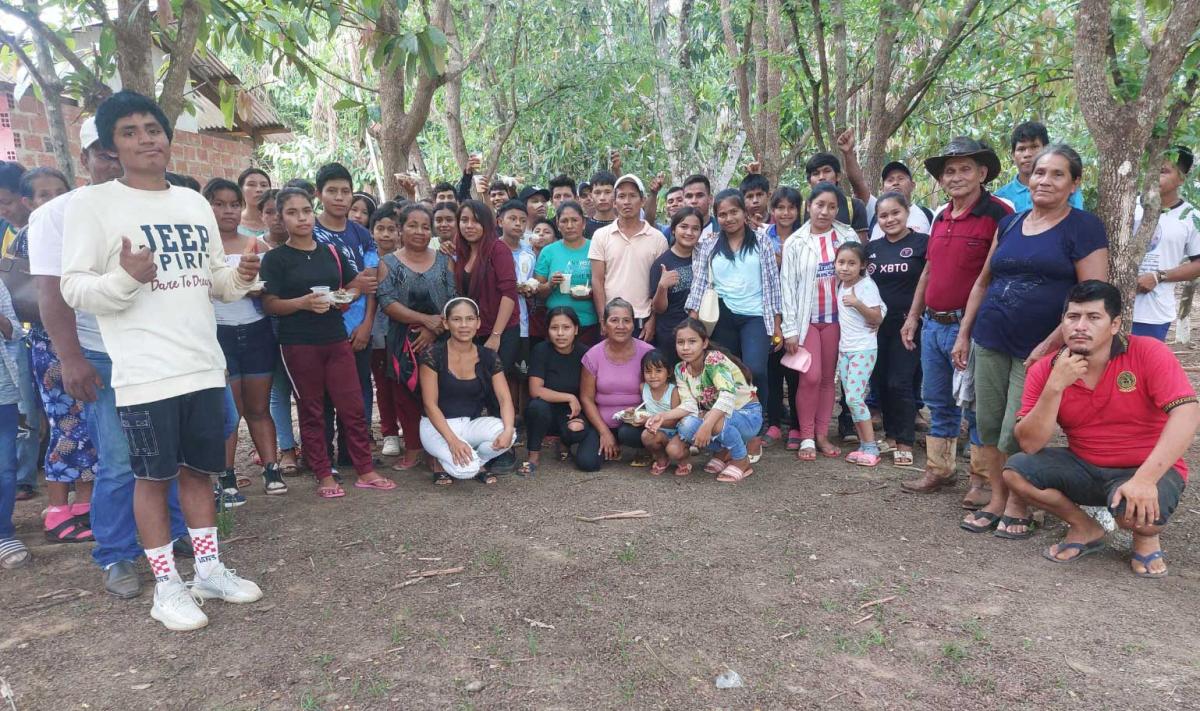
Ajora began with about 35 youth from five communities, and now there are 125 members from six communities—four in Beni and one in Pando. Sixty percent are women and 40% men. Each youth is in charge of a quarter to half a hectare, meaning they collectively care for and protect around 70 hectares.
The communities that make up Ajora are San Juan del Urupú, Medio Monte, Bella Flor, San Ariel, Nazareth, and Carmen Alto, according to Luis Antonio.
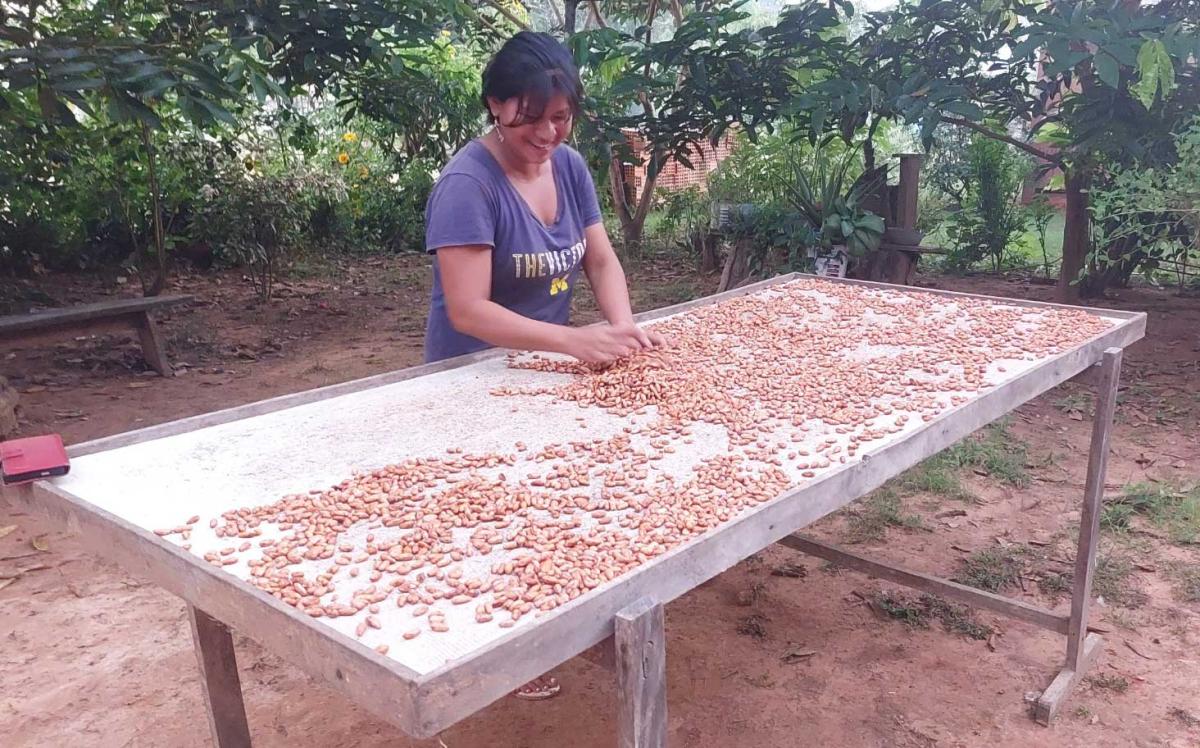
From production, they moved to marketing through local product fairs, starting with honey. But now, the product that brings in the most income is cacao. The youth collect the cacao beans and transform them into artisanal paste to sell in the local market.
Then they started producing copoazú, though on a smaller scale, and the next step is to produce asaí.
The money raised by the association is distributed among the communities and generally reinvested in tools and improvements to keep production going.
2021, year of awards
The first major encouragement came in 2021, when the youth presented a cacao sample that won first place in the 2nd edition of the “Salon of Cacao and Chocolate–Bolivia 2021,” organized by the government. This allowed them to represent the country at the world cacao event in Paris.
“The sample was the result of several years of work in recovering degraded areas, and in the end, it was a light on the path that encourages you to say yes, it’s possible to work on restoring degraded areas,” says Heydi Teco.
And the second major recognition also came in 2021, when Ajora was one of the 10 winners of the Equator Prize awarded by the United Nations Development Programme (UNDP). The prize money was invested in the cacao collection system.
A reason to stay
Ajora not only protects the environment—it’s also showing youth that migrating isn’t the best idea because, as Luis Antonio says, it’s also hard to find a job in the city.
“We created this project so young people wouldn’t have to migrate to the city, and so they would know how to generate their own income,” says Luis Antonio.
Now, while they protect the forest, they also generate income and never stop playing soccer. They have a community league, and the Young Reforesters team shines both on the field and in the forest.
Por Sumando Voces, Erbol:
[Si quiere escuchar el resumen, use este link, gracias]
EN LA AMAZONÍA
Esta historia tiene mucho que ver con el fútbol, el cacao y las abejas. Todo empezó el año 2015, cuando los incendios tomaron grandes dimensiones dejando devastación y tristeza en la Amazonía boliviana.
Para entonces, el fútbol unía a los jóvenes de la comunidad de Medio Monte, ubicada a unos 35 kilómetros de Riberalta. Ahí, entre partido y partido, surgió la idea de hacer algo para frenar la depredación del bosque.
El equipo de fútbol, llamado Jóvenes Reforestadores, fue el punto de partida para hacer realidad los sueños. Sin embargo, no había que empezar plantando árboles, sino criandoabejas, porque estos dulces insectos, que polinizan las plantas con flores y permiten su reproducción y diversificación, habían perecido con el fuego.
En noviembre de 2015 nació la Asociación de Jóvenes Reforestadores en Acción (Ajora), que arrancó con la instalación de apiarios y la producción de miel para su comercialización, para luego pasar a la producción de cacao, copoazú y otros frutos.
Han pasado 10 años desde entonces y en la actualidad Ajora cuenta sus logros en hectáreas recuperadas, quintales de cacao acopiado, litros de miel vendidos, premios recibidos y, por supuesto, goles convertidos en la cancha, porque el fútbol sigue siendo el factor de confraternidad.
No todo fue sabor a miel. De hecho, los tres primeros años los incendios arrasaron con “todingos” los sistemas agroforestales recuperados por los jóvenes, recuerda Luis Antonio Peña, uno de los fundadores. Pero luego aprendieron de don Benjamín Peña, padre de Luis Antonio,que el fuego solo se podría frenar con fuego, a través de las fajas cortafuegos.
Pese a eso, el año pasado, cuando se registró “el peor desastre ambiental” de la historia de Bolivia, se quemaron varias hectáreas de producción y muchos apiarios.Y este año, los predios fueron golpeados por las inundaciones, que afectaron sobre todo a las plantaciones de cacao que están en el bajío, explica Heydi Teco López, una ingeniera agrónoma que trabaja en CIPCA y que es clave en este proyecto.
Pese a eso, el 2024 acopiaron más de 100 quintales de grano de cacao y vendieron 120 litros de miel. En el recuento de los daños aparecen, o mejor dicho, desaparecen 25 colmenas, que fueron quemadas.
Los inicios
Luis Antonio Peña es ahora un ingeniero forestal comprometido con la causa y, en entrevista con Sumando Voces cuenta cómo empezó todo. “Como a mi padre le gusta el fútbol hicimos un equipo de fútbol y lo llamamos Reforestador. Luego, con apoyo de CIPCA llamamos a las comunidades y a las demás personas para formar un grupo de jóvenes para cuidar la Amazonía y reforestar”.
Bejamín Peña, el padre de Luis Antonio, es el protagonista del documental Don Benjamín, que fue estrenado el año pasado con éxito internacional y que relata su lucha por preservar el bosque mientras frena los incendios con la faja cortafuegos inventada por el él mismo.
Los jóvenes trabajan sobre suelo degradado. Luis Antonio relata que hay una planta que crece luego de que la tierra fue usada para las plantaciones de maíz, de arroz y otros productos y que “deja el suelo pobre en nutrientes y nosotros lo estamos reforestando, recuperando la tierra degradada”.
Heydi Teco López explica que el principal objetivo era recuperar las áreas degradadas, pero cuando vieron que las abejas polinizadoras estaban desapareciendo, “ellos empezaron impulsando la recuperación de las abejas nativas”.
Cuenta que el primer respaldo les llegó a UNITAS, con un proyecto para financiar los apiarios, para luego pasar a “la recuperación de las áreas degradadas con las diversas prácticas agroecológicas para la implementación de los sistemas agroforestales”. Actualmente, el proyecto es respaldado por CIPCA y Medicus Mundi.
Ajora arrancó con unos 35 jóvenes de cinco comunidades, pero ahora son 125 integrantes de seis comunidades, cuatro de las cuales están en Beni y una en Pando. El 60% son mujeres y el restante 40% son hombres. Cada uno de los jóvenes está a cargo de cuarta a media hectárea, lo que quiere decir que entre todos cuidan y protegen unas 70 hectáreas.
Las comunidades que conforman Ajora son San Juan del Urupú, Medio Monte, Bella Flor, San Ariel, Nazareth y que es este Carmen Alto, cuenta Luis Antonio.
De la producción se pasó a la comercialización en ferias productivas, empezando por la miel, aunque ahora, el fruto que más recursos les genera es el cacao. Los jóvenes acopian el grano de cacao y lo transforman en pasta artesanal para llevarla al mercado local.
Luego pasaron a la producción de Copoazú, aunque en escala menor y el próximo pasado es producir asaí.
El dinero recolectado por la asociación se reparte entre las comunidades y por lo general está orientado a reinvertirlo en herramientas y mejoras para continuar produciendo.
2021, año de premios
El primer gran aliciente llegó en 2021, cuando los jóvenes presentaron una muestra de cacao que obtuvo el primer lugar en la 2ª versión del “Salón de Cacao y Chocolate-Bolivia 2021”, organizado por el Gobierno, lo que les habilitó para representar al país en el evento mundial del cacao en París.
“La muestra era resultado de un trabajo de varios años de recuperación de áreas degradadas y al final fue una luz en el camino que te impulsa a decir que sí, es posible trabajar en la recuperación de las áreas degradadas”, señala Heydi Teco.
Y el segundo gran reconocimiento también llegó el 2021, cuando Ajora fue uno de los 10 ganadores del premio Ecuatorial del Programa de Naciones Unidas para el Desarrollo (PNUD). El dinero del galardón fue invertido en el sistema de acopio del cacao.
Un motivo para quedarse
Ajora no solo protege el medio ambiente, sino que está demostrando a los jóvenes que no es una buena idea migrar porque, según dice Luis Antonio, también es difícil conseguir trabajo en la ciudad.
“Nosotros hicimos (este proyecto) para que los jóvenes no tengan que emigrara la ciudad y que ellos mismos sepan cómo generar sus propios recursos”, señala Luis Antonio.
Ahora, mientras cuidan el bosque, generan recursos y no dejan de jugar al fútbol. Tienen una liga comunal y el equipo de los Jóvenes reforestadores se luce en la cancha y en el bosque.


Leave a comment