By El Diario:
Agricultural Producers Warn
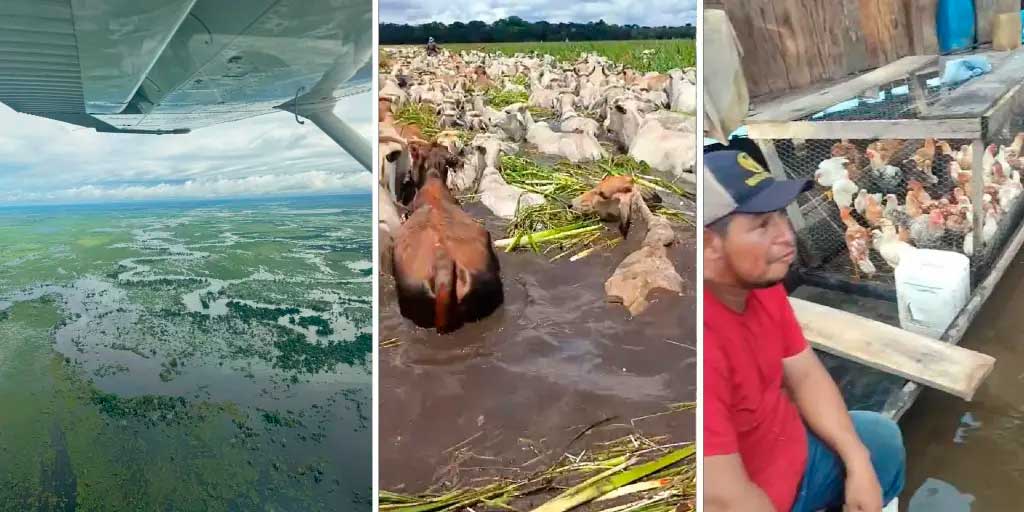
Due to the impact of climate-related issues, public policies, and an economic situation marked by a shortage of dollars and fuel supply failures, the vice president of the Eastern Agricultural Chamber (CAO), Yamil Nacif, stated that if urgent measures are not taken, Bolivia is on a path toward food imports.
Nacif warned that if the government does not implement corrective measures to support and encourage the productive sector, the future of this industry could be catastrophic—meaning Bolivia could become dependent on imports, a situation that could have significant economic and social consequences.
“This is what we don’t want—from being a milk-producing country to having to import it because there are no conditions to sustain the business,” the executive explained in an interview with Canal Rural.
The leader emphasized that the state is not providing the necessary conditions for producers to continue working profitably. “It is very difficult, very difficult with these policies that are not opening up to the productive system,” Nacif stated.
The productive sector has been calling for the reactivation of soybean and beef exports, which are crucial for bringing in foreign currency to the country.
Additionally, the leader explained that the food production chain relies on its primary link: the producers, who generate milk, meat, and grains. Without these products, there is no transportation, no processing industry, and no merchants offering goods in the markets.
“If we do not ensure that this chain grows instead of shrinking, as it has in recent years, the final product will always be more expensive,” the executive stressed, adding that if there is nothing to offer, “it will have to be replaced with imports or smuggling.”
The vice president of the CAO also pointed out the challenges faced by producers, who are struggling with high production costs, a shortage of foreign currency, and transportation issues, further driving up expenses. (Santa Cruz, Canal Rural)
Por El Diario:
Agropecuarios aseguran
Ante la afectación por temas climáticos, las políticas públicas y la coyuntura económica marcada por la falta de dólares y las fallas en el abastecimiento de combustible, el vicepresidente de la Cámara Agropecuaria del Oriente (CAO), Yamil Nacif, señaló que, si no se asumen medidas urgentes, Bolivia se encamina a la importación de alimentos.
Nacif advirtió que, si el Gobierno no aplica medidas correctivas que apoyen e incentiven al aparato productivo, el futuro de este sector podría ser catastrófico, es decir, Bolivia podría depender de la importación, una situación que podría generar un gran impacto económico y social.
“Es lo que no queremos, de ser un país productor de leche a que se tenga que importar porque no hay condiciones para mantenerlo en el negocio”, ejemplificó el ejecutivo en entrevista con Canal Rural.
El dirigente resaltó que el Estado no está proveyendo las condiciones necesarias para que los productores puedan seguir trabajando de manera rentable. “Es muy difícil, es muy difícil con estas políticas que no se están abriendo al sistema productivo”, expresó Nacif.
Desde el sector productivo vienen demandando la reactivación de las exportaciones de soya y de la carne de res, clave para el ingreso de dólares al país.
Además, el dirigente explicó que la cadena de producción de alimentos depende en su primer eslabón de los productores, quienes generan leche, carne y granos. Sin estos productos, no hay transporte, no hay industria procesadora ni comerciantes que ofrezcan en los mercados.
“Si no nos preocupamos porque esta cadena crezca y no disminuya como ha estado estos años, el producto final siempre va a estar más caro”, remarcó el ejecutivo, acotando que, si no hay qué ofertar, se tiene que suplir esto “con importaciones o con contrabando”.
El vicepresidente de la CAO también señaló la complejidad que enfrentan los productores, quienes también lidian con altos costos de producción, escasez de divisas y problemas con el transporte, que aumentan aún más los costos. (Santa Cruz, Canal Rural)
https://www.eldiario.net/portal/2025/04/03/bolivia-se-encamina-a-la-importacion-de-alimentos/
 Bolivian Thoughts | Pensamientos Bolivianos (Bilingual/Bilingüe)
Leave a comment