
By Vision 360:
Mining contamination
Three Indigenous organizations from Oruro, La Paz, and Potosí will arrive in La Paz this Friday to participate in a public hearing at the ALP. They will denounce the contamination affecting their residents as a consequence of mining.
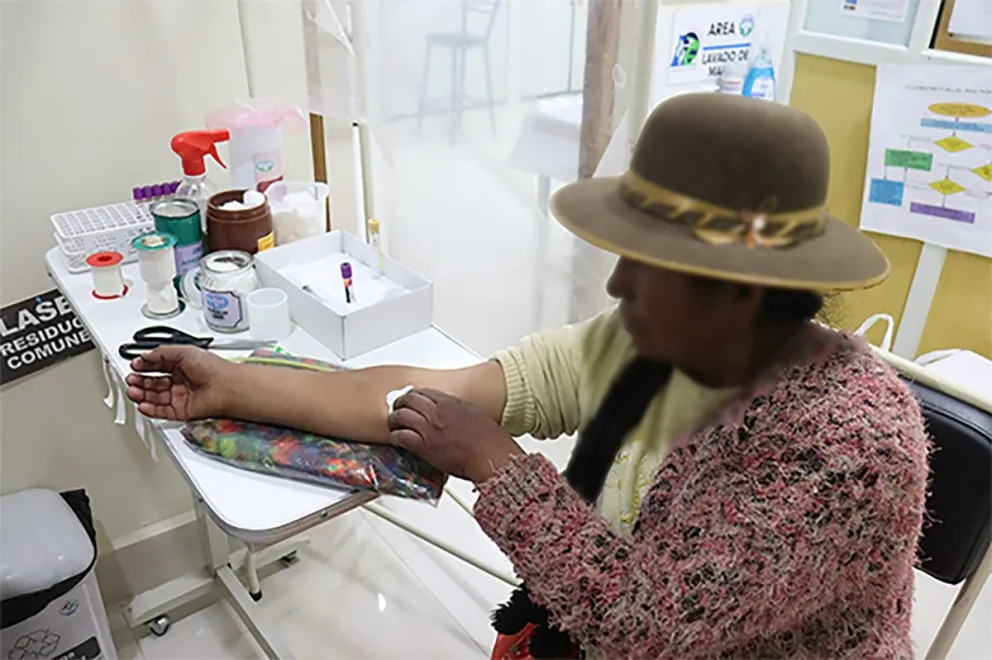
A highland resident undergoes an analysis to measure mercury damage. PHOTO: Cenda
Three Indigenous peoples affected by mining activity in Bolivia will arrive this Friday, March 21, at the Plurinational Legislative Assembly (ALP) to denounce the severe environmental contamination affecting their territories. They also demand the immediate enforcement of constitutional mandates that protect their rights.
“In recent years, mining activity in various regions of Bolivia has reached excessive levels, prioritizing economic interests over life, the health of our populations, and the integrity of our Indigenous territories. We have been witnesses and direct victims of the severe consequences of this extractivist model,” state the affected communities.
There are at least three cases in the country that are causing concern. Those affected have decided to organize as a bloc to make their demands heard.
In Oruro, in the Ayllu San Agustín de Puñaca, the soil and water have been contaminated for decades due to mining, forcing residents to file a Popular Action. As a result, Constitutional Plurinational Ruling No. 1471/2022-S-3 was issued, but it has not been enforced by the relevant state authorities. Blood studies conducted on community members revealed alarming levels of cadmium, lead, and arsenic, far exceeding international standards.
Likewise, in the north of La Paz, the Indigenous peoples of the Central of Indigenous Peoples of La Paz (CPILAP) face river and tributary contamination due to illegal gold mining. Mercury used in these activities has been detected in the population’s bodies, affecting 75% of those tested.
In Potosí, the Community of Cantumarca faces a similar situation. Air pollution from nearby tailings dams has caused concerning lead levels in the blood, especially among children and the elderly—an issue even denounced by the Ombudsman’s Office.
The affected communities demand the effective enforcement of the State Political Constitution, the Environmental Law, and international treaties such as ILO Convention 169. They argue that these legal instruments guarantee their right to self-determination and to prior, free, and informed consultation before any extractive activity in their territories.
Despite Constitutional Plurinational Ruling No. 1471/2022-S-3 and other resolutions favoring their rights, authorities have failed to implement them, leaving affected populations in extreme vulnerability.
In response to this crisis, Indigenous peoples are demanding the immediate enforcement of rulings and resolutions, the creation of a Compensation and Comprehensive Reparations Fund financed by responsible companies, and the establishment of a joint monitoring commission with Indigenous organizations, the Ombudsman’s Office, and international bodies.
The communities also warn about the lack of oversight and political will in addressing these violations, which severely threaten their health and collective rights. They stress that continuing the extractivist model is unsustainable and contradicts the principles of Living Well enshrined in the Constitution.
Finally, the organizations call on Bolivian society, the media, and human rights organizations to shed light on this issue and demand concrete responses from the state. Environmental justice and respect for Indigenous rights cannot continue to be postponed.
Por Vision 360:
Contaminación minera
Tres organizaciones indígenas de Oruro, La Paz y Potosí llegarán este viernes a La Paz para participar de una audiencia pública en la ALP. Denunciarán la contaminación que sufren sus habitantes como efecto de la minería.
Pobladora del altiplano se realiza un análisis para medir el daño por mercurio. FOTO: Cenda
Tres pueblos indígenas afectados por la actividad minera en Bolivia llegarán este viernes 21 de marzo a la Asamblea Legislativa Plurinacional (ALP) para denunciar la grave contaminación ambiental que afecta a sus territorios. También exigen el cumplimiento inmediato de los mandatos constitucionales que protegen sus derechos.
“En los últimos años, la actividad minera en diversas regiones de Bolivia ha alcanzado niveles desmedidos, priorizando intereses económicos sobre la vida, la salud de nuestras poblaciones y la integridad de nuestros territorios indígenas. Nosotros hemos sido testigos y víctimas directas de las graves consecuencias de este modelo extractivista”, señalan las comunidades afectadas.
En el país hay al menos tres casos que causan preocupación. Los afectados han decidido organizarse en un bloque para hacer escuchar sus demandas.
En Oruro, en el Ayllu San Agustín de Puñaca, los suelos y aguas han sido contaminados por décadas debido a la minería, situación que obligó a los pobladores a interponer una Acción Popular. Como resultado, se emitió la Sentencia Constitucional Plurinacional N° 1471/2022-S-3, la cual no ha sido cumplida por las entidades competentes del Estado. Estudios realizados en la sangre de los comunarios revelaron presencia de cadmio, plomo y arsénico en niveles alarmantes, superando ampliamente los estándares internacionales.
Asimismo, al Norte de La Paz, los pueblos indígenas que conforman la Central de Pueblos Indígenas de La Paz (CPILAP), enfrentan la contaminación de los ríos y afluentes por la minería aurífera ilegal. El mercurio utilizado en estas actividades ha sido detectado en el cuerpo de la población, afectando al 75% de las personas evaluadas.
En Potosí, en la Comunidad de Cantumarca, enfrentan un panorama similar. La contaminación del aire debido a las proximidades de los diques de colas, ha provocado niveles preocupantes de plomo en la sangre, especialmente en niños y adultos mayores, extremo que ha sido denunciado incluso por la Defensoría del Pueblo.
Las comunidades afectadas demandan la aplicación efectiva de la Constitución Política del Estado, la Ley de Medio Ambiente y tratados internacionales como el Convenio 169 de la OIT. Señalan que estos instrumentos garantizan su derecho a la autodeterminación y a la consulta previa, libre e informada antes de cualquier actividad extractiva en sus territorios.
A pesar de la Sentencia Constitucional Plurinacional N° 1471/2022-S-3 y otras resoluciones favorables a los derechos de estas comunidades, las autoridades competentes han fallado en su implementación, dejando a las poblaciones afectadas en una situación de vulnerabilidad extrema.
Ante esta crisis, los pueblos indígenas exigen el cumplimiento inmediato de las sentencias y resoluciones, la creación de un Fondo de Compensación y Reparación Integral financiado por las empresas responsables, y la conformación de una comisión mixta de seguimiento con la participación de organizaciones indígenas, la Defensoría del Pueblo y organismos internacionales.
Las comunidades también alertan sobre la falta de fiscalización y voluntad política frente a estas vulneraciones, lo que pone en grave riesgo su salud y derechos colectivos. Advierten que la continuidad del modelo extractivista es insostenible y atenta contra los principios del Vivir Bien establecidos en la Constitución.
Finalmente, las organizaciones llaman a la sociedad boliviana, medios de comunicación y organismos de derechos humanos, a visibilizar esta problemática y exigir respuestas concretas por parte del Estado. La justicia ambiental y el respeto a los derechos de los pueblos indígenas no se pueden seguir postergando.

 Bolivian Thoughts | Pensamientos Bolivianos (Bilingual/Bilingüe)