
By Fernando Chávez, Visión 360:
The technical and financial clauses of the contracts favor the companies Uranium and CBC, according to the analysis.
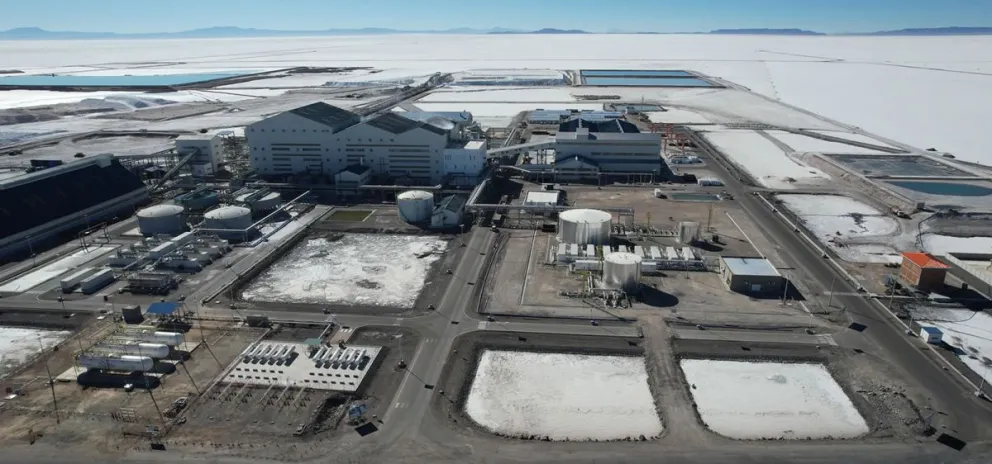
A lithium industrialization plant. Photo: YLB
The Jubileo, Milenio, and Solón foundations, along with the Geneva Club (CDG) and the Bolivia Documentation and Information Center (Cedib), have raised a series of concerns about the contract signed between the state-owned Yacimientos de Litio Bolivianos (YLB) and the Russian company Uranium One Group, as well as the Chinese firm Hong Kong CBC. They assert that the contracts are “incomplete, confusing, and inconsistent.” The state entity and the Executive Branch have yet to respond.
Additionally, they are requesting that the Plurinational Legislative Assembly (ALP) “conduct a thorough analysis of each contract clause with the great responsibility that corresponds to it.”
The cited institutions issued a 13-point “public statement” this Tuesday, warning that “the contracts and their annexes submitted to the ALP are incomplete, confusing, and inconsistent.” They argue that their presentation hinders proper understanding, and their approval as a package raises concerns about transparency.
“The ALP must conduct a thorough analysis of each contract clause and, with the great responsibility that corresponds to it, should not approve the contracts until all concerns and objections are resolved, thereby safeguarding national interests,” concludes the statement.
It further states: “Once again, we confirm that YLB’s improvisation and lack of experience in negotiating natural resource contracts, along with restrictive regulations, could lead to another failure. Given the long-term nature of these contracts (over 30 years), this situation is reminiscent of other failed projects from the past 19 years.”
These are all the concerns and objections to the contracts:
- The contracts and their annexes submitted to the ALP are incomplete, confusing, and inconsistent. Their presentation hinders proper understanding, and their approval as a package raises concerns about transparency.
- Despite the fact that the contracted companies have not demonstrated industrial experience in developing the DLE technologies they intend to implement, they have been granted the most lithium-rich area of the Uyuni Salt Flat. This could condition or limit the future participation of other companies with greater expertise in lithium extraction processes.
- Contrary to the objective of securing agreements with strategic partners who would provide risk investments for the productive development of lithium and other evaporitic resources, these contracts imply that financial risks will be borne by the State. YLB commits to reimbursing foreign companies for their investments, recoverable costs, and remuneration through lithium carbonate production, without certainty regarding its capacity for oversight, monitoring, and regulation.
- There is an inconsistency in investment costs, as Uranium’s plant presents an investment per ton of lithium carbonate that is 2.4 times higher than that in the contract with CBC, without a clear explanation.
- Yacimientos de Litio Bolivianos’ (YLB) financial projections appear to be overestimated, with lithium carbonate price expectations that do not align with current prices (below $10,000 per ton) or reasonable future forecasts. This raises serious doubts about the project’s profitability for the Bolivian State.
- The final costs of lithium production are high and unclear. The “production cost vs. sale price” indicator is excessively high compared to international and regional standards.
- The contracts’ technical and financial clauses favor Uranium and CBC, minimizing their risks and maximizing their profits, even at the expense of the profitability that should belong to YLB.
- The contracts do not adequately include crucial environmental aspects such as the origin and sustainability of freshwater supply, the energy used, chemical and industrial waste management, and the potential reinjection of residual brine into the salt flat.
- The contracts and their annexes do not provide for consultation processes to obtain Free, Prior, and Informed Consent (FPIC) from Indigenous peoples, despite the fact that impacts on freshwater sources will occur within the TCO Nor Lípez.
- The contract with CBC imposes high penalties on YLB if it fails to supply sufficient residual brine.
- The technology transfer conditions differ between the two contracts, but in both cases, they are unfavorable for the country.
- The contracts do not mention the destination of by-products generated at the plants, such as potassium, boron, magnesium, sodium, and others, which have considerable market value.
- The contracts impose restrictions that hinder a future increase in mining royalties (3%) for the department of Potosí and the producing municipalities.
Por Fernando Chávez, Visión 360:
Las cláusulas técnicas y financieras de los contratos favorecen a las empresas Uranium y CBC, dice el análisis.
Una planta de industrialización de litio. Foto: YLP
Las fundaciones Jubileo, Milenio y Solón, junto al Club de Ginebra (CDG) y el Centro de Documentación e Información Bolivia (Cedib) difundieron una serie de observaciones al contrato suscrito entre la estatal Yacimientos de Litio Bolivianos (YLB) con la empresa rusa Uranium One Group y con la china Hong Kong CBC, afirmando que son “incompletos, confusos e incongruentes”. La estatal y el Ejecutivo aún no se pronunciaron al respecto.
Además, solicitan que la Asamblea Legislativa Plurinacional (ALP) “realice un análisis exhaustivo de cada cláusula de los contratos y, con la gran responsabilidad que le corresponde”.
Las instituciones citadas emitieron este martes un “manifiesto a la opinión pública” de 13 puntos, entre los que advierten que “los contratos y sus anexos presentados a la ALP son incompletos, confusos e incongruentes”. Su presentación -señalan- dificulta una comprensión adecuada y su aprobación “en combo” genera incertidumbre sobre su transparencia.
“La ALP debe realizar un análisis exhaustivo de cada cláusula de los contratos y, con la gran responsabilidad que le corresponde, no debe aprobar los contratos hasta que todas las observaciones y cuestionamientos sean resueltos, precautelando de esta manera los intereses nacionales”, dice la conclusión del pronunciamiento.
Además, sostiene: “una vez más, constatamos que la improvisación y falta de experiencia de parte YLB en la negociación de los contratos de recursos naturales y la camisa de fuerza de las normas podrían llevarnos a una nueva frustración, por la duración de los contratos (más de 30 años), similar a lo sucedido con otros proyectos fallidos en los últimos 19 años”.
Estas son todas las observaciones y objeciones a los contratos:
- Los contratos y sus anexos presentados a la ALP son incompletos, confusos e incongruentes. Su presentación dificulta una comprensión adecuada y su aprobación “en combo” genera incertidumbre sobre su transparencia.
- A pesar de que las empresas contratadas no han demostrado tener experiencia industrial en el desarrollo de las tecnologías de EDL que pretenden implementar, se les asigna la zona más rica en concentración de litio del Salar de Uyuni, lo que podría condicionar o limitar la futura participación de otras empresas con mayor experiencia en los procesos de extracción del litio.
- Contrariando el objetivo de lograr acuerdos con socios estratégicos que aporten las inversiones de riesgo para el desarrollo productivo del litio y otros recursos evaporíticos, los referidos contratos implican que los riesgos financieros irán por cuenta del Estado, puesto que YLB se compromete a devolver a las empresas extranjeras sus inversiones, costos recuperables y remuneraciones mediante la producción de carbonato de litio y sin certeza de sus capacidades de control, seguimiento y fiscalización.
- Existe una incongruencia en los costos de inversión, ya que la planta de Uranium presenta una inversión por tonelada de carbonato de litio 2,4 veces más alta que la del contrato con CBC, sin que se ofrezca una explicación clara.
- Las proyecciones financieras de Yacimientos del Litio Bolivianos (YLB) parecen estar sobredimensionadas, con expectativas de precios del carbonato de litio que no se ajustan a los precios actuales (por debajo de 10.000 dólares por tonelada) ni a las previsiones razonables a futuro. Esto genera serias dudas sobre la rentabilidad del proyecto para el Estado Boliviano.
- Los costos finales de producción del litio son elevados y poco claros. El indicador de “costo de producción vs. precio de venta” es excesivamente alto en comparación con estándares internacionales y regionales.
- Las cláusulas técnicas y financieras de los contratos favorecen a las empresas Uranium y CBC, minimizando sus riesgos y maximizando sus ganancias, incluso a costa de la rentabilidad que le correspondería a YLB.
- Los contratos no incluyen de manera adecuada aspectos ambientales cruciales, como el origen y sostenibilidad de la provisión de agua dulce, la energía utilizada, el manejo de desechos químicos e industriales y la potencial reinyección de salmuera residual dentro del salar.
- Los contratos y sus anexos no contemplan la realización de procesos de consulta para obtener el Consentimiento Previo, Libre e Informado (CPLI) de los pueblos indígenas, a pesar de que las afectaciones a fuentes de agua dulce tendrán lugar dentro de la TCO Nor Lípez.
- El contrato con CBC impone penalidades elevadas para YLB, en caso de no poder cumplir con la provisión suficiente de salmuera residual.
- Las condiciones de transferencia de tecnología difieren en ambos contratos, pero en ambos casos resultan desfavorables para el país.
- Los contratos no mencionan el destino de los subproductos generados en las plantas, como potasio, boro, magnesio, sodio y otros, los cuales tienen un valor considerable en el mercado.
- Los contratos imponen restricciones que dificultan un futuro incremento de las regalías mineras (3%) para el departamento de Potosí y los municipios productores.

 Bolivian Thoughts | Pensamientos Bolivianos (Bilingual/Bilingüe)
One Comment Add yours