
By Unitel, Eju.tv:
Tourism companies and airlines have seen their operations affected by the current situation in Bolivia and are calling for an effective and collaborative solution with the government.
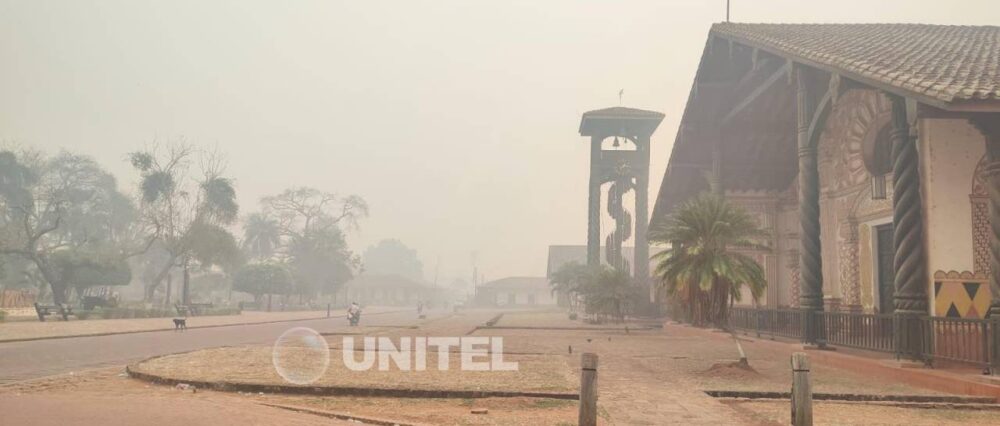
This is how the Concepción church looked in recent days, a must-stop on the Jesuit Mission circuit
The forest fires occurring in the country and the economic situation marked by the dollar shortage are halting the arrival of travelers, choking actors in the travel industry, according to the Bolivian Association of Airlines and the Bolivian Chamber of Tourism (Cabotur).
“When fires break out, we are killing our future, and the big losers will be our children and grandchildren,” said Luis Ampuero, president of Cabotur, noting that the region’s natural and tourist attractions have been devastated by the fires.
Given this, industry leaders deem it urgent to activate the ‘tourism cabinet,’ an initiative to engage with the government to revive the sector, which has already prepared reactivation proposals awaiting discussion with relevant authorities.
“We should have a preventive control plan from now on. We also need proper training for the local communities, who are part of community tourism and are the ones being affected,” said Yanela Zárate, manager of the Airline Association.
Zárate called on authorities to impose harsher penalties for arson, stating that those responsible for fires should face severe punishments, while also rehabilitating affected tourist attractions for the medium and long term.
Adding to the industry’s struggles is the lack of dollars and the obstacles to visitor flow, with the government yet to activate the promised Tourism Cabinet.
Sector representatives explained that the dollar shortage affects their ability to pay for services abroad and also limits Bolivians from traveling abroad due to banking restrictions.
Ampuero reminded that on July 16, the government announced the Tourism Cabinet, but more than two months later, they are still waiting for it to be implemented.
Por Unitel, Eju.tv:
Empresas de turismo y líneas áreas han visto afectadas sus operaciones debido a la coyuntura que atraviesa Bolivia y abogan por dar una salida efectiva y de manera conjunta con el Gobierno.
Así se veía en días pasados la iglesia de Concepción, una parada obligatoria en el circuito de las Misiones jesuíticas
Los incendios forestales que se registran en el país y la coyuntura económica del país, marcada por la falta de dólares, significan un freno a la llegada de viajeros que están asfixiando a los actores de la industria de los viajes, según expusieron desde la Asociación de Líneas Aéreas de Bolivia y la Cámara Boliviana de Turismo (Cabotur).
“Cuando se generan incendios, definitivamente nos estamos matando el futuro y ahí los grandes perdedores van a ser nuestros hijos y nuestros nietos”, manifestó Luis Ampuero, presidente de Cabotur, al referir que los atractivos turísticos y naturales de la región se han visto golpeados por el fuego.
En este sentido, consideran urgente activar el ‘gabinete turístico’, un acercamiento con el Gobierno con miras a oxigenar al sector, el cual ya maneja propuestas de reactivación que esperan ser interiorizadas con las autoridades respectivas.
“Deberíamos tener de aquí en adelante un control preventivo. Debemos tener también la capacitación adecuada con los propios comunarios, estamos hablando de turismo comunitario, y son ellos los que justamente están siendo afectados”, dijo por su parte Yanela Zárate, gerente de la Asociación de Líneas Aéreas.
Zárate exhortó a las autoridades a endurecer las penas por incendios y sostuvo que las personas malintencionadas deben recibir penas severas por el fuego causado, así como también rehabilitar los atractivos turísticos afectados, ya pensando en el mediano y largo plazo.
A eso se suma que los operadores turísticos están agobiados por la falta de dólares y las trabas al flujo de visitantes, mientras el Gobierno no activó el Gabinete que había anunciado para el rubro.
Los representantes del sector explicaron que la falta de dólares les afecta en el pago de servicios al exterior, pero también dificulta que bolivianos salgan al exterior por las restricciones en tarjetas bancarias.
Ampuero recordó que el 16 de julio el Gobierno ya había anunciado el Gabinete de Turismo, pero a más de dos meses siguen esperando que se ponga en marcha.

 Bolivian Thoughts | Pensamientos Bolivianos (Bilingual/Bilingüe)