
By ANF, Eju.tv:
Mining, Land Grabbing, and Drug Trafficking: The Main Threats to Bolivian Park Rangers
“Since the creation of Sernap, 18 park rangers have died while performing their duties in protected areas,” reads the document.
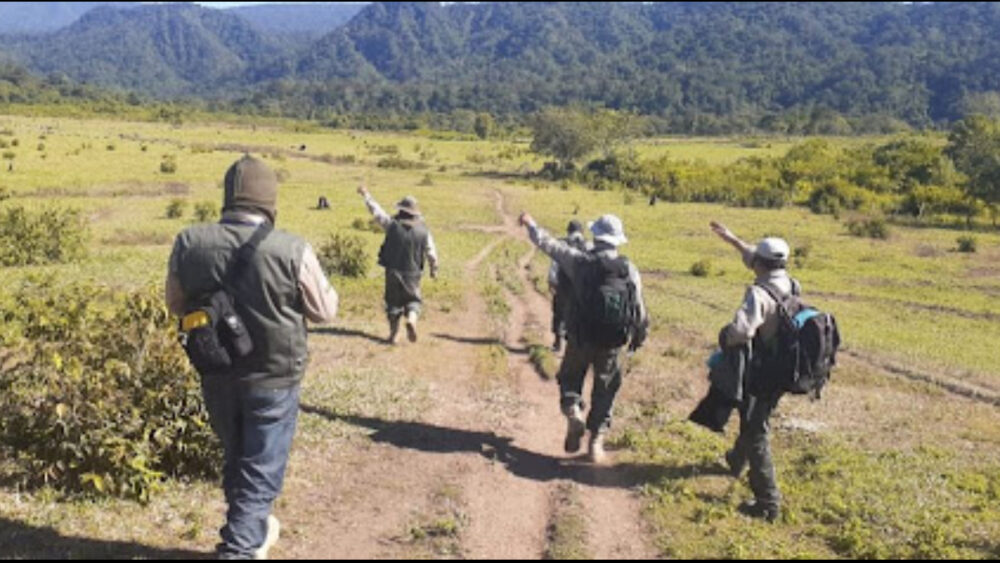
Source: ANF
“They’re going to beat them, whip them, kill them.” These are some of the threats that the park rangers of Madidi receive for fulfilling their mission to protect this natural reserve. The main actors of this harassment are miners—mainly gold miners—land invaders, and drug traffickers.
The intimidation has so far remained just words; it hasn’t gone further, although the threatening attitude persists, Radamir Sevillanos, a park ranger of Madidi National Park and a constant guardian of this reserve and others since 1997, assured ANF.
This conservation agent stated that having a cell phone is a great help in facing all these threats because they record any danger they encounter.
“These are third parties. They tell us: ‘so-and-so is saying this,’ ‘they say they’re going to beat you,’ ‘they say they’re going to kill you,’ but they never did anything to us. They know we’re equipped and they’re scared of the camera. We don’t use weapons; we only have a cell phone, our regulations, and Law 373. We show them the recordings and they flee,” Sevillanos said.
Faced with these difficulties, at the XI Pan-Amazonian Social Forum (FOSPA) held from June 12 to 15 in Rurrenabaque, Beni, and San Buenaventura, La Paz, where the park rangers participated, a statement was issued in their defense.
The resolution states that professionals work in “total lack of protection,” not only because they lack full protection but also because of the lack of contracts that respect the Labor Law and the Political Constitution of the State, such as working as online consultants.
It also highlighted the lack of equipment and supplies for their daily work, such as fuel or electricity provision in some cases, transportation, communication, and more.
“Since the creation of Sernap (National Service of Protected Areas), 18 park rangers have died fulfilling their duties in protected areas,” reads the document.
Park rangers are responsible for guarding and preserving the 22 protected areas of the national territory, providing recreational opportunities, and interpreting cultural and historical sites within the national parks, according to Sernap’s website.
At the FOSPA assembly, it was demanded that Sernap, the Ministry of Labor, and the Bolivian Workers’ Center (COB) comply with the General Labor Law in favor of them; they were also paid tribute.
“The attending organizations will assume, along with labor lawyers, the pertinent demands at the national and international levels to end this form of precarization, exploitation, and labor discrimination in employment, which violate labor standards (…)” states the fourth article of this pronouncement.
Sevillanos recalled that about 20 years ago, it was impossible for a park ranger to walk alone in Rurrenabaque as they would be beaten or even have their camps burned. At that time, their main threats were loggers and leaders from Apolo who wanted the Apolo-Ixiamas road to be built.
“Today there are threats in Apolo; mining is intense, and they bring in and remove machinery whenever they want. (Those who threaten) have sometimes entered the office, but we scare them off by threatening legal action. We conduct operations when there are complaints or as a surprise, and we also intervene in mining activities,” he continued.
Regarding the protection that Sernap should provide and their coordinated work with them, the park ranger assured that there is slowness and bureaucracy, as they can submit intervention reports, but by the time they get a response from the state, the offenders have fled.
“We must recognize that the state’s response is very slow. We carry out administrative processes, sanctioning offenders who think that paying the fine legalizes their actions and continue working, but the other part (the Government) should prosecute for environmental damages. I haven’t seen any miner being prosecuted.”
/MVL/
Por ANF, Eju.tv:
Minería, avasallamientos y narcotráfico, las principales amenazas a los guardaparques bolivianos
“Desde la creación del Sernap han muerto 18 guardaparques cumpliendo sus tareas en las áreas protegidas”, se lee en el documento.
Fuente: ANF
“Los van a palear, los van a guasquear, los van a matar”, estas son algunas de las amenazas que los guardaparques del Madidi reciben por cumplir su misión de reguardar esa reserva natural. Los principales actores del hostigamiento son los mineros -principalmente del oro-, los avasalladores y los narcotraficantes.
El amedrentamiento ha quedado hasta ahora en palabras, no fueron más allá, aunque persiste la actitud amenazante, aseguró a la ANF, Radamir Sevillanos, guardaparque del Parque Nacional Madidi y vigilante constante de esta reserva y de otras desde 1997.
Este agente de la conservación aseguró que para hacer frente a todas estas amenazas contar con celular es de gran ayuda, porque ante cualquier peligro, los graban.
“Son terceras personas. Nos dicen: ‘fulano está hablando así´, ’dice que los van a palear´, ´que los van a matar´, pero nunca lo hicieron con nosotros, saben que estamos equipados y le tienen miedo a la cámara. No usamos armamento, solo tenemos un celular, nuestro reglamento y la Ley 373. Le mostramos las filmaciones y huyen”, indicó Sevillanos.
Antes estas dificultades, en el XI Foro Social Panamazónico (FOSPA) que se realizó entre el 12 y 15 de este mes de junio, en Rurrenabaque, Beni y San Buanventura, La Paz, en el que los guardaparques participaron, emitió un pronunciamiento en su defensa.
La resolución señala que los profesionales trabajan en una “total desprotección”, no solo porque no gozan de total protección, por la falta de contratos que no respetan la Ley del Trabajo ni la Constitución Política del Estado, por ejemplo, el trabajo como consultores en línea.
Asimismo, se advirtió de la falta de equipamientos e insumos para su trabajo diario, como la dotación de combustible o energía eléctrica en algunos casos, transporte, comunicación y otros.
“Desde la creación del Sernap (Servicio Nacional de Áreas Protegidas) han muerto 18 guardaparques cumpliendo sus tareas en las áreas protegidas”, se lee en el documento.
Los guardaparques son los responsables del resguardo y la preservación de las 22 áreas protegidas del territorio nacional, brindan oportunidades recreativas y de interpretación de los sitios culturales e históricos de los parques nacionales, señala la página web del Sernap.
En la asamblea del FOSPA se exigió al Sernap, al Ministerio de Trabajo y a la Central Obrera Boliviana (COB) que se cumpla la Ley General del Trabajo a favor de ellos; también les rindieron un homenaje.
“Las organizaciones asistentes asumiremos junto a abogados laboristas las demandas pertinentes a nivel nacional e internacional para poner fin a esta forma de precarización, explotación y discriminación laboral en el empleo, que violan las normas laborales (…)”, señala el cuarto artículo de este pronunciamiento.
Sevillanos recordó que hace unos 20 años, era imposible que un guardaparque camine solo por Rurrenabaque, pues lo pegaban o hasta quemaban sus campamentos. En ese tiempo, sus principales amenazadores eran los madereros y dirigentes de Apolo que querían que el camino Apolo-Ixiamas se realizara.
“Hoy existen amenazas en Apolo, la minería es intensa, entra y sacan maquinaria cuando quieren. (Los que amenazan) alguna vez han entrado a la oficina, pero los asustamos con hacerles un proceso. Hacemos operativos cuando hay denuncias o de sorpresa, así también intervenimos a las actividades mineras”, prosiguió.
Sobre la protección que debe brindarles el Sernap y el trabajo coordinado con ellos, el guardaparque aseguró que existe lentitud y burocracia, pues pueden presentar informes de intervención, pero hasta obtener la respuesta estatal, los infractores huyeron.
“Hay que reconocer que la reacción es muy lenta de parte del Estado. Nosotros hacemos procesos administrativos, sancionamos, el infractor piensa que porque ya pagó la multa ya lo legalizó y sigue trabajando, pero la otra parte (Gobierno) debe denunciar por los daños ambientales. No he visto a ningún minero que está siendo procesado”.
/MVL/
Por Nancy Castro

 Bolivian Thoughts | Pensamientos Bolivianos (Bilingual/Bilingüe)