
Editorial, El Dia:
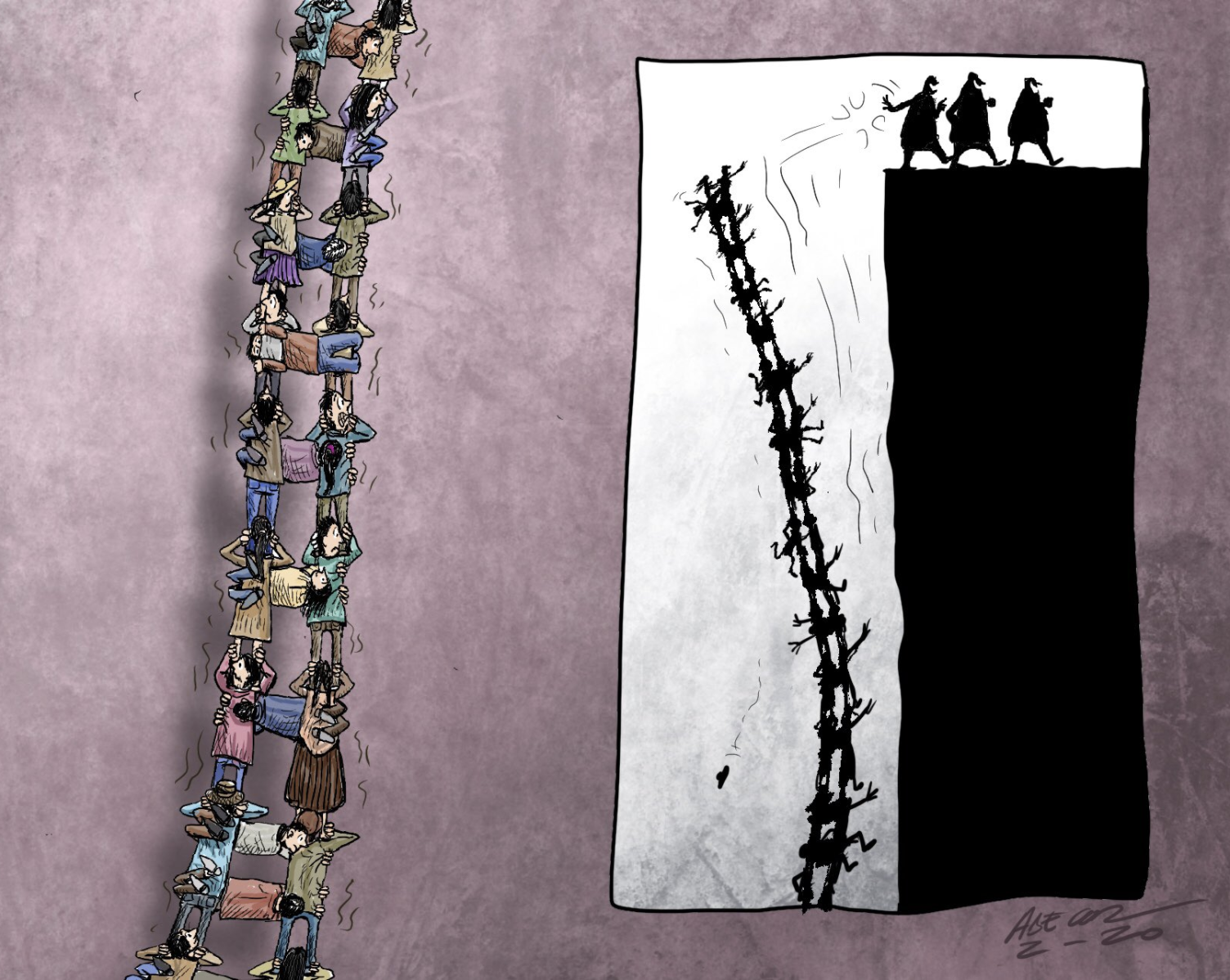
The state enjoys good press because it helps, provides assistance, distributes wealth, and seeks social justice, but these are just good intentions. The reality is very different because it ends up generating more poverty than before, discourages production, and above all, harms the neediest.
The harm of state aid is especially evident in times of crisis, recessions, or when economic imbalances occur. At that moment, the state launches with its good intentions to “save” the hardest hit, and the result is a deeper and more prolonged depression.
The money the state spends on providing assistance comes from taxation or borrowing, factors that reduce savings and investment by genuine producers to benefit parasitic spending by non-producers, negatively affecting society’s productivity.
While providing assistance (inefficient and costly), the state does not reduce other government expenditures (almost always increases them) and ends up reducing the “private purchasing power” that is crucial for economic recovery.
Spending on “welfare” obtained from taxpayers through higher taxes discourages businesses from investing their capital and generating more jobs. It is also detrimental to the labor market because it dissuades people from seeking reemployment, acquiring new skills, and improving the quality of the workforce, hindering economic recovery.
The welfare of a society is not provided by the state but by private investment, business creation, job generation, people’s savings, and that is impossible when governments extract money from society to give it to supposedly vulnerable sectors, which do not need handouts but tools to recover. Only businesses can offer these tools, capable of providing sustainable and productive jobs. Meanwhile, state aid always generates dependency, fosters bureaucracy and corruption, and discourages the competitiveness of human resources.
When the state does not help, it fosters an alliance between entrepreneurs and workers, assumes greater responsibility in times of crisis, whether by promoting savings, being more sensitive to market needs, or investing in personal skills for the future. In fact, the most prosperous societies often invest more in education during difficult times, and the most conscientious save money, limit their expenses, attitudes that are not in the state’s playbook, much less when it comes to a socialist regime or a welfare state, which are practically the same.
Demagogues often justify their actions by arguing that in times of crisis, the rich must help the poor. That’s why they take their money, raise their taxes, and supposedly distribute wealth among the needy. The consequences are disastrous, as evidenced by Cuba or Venezuela, where they wiped out the rich, everything ended up in the hands of the state, and the poor continue to multiply like mushrooms.
El estado tiene buena prensa porque ayuda, porque brinda asistencia, distribuye la riqueza y busca la justicia social, pero esas son sólo buenas intenciones. La realidad es muy distinta, porque termina generando más pobreza de la que había, desincentiva la producción y sobre todo, perjudica a los más necesitados.
El daño de la ayuda estatal se manifiesta especialmente en épocas de crisis, períodos de recesión o cuando se producen desajustes económicos. En ese momento, el estado se lanza con sus buenas intenciones a “salvar” a los más azotados y el resultado es una depresión más aguda y más prolongada.
La plata que gasta el estado en brindar ayuda la obtiene de la tributación o del endeudamiento, factores que reducen el ahorro y la inversión de los productores genuinos en beneficio de un gasto parasitario por parte de no productores, afectando negativamente la productividad de la sociedad.
Mientras proporciona asistencia (ineficiente y cara), el estado no reduce otros gastos gubernamentales (casi siempre los incrementa) y termina disminuyendo el “poder adquisitivo privado” que es crucial para la recuperación económica.
Los gastos en “bienestar” que obtienen de los contribuyentes con más impuestos, desincentivan a las empresas para invertir su capital y generar más puestos de trabajo. Para el mercado laboral también es perjudicial, porque disuaden a la gente para procurar una reubicación, adquirir nuevas habilidades y mejorar la calidad de la mano de obra, lo que obstaculiza la recuperación económica.
El bienestar de una sociedad no lo brinda el estado, sino la inversión privada, la creación de empresas, la generación de puestos de trabajo, el ahorro de la gente y eso es imposible cuando los gobiernos extraen plata de la sociedad para entregárselo a sectores supuestamente vulnerables, que no necesitan dádivas, sino herramientas para poder recuperarse. Esos utensilios sólo los pueden ofrecer las empresas, únicas capaces de brindar puestos sostenibles y productivos. Mientras tanto, la ayuda estatal siempre genera dependencia, fomenta la burocracia y la corrupción y desincentiva la competitividad de los recursos humanos.
Cuando el estado no ayuda, se fomenta una alianza entre empresarios y trabajadores, se asume una mayor responsabilidad frente a los tiempos de crisis, ya sea fomentando el ahorro, siendo más sensibles ante las necesidades del mercado o invirtiendo en habilidades personales para el futuro. De hecho, las sociedades más prósperas suelen invertir más en educación en tiempos difíciles y los más conscientes cuidan el dinero, lo guardan, limitan sus gastos, actitudes que no están en el libreto del estado, mucho menos cuando se trata de un régimen socialista o un estado de bienestar, que son prácticamente lo mismo.
Los demagogos suelen justificar sus acciones con el argumento de que, en crisis, los ricos deben ayudar a los pobres. Por eso les saca dinero, les aumenta los impuestos y supuestamente reparte la riqueza entre los más necesitados. Las consecuencias son nefastas, como lo atestiguan Cuba o Venezuela, donde extinguieron a los ricos, todo quedó en manos del estado y los pobres siguen multiplicándose como hongos.
https://eldia.com.bo/2024-03-17/editorial/el-estado-jamas-ayuda.html

 Bolivian Thoughts | Pensamientos Bolivianos (Bilingual/Bilingüe)