
Editorial, El Deber:
After 11 days of blocking the highway between Santa Cruz and Cochabamba by Buena Vista, groups related to the Government decided to lift their protest measure, although with the intention of returning to the charge as of September 11. Their cynical statement of a pause is not due to a conciliatory gesture on their part about the cause for which they are protesting, but rather to a simple political calculation.
It turns out that the powerful Single Union Confederation of Peasant Workers of Bolivia (Csutcb) has announced a nationwide road blockade as of September 4, and those at the forefront of this measure are none other than the leaders of the evista wing of this organization. Apparently, they have decided to give a dose of their own medicine to the arcistas of Buena Vista, who responded with their temporary withdrawal while they analyze how to digest this internal wrestling of the divided masismo.
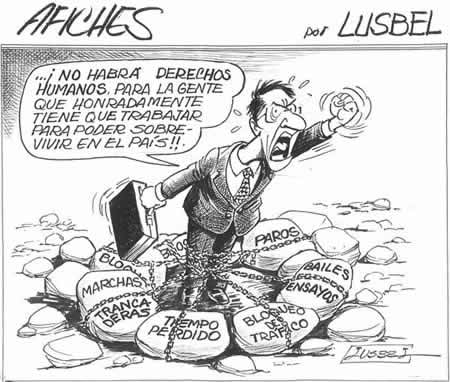
The blockade in Buena Vista caused economic damage to the country in excess of 110 million dollars. But the blockers do not care about the damage caused, because their slogan is to build a stretch of highway where they want, ignoring the technical criteria that the Santa Cruz Governor’s Office uses to protect aquifers in the metropolitan area and reduce project costs. Those have enjoyed the consent of the central government, which can only be understood if the slogan means a political revenue through the distribution of public lands adjacent to the disputed stretch of highway.
What the agitators did not expect was an internal reaction from their political instrument. The leadership of the Csutcb, close to former President Evo Morales, determined an “indefinite national road blockade” as of September 4 and instructed its union structures to organize in a disciplined manner. This sector assures that its measure obeys the “need to fulfill a new political and social agenda”, in addition to demanding President Luis Arce to “ask for forgiveness” for allegedly having instructed the gasification of the last peasant congress, from which two leaders emerged: one evista and another arcista.
Of course, the Csutcb is far from achieving its characteristic organic unity at the national level. To begin with, some of its affiliates from the department of La Paz – from the arcista wing, of course – have announced that they will support another directive and that, rather, they will ask to block “their own houses” of their adversaries. All this highlights the deep division within the organizations related to the MAS.
This division has been growing in intensity. It all started with simple opposing positions, which were later minimized to show unity. Later they began to exchange insults and serious accusations of criminal acts and corruption. Now, apparently, they are willing to take their struggles into the arena of blocking roads. Ironically, the destructive method that made the country unfeasible and that brought the MAS to power almost two decades ago, can now be used by the same party as an instrument of internal wrestling. Competition between blockers, unfortunately for all of Bolivia.
Now the government has it difficult. If it has not been able (or have not wanted to) act with determination to prevent or lift the blockades promoted by its supporters, they will be even less able to do so with those of its political adversaries. And if arcistas and evistas do not put the interests of the country first and annul their reckless measures, Bolivia will once again live those days of unfeasibility of sad memory.
Luego de 11 días de bloqueo de la carretera que une Santa Cruz y Cochabamba a la altura de Buena Vista, grupos afines al Gobierno decidieron levantar su medida de protesta, aunque con la intención de volver a la carga a partir del 11 de septiembre. Su cínica declaración de cuarto intermedio no obedece a un gesto conciliatorio de su parte sobre la causa por la cual protestan, sino a un simple cálculo político.
Resulta que la poderosa Confederación Sindical Única de Trabajadores Campesinos de Bolivia (Csutcb) ha anunciado un bloqueo de carreteras a nivel nacional a partir del 4 de septiembre, y los que están al frente de esta medida son nada menos que los dirigentes del ala evista de esta organización. Al parecer, éstos han decidido darle una dosis de su propia medicina a los arcistas de Buena Vista, quienes respondieron con su repliegue temporal mientras analizan cómo digerir esta pulseada interna del dividido masismo.
El bloqueo en Buena Vista causó daños económicos al país por encima de los 110 millones de dólares. Pero a los bloqueadores no les importa el daño causado, porque su consigna es que se construya un tramo carretero por donde ellos quieren, desconociendo los criterios técnicos que la Gobernación de Santa Cruz esgrime para proteger acuíferos del área metropolitana y reducir costos del proyecto. Aquellos han gozado de la anuencia del Gobierno central, lo cual sólo se entiende si la consigna significa un rédito político por la vía de repartija de tierras fiscales aledañas al cuestionado tramo carretero.
Lo que los agitadores no se esperaban era una reacción interna de su instrumento político. La dirigencia de la Csutcb, afín al expresidente Evo Morales, determinó un “bloqueo nacional indefinido de caminos” a partir del 4 de septiembre e instruyó a sus estructuras sindicales a organizarse de manera disciplinada. Este sector asegura que su medida obedece a la “necesidad de cumplir una nueva agenda política y social”, además de exigir al presidente Luis Arce a “pedir perdón” por supuestamente haber instruido la gasificación del último congreso campesino, de donde surgieron dos dirigencias: una evista y otra arcista.
Claro que la Csutcb está lejos de conseguir su característica unidad orgánica a nivel nacional. Para empezar, algunos de sus afiliados del departamento de La Paz –del ala arcista, por supuesto– han anunciado que apoyarán a otra directiva y que, más bien, pedirán bloquear “las propias casas” de sus adversarios. Todo esto pone en evidencia la profunda división dentro de las organizaciones afines al MAS.
Esta división ha ido creciendo en intensidad. Todo comenzó con simples posiciones encontradas, que luego eran minimizadas para dar muestras de unidad. Después pasaron al intercambio de insultos y de graves acusaciones de hechos delictivos y de corrupción. Ahora, por lo visto, están dispuestos a llevar sus pugnas a la arena del bloqueo de caminos. Irónicamente, el método destructivo que inviabilizó el país y que llevó al MAS al poder hace casi dos décadas, ahora puede ser utilizado por el mismo partido como instrumento de pulseada interna. Competencia entre bloqueadores, para desgracia de Bolivia entera.
Ahora el Gobierno la tiene difícil. Si no ha podido (o no ha querido) actuar con determinación para prevenir o para levantar los bloqueos propiciados por sus afines, menos lo podrá hacer con los de sus adversarios políticos. Y si arcistas y evistas no anteponen los intereses del país y dejan sin efecto sus temerarias medidas, Bolivia vivirá nuevamente esos días de inviabilidad de triste memoria
https://eldeber.com.bo/edicion-impresa/amenazas-contra-la-viabilidad-del-pais_337665

 Bolivian Thoughts | Pensamientos Bolivianos (Bilingual/Bilingüe)