
El Mundo:
The “Amboró” park guarantees water for Food Safety
VITAL: LIDEMA considers the Amboró park as the head of a vital biological corridor for the region because it captures water and at least five rivers originate from it. In flora, it has 5,000 species of native plants and fauna more than 1,236 species
The president of the League for the Defense of the Environment (LIDEMA), Magdalena Medrano, on celebrating the 36th anniversary of the creation of the National Park and Integrated Management Natural Area, highlighted the vital importance of the Amboró Park. Born on August 16, 1984, through Supreme Decree No. 20423, it changed its category to National Park, with the addition of the category of Amboró Integrated Management Natural Area in 1995.
Medrano explained that Amboró is the head of the Amboró-Villcabamba-Peru biological corridor. “This biological corridor represents a unique enclave for exclusive species and singular ecosystems, as well as distinctive climatic conditions. The corridor, which extends geographically from Amboró to the Vilcabamba National Park in Peru, encompasses a basin in the Andes mountain range that captures and distributes water essential for the natural environment and surrounding communities,” she explained.
WATER SUPPLIER
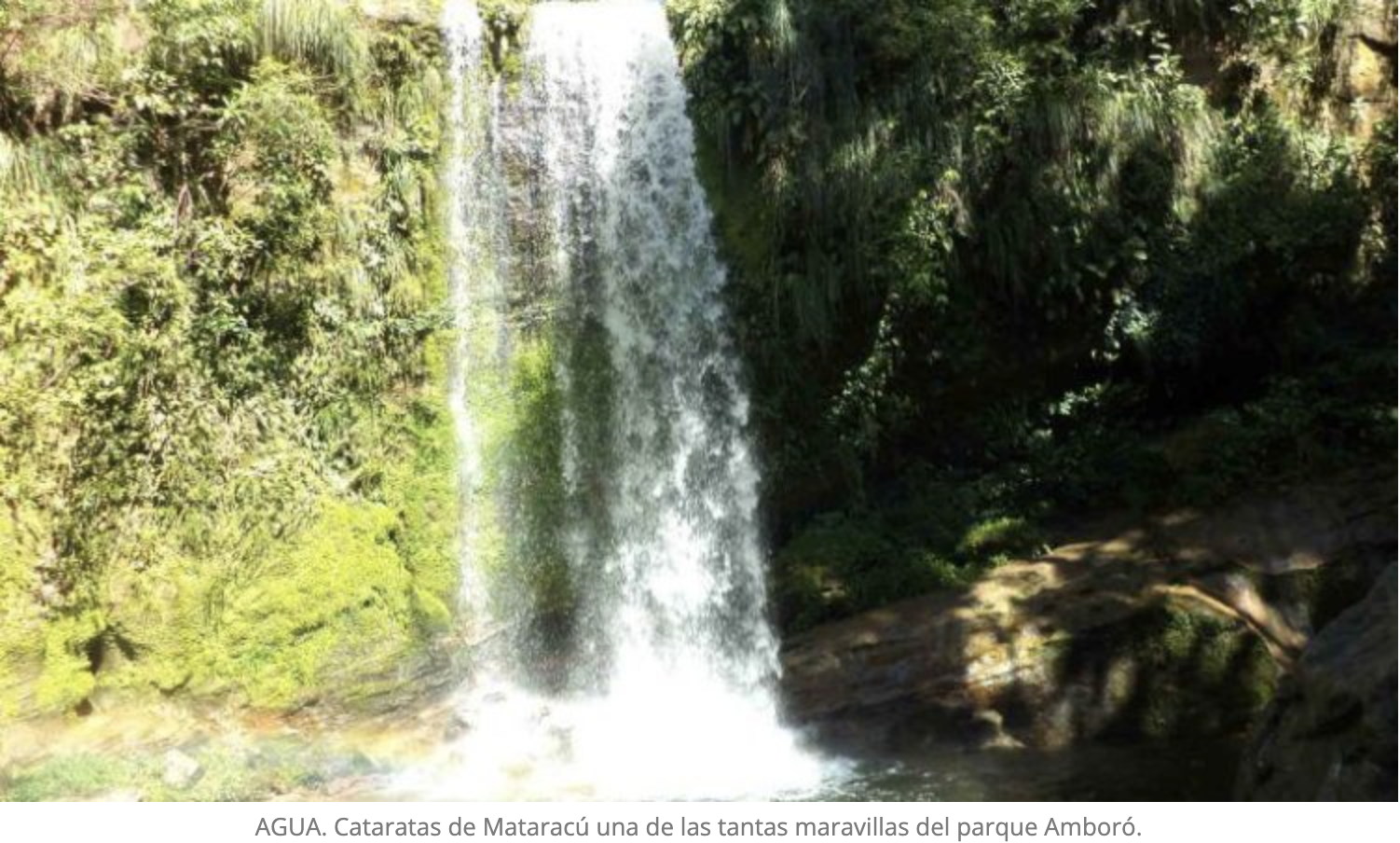
The relevance of the Amboró Park lies in its key role as a provider of water for populated areas. Magdalena Medrano explained that due to its strategic location, the park receives evaporated water from the sea that condenses in the mountains, returning as liquid water to supply local communities. This water supply is essential for the survival of the inhabitants of the region, particularly for the population of Santa Cruz.
However, the relevance of the Amboró Park transcends the mere provision of water and food security. The park is also home to a rich variety of species, from migratory birds to iconic animals like the spectacled bear. [Jukumari]
Source: Marcelo Huanca Dorado
El parque “Amboró” garantiza agua para Seguridad Alimentaria
VITAL: LIDEMA considera al parque Amboró como la cabecera de un corredor biológico vital para la región porque captura agua y de él nacen al menos cinco ríos. En flora, tiene 5.000 especies de plantas nativas y fauna más de 1.236 especies
La presidenta de la Liga de Defensa del Medio Ambiente (LIDEMA), Magdalena Medrano, al celebrarse los 36 años de creación del Parque Nacional y Área Natural de Manejo Integrado resaltó la vital importancia del Parque Amboró. Nació el 16 de agosto de 1984, a través del Decreto Supremo Nº 20423, cambió su categoría a Parque Nacional, con la adición de la categoría de Área Natural de Manejo Integrado Amboró en 1995.
Medrano explicó el Amboró es cabecera del corredor biológico Amboró-Villcabamba-Perú. “Este corredor biológico representa un enclave único para especies exclusivas y ecosistemas singulares, así como condiciones climáticas distintivas. El corredor, que se extiende geográficamente desde Amboró hasta el Parque Nacional Vilcabamba en Perú, abarca una cuenca en la cordillera de los Andes que captura y distribuye aguas fundamentales para el entorno natural y las comunidades circundantes”, explicó.
PROVEEDOR DE AGUA
La relevancia del Parque Amboró radica en su papel clave como proveedor de agua para las áreas pobladas. Magdalena Medrano explicó que debido a su ubicación estratégica, el parque recibe agua evaporada del mar que se condensa en la cordillera, regresando en forma de agua líquida para abastecer a las comunidades locales. Este suministro hídrico es esencial para la supervivencia de los habitantes de la región, en particular para la población de Santa Cruz.
No obstante, la relevancia del Parque Amboró trasciende la mera provisión de agua y seguridad alimentaria. El parque también alberga una rica variedad de especies, desde aves migratorias hasta animales icónicos como el oso de anteojos. [Jukumari]
Fuente: Marcelo Huanca Dorado
https://elmundo.com.bo/el-parque-amboro-garantiza-agua-para-seguridad-alimentaria/

 Bolivian Thoughts | Pensamientos Bolivianos (Bilingual/Bilingüe)