
Humberto Vacaflor Ganam, El Diario:
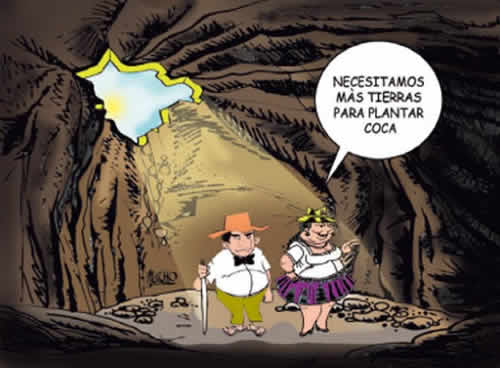
Just as Russia views the Ukraine as part of its territory, Chapare strategists see Santa Cruz as their land of expansion, or their backyard.
The strategy includes attitudes typical of the most aggressive imperialisms, although the details of this operation are known only to a few people from Santa Cruz.
Cocaine is behind almost all the operations of Chapareño expansionism, winning partners for the most profitable business in Bolivia.
Santa Cruz is the territory that separates Chapare from the largest drug market in the Americas, Brazil, and strategists have decided to control it.
The businesses of the Chapare members, within the Santa Cruz territory, offer the “Magic Powder”, on signs with the portrait of the Colombian Pablo Escobar, so that no one can doubt what it is about.
The transport of the drug would need a coca-duct, but since that is not possible, the strategists have devised ingenious and even daring transport systems.
The most daring of all included the decision of the government of Evo Morales (the senior strategist) to install the urea factory in Chapare, thinking that the largest market for this fertilizer is Brazil, just like for drugs.
A transport system, which includes the project to complete the railway route, will be at the service of the two star products that Chapare offers to Brazil.
But since the connection section, Bulo Bulo-Montero, is not finished, trucks are used to carry the urea and what can go as an accompanying product, as “added value.”
What can be offered along the way, as a curtain, to justify the traffic of dust, or paste?
Strategists, a bit clumsy, they thought of carrying a load that would hide the star product, and they came up with sand, gravel.
Carry sand that far? Chapare sand to compete with the local one? 350 kilometers compared to 10 kilometers of the local sand?
The idea was imposed, thinking that all this would be protected by the national government, controlled by the business, and supported by the mayors of the intermediate towns that are from the MAS.
The important thing is to move with “la merca” to the east, as close as possible to the border with Brazil.
The aggregates of the Chapare as a cover for drugs have been imposed in Santa Cruz. The action of these operators of the Chapare empire is so powerful and aggressive that they have managed to control organizations of transporters from Santa Cruz, now their allies to fight those who want to sell the aggregates of the Santa Cruz rivers.
In that they are. For the moment, a preview of this series that will deal with the details of the capture of Santa Cruz by the Chapare:
A businessman from Santa Cruz who was dedicated to the sale of aggregates, and did not give in to the pressure and blackmail of the hitmen, was attacked by a mayor at the service of the Chapare.
His hitmen have broken the businessman’s legs. And the strategists have ordered the Masista judges that, just as he is, in bed, immobilized, he is taken to jail.
The details of this dark story are coming.
siglo21bolivia.com
Así como Rusia considera a Ucrania como parte de su territorio, los estrategas de Chapare ven a Santa Cruz como su tierra de expansión, o su patio trasero.
La estrategia incluye actitudes propias de los imperialismos más agresivos, aunque los detalles de este operativo son conocidos sólo por pocos cruceños.
La cocaína está detrás de casi todas las operaciones del expansionismo chapareño, conquistando socios para el negocio más rentable de Bolivia.
Santa Cruz es el territorio que separa a Chapare del mercado de la droga más grande de las Américas, Brasil, y los estrategas han decidido controlarlo.
Los negocios de los socios del Chapare, dentro del territorio cruceño, ofrecen el “Polvo mágico”, en letreros con el retrato del colombiano Pablo Escobar, para que nadie pueda dudar de lo que se trata.
El transporte de la droga necesitaría un coca-ducto, pero como eso no es posible, los estrategas han ideado sistemas de transporte ingeniosos e incluso atrevidos.
El más atrevido de todos incluyó la decisión del gobierno de Evo Morales (el estratega mayor) de instalar en Chapare la fábrica de urea, pensando en que el mayor mercado de ese fertilizante es Brasil, igual que de la droga.
Un sistema de transporte, que incluye el proyecto de completar la ruta ferroviaria, estará al servicio de los dos productos estrella que Chapare ofrece a Brasil.
Pero como el tramo de conexión, Bulo Bulo-Montero, no está terminado, son usados los camiones para llevar la urea y lo que pueda ir como producto acompañante, como “valor agregado”.
¿Qué se puede ofrecer en el trayecto, como cortina, para justificar el tráfico del polvo, o la pasta?
Estrategas, un poco torpes, pensaron en llevar una carga que permita ocultar el producto estrella, y se les ocurrió la arena, el ripio.
¿Llevar arena tan lejos? ¿Arena del Chapare para competir con la del lugar? ¿350 kilómetros frente a 10 kilómetros de la arena lugareña?
La idea se impuso, pensando en que todo ello sería protegido por el gobierno nacional, controlado por el negocio, y apoyado por los alcaldes de los pueblos intermedios que sean del MAS.
Lo importante es avanzar con “la merca” hacia el oriente, lo más cerca posible de la frontera con Brasil.
Los áridos del Chapare como cobertura para la droga se han impuesto en Santa Cruz. Es tan poderosa y agresiva la acción de estos operadores del imperio del Chapare que han logrado controlar organizaciones de transportistas de Santa Cruz, ahora sus aliados para combatir a los que quieren vender los áridos de los ríos cruceños.
En eso están. Por el momento, un adelanto de esta serie que tratará los detalles de la toma de Santa Cruz por el Chapare:
Un empresario cruceño que se dedicaba a la venta de áridos, y no cedía ante las presiones y los chantajes de los sicarios, fue atacado por un alcalde al servicio del Chapare.
Sus sicarios han roto las piernas del empresario. Y los estrategas han ordenado a los jueces masistas que, así, como está, en cama, inmovilizado, sea llevado a la cárcel.
Ya vienen los detalles de esta tenebrosa historia.
Siglo21bolivia.com
https://www.eldiario.net/portal/2023/07/30/la-toma-de-santa-cruz/

 Bolivian Thoughts | Pensamientos Bolivianos (Bilingual/Bilingüe)