
By Vision 360:
Artisans from Eight Bolivian Departments Build a National Agenda to Strengthen and Protect Alasita
The meeting includes representatives from all federations, associations, and councils of amautas from Santa Cruz, Cochabamba, Potosí, Chuquisaca, Oruro, Pando, Tarija, and La Paz (including El Alto).
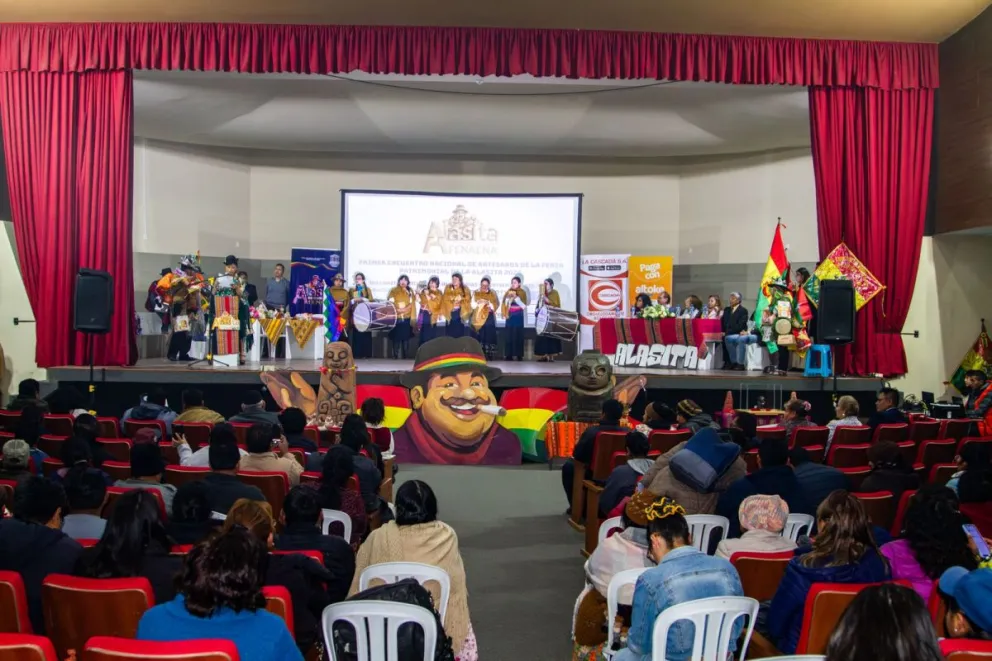
Participants at the First National Meeting of Artisans of the Heritage Alasita Fair 2026. Photo: Vice Ministry of Cultures
Representatives of Alasita artisan organizations from eight departments across the country are gathering at the First National Meeting of Artisans of the Heritage Alasita Fair 2026, where they aim to develop a comprehensive proposal to strengthen and protect this festival, which has been declared an Intangible Cultural Heritage of Humanity. The event, held in La Paz, is supported by the Ministry of Sustainable Tourism, Cultures, Folklore, and Gastronomy through the Vice Ministry of Cultures and Folklore.
Under the slogan “Identity, Safeguarding, and Productive Development,” the meeting brings together representatives of all federations, associations, and councils of amautas from Santa Cruz, Cochabamba, Potosí, Chuquisaca, Oruro, Pando, Tarija, and La Paz (including El Alto). Its objective is to discuss public policies focused on strategic areas such as heritage preservation and the economic revitalization of the sector, as well as the creation of the National Confederation of Alasita Artisans.
During the event, Minister of Sustainable Tourism, Cultures, Folklore, and Gastronomy Cinthya Yañez stated that Alasita is one of the most important celebrations of Bolivia’s living culture because miniature crafts support thousands of producers and the festival is recognized as an Intangible Cultural Heritage of Humanity. She warned that, given the risk of losing authenticity, this traditional celebration remains under constant curatorial oversight entrusted to experts and the artisans themselves.
“We congratulate the efforts of the Federation of Exhibiting Artisans and the other artisan federations, as well as the Council of Amautas, for organizing this gathering, which seeks to safeguard and protect traditional values and ensure they remain relevant throughout this century,” the minister said.
“For me, this meeting of artisans is highly significant because I have had the opportunity to accompany them for nearly 20 years in this process and to participate in the nomination dossier submitted to UNESCO. We are aware that they are the heart and essence of Alasita, not only because they produce cultural goods and handicrafts in various forms, but also because through them they express identity, memory, and, most importantly, the dreams that are at the core of Alasita,” said Vice Minister of Cultures Andrés Zaratti.
He also emphasized the importance of understanding the outcomes of the meeting, noting the need for a broader national perspective on Alasita. “Alasita is present in every department of Bolivia. This challenges us to ensure that, through these national initiatives, we can expand and strengthen its international reach.” He recalled that traveling artisans were responsible for establishing Alasita in Puno and later in other cities around the world.
Representing the National Federation of Christmas and Alasita Exhibiting Artisans (FENAENA), Boris Cussi highlighted that the meeting will include, among other activities, a situational assessment of Alasita fairs and celebrations throughout the country. The process will identify strengths, challenges, and opportunities in order to develop a comprehensive proposal for the development, strengthening, and protection of the festival for the benefit of current and future generations of artisans.
The Alasita festival and its ritual processions in the city of La Paz were declared an Intangible Cultural Heritage of Humanity by UNESCO in 2017, making it a fundamental pillar of Bolivia’s identity, popular economy, and miniature craftsmanship tradition.
Por Vision 360:
Artesanos de ocho departamentos de Bolivia construyen una agenda nacional para fortalecer y proteger la Alasita
El encuentro cuenta con representantes de todas las federaciones, asociaciones y consejos de amautas de Santa Cruz, Cochabamba, Potosí, Chuquisaca, Oruro, Pando, Tarija y La Paz (además de El Alto).
Los participantes del Primer Encuentro Nacional de Artesanos de la Feria Patrimonial de la Alasita 2026. Foto: Viceministerio de Culturas
Representantes de las organizaciones de artesanos de la Alasita de ocho departamentos del país se reúnen en el Primer Encuentro Nacional de Artesanos de la Feria Patrimonial de la Alasita 2026, donde buscan construir una propuesta integral que fortalezca y proteja esta festividad declarada Patrimonio Cultural Inmaterial de la Humanidad. La actividad desarrollada en La Paz cuenta con el apoyo del Ministerio de Turismo Sostenible, Culturas, Folklore y Gastronomía, a través del Viceministerio de Culturas y Folklore.
Bajo el lema “Identidad, salvaguardia y desarrollo productivo”, el encuentro cuenta con representantes de todas las federaciones, asociaciones y consejos de amautas de Santa Cruz, Cochabamba, Potosí, Chuquisaca, Oruro, Pando, Tarija y La Paz (además de El Alto), con el objetivo de debatir políticas públicas en ejes estratégicos como la salvaguardia patrimonial y la reactivación económica del sector; así como la fundación de la Confederación Nacional de Artesanos de la Alasita.
En la ocasión, la Ministra de Turismo Sostenible, Culturas, Folklore y Gastronomía, Cinthya Yañez, afirmó que la Alasita es una de las fiestas más importantes de nuestra cultura viva, porque las miniaturas movilizan a miles de productores y es Patrimonio Cultural Inmaterial de la Humanidad. Advirtió que, ante el riesgo de perder autenticidad, la festividad tradicional está bajo una constante curaduría encomendada a expertos y a los mismos artesanos.
“Felicitamos el esfuerzo de la Federación de Artesanos Expositores y de las demás federaciones de artesanos, así como del Consejo de Amautas, por organizar este encuentro que busca salvaguardar y proteger los valores tradicionales y proyectarlos para que continúen vigentes a lo largo de este siglo”, señaló la autoridad.
“Para mí es muy significativo este encuentro de artesanos, ya que me ha tocado acompañarlos casi 20 años en este desarrollo y participar en la carpeta de postulación (a la Unesco). Estamos conscientes de que son el corazón y la esencia de la Alasita, no sólo porque producen bienes culturales, artesanías en diferente formato, sino que a través de ellas expresan identidad, memoria, pero algo fundamental de la Alasita es que a través de ellas expresan sueños”, sostuvo a su turno el Viceministro de Culturas, Andrés Zaratti.
También enfatizó en la importancia de conocer los resultados del encuentro, sabiendo que es necesario tener una mirada más amplia de la Alasita a nivel nacional. “La Alasita está presente en todos los departamentos de Bolivia. Esto nos genera el reto de que, a partir de estos recorridos nacionales, podamos amplificar y fortalecer los recorridos internacionales”. Por ello, recordó que fueron artesanos viajeros quienes, por ejemplo, crearon la Alasita en Puno, y posteriormente en otras ciudades del mundo.
En representación de la Federación Nacional de Artesanos Expositores de Navidad y Alasita (Fenaena), Boris Cussi, resaltó que, entre otras acciones, en el encuentro se realizará un diagnóstico situacional de las ferias y de las representaciones de la Alasita a nivel nacional, identificando fortalezas, desafíos y oportunidades para, posteriormente, construir una propuesta integral destinada al desarrollo, fortalecimiento y protección de la fiesta en beneficio de las actuales y futuras generaciones de artesanos.
La festividad de la Alasita y los recorridos rituales en la ciudad de La Paz fue declarada Patrimonio Cultural Inmaterial de la Humanidad por la Unesco en 2017, por lo que es un pilar fundamental de la identidad, la economía popular y la miniatura en Bolivia.


Leave a Reply