By Oscar Antezana, El Dia:
I don’t understand. Or rather, wasn’t the public already suspicious for years—or even taking it for granted—that the Chapare was infiltrated by organizations linked to drug trafficking, including networks of different nationalities? Didn’t President Paz and at least some of the presidential candidates know in far greater detail the scale of this problem?
For more than two decades we have seen indications, denunciations, and in many cases evidence. However, few dared to stir the waters too much. The reason was simple: sectors within the state apparatus itself were involved in that reality, including authorities in the judicial system. For this reason, it should not be surprising that narco-terrorism is financing the mobilization of thousands of demonstrators turned into instruments of political pressure for almost fifty days. Nor should it be surprising that groups based in the Chapare, both Bolivian and foreign, have access to modern weaponry of various calibers.
President Paz has demonstrated, at the very least, a worrying lack of vision and leadership in running the country. In seven months in office, beyond the increase in fuel prices at the beginning of his administration—a relatively simple measure because the population expected it and considered it necessary to normalize supply—he has little else to show. Yes, he raised the minimum wage, implemented temporary cash transfers under the PEPE program, to the detriment of the large fiscal deficit, and presented a deeply demagogic budget that seems more like a continuation of the previous government’s economic legacy than a real change of direction. There we have the evidence of drug-laced wood being transported and sold as if it were chicken.
The country’s lack of direction would be the product of a demagogic campaign that did not have—and still does not have, seven months after taking office—a governing plan; of its alliance with a PDC infiltrated by MAS supporters; and of its hesitation. In the midst of this vacuum and downward spiral, we Bolivians find ourselves.
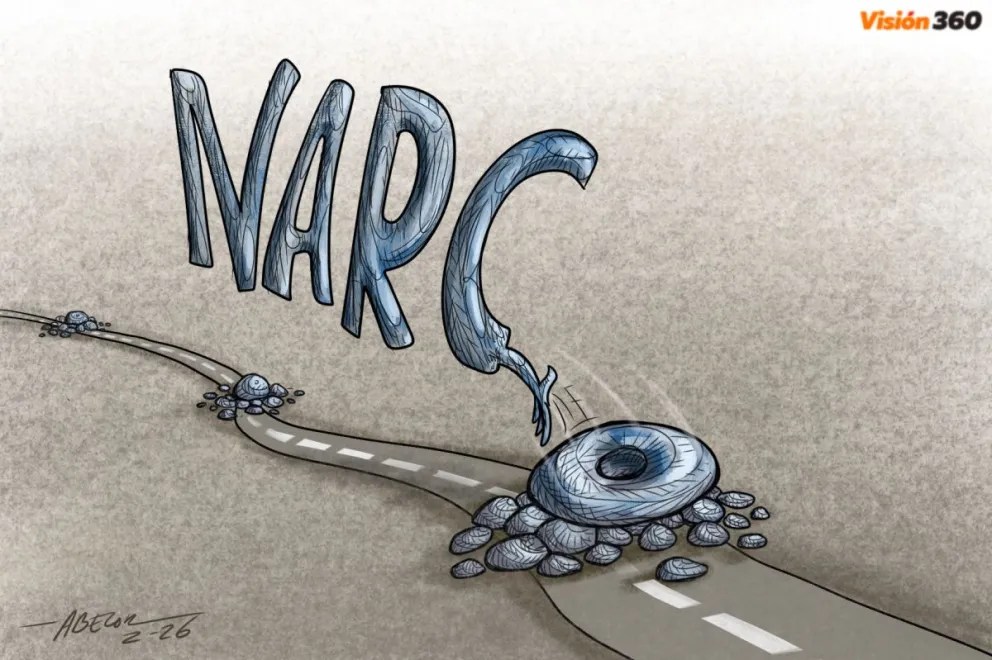
Faced with road blockades and the increasingly open action of criminal structures linked to drug trafficking, an inevitable question arises: will the President continue asking or begging for dialogue while organized groups challenge the State?
The scale of the problem demands more than statements. The government should be designing a comprehensive strategy, including exploring mechanisms of international cooperation, to confront once and for all this scourge inherited from the years of Evo Morales and MAS. Acting alone would be extremely difficult. The Bolivian State has democratic legitimacy and constitutional backing, but its institutional and operational capacities are limited to confront criminal networks that operate with resources, logistics, and international connections.
No one should have illusions: those who control a multibillion-dollar business will not give it up voluntarily. They will defend their interests at any cost, even if that means more violence and more lives lost. Any intervention must be carefully planned, intelligence-driven, and above all, based on surprise. Current technology offers tools that did not exist before. Used correctly, they could reduce risks and increase the chances of success. If acted upon in an improvised manner, however, the human, social, and political consequences could be far more severe.
The time has come to confront one of the most damaging legacies left by Evo Morales and MAS. This is not solely a government task; it is a national challenge. Political leaders, institutions, and citizens should unambiguously support any initiative aimed at restoring state control over its territory and healing and saving the country from narco-terrorism.
If Bolivia manages to defeat this threat—and it must—this could become the legacy of the current President: a legacy that, so far, remains an unfulfilled promise for an increasingly disappointed population.

Por Oscar Antezana Malpartida, El Dia:
No entiendo. ¿Acaso la ciudadanía no sospechaba desde hace años —o incluso daba por hecho— que el Chapare estaba infiltrado por organizaciones vinculadas al narcotráfico, incluyendo redes de distintas nacionalidades? ¿Acaso el presidente Paz y, al menos, algunos de los excandidatos presidenciales no conocían con bastante más detalle la magnitud de este problema?
Durante más de dos décadas hemos visto indicios, denuncias y, en muchos casos, evidencias. Sin embargo, pocos se atrevieron a levantar demasiado polvo. La razón era simple: sectores del propio aparato estatal estaban comprometidos con esa realidad, incluidas autoridades del sistema judicial. Por ello, no debería sorprender que el narcoterrorismo esté financiando la movilización de miles de manifestantes convertidos en instrumentos de presión política durante ya casi cincuenta días. Tampoco debería extrañar que grupos asentados en el Chapare, bolivianos y extranjeros, tengan acceso a armamento moderno y de diversos calibres.
El presidente Paz ha demostrado, cuando menos, una preocupante falta de visión y liderazgo en la conducción del país. En siete meses de gobierno, más allá del incremento del precio de los combustibles al inicio de su gestión —una medida relativamente sencilla porque la población la esperaba y la consideraba necesaria para normalizar el abastecimiento—, poco más puede exhibir. Sí, aumentó el salario mínimo, implementó transferencias temporales bajo el programa PEPE, en detrimento del abultado déficit fiscal, y presentó un presupuesto profundamente demagógico, que parece más una prolongación del legado económico del gobierno anterior que un verdadero cambio de rumbo. Ahí tenemos la evidencia de la madera impregnada de droga transportándose y comercializándose como si fuera pollo.
La falta de rumbo del país sería producto de una campaña demagógica que no contaba —y no cuenta hasta el día de hoy, siete meses después de asumir el gobierno— con un plan de gobierno; de su alianza con un PDC infestado de masistas; y de su tibieza. En medio de ese vacío y de esta espiral descendente, nos encontramos los bolivianos.
Frente a los bloqueos y a la acción cada vez más abierta de estructuras criminales vinculadas al narcotráfico, surge una pregunta inevitable: ¿seguirá el Presidente pidiendo o suplicando diálogo mientras grupos organizados desafían al Estado?
La magnitud del problema exige algo más que declaraciones. El gobierno debería estar diseñando una estrategia integral, incluso explorando mecanismos de cooperación internacional, para enfrentar de una vez por todas este flagelo heredado de los años de Evo Morales y del MAS. Actuar en solitario sería extremadamente difícil. El Estado boliviano cuenta con legitimidad democrática y respaldo constitucional, pero sus capacidades institucionales y operativas son limitadas para confrontar redes criminales que operan con recursos, logística y conexiones internacionales.
Nadie debe hacerse ilusiones: quienes controlan un negocio multimillonario no renunciarán a él voluntariamente. Defenderán sus intereses al precio que sea necesario, incluso si ello implica más violencia y más vidas perdidas. Cualquier intervención deberá ser cuidadosamente planificada, ejecutada con inteligencia y, sobre todo, con capacidad de sorpresa. La tecnología actual ofrece herramientas que antes no existían. Utilizadas correctamente, podrían reducir riesgos y aumentar las probabilidades de éxito. Si se actúa de manera improvisada, en cambio, las consecuencias humanas, sociales y políticas podrían ser mucho más graves.
Ha llegado la hora de enfrentar uno de los legados más dañinos que dejaron Evo Morales y el MAS. Esta no es una tarea exclusiva del gobierno; es un desafío nacional. Los líderes políticos, las instituciones y la ciudadanía deberían respaldar sin ambigüedades toda iniciativa destinada a recuperar el control del Estado sobre su territorio, a curar y salvar a la patria del narcoterrorismo.
Si Bolivia logra vencer esta amenaza —y debe hacerlo—, ese podría convertirse en el legado del actual Presidente: un legado que, hasta ahora, sigue siendo una promesa pendiente para una población cada vez más decepcionada.
https://eldia.com.bo/2026-06-15/opinion/tribuna/quien-manda-en-bolivia-.html


Leave a Reply