
By ANF, Eju.tv:
Businesses Warn of Company Closures and Job Losses After 32 Days of Protests and Road Blockades
The manager of the Bolivian Institute of Foreign Trade (IBCE), Gary Rodríguez, warned that Bolivia’s image has been damaged internationally, which could lead to a decline in investment.
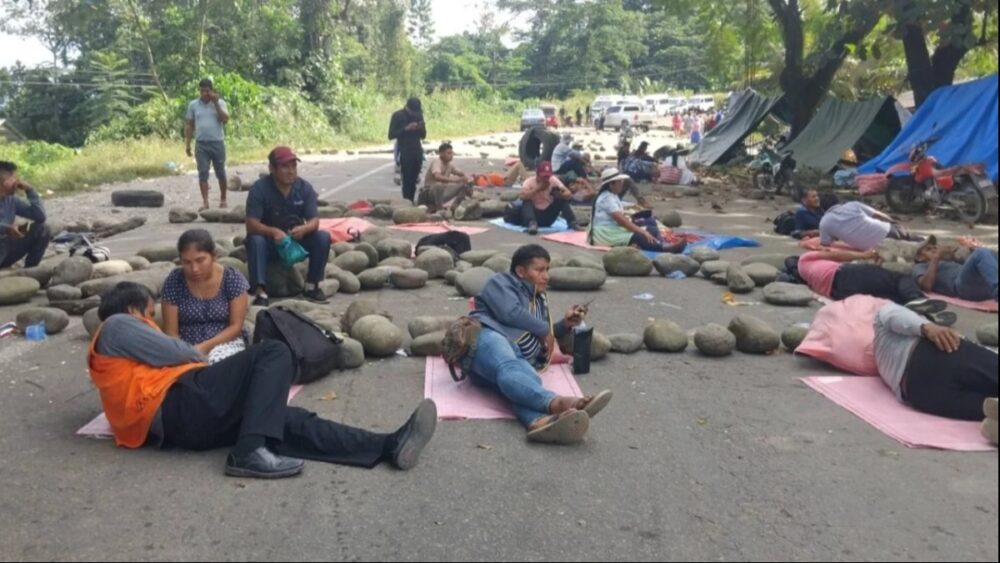
After 32 days of protests and road blockades, private business leaders, industrialists, and micro and small business owners warned of an accelerating economic deterioration that could result in company closures, job losses, and reduced foreign investment in the country.
“The Bolivian business sector is reaching its sustainability limit. After years of facing structural difficulties, current events are placing thousands of companies, especially small and medium-sized enterprises, on the verge of collapse,” the Confederation of Private Entrepreneurs of Bolivia (CEPB) warned in a statement.
For the past four weeks, groups aligned with Evo Morales, peasant organizations from La Paz, and the Bolivian Workers’ Central (COB) have been carrying out demonstrations and road blockades. Initially, they demanded attention to sector-specific grievances; later, they unified their demands and are now calling for the resignation of President Rodrigo Paz.
The demonstrations began on May 1, coinciding with Labor Day, while the road blockades have been in place since May 6, led by the Tupac Katari Federation of Peasants of La Paz.
Meanwhile, Gonzalo Morales, president of the National Chamber of Industries (CNI), warned that several industries based in La Paz are considering relocating their operations to other regions of the country and even abroad, which would generate unemployment and negatively affect the regional economy.
“There are many industries in the department of La Paz that are already thinking about moving to a city where it is easier to do business. They are looking at Cochabamba, Santa Cruz, and, worst of all, they are looking at Peru, Paraguay, and Chile,” Morales said.
He also noted that the economic losses caused by the road blockades have reached $2 billion.
In that regard, business leaders expressed frustration over the lack of willingness to engage in dialogue among the protesting groups and the government’s inability to resolve the conflict.
“The seriousness of the situation requires immediate decisions. Every day of paralysis and blockades increases the damage and brings the country closer to a catastrophic situation,” they stated.
They also warned that the consequences of this crisis will not end once the pressure measures are lifted, but could continue for months or years, affecting employment, household incomes, and investment.
Damaged Image
IBCE manager Gary Rodríguez warned that Bolivia’s international image has been harmed, which could lead to a reduction in investment.
He also cautioned that some sectors of the population are threatening to clear the roads on their own or promote local actions, as occurred in the municipality of Rurrenabaque, where an anti-blockade law was approved.
“Be careful that this does not get out of hand and that the conflict ends up overwhelming the government,” he warned.
Microbusinesses
Edwin Fernández, president of the National Confederation of Micro and Small Entrepreneurs (Conamype), stated that a large portion of productive units are laying off workers because they cannot obtain supplies or transport their products to other regions due to the road blockades.
He said that economic losses for the sector have already exceeded $700 million and warned that the recovery of microenterprises will not be quick.
/EUA/JA
Por ANF, Eju.tv:
Empresarios advierten quiebra de empresas y pérdida de empleos tras 32 días de protestas y bloqueos
El gerente del Instituto Boliviano de Comercio Exterior (IBCE), Gary Rodríguez, alertó que la imagen del país se encuentra deteriorada en el ámbito internacional, lo que podría derivar en una reducción de las inversiones
A 32 días de las protestas y el bloqueo de carreteras, empresarios privados, industriales y micro y pequeños empresarios advirtieron una aceleración del deterioro económico que podría derivar en el cierre de empresas, la pérdida de fuentes laborales y la reducción de la inversión extranjera en el país.
«El sector empresarial boliviano está llegando a su límite de sostenibilidad. Después de años de enfrentar dificultades estructurales, los acontecimientos actuales están colocando a miles de empresas, especialmente pequeñas y medianas, al borde de una situación de colapso», advirtió la Confederación de Empresarios Privados de Bolivia (CEPB) mediante un comunicado.
Desde hace cuatro semanas, sectores afines a Evo Morales, organizaciones campesinas de La Paz y la Central Obrera Boliviana (COB) impulsan movilizaciones y bloqueos de carreteras. Inicialmente exigían la atención de demandas sectoriales; posteriormente unificaron sus reclamos y ahora piden la renuncia del presidente Rodrigo Paz.
Las movilizaciones comenzaron el 1 de mayo, en coincidencia con el Día del Trabajo, y los bloqueos se realizan desde el día 6 por parte de la Federación de Campesinos de La Paz Tupac Katari.
Por su parte, el presidente de la Cámara Nacional de Industrias (CNI), Gonzalo Morales, advirtió que varias industrias asentadas en La Paz evalúan trasladar sus operaciones a otras regiones del país e incluso al exterior, lo que generaría desempleo y un impacto negativo en la economía departamental.
«Hay muchas industrias en el departamento de La Paz que ya están pensando en irse a una ciudad donde sea más fácil trabajar. Están mirando Cochabamba, Santa Cruz y, lo peor, están mirando Perú, Paraguay y Chile», afirmó Morales.
Asimismo, señaló que las pérdidas económicas provocadas por los bloqueos de carreteras alcanzan los 2.000 millones de dólares.
En ese sentido, los empresarios expresaron su frustración por la falta de voluntad de diálogo de los sectores movilizados y por la incapacidad del Gobierno para solucionar el conflicto.
«La gravedad del momento exige decisiones inmediatas. Cada día de parálisis y bloqueos agrava los daños y acerca al país a una situación de catástrofe», señalaron.
A la vez, advirtieron que las consecuencias de esta crisis no concluirán cuando se levanten las medidas de presión, sino que podrían extenderse durante meses o años, afectando el empleo, los ingresos de la población y la inversión.
Imagen deteriorada
El gerente del Instituto Boliviano de Comercio Exterior (IBCE), Gary Rodríguez, alertó que la imagen del país se encuentra deteriorada en el ámbito internacional, lo que podría derivar en una reducción de las inversiones.
Asimismo, advirtió que algunos sectores de la población amenazan con desbloquear las carreteras por cuenta propia o impulsar acciones locales, como ocurrió en el municipio de Rurrenabaque, donde se aprobó una ley antibloqueo.
«Cuidado con que esto se salga de las manos y el conflicto se lleve por delante al Gobierno», alertó.
Microempresarios
El presidente de la Confederación Nacional de Micro y Pequeños Empresarios (Conamype), Edwin Fernández, afirmó que una gran parte de las unidades productivas está despidiendo trabajadores debido a que no puede acceder a insumos ni trasladar su producción a otras regiones por los bloqueos de caminos.
Indicó que las pérdidas económicas para el sector ya superan los 700 millones de dólares y advirtió que la recuperación de las microempresas no será rápida.
/EUA/JA


Leave a Reply