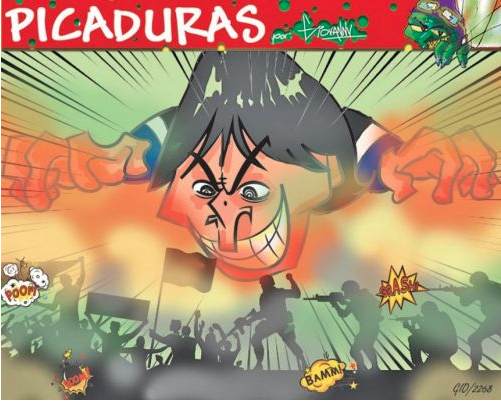
By El Pais:
State of Exception: What Does It Mean and What Happens After the Repeal of Law 1341?
The law regulated the detailed procedure, concrete limits, and consequences for those who abuse the measure
State of exception
In a session convened at the House of Liberty in Sucre to celebrate the 217th anniversary of Chuquisaca, the full Senate approved by more than a two-thirds majority — and in record time — the bill repealing Law No. 1341, the regulation that since July 2020 had governed states of exception in Bolivia. The text was immediately sent to the Chamber of Deputies for review, which initially rejected the virtual session call and referred the text to the Constitutional Commission, meaning it would reach the floor no earlier than Tuesday.
The initiative was unexpectedly introduced by Senate President Diego Ávila Navajas and brought to a vote through a waiver of procedures. Only three senators, identified with Vice President Edmand Lara’s bloc, voted against it.
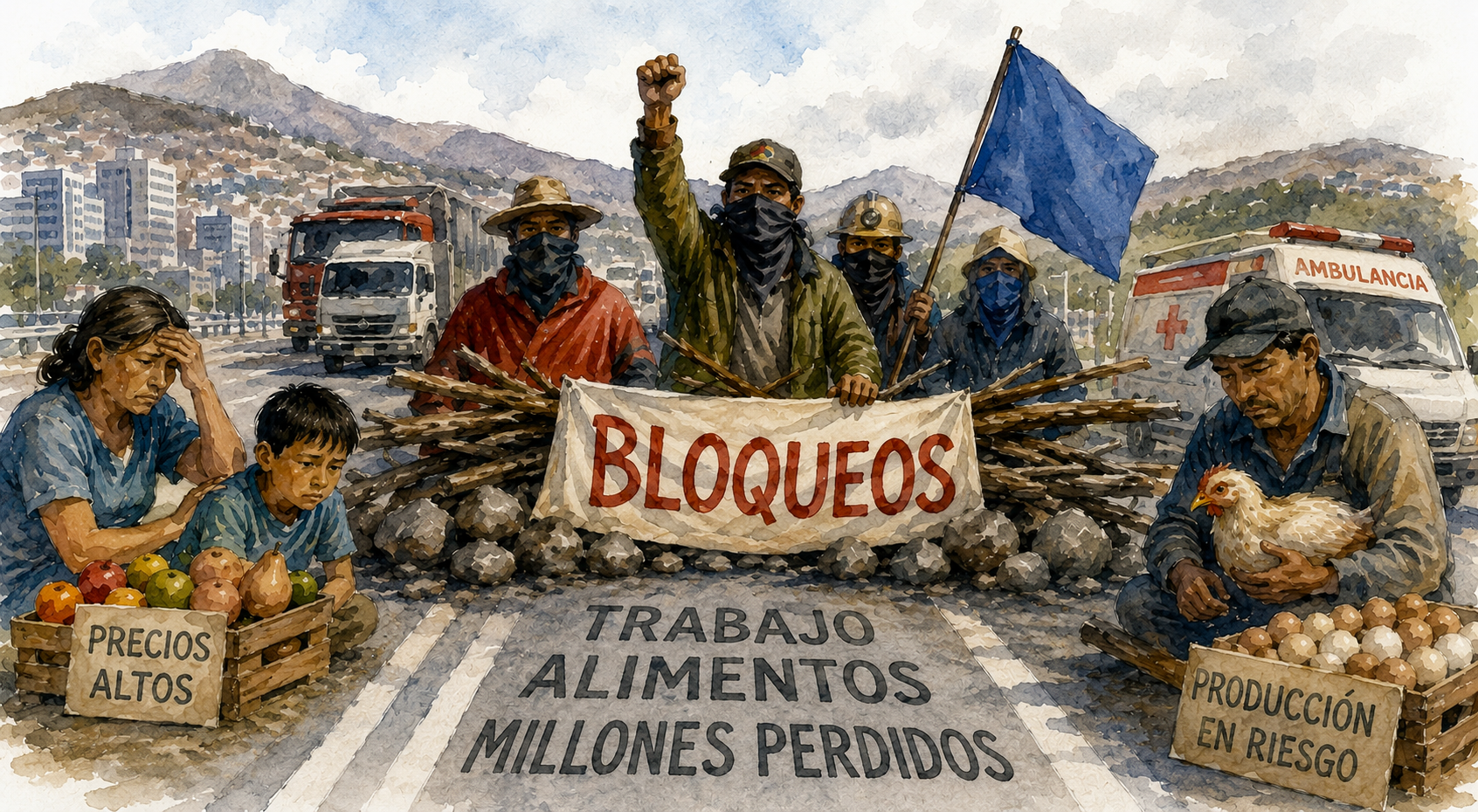
The repeal comes at the worst possible moment to assess it calmly: Bolivia has endured more than three weeks of highway blockades, La Paz is virtually under siege, clashes are taking place in El Alto, and growing calls for the resignation of President Rodrigo Paz, who took office only six months ago.
What Law 1341 Was and Why It Mattered
Law 1341, promoted in 2020 by then-Senate President Eva Copa, did not create the state of exception — that already existed in the Constitution — but rather regulated it: it established time limits, precise grounds, untouchable rights, accountability mechanisms, and, crucially, criminal liability for those who violated them.
Its repeal does not eliminate the possibility of declaring a state of exception. That authority still exists under Article 137 of the Political Constitution of the State. What disappears is everything Law 1341 added beyond that article: the detailed procedure, concrete limits, and consequences for those who abuse the measure.
The repeal of Law 1341 removes a series of limits and safeguards that regulated the state of exception in Bolivia. The maximum limit of 60 calendar days for its duration disappears, as does the obligation to specifically justify each restriction of rights. The Foreign Ministry’s duty to notify the OAS and the UN within 24 hours is eliminated, along with the explicit catalog of untouchable rights, including life, personal integrity, access to information, and judicial guarantees. The law also ceases to establish criminal, civil, and administrative liability for officials who violate rights under the protection of a state of exception, and removes the clarification that “due obedience” does not exempt someone from guilt. In addition, the prohibition on declaring a second state of exception without prior legislative authorization disappears, as does the explicit requirement that adopted measures be reasonable and proportional to the threat motivating them.
What Remains: Article 137 as the Only Foundation
Article 137 of the Bolivian Constitution is brief. It establishes that the President may declare a state of exception in the event of danger to state security, external threat, internal unrest, or natural disaster. It states that this is done through a Supreme Decree. And it says that the Legislative Assembly must “consider” the measure within 72 hours. Nothing more.
What Article 137 does not say is precisely what is now missing: how long it may last, which rights may be restricted and which may not, how each measure must be justified, what happens if the Assembly rejects it, or what consequences follow from abuse. That ambiguity was precisely what Law 1341 was meant to fill.
Together with Article 137 of the Constitution, Articles 138, 139, and 140 provide general notions without establishing clear deadlines or procedures: they state that a state of exception in Bolivia must subsequently be approved by the Plurinational Legislative Assembly within 72 hours of its declaration, maintaining a strict and proportional relationship with the situation that motivated it and without generally suspending constitutional rights. In addition, the Executive is obligated to render accounts regarding the causes and use of extraordinary powers, while any violation of rights may lead to criminal proceedings. The Constitution also prohibits granting extraordinary powers outside constitutional limits, preventing the concentration of public power or leaving rights and guarantees at the mercy of a single authority, and establishes that no constitutional reform may begin while a state of exception is in force. Finally, once concluded, another state of exception may not be declared during the following year unless previously authorized by the Legislature.
International human rights treaties — the American Convention on Human Rights and the International Covenant on Civil and Political Rights — remain part of Bolivia’s domestic law under Article 410 of the Constitution. But the difference now is that there is no concrete national regulation translating them into applicable procedures or enforceable responsibilities for individual officials.
What This Means in Practice
• The Executive may declare a state of exception with fewer formal requirements
• The Assembly must “consider” it within 72 hours, but the Constitution does not establish what happens if it rejects it
• There is no legal cap on duration: it could be extended without an explicit limit
• Liability for officials who abuse their authority reverts to ordinary law, without a specific regulation
• Successive states of exception could be declared without requiring prior legislative authorization
• The catalog of untouchable rights shifts from being a domestic legal obligation to depending on international treaties with more diffuse application
What Comes Next: The Move to Deputies and the Legal Vacuum
The bill was sent this Sunday to the Chamber of Deputies, which initially referred it to the Constitutional Commission and rejected an extraordinary virtual session, meaning the debate would reach the floor no earlier than Tuesday. If that chamber approves it — which could occur in the coming hours given the urgency with which it was handled in the Senate — the repeal would be enacted and enter into force upon promulgation by President Rodrigo Paz.
Some senators spoke of drafting a new “fair and balanced” law. Until such a law exists, Bolivia will operate in a legal vacuum regarding states of exception: with the tool constitutionally enabled, but without the regulation that imposes limits on it, meaning the presidential decree itself would effectively define those limits.
The Ombudsman’s Office, the Catholic Church, and the Permanent Assembly for Human Rights of El Alto issued a joint statement today calling for calm and respect for fundamental rights. They did not specifically comment on the repeal, which was approved in the late afternoon hours.
Por El Pais:
Estado de Excepción: ¿Qué implica y qué pasa tras la abrogación de la Ley 1341?
La Ley regulaba el procedimiento detallado, los límites concretos y las consecuencias para quienes abusen de la medida
Estado de excepción
En una sesión convocada en la Casa de la Libertad de Sucre para celebrar el 217.° aniversario de Chuquisaca, el pleno de la Cámara de Senadores aprobó por más de dos tercios —y en tiempo récord— el proyecto de ley que deroga la Ley N.° 1341, la norma que desde julio de 2020 regulaba los estados de excepción en Bolivia. El texto fue remitido de inmediato a la Cámara de Diputados para su revisión, que en principio rechazó la convocatoria virtual y remitió el texto a la Comisión de Constitución, por lo que como pronto, llegaría el martes.
La iniciativa fue presentada de forma sorpresiva por el presidente del Senado, Diego Ávila Navajas, e ingresó a votación por dispensación de trámites. Solo tres senadores, identificados con el bloque del vicepresidente Edmand Lara, votaron en contra.
La abrogación se produce en el peor momento posible para medirla con calma: Bolivia lleva más de tres semanas con bloqueos de carreteras, La Paz virtualmente sitiada, enfrentamientos en El Alto y una demanda de renuncia que crece sobre el presidente Rodrigo Paz, quien llegó al poder hace apenas seis meses.
Qué era la ley 1341 y por qué importaba
La Ley 1341, impulsada en 2020 por la entonces presidenta del Senado Eva Copa, no creaba el estado de excepción —eso ya estaba en la Constitución— sino que lo regulaba: establecía plazos, causales precisas, derechos intocables, mecanismos de rendición de cuentas y, crucialmente, responsabilidad penal para quien los violara.
Su abrogación no elimina la posibilidad de declarar el estado de excepción. Eso lo sigue habilitando el artículo 137 de la Constitución Política del Estado. Lo que desaparece es todo lo que la Ley 1341 añadía por encima de ese artículo: el procedimiento detallado, los límites concretos y las consecuencias para quienes abusen de la medida.
La abrogación de la Ley 1341 elimina una serie de límites y salvaguardas que regulaban el estado de excepción en Bolivia. Desaparece el tope máximo de 60 días calendario para su vigencia y también la obligación de justificar de forma concreta cada restricción de derechos. Se elimina el deber de la Cancillería de notificar en 24 horas a la OEA y la ONU, así como el catálogo explícito de derechos intocables, entre ellos la vida, la integridad personal, el acceso a la información y las garantías judiciales. La norma también deja de establecer responsabilidades penales, civiles y administrativas para los funcionarios que vulneren derechos bajo el amparo del estado de excepción, y borra la aclaración de que la obediencia debida no exime de culpa. Además, desaparece la prohibición de declarar un segundo estado de excepción sin autorización legislativa previa y se elimina el requisito expreso de que las medidas adoptadas sean razonables y proporcionales a la amenaza que las motiva.
Qué queda: el artículo 137 como único piso
El artículo 137 de la Constitución boliviana es una norma breve. Establece que el Presidente puede declarar el estado de excepción ante peligro para la seguridad del Estado, amenaza externa, conmoción interna o desastre natural. Que lo hace mediante Decreto Supremo. Y que la Asamblea Legislativa debe “considerar” la medida en 72 horas. Nada más.
Lo que no dice el artículo 137 es todo lo que ahora falta: cuánto puede durar, qué derechos pueden restringirse y cuáles no, cómo debe fundamentarse cada medida, qué pasa si la Asamblea la rechaza, ni qué consecuencias tiene el abuso. Esa ambigüedad era, precisamente, lo que la Ley 1341 venía a llenar.
Junto al 137 de la CPE, el 138, 139 y 140 dan nociones generales sin establecer plazos ni procedimientos claros: establecen que un estado de excepción en Bolivia debe ser aprobado posteriormente por la Asamblea Legislativa Plurinacional dentro de las 72 horas siguientes a su declaración, manteniendo una relación estricta y proporcional con la situación que lo motivó y sin suspender de manera general los derechos constitucionales. Además, el Ejecutivo está obligado a rendir cuentas sobre las causas y el uso de las facultades extraordinarias, mientras que cualquier vulneración de derechos puede derivar en procesos penales. La Constitución también prohíbe conceder poderes extraordinarios fuera de los límites constitucionales, impedir la concentración del poder público o dejar los derechos y garantías a merced de una sola autoridad, y establece que no puede iniciarse una reforma constitucional mientras esté vigente un estado de excepción. Finalmente, una vez concluido, no podrá declararse otro durante el siguiente año salvo autorización previa del Legislativo.
Los tratados internacionales de derechos humanos —el Pacto de San José de Costa Rica y el Pacto Internacional de Derechos Civiles y Políticos— siguen siendo derecho interno boliviano por el artículo 410 de la Constitución. Pero la diferencia es que ahora no hay norma nacional concreta que los traduzca en procedimientos aplicables ni en responsabilidades exigibles a funcionarios individuales.
Lo que esto significa en la práctica
• El Ejecutivo puede declarar el estado de excepción con menos requisitos formales
• La Asamblea debe “considerarlo” en 72 hs., pero la CPE no establece qué consecuencia tiene su rechazo
• No hay tope de días en ley ordinaria: podría prorrogarse sin límite explícito
• La responsabilidad del funcionario que abuse queda remitida al derecho común, sin norma específica
• Pueden declararse estados de excepción sucesivos sin necesitar autorización legislativa previa
• El catálogo de derechos intocables pasa de ser obligación legal interna a depender de tratados internacionales de aplicación más difusa
Qué sigue: el paso a diputados y el vacío legal
El proyecto fue remitido este domingo a la Cámara de Diputados, que en principio lo remitió a Comisión de Constitución y rechazó una sesión extraordinaria virtual, por lo que como pronto llegaría la sesión sería el martes. Si esa cámara lo aprueba —lo que podría ocurrir en las próximas horas dada la urgencia con que fue tratado en el Senado— la abrogación quedaría sancionada y entraría en vigor con su promulgación por parte del presidente Rodrigo Paz.
Algunos senadores hablaron de que se trabajará en una nueva ley “justa y equilibrada”. Mientras esa norma no exista, Bolivia operará en un vacío legal en materia de estados de excepción: con la herramienta habilitada constitucionalmente, pero sin el reglamento que le pone límites, por lo que sería el propio Decreto presidencial el que los regulara.
La Defensoría del Pueblo, la Iglesia Católica y la Asamblea Permanente de Derechos Humanos de El Alto emitieron hoy un pronunciamiento conjunto llamando a la calma y al respeto de los derechos fundamentales. No se pronunciaron específicamente sobre la abrogación, cuya aprobación ocurrió en las últimas horas de la tarde.
 Bolivian Thoughts | Pensamientos Bolivianos (Bilingual/Bilingüe)
Leave a comment