By Carlos Toranzo, Brujula Digital:
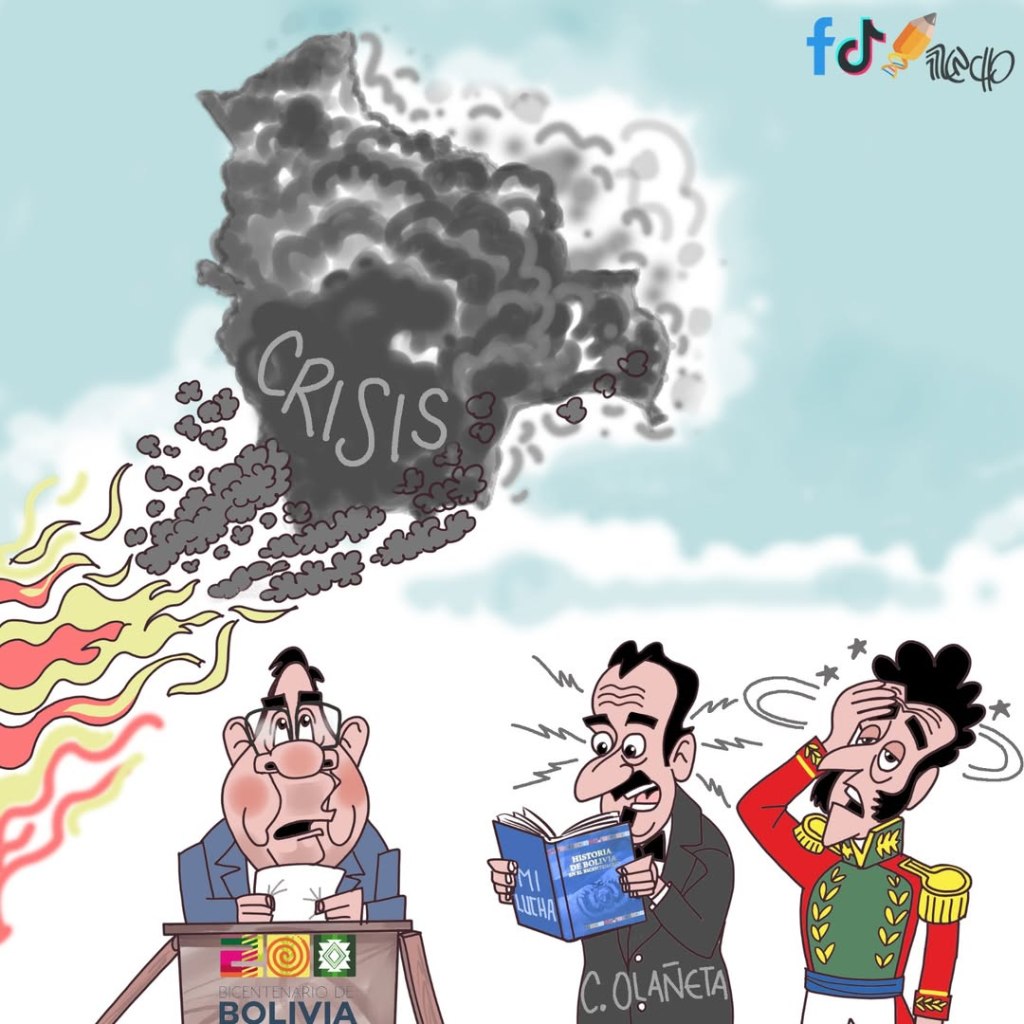
Even before the electoral runoff, it was known that Evo Morales would not remain still; his non-electoral Plan B was to destabilize whichever government came to power. It was the chronicle of an announced conspiracy, now already underway. Lara’s presence alongside Loza in Cochabamba is the explicit manifestation of that conspiracy, one sheltered by several social movements unwilling to lose their privileges.
But there is something even more serious: all of them have the blessing of drug trafficking, which wants to continue living as it did during the previous 20 years, when the State did not confront it. Drug traffickers know that the presence of the DEA or American military personnel represents a major threat to their business; therefore, they will do everything possible to wear down or overthrow Rodrigo Paz.
The blow against Marset disrupted the narco networks in Bolivia, which is why acts of vigilante killings and sicario violence have become more visible. The unclear issue surrounding the initials also smells of drug trafficking, but it simultaneously smells of governmental inefficiency and the absence of clear explanations.
But not everything can be reduced to those conspiracies. There are also internal “conspiracies” within the government; on one side stands the subversive action of Lara in alliance with the MAS.
Other internal “conspiracies” are the government’s lack of decision-making, its tendency to talk and talk without defining anything. The gasoline issue grew because there was never a single coherent version, because the government lied and concealed the problem; therein lies one of the visible elements of governmental destabilization.
Added to this is the fact that there is a President, but no governing team; the principal ministers do not act collectively or in harmony, but rather are in conflict with one another.
There is no vision for the country, only sophisms about the homeland or Bolivia in the world and the world in Bolivia, without looking inward to solve domestic problems. There is far too much triumphalist self-contemplation, staring only at one’s own navel instead of raising one’s head to develop strategic visions.
Since the first-round results, it was known that Parliament should become a space for agreements, for building a stronger foundation of negotiated democracy. But Parliament does not exist; it is mediocre, and there are no agreements to guide the country toward development or, at the very least, toward political stabilization.
Efficient minorities are acting; they do not see the common interest, but rather the privileges of patronage-based leaderships. The COB, a corrupt institution, was already dead before this government took office; the population viewed it as a den of immorality, devoid of values and discredited. But the government revived it and gave it new life.
The government did not ensure that the full weight of the law fell upon the person responsible for human trafficking; that is why Morales now conspires openly in broad daylight. His social movements do not want specific demands addressed; no, what they want is Rodrigo Paz’s resignation in order to return to the past 20 years of autocracy.
The majority of the population does not want that return to the past; it does not want to live under the command of an autocracy. Bolivians want to live in democracy, but the government is not helping in that effort.
Nevertheless, there is still time and, above all, the need for the government to make a sharp change in direction. That does not only mean resorting to repression, but governing while enforcing the law, respecting the rule of law, engaging in dialogue, yet without becoming slaves to corporatism. Above all, effective state administration, transparency, and a political pact to achieve governability are required.
There is a favorable international environment for pushing all this forward, but what is needed is government and teamwork.
Carlos Toranzo is an economist.
Por Carlos Toranzo Roca, Brujula Digital:
Desde antes de la segunda vuelta electoral se sabía que Evo Morales no se quedaría quieto; su plan B no electoral era desestabilizar al gobierno que llegue al poder. Era la crónica de una conspiración anunciada, que ahora está en marcha. La presencia de Lara junto a Loza en Cochabamba es la explicitación de esa conspiración, la cual está cobijada por varios movimientos sociales que no quieren perder sus privilegios.
Pero hay algo más grave: todos ellos tienen el beneplácito del narcotráfico, el cual quiere vivir como en los 20 años anteriores en que el Estado no lo enfrentaba. El narco sabe que la presencia de la DEA o de militares americanos es un peligro muy fuerte para sus negocios; por ello harán lo posible por desgastar o tumbar a Rodrigo Paz.
El golpe a Marset desordenó al narco en Bolivia, por eso son más visibles los actos de ajusticiamiento y de violencia del sicariato. El tema no claro de las siglas huele también a narcotráfico, pero huele paralelamente a ineficiencia gubernamental y a ausencia de explicaciones claras.
Pero no todo se resume en esas conspiraciones. También hay “conspiraciones” internas en el gobierno; por un lado, está la acción subversiva de Lara en unión con el MAS.
Otras “conspiraciones” internas son la falta de decisiones del gobierno, su impulso a hablar y hablar sin definir nada. El tema de la gasolina creció por no dar una sola versión, por mentir y ocultar el problema; ahí está uno de los elementos visibles de la desestabilización gubernamental.
A eso se suma que hay Presidente pero no hay equipo gubernamental; los principales ministros no actúan en grupo, en consonancia, más bien están enfrentados entre sí.
No hay una visión de país, solo sofismas de patria o Bolivia en el mundo y el mundo en Bolivia, pero sin mirar y solucionar los problemas internos. Existe mucha mirada triunfalista de observarse solo el ombligo propio, sin levantar la cabeza para tener visiones estratégicas.
Desde los resultados de la primera vuelta se sabía que el Parlamento debía ser un escenario de concertaciones, de generación de un piso más de democracia pactada. Pero el parlamento no existe, es mediocre y no hay acuerdos para llevar al país hacia el desarrollo o, por lo menos, a la estabilización política.
Las minorías eficientes están actuando; ellas no ven el interés común, sino los privilegios de las dirigencias prebendales. La COB, institución corrupta, estaba muerta antes de la posesión de este gobierno; la población la miraba como un antro sin moral, sin valores, descalificada. Pero el gobierno la hizo revivir, le dio aire.
El gobierno no impulsó que el peso de la ley caiga sobre el responsable de trata de personas; por eso ahora Morales conspira a la luz del día. Sus movimientos sociales no quieren reivindicaciones puntuales, no, lo que quieren es la renuncia de Rodrigo Paz para volver al pasado de 20 años de autocracia.
La mayoría de la población no desea ese retorno al pasado, no desea vivir bajo el mando de una autocracia. Los bolivianos queremos vivir en democracia, pero el gobierno no está ayudando en este afán.
Sin embargo, hay tiempo y, ante todo, la necesidad de que el gobierno dé un golpe de timón. Eso no implica solo acudir a la represión, sino gobernar haciendo respetar la ley, el estado de derecho, dialogando, pero sin ser esclavos del corporativismo. Pero, ante todo, se requiere eficacia en la administración del Estado, transparencia y un pacto político para lograr la gobernabilidad.
Hay un escenario internacional propicio para empujar todo esto, pero se precisa gobierno y trabajo de equipo.
Carlos Toranzo es economista.
https://brujuladigital.net/opinion/conspiraciones-contra-la-democracia


Leave a Reply