By Álvaro Ríos, Vision 360:
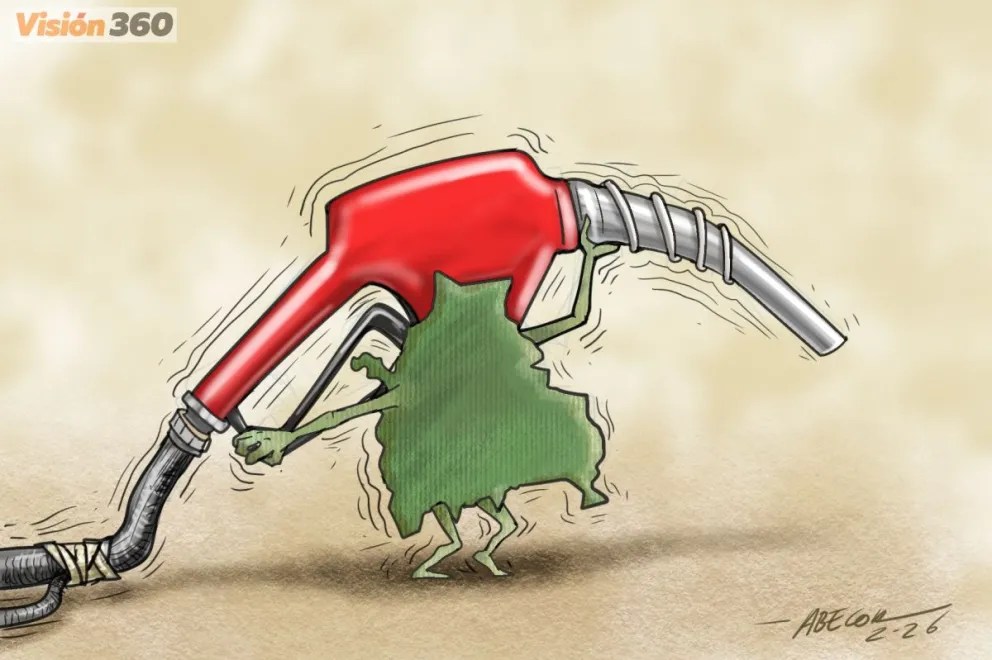
I sense that the energy shortage could bring the country to its knees. I hope I am completely wrong and that we are able to communicate and make Bolivians understand that major changes are necessary and that we are going to suffer.
Bolivia is moving along a very delicate path toward a chronic energy shortage. This is foreseeable because part of the Bolivian population, for 20 years (2005–2025), has been indoctrinated by the Movement Toward Socialism (MAS) into believing that the almighty State can do everything. In other words, that the welfare State — with its ministries, institutions, and hundreds of public companies — can invest and provide the country with everything: healthcare, education, food, energy, highways, a fixed exchange-rate currency, and much more.
This ideological indoctrination by MAS took place after it inherited, in 2005, a country with proven gas reserves close to 13 to 14 trillion cubic feet (TCF) and hundreds of billions of barrels of oil and liquids associated with natural gas. From 2005 to 2025, nearly USD 70 billion were exported in natural gas, LPG, and reconstituted crude oil. Annual export revenues exceeded USD 6 billion.
There was fresh cash for everything. So that YPFB and ENDE, with their own resources and loans from the Central Bank of Bolivia (with kickbacks included, of course), could build whatever they pleased. YPFB invested in biodiesel plants, urea plants, and refinery modernization projects that had no guaranteed raw material supply or were located in unsuitable places. It drilled several “patriotic” wells simply to celebrate departmental anniversaries. The same happened at ENDE, where combined-cycle plants were purchased recklessly, creating an enormous oversupply, along with other unnecessary infrastructure such as the electricity export line to Argentina. None of ENDE’s or YPFB’s projects went through even a basic feasibility study. These companies became tools serving the political power of the day and its triumphalist propaganda.
Those were glory days. “YPFB, the force that moves Bolivia,” “Bolivia, the energy-exporting heart of Latin America,” “We have a sea of gas that you cannot even imagine,” and much more. The reality of the energy industry, however, was moving in the opposite direction. Gas and oil reserves were not being replenished, gasoline and diesel imports were increasing sharply, gas exports had been declining rapidly since 2015, and the infrastructure that had been built was gradually left with idle capacity.
Subsidies for all energy products were maintained under the boast that “the people” were being protected. ENDE and YPFB gradually became marginal companies — and, frankly speaking, deficit-ridden ones with large debts owed to the State. At the beginning of 2025, the whole mess exploded. There were no dollars left — neither at YPFB nor at the Central Bank — to import gasoline and diesel, and the country fell into chronic shortages. The blame was placed on rough seas, the start of the school year, excess demand, and so on, while underneath it all major backroom diesel deals were taking place.
Well, if things continue this way, by 2030 there will be no gas exports, while energy imports (including diesel, gasoline, jet fuel, natural gas, and LPG) will range between USD 3.2 and 3.5 billion at USD 80 per barrel. And where will the dollars come from? That is why several tough measures must be taken to supply the country and stop the hemorrhaging caused by imports. It must begin with approving a Hydrocarbons Law to attract private capital into exploration, naturally by reducing taxes and “raising prices.” ENDE and YPFB must be made viable again (downsizing them, merging them, partnering them with private capital, shutting down unproductive units, privatizing some operations, etc.). Subsidies on diesel, gasoline, natural gas, and LPG must be eliminated so prices fluctuate according to international prices, just like the exchange rate. At the same time, the country must turn to the IMF for fresh money and ask the population to endure hardship.
From the surveys I have conducted, I am convinced that part of the Bolivian people still believe YPFB and ENDE are swimming in money, should not be touched, and must remain exactly as they are. That these two companies, together with the almighty State, can continue supplying subsidized energy and provide the country with everything it needs indefinitely and without any problem. That new Electricity and Hydrocarbons laws are unnecessary, and that private capital is not needed because it would only “loot” the country’s natural resources. That turning to the International Monetary Fund for fresh cash to solve the country’s energy supply problem is heresy.
In other words, part of the Bolivian population believes we are still living in times of energy and economic prosperity. Because of this, I see it as extremely difficult to approve laws, remove subsidies, and restructure YPFB and ENDE in order to stop losing money. As some political scientists told me about three weeks ago: “Bolivia has not yet hit rock bottom.” I have the feeling that until this happens, the structural changes mentioned above in the energy sector will be nearly impossible to carry out — even more so given the current politicization in the country, which is affecting the democratic system.
I sense that the energy shortage could bring the country to its knees. I hope I am completely wrong and that we are able to communicate and make Bolivians understand that these changes are absolutely necessary and that we are going to suffer. Narrative and reality are extremely important when trying to implement change.
Por Álvaro Ríos, Vision 360:
Presiento que el desabastecimiento de energia puede llevarse al país por adelante. Ojalá este totalmente equivocado y que seamos capaces de comunicar y hacer entender a los bolivianos que los cambios son muy necesarios y que vamos a sufrir.
Bolivia transita por un muy delicado sendero hacia un desabastecimiento crónico de energia. Lo anterior es previsible en razón a que una parte la población boliviana, por 20 años (2005 – 2025), ha sido adoctrinada por el Movimiento al Socialismo (MAS), de que el papa Estado lo puede todo. Es decir, el Estado benefactor con sus ministerios, sus instituciones y sus cientos de empresas públicas pueden invertir y dotarle al país de todo. Salud, educación, alimentos, energia, carreteras, moneda a cambio fijo y mucho más.
Este adoctrinamiento ideológico del MAS se llevó a cabo cuando el 2005 recibió un país con reservas probadas de gas cercanas a los 13 a 14 trillones de pies cúbicos (TPC) y cientos billones de barriles de petróleo y líquidos asociados al gas natural. Desde 2005 a 2025 se han exportado cerca de 70,000 MMUSD entre gas natural, GLP y crudo reconstituido. Los ingresos anuales por exportaciones llegaron a sobrepasar los 6,000 MMUS.
Había platita fresca para todo. Para que YPFB y ENDE con recursos propios y con préstamos del Banco Central de Bolivia (diezmos de por medio por supuesto) construyera lo que se venía en gana. YPFB en plantas de biodiesel, urea y modernización refinerías que no tenían materia prima asegurada o se ubicaban en lugares inadecuados. Perforación de varios pozos patrióticos solo para celebrar aniversarios departamentales. Lo mismo ocurría en ENDE donde se compraron sin son ni ton plantas de ciclos combinado y generar sobre oferta descomunal y otra infraestructura no necesaria como la línea de exportación de electricidad a Argentina. Ningún proyecto de ENDE o YPFB pasaba un básico estudio de factibilidad. Empresas al servicio del poder político de turno y de la propaganda exitista.
Eran tiempos de gloria. “YPFB la fuerza que mueve Bolivia”, Bolivia corazón energético exportador de Latinoamerica”, “Tenemos un mar de gas que ustedes no visualizan” y mucho más. La realidad de la industria energética, sin embargo, iba en dirección contraria. No se reponían reservas de gas y petróleo, las importaciones de gasolina y diésel en notable aumento, las exportaciones de gas declinaban aceleradamente desde 2015 y la infraestructura construida iba quedando con capacidad ociosa.
Se preservaban los subsidios a todos los energéticos vanagloriando que se protegía al pueblo. Ende e YPFB pasaron de a poco a ser empresas marginales y porque no decirlo deficitarias y con elevadas deudas al Estado. A principios de 2025 estallo el quilombo. No había dolarcitos (divisas) ni en YPFB ni en el BCB para importar gasolina y diésel y se desabasteció crónicamente al país. La culpa la tenían la marejada, el inicio de clases, la sobredemanda, etc., mientras por debajo se hacía grandes negociados con el diésel.
Bueno como van las cosas el 2030 no habrá exportaciones de gas, las importaciones de energia (incluyendo diésel, gasolina, jet fuel, gas natural y GLP) bordearan los 3,200 a 3,500 MMUS a 80 USD/barril. ¿Y los dólares de dónde saldrán? Por eso hay que tomar varias y duras medidas para abastecer el país y parar la sangría de la importación. Empezando por aprobar una Ley de Hidrocarburos para atraer capital privado a exploración, por supuesto reduciendo impuestos y “subiendo precios”. Se debe hacer viables a ENDE e YPFB (achicarlas, fusionarla, asociarlas al capital privado, cerrar unidades improductivas, privatizar algunas unidades, etc.). Se debe quitar subsidios al diésel, a la gasolina, al gas natural y al GLP y que los precios fluctúen con los precios internacionales, así como el tipo de cambio de la moneda. Paralelamente se debe acudir al FMI y pedirle dinero fresco y a la población que sufra.
Hecho mi sondeo, estoy convencido que una parte del pueblo boliviano sigue pensando que YPFB y ENDE están forradas de dinero y no se deben tocar y deben quedar como están. Que estas dos empresas con el papa Estado pueden seguir entregando energia subvencionada y abastecer al país sin ningún problema e indefinidamente. Que no es necesario nuevas Leyes de Electricidad e Hidrocarburos y que el capital privado es innecesario para que además saqueen los recursos naturales del país. Que es una herejía acudir al Fondo Monetario Internacional para conseguir platita fresca y solucionar el abastecimiento de energia al país.
En otras palabras, una parte de la población boliviana percibe que seguimos en bonanza energética y económica. Por lo expuesto, es que veo muy complejo aprobar leyes y quitar subsidios y rearmar YPFB y ENDE para no seguir perdiendo plata. Como me comentaron unos politólogos hace unas tres semanas: “Bolivia no ha tocado fondo aun”. Tengo el presentimiento que mientras esto no ocurra, los cambios estructurales mencionados arriba en el sector energético serán casi imposibles de sacar adelante y mucho peor con la politización existente actual en el país para afectar el régimen democrático.
Presiento que el desabastecimiento de energia puede llevarse al país por adelante. Ojalá este totalmente equivocado y que seamos capaces de comunicar y hacer entender a los bolivianos que los cambios son muy necesarios y que vamos a sufrir. El relato y la realidad son muy importante a la hora de tratar de hacer cambios.


Leave a Reply