
By El Potosi:
Gold and silver are luring many because of today’s spectacular market values.
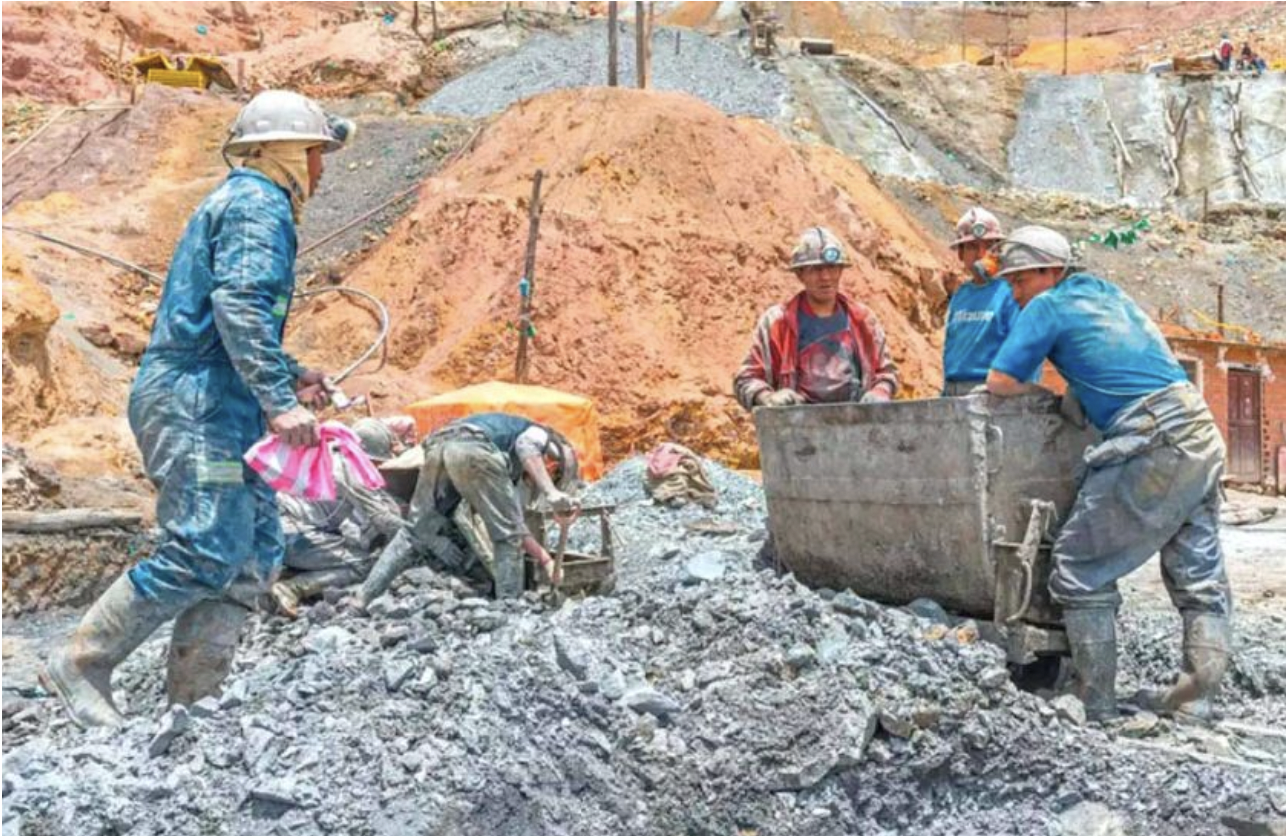
Many want to enter the mining business. El Potosí
The high international prices of various minerals appear to be encouraging the growth of legal mining in the Department of Potosí.
The dean of the Faculty of Mining Engineering at Tomás Frías Autonomous University (UATF), Epifanio Mamani, pointed out that prices are rising in an unprecedented way, making this productive sector attractive to many people.
As a result, many communities are seeing the emergence of so-called mining cooperatives that compete for work areas with those who already hold rights to exploit the subsoil.
He noted that in Cerro Rico there is also intense exploitation due to the high price of silver, and the same is happening in other regions near the city of Potosí.
The interviewee regrets that there is an unusual amount of illegal mining activity, as it disregards environmental aspects and proper production practices, operates without extraction regulations, and lacks safety measures — leading to an increase in mine accidents and deaths in tunnels.
GOLD
With a price of $3,844 per troy ounce, gold is the most precious metal and is driving mining activity not only in Potosí but also in several regions of the country.
A December 2024 report from the Secretariat of Mother Earth of the Autonomous Departmental Government of Potosí revealed that the department had around 300 gold extraction operations, of which only about 25 percent were either licensed or in the process of obtaining permits.
Most gold mining operations take place in the San Juan del Oro basin, which includes the municipalities of Tupiza and Cotagaita.
It is estimated that in those areas there are between 200 and 300 gold mining operations, about 25 percent of which may have or be processing licenses, while the rest are operating illegally.
He mentioned that many of these operations are mobile and can move from one point to another, making it difficult to verify their documentation.
This large number of illegal gold mining operations in the southern region of the Department of Potosí is reportedly backed by Chinese, Colombian, Peruvian, and Chilean investors, according to researcher Alfredo Zaconeta from the Center for Labor and Agrarian Studies (Cedla).
Por El Potosi:
El oro y la plata seducen a muchos debido a las espectaculares cotizaciones que tienen hoy.
Muchos quieren entrar a la actividad minera. EL POTOSÍ
Las elevadas cotizaciones internacionales de los diferentes minerales estarían incentivando a un mayor desarrollo de la minería legal en el Departamento de Potosí.
El decano de la Facultad de Ingeniería Minera de la Universidad Autónomo Tomás Frías (UATF), Epifanio Mamani, apuntó que los precios van subiendo de una forma nunca antes vista, lo cual hace que este rubro productivo sea atractivo para muchas personas.
Debido a ello es que en muchas comunidades surgen supuestas cooperativas mineras que disputan áreas de trabajo con quienes ostentan los derechos de explotación del subsuelo.
Apuntó que en el Cerro Rico también se está `produciendo una alta explotación debido al elevado precio de la plata y lo propio ocurre en otras regiones próximas a la ciudad de Potosí.
El entrevistado lamenta que exista un inusual trabajo ilegal minero porque no respeta los aspectos ambientales y las labores productivas propiamente dichas, no se basan en normas de extracción y carecen de elementos de seguridad, lo cual incide en el incremento de los accidentes en mina y las muertes en los socavones.
ORO
Con una cotización de 3.844 dólares la onza troy, el oro es el metal más preciado y genera actividades de explotación no solo en Potosí sino en varias regiones del país.
Un informe de diciembre de 2024 de la secretaría de la Madre Tierra del Gobierno Autónomo Departamental de Potosí da cuenta que en el Departamento existían alrededor de 300 operaciones de extracción de oro de las que apenas un 25 por ciento estaría entre las que tienen licencia y las que encaran trámite.
La mayoría de las operaciones de explotación de oro desarrollan su actividad en la cuenca San Juan del Oro que abarca los municipios de Tupiza y Cotagaita.
Se estima que en esas áreas existen entre 200 a 300 operaciones de explotación del metal precioso de las cuales un 25 por ciento podrían estar entre las que tienen licencia de operación y las que lo están tramitando, y el resto estaría operando de forma ilegal.
Comentó que muchas de esas operaciones son móviles y se pueden trasladar de un punto a otro con lo cual se dificulta el trabajo de verificación de sus documentos.
Esa gran cantidad de operaciones ilegales de explotación de oro en la región sud del Departamento de Potosí tendría por detrás a inversionistas chinos, colombianos, peruanos y chilenos, según señaló el investigador del Centro de Estudios Laborales y Agrarios (Cedla), Alfredo Zaconeta.

 Bolivian Thoughts | Pensamientos Bolivianos (Bilingual/Bilingüe)