
This dish was designed to provide energy to diners and is a fundamental part of the local culture, in addition to being an attraction for visitors seeking authentic flavors.
Flavors of the Yungas: Gastronomic destinations winning over tourists’ palates
The Yungas region of La Paz is much more than an ecological corridor of climatic and geographic transition. This area, with lush vegetation and winding roads, is also a culinary treasure that is gaining increasing prominence as a tourist attraction. With a gastronomic offering as diverse as its geography, the Yungas are becoming a flavorful route that invites visitors to discover the identity of this place through its cuisine.
Juan Carlos Nuñez, professor of the Hotel and Tourism Management program at the Franz Tamayo University (Unifranz), states that the area’s culinary offerings are diverse, thanks to its natural characteristics that attract tourists and due to the region’s unique flavors.
“With a gastronomic offering as diverse as its geography, the Yungas are becoming a flavorful route that invites the discovery of Bolivia’s deep identity through the palate,” says Nuñez.
From Pongo to Rurrenabaque, even reaching Ixiamas, passing through towns like Caranavi, Palos Blancos, or closer locations like Coroico, Chulumani, and Irupana, the Yungas offer a multisensory journey where cooking becomes living memory, cultural heritage, and a bridge between generations.
“You can find different dishes depending on the area you visit. For example, you can stop in Pongo and enjoy some good river trout,” highlights the academic. Pongo offers an attractive culinary experience: located less than an hour from La Paz, it is an emerging tourist destination that focuses on trout, with restaurants preparing it grilled, with lemon, among other common options.
Local products like plantain, cassava, hearts of palm, cacao, honey, tropical fruits, high-altitude coffee, and wild game form the basis of a cuisine that blends Afro-Bolivian, Aymara, and mestizo traditions. It is served in markets, fairs, restaurants, hotels, or new sustainable tourism ventures.
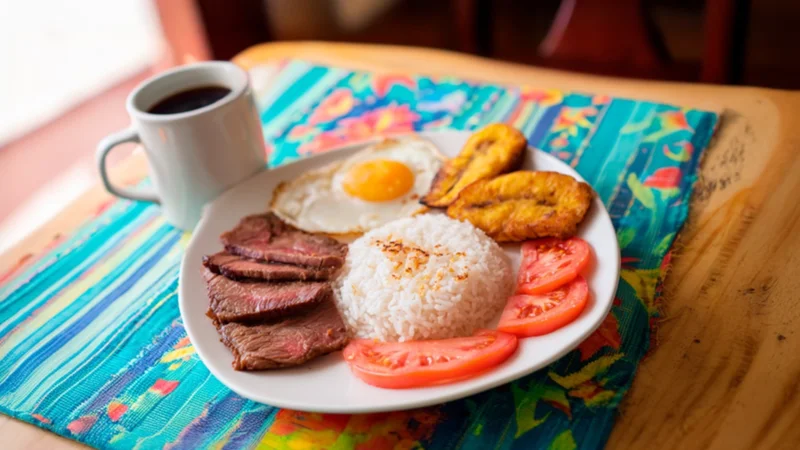
“One of the most traditional dishes is the yungueño breakfast, which includes rice, fried plantain, meat, egg, bread, and coffee, and is usually consumed in the morning because it provides energy,” notes Nuñez. The yungueño breakfast is famous for its generous portion, which may vary slightly in components, but generally includes egg, meat, cheese, tomato, and avocado, accompanied by regional coffee.
This dish was designed to provide energy to diners and is a fundamental part of the local culture, in addition to being an attraction for visitors seeking authentic flavors. Currently, the yungueño breakfast is included in the menus of restaurants and hotels as part of the tourist experience.
Another notable place is Yolosa. According to the academic, one can enjoy a good yungueño-coroiqueño lunch there based on “puti” (boiled green plantain), accompanied by rice and the day’s meat, which traditionally was a product of that morning’s hunt.
For the more adventurous, the offering includes gastronomic experiences in eco-lodges or communities, where local residents teach visitors how to prepare traditional dishes such as chicken escabeche (a chicken-based soup, but without vinegar), accompanied by whole ripe plantain, tomato slices, carrot sticks, onion, potato, and the soup seasoned with a mix of pepper, cumin, and oil cooked over fire to give it the characteristic flavor of a dish typically eaten in Caranavi.
“In Palos Blancos, Sapecho, or Rurrenabaque, the offerings include freshwater fish like pacú, paiche, or catfish, grilled and wrapped in banana leaves, served with cassava and rice. In more remote, jungle areas, we find very exotic foods like alligator, which can be the meat of the day, though those are more extreme options. In the southern part of the Yungas, there are variations such as hualusa with coconut, honey, and a daily protein,” emphasizes the academic.
However, he notes that one of the most exotic dishes to eat in the Yungas region is the so-called fried tujo, a preparation made from local ants known as “hormiga culona” or “cepe.” It is a type of flying ant about three centimeters long. Its hind part, or abdomen, is what is eaten, usually fried and salted, sometimes mixed with rice.
“There are giant mushrooms in the Coroico area that are edible. In Paris, a dish of mushrooms is highly valued—over 100 euros—and in Bolivia, it costs less than five dollars,” explains Nuñez, pointing out another of the exotic culinary options. He also highlights that not everything is offered to foreign tourists, for reasons of food safety and hygiene.
One of the Yungas’ greatest prides is its high-altitude organic coffee, internationally recognized for its fruity aroma and balanced acidity. In municipalities like Caranavi, visitors can take part in coffee routes, where they learn about the entire process—from harvest to cup.
Eating in the Yungas means learning about its history of resilience and its living culture. The growing appreciation of local cuisine as a tourism resource has encouraged entrepreneurs to promote food fairs, coffee festivals, cacao routes, and tourism encounters.
With its diverse and authentic culinary offerings, the Yungas are increasingly attracting interest in gastronomic tourism—one savored dish by dish, sip by sip, leaving each traveler with the certainty of having experienced more than just a meal.
Por Red Uno de Bolivia:
Este platillo fue pensado para proporcionar energía a los comensales y es parte fundamental de la cultura local, además de ser un atractivo para los visitantes que buscan sabores auténticos.
Sabores de los Yungas: destinos gastronómicos que conquistan paladares de turistas
Los Yungas de La Paz son mucho más que un corredor ecológico de transición climática y geográfica. Esta región, de vegetación exuberante y caminos serpenteantes, es también un tesoro culinario que cada vez gana más protagonismo como atractivo turístico. Con una oferta gastronómica tan diversa como su geografía, los Yungas se están consolidando como una ruta de sabores que invita a descubrir la identidad de este lugar a través de su gastronomía.
Juan Carlos Nuñez, docente de la carrera de Administración Hotelera y Turismo de la Universidad Franz Tamayo, Unifranz, sostiene que la oferta gastronómica del lugar es variada, gracias a sus características naturales que atrae a los turistas y por los sabores únicos de la región.
“Con una oferta gastronómica tan diversa como su geografía, los Yungas se están consolidando como una ruta de sabores que invita a descubrir la identidad profunda de Bolivia a través del paladar”, afirma Nuñez.
Desde Pongo hasta Rurrenabaque, incluso hasta llegar a Ixiamas, pasando por pueblos como Caranavi, Palos Blancos o, más cerca, Coroico, Chulumani e Irupana, los Yungas ofrecen un viaje multisensorial donde la cocina se convierte en memoria viva, herencia cultural y puente entre generaciones.
“Se pueden encontrar diferentes platos dependiendo de la zona que se visite. Por ejemplo, se puede hacer una parada para comer en Pongo y degustar una buena trucha de río”, destaca el académico. Pongo ofrece una experiencia gastronómica atractiva: ubicado a menos de una hora de La Paz, es un destino turístico emergente que se centra en la trucha, con restaurantes que la preparan a la parrilla, al limón, entre otras opciones comunes.
Los productos locales como el plátano, la yuca, el palmito, el cacao, la miel, las frutas tropicales, el café de altura y la carne de monte son la base de una cocina que mezcla tradiciones afrobolivianas, aymaras y mestizas, y que se sirve en mercados, ferias, restaurantes, hoteles o nuevos emprendimientos turísticos con visión sostenible.
“Uno de los más tradicionales es el desayuno yungueño, que tiene arroz, plátano frito, carne, huevo, pan y café, y se consume especialmente en las mañanas porque brinda energía”, señala Nuñez. El desayuno yungueño es famoso por su generosa porción, que puede variar ligeramente en los componentes, pero generalmente incluye huevo, carne, queso, tomate y palta, acompañados de café de la región.
Este platillo fue pensado para proporcionar energía a los comensales y es parte fundamental de la cultura local, además de ser un atractivo para los visitantes que buscan sabores auténticos. Actualmente, el desayuno yungueño está incluido en los menús de restaurantes y hoteles como parte de la experiencia turística.
Otro lugar destacado es Yolosa. Según el académico, allí se puede disfrutar de un buen almuerzo yungueño-coroiqueño en base a “puti” (plátano verde cocido), acompañado de arroz y carne del día, que tradicionalmente era un producto de la caza de la mañana.
Para los más aventureros, la oferta incluye experiencias gastronómicas en ecoalbergues o comunidades, donde los propios pobladores enseñan a preparar platos típicos como el escabeche de pollo (una sopa a base de pollo pero sin vinagre), acompañada con plátano maduro entero, rodajas de tomate, bastones de zanahoria, cebolla, papa y la sopa especiada con una combinación de pimienta, comino y aceite sometidas al fuego para darle el sabor característico de un plato que generalmente se consume en Caranavi.
“En Palos Blancos, Sapecho o Rurrenabaque, la oferta incluye peces de agua dulce como pacú, paiche o bagre, cocidos a la brasa y envueltos en hojas de plátano, acompañados de yuca y arroz. En lugares más adentro, más selváticos, encontramos comida muy exótica como el lagarto, que puede ser la carne del día, aunque esas ya son opciones más extremas. En la parte sur de los Yungas, hay variaciones como la hualusa con coco, miel y una proteína del día”, enfatiza el académico.
Sin embargo, comenta que uno de los platos más exóticos para comer en la región yungueña es el llamado tujo frito, un preparado a base de hormigas de la región conocidas también como “hormiga culona” o “cepe”. Es una especie de hormiga voladora del tamaño aproximado de tres centímetros. Su parte trasera, o abdomen, es lo que se come, generalmente frito y con sal, e incluso mezclado con arroz.
“Hay hongos gigantes en la zona de Coroico que son comestibles, en París un plato de hongos es muy valorado, hablamos de más de 100 euros y en Bolivia menos de cinco dólares”, explica Nuñez, como otra de las ofertas de platos exóticos. Así también destaca que no todo se ofrece al turista extranjero, por razones de inocuidad e higiene.
Uno de los mayores orgullos de los Yungas es su café orgánico de altura, reconocido a nivel internacional por su aroma afrutado y su acidez equilibrada. En municipios como Caranavi se puede participar en rutas del café, donde el visitante conoce todo el proceso, desde la recolección hasta la taza.
Comer en los Yungas es aprender sobre su historia de resistencia y su cultura viva. La creciente valoración de la gastronomía local como recurso turístico ha impulsado a emprendedores a promover ferias gastronómicas, festivales de café, rutas del cacao y encuentros con el turismo.
Los Yungas, con su oferta culinaria diversa y auténtica, están atrayendo cada vez más el interés en el turismo gastronómico. Uno que se saborea plato a plato, sorbo a sorbo, y que deja en cada viajero la certeza de haber vivido algo más que una comida.

 Bolivian Thoughts | Pensamientos Bolivianos (Bilingual/Bilingüe)