
By Marcela Araúz, Visión 360:
This space is located in the La Paz neighborhood of Achumani
Marsia Taha holds the title of Best Chef in Latin America, according to the Latin America’s 50 Best ranking, and she invited us to explore the menu she offers at Arami, her restaurant inaugurated in January.
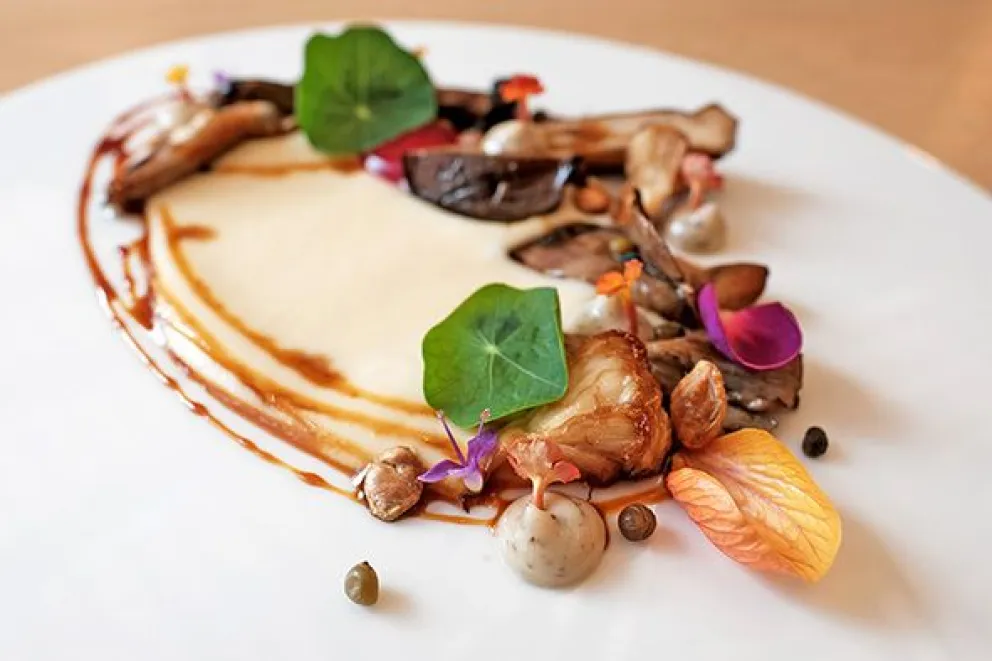
“Mushroom and lacayote,” another of the dishes. Photos: Christian Eugenio
The story of Fitzcarraldo, the iconic character by filmmaker Werner Herzog, tells us about the passionate man who longed to build an opera house in the heart of the Amazon. One of the most civilized human creations anchored in the midst of brutal greenery. And that’s what came to mind as I tasted Marsia Taha’s new gastronomic proposal at Arami: she has created a menu that, with absolute refinement, immerses us in the Bolivian Amazon jungle.
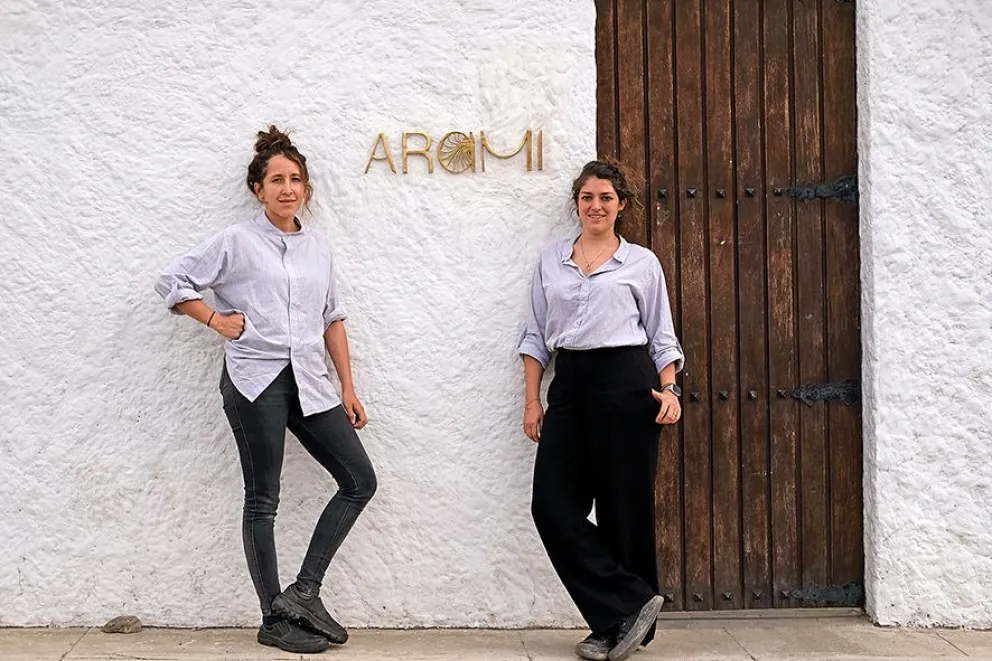
Arami was founded by Taha and sommelier Andrea Moscoso. Marsia is preceded by her legacy at Gustu, which is undoubtedly a watershed in contemporary Bolivian cuisine. Andrea, on the other hand, has rigorous experience at El Celler de Can Roca, one of Spain’s most renowned establishments, with three Michelin stars to its name. A sure bet.
This restaurant is located in the Achumani neighborhood, in the southern zone of La Paz. The space offers a visual cleanse: a light color palette, wooden furniture… the main kitchen counter, in plain sight, emulates the layers of a mushroom. There are only a few tables—no more than 10—and a simple garden. Zero frills.
The reasonable prices on the menu are worth appreciating, not only given the current economic crisis, but also because it’s encouraging to see a first-rate culinary proposal within reach of more people. “Elitism has left the group”: starters and desserts are Bs 50; main dishes, Bs 95. Add to that an exceptional service. An outstanding team.
That said, let’s dive in.
Land and river
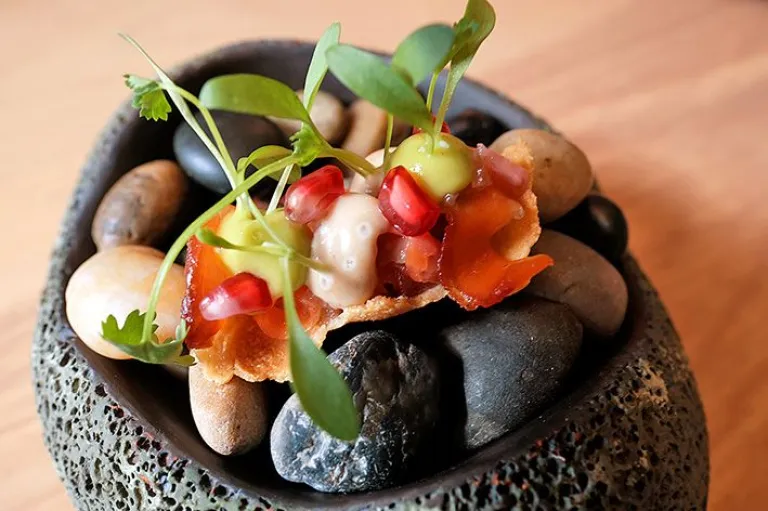
We began with a delicacy that unites the East and the West: cured trout croquette, spicy avocado emulsion with “ají gusanito”—the most intense chili in the country—and cilantro. A powerful amuse-bouche.
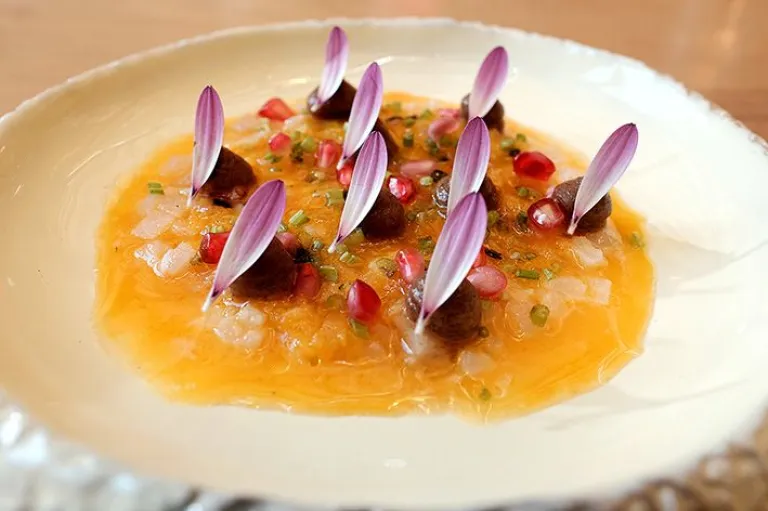
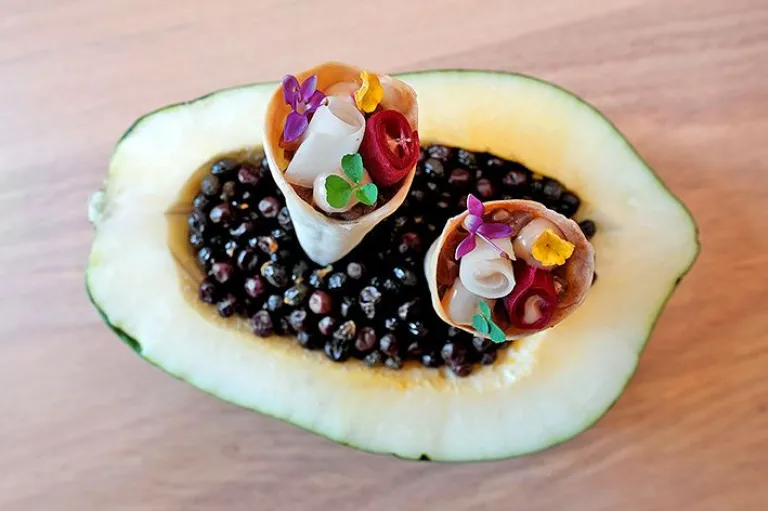
The second appetizer is caiman tail—the leanest part of the animal—served raw and aged for 12 hours; plated with grenadine, passion fruit, sweet granadilla, and payuje. Aware that without banana this dish might be too acidic, I still believe the banana feels out of place.
I admit it: I had never tried river croaker before going to Arami. It wasn’t on my radar. It is served in delicate slices with banana oil, alongside Brazil nut croquettes, sacha cilantro leaves, and Amazonian almond milk. I must say that of all the dishes, this was the least convincing, given the gummy texture of the fish and the lack of personality in its flavor. Moreover, the combination of ingredients results in a somewhat greasy finish.
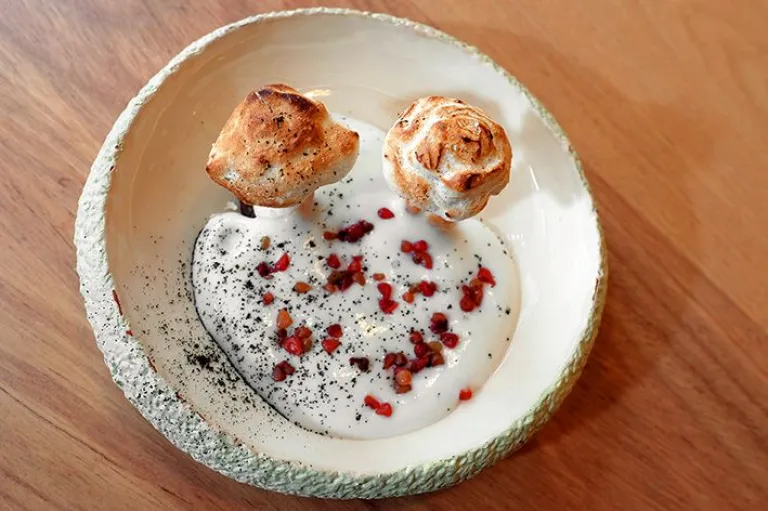
Next came the yuca bread with chivé aged for seven days, which contains casein—a milk protein—with honey. This bread plays an important role by cleansing the palate between the savory starters and the main courses to follow.
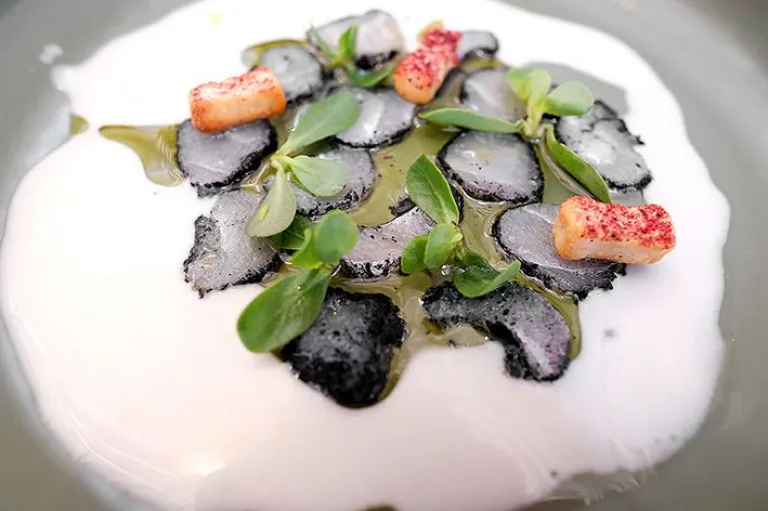
Joy could very well be named “mushroom and lacayote.” It is a dish crafted with different types of mushrooms such as pionino, lion’s mane, oyster, among others, sourced by Arami through Hongotopía. These are hard to produce in our territory, but Hongotopía has managed to grow them, the chef highlights.
The mushrooms rest on a base of lacayote with chancaca honey and edible flowers. The texture of grilled mushrooms combined with sweet notes deepens the fusion. This dish could be the main act of the show, as Marsia draws out all the qualities of the mushrooms and magnifies them.
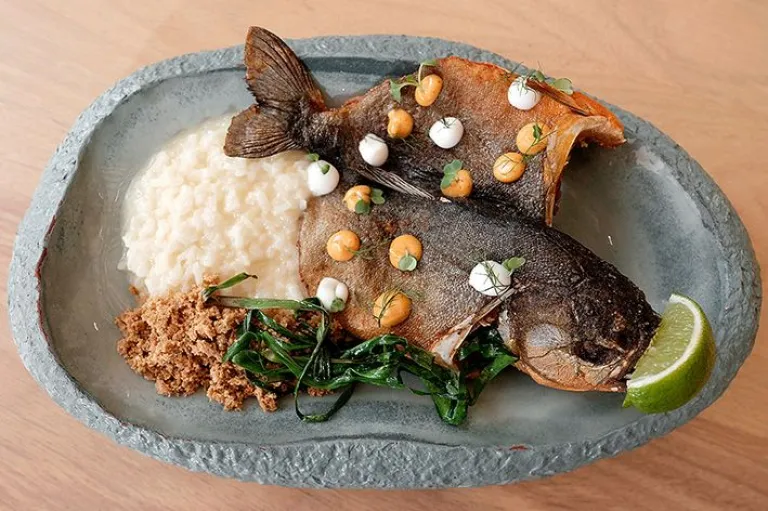
Emulsified piranha with lemon, coconut rice and chivé is the second main course, arriving at the table with no pretense, the fish showing off its sharp teeth. The piranha was marinated in chili peppers and is accompanied by green onions, sriracha dots, and an emulsion of fish cheeks.
Although this presentation is striking, the preparation shows a restrained handling of the ingredients. In fact, the plating is unpretentious: beautiful and simple, with no gimmicks to overshadow the food.
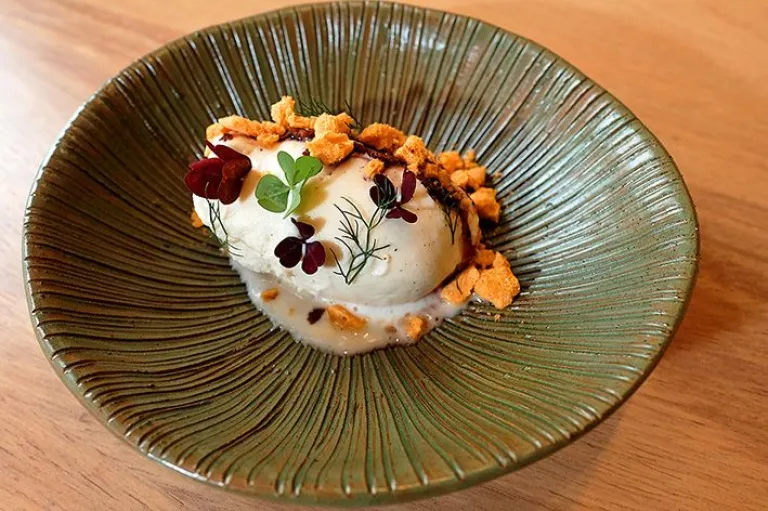
Final act: sweetness. The first dessert tasted was Amazonian vanilla ice cream from the Chalalán area (north of La Paz), accompanied by isaño honey (a highland tuber) and a frizz of urucú and miso. Its seduction lies in its crunchiness and the subtle salty touch that elevates it completely.
Then we tried tujuré ice cream like a corn pudding topped with a yuca churro, yuca honey and sweet chivé. Then came the “chocoHongo”: 70% Amazonian chocolate, mushrooms, an infusion of Chiquitano oak in milk and, to add acidity, wild blackberries. I believe this dessert is the weakest of the menu, due to the high sugar content.
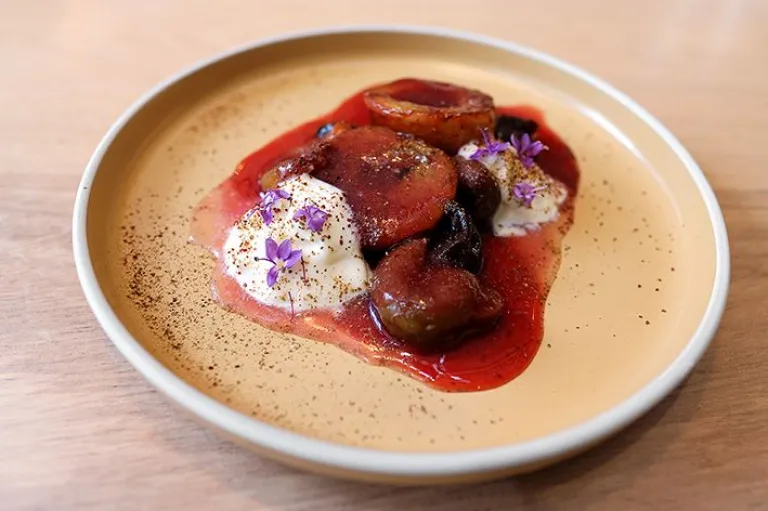
Finally, wild foraged plums cooked using different techniques, with two dots of Tarija goat cheese foam. Heaven. What’s fascinating about the dessert course is that the salty presence that plays with the sweetness is prominent—a wise integration.
After tasting this menu, it’s clear that the spearhead of contemporary Bolivian cuisine is in the hands of women, and that is something that must be named and recognized. With Marsia and her team’s dishes, I’ve felt the scent of trees, the freshness of rivers, and the dampness of the soil. Arami means “piece of sky” in Guaraní, which is paradoxical, because these flavors have tied me more deeply to my land.
Por Marcela Araúz, Visión 360:
Este espacio se halla en el barrio paceño de Achumani
Marsia Taha ostenta el nombramiento de la Mejor Cocinera de Latinoamérica, según el ranking Latin America’s 50 Best y nos invitó a explorar el menú que propone en Arami, su restaurante inaugurado en enero.
“Hongo y lacayote”, otro de los platillos. Fotos: Christian Eugenio
La historia de Fitzcarraldo, icónico personaje del cineasta Werner Herzog, nos habla del apasionado sujeto que ansiaba construir un teatro de ópera en medio de la Amazonia. Una de las más civilizadas creaciones humanas anclada en pleno verdor brutal. Y en ello pensé al probar la nueva propuesta gastronómica de Marsia Taha en Arami: ha creado un menú que con absoluta refinación nos introduce en la selva amazónica boliviana.
Arami fue fundado por Taha y por la sommelier Andrea Moscoso. A Marsia le precede su legado en Gustu, que sin duda es un parteaguas en la gastronomía contemporánea de Bolivia. Andrea, por otro lado, tiene una rigurosa experiencia en El Celler de Can Roca, una de las referencias en España, con Tres Michelines a favor. No hay pierde.
Este restaurante se halla en el barrio de Achumani, zona Sur de La Paz. El espacio genera una limpieza de retina: una paleta clara en los colores, mueblería de madera… el mesón principal de la cocina, a la vista, emula las láminas de un hongo. Son pocas mesas –no más de 10– y un sencillo jardín. Cero estridencias.
Hay que agradecer la mesura en los precios de la carta, no solo por la época de crisis que vivimos, sino también porque es alentador pensar en una propuesta culinaria de primer nivel al alcance de más gente. “Elitismo salió del grupo”: los entrantes y los postres están a Bs 50; los platos principales, a Bs 95. A ello hay que sumar un servicio excepcional. Rotundo equipo.
Dicho eso, exploremos.
Tierra y río
Comenzamos con una delicatessen que une Oriente con Occidente: croqueta de trucha curada, emulsión de palta picante con ají gusanito –que es el más intenso del país– y cilantro. Un amuse bouche contundente.
El segundo aperitivo es cola de lagarto –la carne más magra del animal–, presentada cruda y madurada por 12 horas; servida en granadina, maracuyá, pastiflora y payuje. Consciente de que en este caso, sin el plátano, tal vez la propuesta sería muy ácida, de todas maneras considero que el plátano desentona.
Lo admito: nunca había probado corvina de río antes de ir a Arami. No estaba en mi radar. Es servida en delicadas láminas en aceite de plátano, junto a croquetas de castaña, hojas de sacha cilantro y leche de almendra amazónica. Debo decir que de todas las propuestas, esta fue la menos convincente, dado que la textura del pescado es gomosa y no hallé personalidad en su sabor. Además, la fusión de esos ingredientes culmina en un encuentro algo aceitoso.
Luego fue el turno del pan de yuca con chive reposado siete días, el cual contiene caseína –proteína de la leche– con miel. Este pan tiene un rol importante porque hace un corte en el paladar entre los entrantes salados y lo que serán los platos fuertes.
La alegría bien podría denominarse “hongo y lacayote”. Es un platillo trabajado con diferentes tipos de hongos como el pionino, melena de león, ostra, entre otros productos que son adquiridos por Arami a través de Hongotopía. Estos son difíciles de producir en nuestro territorio, pero Hongotopía ha logrado que surjan, destaca la chef.
Los hongos están sobre una base de lacayote con miel de chancaca y flores comestibles. La textura de las setas a la parrilla con los toques dulces profundiza el resultado de esa fusión. Este platillo podría ser el acto principal del espectáculo, porque Marsia aprovecha todas las cualidades de los hongos y las magnifica.
Piraña emulsionada al limón, arroz con coco y chivé es el segundo plato fuerte que llega sin diplomacias a la mesa, con el pescado exhibiendo dientes afilados. La piraña fue marinada en ajíes y es acompañada de cebolla verde, puntos de sriracha y emulsión de cocochas, que son las mejillas del pescado.
Aunque esta presentación impresiona, la preparación tiene una manipulación moderada al convocar a esos ingredientes. Es más, los emplatados no tienen pretensiones: son bellos y sencillos, sin artilugios que opaquen la comida.
Acto final: la dulzura. El primer postre saboreado fue helado de vainilla amazónica del lado de Chalalán (norte de La Paz), acompañado de miel de isaño (tubérculo altiplánico) y un frizz de urucú y miso. Su seducción radica en la crocancia y el sutil toque salado que lo eleva absolutamente.
Luego probamos el helado de tujuré como mazamorra hecha de maíz coronado con un churro de yuca, miel de yuca y chivé dulce. Tocó el turno del “chocoHongo”: chocolate amazónico en 70%, hongos, una infusión de roble chiquitano en leche y, para darle acidez, moras silvestres. Creo que este postre es el más flojito de la carta, por el elevado nivel de azúcar.
Finalmente, ciruelos silvestres de recolección, cocidos en distintas técnicas y dos puntos de espuma de queso de cabra tarijeño. Heaven. Lo fascinante en la tanda de postres es que la presencia salada que juguetea con el dulzor es protagónica, una sabia integración.
Luego de probar este menú se puede aseverar que la punta de lanza de la gastronomía contemporánea en Bolivia está en manos de mujeres y eso es algo que debe ser nombrado y reconocido. Con los platillos de Marsia y su equipo, he sentido el aroma de los árboles, la frescura de los ríos y la humedad del suelo. Arami significa “pedazo de cielo” en guaraní, lo cual es paradójico, porque estos sabores me han atado más fuerte a mi tierra.
https://www.vision360.bo/noticias/2025/06/06/26242-arami-un-refinado-dialogo-con-la-selva

 Bolivian Thoughts | Pensamientos Bolivianos (Bilingual/Bilingüe)