
By ANF, Eju.tv:
Comcipo and peasant communities reject miners’ request to enter the Uyuni Salt Flat
The Minister of Environment and Water, Álvaro Ruiz, clarified that the cooperative miners’ aspiration is not to enter the Uyuni Salt Flat to carry out exploitation work, but rather to operate in the surrounding areas.
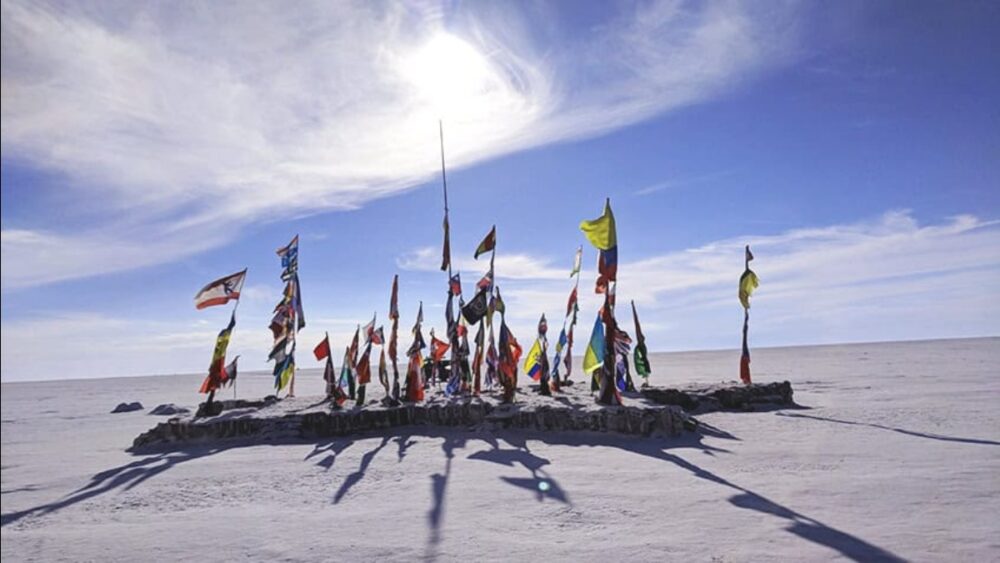
The Potosinista Civic Committee (Comcipo) and the peasant communities of the Marka Tahua ayllu rejected the request made by cooperative miners to enter the Uyuni Salt Flat. They also warned that it would affect water reservoirs and tourism.
“We, as a civic entity, were not aware of this petition, and we do not agree with the proposal they submitted to the government. We do not want the Uyuni Salt Flat to be affected, especially tourism; they will leave tailings dams and it will be a calamity,” stated Comcipo’s president, Alberto Pérez, in remarks to ANF.
In this regard, the advisor of the Marka Tahua ayllu, Efraín Quispe, also rejected the request and indicated that the indigenous communities located near the brine pools would be the most affected because the underground water reservoirs used for their consumption, livestock, and quinoa cultivation would be contaminated.
“We already know that mining exploitation in Bolivia has caused a great environmental impact; this can be seen in Llallagua and Huanuni. Mining has never been a solution; rather, it is synonymous with the destruction of our ecosystems. That is why the Marka Tahua ayllu rejects mining exploitation, whether national or international,” he asserted.
Hundreds of members of the National Federation of Mining Cooperatives of Bolivia (Fencomin) arrived in La Paz and mobilized, demanding that the Government address their demands. One of the 19 points of their petition was the granting of more working areas, for which they requested the partial lifting of the fiscal reserve that protects the Uyuni Salt Flat.
After negotiations with the Government, in which President Luis Arce participated, they reached an agreement and lifted their pressure measures. Regarding this request, the Ministry of Mining agreed to analyze the matter later, according to Sumando Voces.
Exploration around the area
In this regard, the Minister of Environment and Water, Álvaro Ruiz, clarified that the cooperative miners’ aspiration is not to enter the Uyuni Salt Flat to carry out exploitation work, but rather to the surrounding areas.
“They would not be entering the Salt Flat, but the edges of the Salt Flat. However, it is also clear that these edges are within the fiscal reserve established by the 2003 law,” he stated in an interview with the Erbol network.
Observations
On the other hand, the peasant leader questioned the government for not complying with the Political Constitution of the State (CPE) and for continuing to violate the rights of indigenous peasant peoples; furthermore, prior and informed consultations are not being carried out.
At the same time, he said that the tourist attraction of the Uyuni Salt Flat, which is recognized worldwide, would be affected, leading to lower economic income for the nearby communities that rely on tourism.
“We want projects to strengthen tourism; we want to preserve the salt flat because we want our children to know the splendor of the salt flat. They are putting this unique and very fragile ecosystem at risk,” he stated.
He also assured that the entry of mining companies would damage the ecosystem and water reserves and that they would not have economic income due to the loss of camelid livestock and crops.
“Thus, if the salt flat and the underground waters are contaminated and totally affected, it means that the original peoples like Marka Tahua will become extinct, as they will no longer have that vital resource, water, for agriculture,” he emphasized.
/EUA/ nvg/
Por ANF, Eju.tv:
Comcipo y comunidades campesinas rechazan pedido de mineros de ingresar al salar de Uyuni
El ministro de Medio Ambiente y Agua, Álvaro Ruiz, aclaró que la aspiración de los mineros cooperativistas no es entrar al salar de Uyuni para realizar trabajos de explotación, sino a los alrededores.
El Comité Cívico Potisinista (Comcipo) y las comunidades campesinas del ayllu Marka Tahua rechazaron el pedido que hicieron los mineros cooperativistas de ingresar al salar de Uyuni. Además advirtieron que afectará a los reservorios de agua y al turismo.
“Nosotros, como ente cívico, no conocíamos de este pliego petitorio, no estamos de acuerdo con la propuesta que han hecho llegar al gobierno. Nosotros no queremos que afecte al salar de Uyuni, sobre todo al turismo, van a dejar los diques de cola y será una calamidad”, afirmó el presidente de Comcipo, Alberto Pérez, en declaraciones a la ANF.
En ese sentido, el asesor del ayllu Marka Tahua, Efraín Quispe, también rechazó esa petición e indicó que las comunidades indígenas que se encuentran cerca a las salmueras serán las más afectadas porque se contaminará los reservorios de agua subterránea que son usados para su consumo, del ganado y el cultivo de quinua.
“Ya conocemos que la explotación de la minería en Bolivia ha causado un gran impacto ambiental, eso se puede ver en Llallagua y en Huanuni. La minería nunca ha sido la solución, más bien es sinónimo de desastre de nuestros ecosistemas. Es por eso que el ayllu Marka Tahua rechazamos la explotación minera ya sea nacional o internacional”, aseveró.
Cientos de afiliados a la Federación Nacional de Cooperativas Mineras de Bolivia (Fencomin) llegaron a La Paz y se movilizaron exigiendo que el Gobierno atienda sus demandas. Uno de los 19 puntos del pliego fue la otorgación de más áreas de trabajo, por lo que pidieron levantar de forma parcial la reserva fiscal que protege al salar de Uyuni.
Luego de la negociación con el Gobierno, en la que participó el presidente Luis Arce, arribaron a un acuerdo y levantaron sus medidas de presión. Con relación a ese pedido, el Ministerio de Minería acordó analizar el tema posteriormente, según Sumando Voces.
Exploración en alrededores
Al respecto, el ministro de Medio Ambiente y Agua, Álvaro Ruiz, aclaró que la aspiración de los mineros cooperativistas no es entrar al salar de Uyuni para realizar trabajos de explotación, sino a los alrededores.
“No estarían entrando al Salar, pero sí a los bordes del Salar. Pero también está claro que esos bordes están dentro de la reserva fiscal de la ley que establece eso de 2003”, afirmó en entrevista con la red Erbol.
Observaciones
Por otra parte, el dirigente campesino cuestionó que el gobierno no cumpla con la Constitución Política del Estado (CPE) y continúe vulnerando los derechos de los pueblos indígenas campesinos, además no se llevan a cabo las consultas previas e informadas
A la vez, dijo que se afectará el atractivo turístico del salar de Uyuni que es reconocido a nivel mundial, el cual derivará en menos ingresos económicos para las comunidades cercanas que se dedican a ese rubro.
“Nosotros queremos proyectos para fortalecer el turismo, queremos preservar el salar porque queremos que nuestros hijos conozcan el esplendor del salar. Van a colocar en riesgo este atractivo que tenemos, que es único y tiene un ecosistema muy frágil”, manifestó.
A la vez, aseguró que el ingreso de las empresas mineras también dañará el ecosistema y las reservas de agua y no contarán con ingresos económicos ante la pérdida del ganado camélido y los cultivos de agua.
“Entonces, si el salar y las aguas subterráneas son contaminadas, afectados totalmente significa que los pueblos originarios como Marka Tahua se van a extinguir, no van a tener ese recurso vital que es el agua para la agricultura”, puntualizó.
/EUA/ nvg/

 Bolivian Thoughts | Pensamientos Bolivianos (Bilingual/Bilingüe)