
By Eju.tv:
“There is no lake anymore, it’s a canyon”: The contaminated lagoon in Llallagua that caused the deadly mudslide has disappeared
Despite several days having passed since the emergency, mud continues to slide down from the upper part of the Catavi District. The disaster left two dead and 47 homes buried under the mud.
“I went to see Lake K’enko, and it’s gone,” said Róger, who arrived at the emergency zone in Andavilque, a community in Llallagua, northern Potosí, which was struck by a lethal mudslide over the weekend.
“There was a lake, but the accumulated water overflowed, triggering a landslide that caused destruction in the village below,” said the young man, who also showed how the area that once held a contaminated lagoon is now just a canyon.
Even after several days have passed since the tragedy, mud continues to slide down from the upper part of the Catavi District.
“It would now be the El Kenko Canyon, no longer the El Kenko Lake. It was a well-known place,” Róger commented in a video posted on his TikTok account.
Casualties
One of the latest reports confirmed that 47 homes were completely destroyed by the mudslide, which claimed the lives of two people in the early hours of Sunday, March 16.
“We already have a preliminary assessment from the State Housing Agency, which is in the area. Around 47 homes have been rendered practically uninhabitable. Additionally, we have been informed of two fatalities, one of whom has already been recovered,” reported Deputy Minister of Civil Defense Juan Carlos Calvimontes in an interview with Cadena A on Tuesday night.
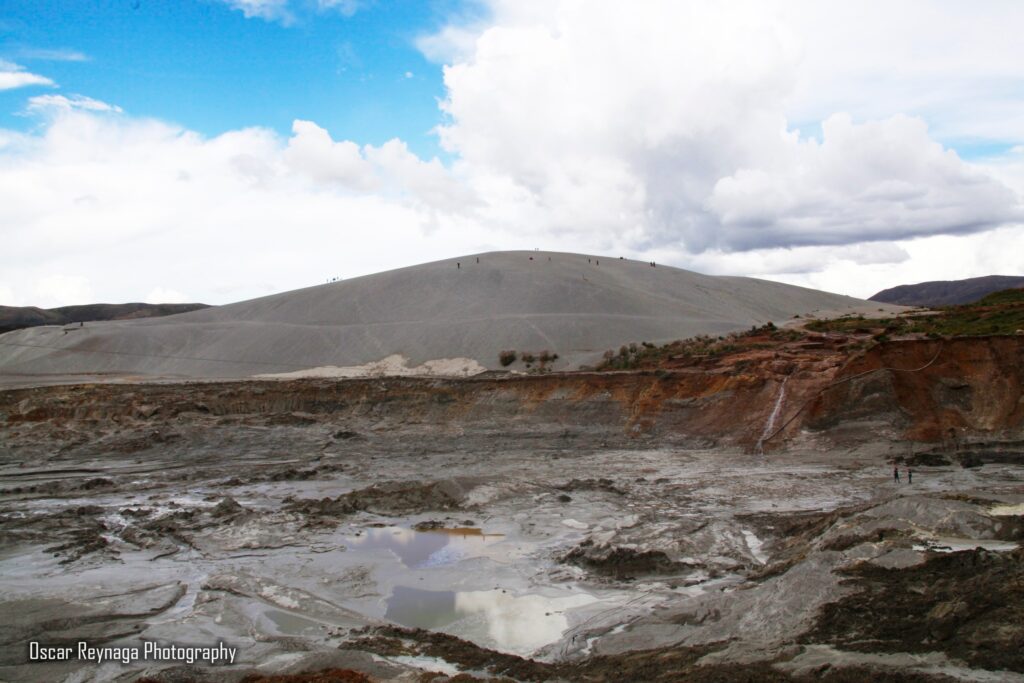
Early last Sunday, the overflow of El Kenko Lagoon triggered a mudslide that buried homes and animals under lead-colored sludge, causing great concern among authorities.
Following this tragic event, the body of the first fatal victim was recovered last Monday. It was Agapito Reyes Huaytari, an 88-year-old man found beneath the rubble of a house.
“The news is not encouraging at all in terms of recovering any belongings because the amount of mud that accompanied this disaster is overwhelming,” explained Calvimontes.
Environmental Liabilities
According to preliminary reports, the disaster was not only caused by heavy rains but also by tailings that had practically surrounded the lagoon, which had formed during the era of the tin barons from mining waste.
It is known that Kenko Lagoon contained acidic waters formed due to the presence of lead, tin, zinc, and other mineral elements in what was once a massive area of environmental liabilities.
Por Eju.tv:
«Ya no hay el lago, es un cañón»: La laguna contaminada de Llallagua que generó la mazamorra fatal desapareció
Pese a que ya pasaron varios días de la emergencia, el lodo sigue deslizándose desde la parte alta del Distrito de Catavi. La tragedia dejó dos fallecidos y 47 viviendas sepultadas por el lodo.
«Fui a ver el lago del K’enko y ya no hay», relató Róger, quien llegó a la zona de emergencia de Andavilque, la comunidad de Llallagua, en el norte de Potosí, que el fin de semana fue golpeada por una mazamorra letal.
«Había un lago, la acumulación de agua se desbordó provocando el deslizamiento de tierra, provocando desastres en el pueblo que había mas abajo», contó el joven, quien además mostró cómo en el lugar en el que antes había una laguna contaminada hoy solo queda un cañadón.
Pese a que ya pasaron varios días de la tragedia, el lodo sigue deslizándose desde la parte alta del Distrito de Catavi.
«Ya sería el cañón de El Kenko, ya no sería el lago de El Kenko, era un lugar muy conocido», comentó Roger en un video publicado en su cuenta de TikTok.
Saldo
Uno de los últimos reportes daba cuenta que 47 viviendas quedaron totalmente destruidas por el lodo, que se cobró la vida de dos personas la madrugada del domingo 16 de marzo.
“Ya tenemos una evaluación preliminar de la Agencia Estatal de Vivienda que se encuentra en la zona, son alrededor de 47 viviendas que han quedado prácticamente inutilizadas. Asimismo, nos han reportado dos personas fallecidas, una ya se ha recuperado”, informó el viceministro de Defensa Civil, Juan Carlos Calvimontes en una entrevista con Cadena A la noche del martes.
La madrugada del domingo pasado, el desborde de la laguna El Kenko provocó una mazamorra que sepultó viviendas y animales con un lodo plomizo, que causa gran preocupación en las autoridades.
Tras ese trágico hecho, fue recuperado, el pasado lunes, el cuerpo de la primera víctima fatal. Se trataba de Agapito Reyes Huaytari de 88 años de edad, quien estaba debajo de los escombros de una vivienda.
«Las noticias no son nada alentadoras, en el sentido, que se pueda recuperar algunos bienes, porque prácticamente el lodo que ha acompañado esta desgracia es bastante», explicó Calvimontes.
Pasivos
Según los reportes preliminares, el desastre no solo fue causado por las lluvias, sino por los relaves que prácticamente rodeaban a la laguna, formada desde la época de los barones del estaño con los desechos de la minería.
Se conoce que la laguna Kenko contenía aguas ácidas que se formaron por la presencia de plomo, estaño, zinc y otros elementos mineralógicos en esa área que antes fue un enorme lugar de pasivos ambientales.
por Antonio Villegas

 Bolivian Thoughts | Pensamientos Bolivianos (Bilingual/Bilingüe)