
By Marisol Alvarado, Vision 360:
Fernando Romero
ALTHOUGH two biotechnology events have been approved, the validation process is still pending, so it is expected that by 2026 or 2027, this type of seed can be planted, Romero stated.
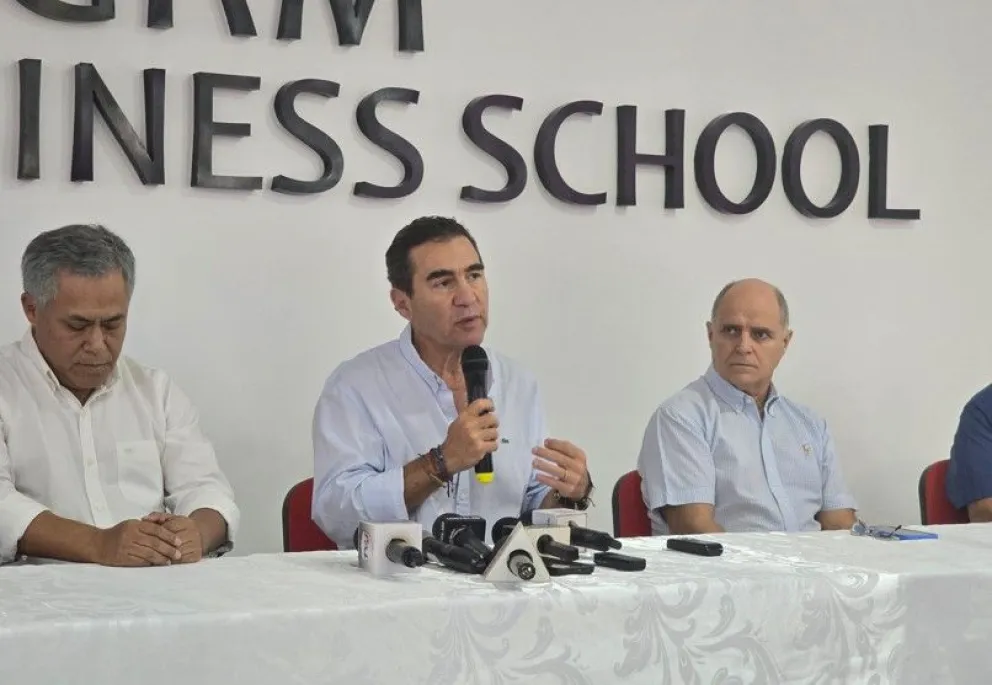
Fernando Romero, president of Anapo (center), at a press conference alongside other executives. Photo: Anapo
For the president of the Oilseed and Wheat Producers Association (Anapo), Fernando Romero, having a timely supply of diesel is even more necessary than the fuel subsidy implemented by the government.
In an interview with Visión 360, Romero addressed both the fuel shortage and export restrictions, as well as the use of biotechnology, which is still in its early stages in the country, among other topics.
What are Anapo’s main export destinations?
The main destinations for soybean grain exports in 2024, when 196,000 tons were exported (data as of November), were Peru, Argentina, Angola, and Chile, in that order of importance.
Does the soybean sector have access to the Chinese market? How attractive is it?
China is the world’s largest buyer of soybean grain, with an annual demand of 90 million tons, making it an attractive market. However, it requires large volumes and very efficient export logistics.
As Bolivia, we already have phytosanitary approval from the Chinese market for soybean grain exports, but we have not yet carried out shipments to that country.
What other grains are being exported?
Currently, as a productive sector, we are exporting soybean grain, while agro-industries export derived products (meal, flour, and oil). The same applies to sunflower grain. On a much smaller scale, there is the production of chia and some varieties of beans.
The markets are neighboring countries such as Colombia, Peru, Ecuador, and Chile, primarily.
How does Paraguay differ in this regard? That country has less arable land but exports more, or is that not the case?
About 20 years ago, Paraguay had a cultivated area similar to Bolivia’s; in other words, we were equal to or even larger than Paraguay at that time. However, today, it has expanded its planted area to three million hectares and also increased productivity to three tons per hectare. Meanwhile, Bolivia remains at two tons per hectare.
Paraguay produces 10 million tons of grain annually, while Bolivia produces three million tons.
The difference is that Paraguay has provided conditions for producers to increase production with clear and serious policies. For example, access to biotechnology with new genetically modified soybean, corn, and cotton varieties. They have also provided legal security for investments in productive land, promoted free exports without restrictions, and improved productive infrastructure and export logistics. In the latter aspect, for example, they have 35 export ports along the Paraguay-Paraná Waterway, while Bolivia has only three. These are lost opportunities.
Has the government truly opened up to the use of GMOs, or are these just initial steps?
After 20 years, we have seen some progress with the approval of two new biotechnology events for soybeans: the Intacta event and HB4, which is drought-tolerant. We consider these important steps, but still insufficient for Bolivia to fully enter the biotechnology era. Currently, the process of incorporating these events into local genetics is underway, within the framework of existing regulations.
However, I repeat, it is still insufficient. It is important to continue advancing in biotechnology, with next-generation events in soybeans and also in corn, which is essential for sustainable production due to its role in crop rotation. Ideally, we would have approval for all events used within the Mercosur bloc, as other member countries do. We must be competitive and produce under equal conditions.
Until when can planting be done under the new authorization, and when will the first harvests be available?
Although these two technologies have been approved, we still need to begin a process of validating the genetics and seeds incorporating this technology to assess their adaptability to our soil and climate conditions. This process will take about two or three more growing seasons.
We expect that by 2026 or 2027, we will have validated and approved seed varieties with these technologies, allowing producers to plant them in their production fields. We also hope to have a broader vision regarding new events.
The government is attempting to produce diesel based on oil. Can the country’s production meet this demand?
Vegetable oil is the raw material used to produce biodiesel, which could help reduce diesel oil imports. Currently, they are using soybean oil, as it is the only one available. Unfortunately, this also creates an imbalance because, on one hand, we save on fuel imports, but on the other, we stop exporting and lose revenue for the economy.
For this reason, from the outset, we have advocated for increasing soybean productivity through biotechnology to generate greater surpluses that can supply the biodiesel industry while maintaining current export levels, which bring foreign currency into the country.
It is also important for the government to promote agricultural production initiatives for other species, such as cusi, which could provide a higher vegetable oil content for biodiesel production and thus avoid affecting soybean oil production.
How do export restrictions, such as those imposed by the national government on oil, meat, and soybeans, affect the sector?
Any restriction, quota, price band, or export permit creates market distortions and also generates bureaucracy and inefficiency.
Specifically, the restriction on soybean grain exports creates uncertainty for producers regarding the correct price buyers should pay, which should be based on export opportunity prices. This is especially concerning as we are in the early stages of harvesting the summer season, where we estimate a production of 2.5 million tons.
This measure also creates uncertainty among external buyers, who now view the country with distrust.
It is an unfair and misguided measure that not only affects the more than 14,000 producers and families involved in soybean production in Bolivia but also damages the country’s credibility and ultimately impacts the economy as a whole.
How can markets be regained?
Opening markets should be a public-private effort, a process where the state provides guarantees, and private actors take responsibility. Any breach of contract or change in conditions can result in market loss. Recovering markets takes time; it is a matter of gaining the trust of foreign buyers so that they see us as reliable suppliers. That is why we reject any export restrictions, as they create uncertainty in accessing export markets.
Is the domestic market being left unserved, as the national government argues?
Not at all. Soybean grain producers have fulfilled their obligations. We have fully guaranteed the domestic market supply. In 2024, despite production losses—the worst year in over 30 years—production exceeded two million tons of grain, while domestic demand only requires 800,000 tons for full supply. There was never a shortage.
In this 2024-2025 summer season, as we begin harvesting, we estimate producing around 2.5 million tons of soybean grain. The domestic market is more than sufficiently supplied and, I repeat, it has always been supplied, so we do not understand the export ban.
Many citizens, especially activists, denounce that the soybean sector uses burning to clear agricultural land. What is your response?
That demonstrates misinformation and ignorance. The vast majority of producers practice no-till farming and crop rotation. For us, burning is a sin—it destroys soil fertility needed for growing crops. Slash-and-burn practices are used in subsistence farming, not by soybean producers for land clearing. All land clearing is carried out with authorization from regulatory entities, always respecting existing regulations.
Genetically modified crops have been associated with glyphosate use. Have you sought or considered better alternatives?
The use of glyphosate, associated with the only approved biotechnology event for soybeans—the RR or RG technology—has been a technological milestone for our sector. It has allowed producers to improve weed control and access high-yield genetics to boost productivity.
Recommendations are being validated to combine the use of glyphosate with other herbicides to continue improving control efficiency for weeds harmful to crops.
Biotechnology has allowed for reduced agrochemical use, fewer applications, and therefore less water and diesel consumption, while achieving higher productivity on the same cultivated area. Among other initiatives, we have programs and partnerships to promote the use of bio-inputs for controlling insects and fungi.
How much does fuel subsidization help soybean production?
Fuel subsidization is a political decision and was not made to benefit the sector. It is a decision of the State. For us, more than fuel subsidies, what producers need is a guaranteed diesel supply in a timely manner and in sufficient quantities because the most expensive diesel is the one that is unavailable.
Our sector demands about 180 million liters of diesel annually, representing only 8% of the national consumption of two billion liters. Additionally, since November 2024, we have been the main sector conditioning fuel supply so that medium and large producers purchase ULS diesel at a price of Bs 6.88 per liter.
Only small producers who source fuel from service stations in productive areas are being supplied with subsidized diesel oil.
How much could the sector be affected if the fuel subsidy is suspended?
As producers, the most important thing is ensuring a diesel supply so we can continue producing food for the country.
Eliminating the subsidy will likely lead to price adjustments in services, labor, and transportation, potentially generating inflationary effects, but that is a government decision.
We will continue betting on productivity, as we believe it is the best price regulator. To achieve this, we need all available technological and innovative tools to move forward.
In your opinion, what should be the next government’s food production policy?
Bolivia has enormous potential to become a food supplier for the region and the world.
Our proposal is to build a productive country rather than depend on extractive sectors that are depleting. Policy should focus on incentivizing food production by providing certainty to producers, ensuring access to external markets, legal security for land, access to technology, financing, and improving productive infrastructure, among other factors.
What opportunities did Exposoya open for the sector? What is the overall contribution of these events?
Exposoya contributes by creating a platform for technological dissemination, allowing producers to observe firsthand, both in the field and at the fair, the latest innovations in soybean, corn, and sorghum crop management, as well as state-of-the-art agricultural machinery and equipment.
Exposoya showcases the efforts of producers and other stakeholders in the production chain to continue supplying food to the country. It serves as a display of the agricultural sector’s potential, a sector that generates multiplier effects in the economy while being renewable and sustainable over time.
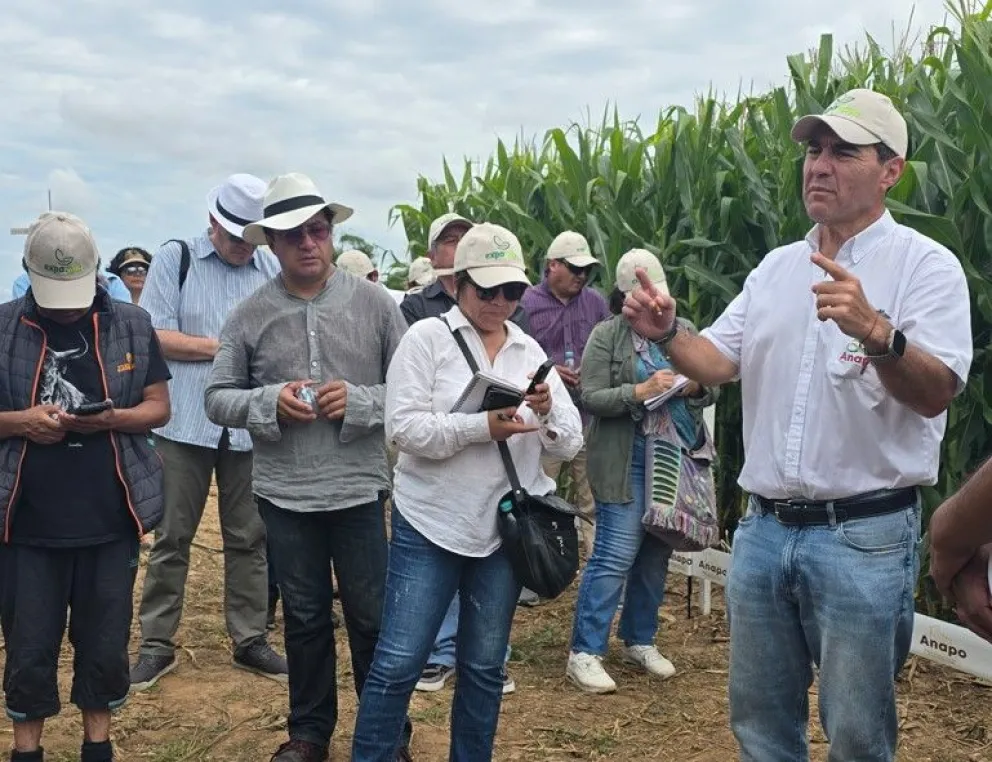
PROFILE
LIFE Born in Santa Cruz de la Sierra on July 27, 1968.
PASSION Horses are his greatest passion, although he also enjoys sports. He likes watching and playing polo, golf, soccer, and padel.
SOCCER He supports Blooming and Bolívar in the Bolivian league, closely follows River Plate, and prefers Real Madrid in European soccer.
FOOD He enjoys national cuisine, with soups being his favorite.
FAMILY He values the time spent with his family, with whom he enjoys traveling and dining well.
HOBBIES Sports, watching series, and movies.
ANAPO Before becoming president, he served as the institution’s treasurer and vice president.
Soybean producers have fully guaranteed the supply of the domestic market.
After 20 years, we have achieved progress with the approval of two new biotechnology events.
The practice of burning is part of subsistence farming and is not used by soybean producers.
Exposoya is the showcase that allows the country to see the potential of the agricultural sector.
Por Marisol Alvarado, Vision 360:
Fernando Romero
SI BIEN se han aprobado dos eventos de biotecnología, aún resta el proceso de validación, por lo que se espera que en 2026 o 2027 se pueda sembrar con este tipo de semillas, afirmó Romero.
Fernando Romero, presidente de Anapo (centro), en una conferencia de prensa, junto con otros ejecutivos. Foto: Anapo
Para el presidente de la Asociación de Productores de Oleaginosas y Trigo (Anapo), Fernando Romero, contar con diésel de manera oportuna es incluso más necesario que contar con la subvención a los combustibles implementada por el Gobierno.
En entrevista con Visión 360, Romero se refirió tanto a la escasez de combustible como a la restricción de exportaciones y al uso de la biotecnología, que aún es incipiente en el país, entre otros temas.
¿Cuáles son los principales destinos de exportación que tiene Anapo?
Los principales destinos para la exportación de grano de soya en 2024, cuando se exportaron 196 mil toneladas (datos a noviembre), fueron Perú, Argentina, Angola y Chile, en ese orden de importancia.
¿El sector soyero tiene acceso al mercado en China? ¿Qué tan atractivo es?
China es el principal comprador de grano de soya en el mundo, con una demanda anual de 90 millones de toneladas, por eso es atractivo. Sin embargo, se necesita mucho volumen y ser muy eficientes en la logística de exportación.
Como Bolivia, ya tenemos apertura fitosanitaria del mercado de China para la exportación de grano de soya, pero aún no hemos realizado exportaciones hacia ese país.
¿Qué otros granos están exportando?
Actualmente, como sector productivo, estamos exportando el grano de soya, mientras que las agroindustrias exportan los productos derivados (torta, harina y aceite). De manera similar, ocurre con el grano de girasol. En una escala muy pequeña está la producción de chía y algunas variedades de frejol.
Los mercados son los países vecinos de Colombia, Perú, Ecuador y Chile, principalmente.
¿Cuál es la diferencia con Paraguay en esta materia? Ese país tiene menos extensión cultivable, pero exporta más, ¿o no es así?
Hace unos 20 años, Paraguay tenía una superficie cultivable similar a la de Bolivia, es decir, hace 20 años éramos igual o más que Paraguay; pero a la fecha, ha crecido en área de siembra a tres millones de hectáreas y también en productividad a tres toneladas por hectárea. En cambio, Bolivia está con dos toneladas por hectárea.
Paraguay produce anualmente 10 millones de toneladas de grano y Bolivia tiene una producción de tres millones de toneladas.
La diferencia está en que en Paraguay se han dado condiciones a los productores para aumentar la producción, políticas muy claras y serias. Por ejemplo, el acceso a la biotecnología con nuevos eventos transgénicos en soya, maíz y algodón. Les dieron además seguridad jurídica para las inversiones en tierras productivas, fomento a la libre exportación sin ninguna restricción y el mejoramiento de la infraestructura productiva y la logística de exportación. En este último, por ejemplo, tienen 35 puertos de exportación sobre la Hidrovía Paraguay-Paraná, y Bolivia solo tiene tres puertos de exportación. Esas son las oportunidades perdidas.
¿El Gobierno se abrió al uso de transgénicos efectivamente o solo son pasos que se están dando?
Después de 20 años, hemos tenido una apertura con la aprobación de dos nuevos eventos de biotecnología para la soya, como son el evento Intacta y HB4 tolerante a la sequía, que consideramos son pasos importantes, pero aún insuficientes para que Bolivia ingrese a la era de la biotecnología. Actualmente se está en proceso de incorporar dichos eventos a la genética local y dentro de lo que la normativa lo permite.
Pero repito, aún es insuficiente, es importante continuar avanzando en biotecnología, con eventos de última generación en soya, y en el cultivo de maíz, que es fundamental para la producción sostenible por su aporte en la rotación de cultivos. Lo ideal sería contar con la aprobación de todos los eventos dentro del bloque Mercosur, tal como lo tienen los demás países miembro. Tenemos que ser competitivos y producir en igualdad de condiciones.
¿Hasta cuándo se podrá sembrar con la nueva autorización y cuándo se contará con las primeras cosechas?
Si bien se han aprobado esas dos tecnologías, aún debemos iniciar un proceso de validación de la genética y la semilla que tenga incorporada esa tecnología, para ver su adaptabilidad a nuestras condiciones de suelo y ambiente. Este proceso tomará unas dos o tres campañas agrícolas todavía.
Esperamos que para el 2026 o 2027 ya estemos con las variedades de semillas validadas y aprobadas con estas tecnologías, para que los productores las puedan sembrar en sus campos de producción. Esperamos también tener una visión más amplia sobre nuevos eventos.
El Gobierno está intentando producir diésel sobre la base de aceite. ¿La producción del país puede dar para ese producto?
El aceite vegetal es la materia prima con la que se puede producir biodiésel y con ello contribuir a disminuir la importación de diésel oil, y actualmente para ello están recurriendo al aceite vegetal de soya que es el único disponible. Lamentablemente, esto tambien genera un desequilibrio, porque por un lado nos ahorramos en la importación de combustibles, pero por otro, dejamos de exportar y se pierden ingresos para la economía.
Por eso, desde un principio hemos planteado la necesidad de aumentar la productividad de la soya con el uso de biotecnología, para tener mayores excedentes para abastecer la industria del biodiésel y mantener las exportaciones actuales que significan divisas para el país.
También es importante que el Gobierno fomente iniciativas de producción agrícola de otras especies como el cusi, que pueden contribuir con mayor contenido de aceite vegetal para la producción de biodiésel y con ello no afectar la producción de aceite vegetal de soya.
¿Cómo afectan las restricciones a la exportación, como las medidas que dictó el Gobierno nacional al aceite, a la carne y a la soya?
Toda restricción, cupo, franja de precios y permiso de exportación genera distorsiones en los mercados, además genera burocracia e ineficiencia.
De forma específica, en la restricción a la exportación de grano de soya, nos genera incertidumbre a los productores respecto al precio correcto que nos deben pagar los compradores, que debe estar referido al precio de oportunidad de exportación, más aún cuando estamos en pleno inicio de la cosecha de la campaña de verano en la que estimamos una producción de 2,5 millones de toneladas.
Esta medida también genera incertidumbre en los compradores externos, que ya ven al país con desconfianza.
Es una medida injusta y errada, que afecta no solo a los más de 14 mil productores y familias que se dedican a la producción de soya en Bolivia, sino también en la seriedad como país y finalmente afecta a la economía en su conjunto.
¿Cómo se recuperan los mercados?
Abrir el mercado debería ser una tarea público–privada, es una gestión donde está la fe del Estado y la responsabilidad del privado. Cualquier incumplimiento o cambio de condiciones puede derivar en una pérdida de los mismos. Los mercados tardan tiempo recuperar, es una cuestión de confianza de los compradores externos, para que nos vean como proveedores serios y confiables. Por esa razón, rechazamos cualquier restricción a las exportaciones, porque precisamente genera incertidumbre de acceso a mercados de exportación.
¿Se está dejando de abastecer el mercado interno, como argumenta el Gobierno nacional?
De ninguna manera, los productores de grano de soya hemos cumplido. Hemos venido garantizando plenamente el abastecimiento del mercado interno. En 2024, a pesar de las pérdidas productivas, el peor año en más de 30, la producción fue de más de dos millones de toneladas de grano y la demanda interna solo requiere de 800 mil toneladas para su abastecimiento pleno. Nunca hubo desabastecimiento.
En esta campaña de verano 2024-2025, que estamos iniciando la cosecha, estimamos producir unos 2,5 millones de toneladas de grano de soya. El mercado interno está por demás abastecido y repito, siempre estuvo abastecido, por eso no entendemos la prohibición a la exportación.
Muchos ciudadanos, principalmente activistas, denuncian que el sector soyero utiliza la quema para habilitar tierras agrícolas, ¿qué dice al respecto?
Eso demuestra desinformación e ignorancia. La gran mayoría de los productores practica la siembra directa y la rotación de cultivos. Para nosotros quemar es pecado, es destruir la fertilidad del suelo para producir cultivos. La práctica del corte y quema corresponde a una agricultura de subsistencia, y no es utilizada de ninguna manera por los productores soyeros para habilitar tierras agrícolas. Toda habilitación de tierras se realiza con el permiso y la autorización de los entes reguladores, respetando siempre la normativa vigente.
Se vio el uso de transgénicos ligados al glifosato. ¿Han buscado o han visto mejores opciones?
El uso de glifosato, asociado al único evento aprobado de biotecnología en soya, como es la tecnología RR o RG, ha generado un hito tecnológico para nuestro sector, porque ha permitido a los productores mejorar el control de las malezas resistentes y también contar con genética de alto rendimiento para mejorar la productividad.
Se están validando recomendaciones para combinar el uso del glifosato con otros herbicidas para continuar mejorando la eficiencia de control para las malezas dañinas para el cultivo.
La biotecnología ha permitido el menor uso de agroquímicos, menos aplicaciones; por tanto, menos uso de agua, de diésel y mayor productividad en la misma área de siembra. Entre otras iniciativas, tenemos programas y alianzas para fomentar el uso de bioinsumos, para el control de insectos y hongos.
¿Cuánto ayuda la subvención de combustibles a la producción de soya?
La subvención a los combustibles es una decisión política y no fue hecha para beneficiar al sector. Es una decisión del Estado. Para nosotros, más que la subvención de combustibles, lo que los productores necesitan es tener garantizada la provisión de diésel en tiempo oportuno y en las cantidades suficientes, porque el diésel más caro es el que no hay disponible.
Nuestro sector demanda unos 180 millones de litros de diésel anuales, que representa solo el 8% del consumo nacional de dos mil millones de litros. Además, desde noviembre de 2024, hemos sido el principal sector que ha condicionado el abastecimiento de combustible para que los medianos y los grandes productores adquieran el diésel ULS a un precio de 6,88 Bs/litro.
Solamente los pequeños productores que se abastecen de estaciones de servicio de zonas productivas están siendo abastecidos con diésel oil a precio subvencionado.
¿Cuánto podría perjudicar al sector si se suspende la subvención de combustibles?
Como productores lo más importante es que nos garanticen la provisión de diésel para que podamos seguir produciendo alimentos para el país.
La eliminación de la subvención, seguramente generará un ajuste de precios en los servicios, las labores y el transporte, y podrá generar un efecto inflacionario, pero eso es una decisión del Gobierno.
Nosotros seguiremos apostando a la productividad, creemos que es el mejor regulador de precios, para lo cual necesitamos de todas las herramientas tecnológicas e innovadoras, para seguir adelante.
¿En su criterio, cuál debe ser la política en la producción de alimentos del próximo Gobierno?
Bolivia tiene un potencial enorme de convertirse en un proveedor de alimentos para la región y el mundo.
Nuestra propuesta es hacer un país productivo y no depender de sectores extractivos y en proceso de agotamiento. La política debe estar orientada a incentivar la producción de alimentos dando certidumbre a los productores, con seguridad de acceso a mercados externos, seguridad jurídica para las tierras, acceso a la tecnología, financiamiento y mejoramiento de la infraestructura productiva, entre otros.
¿Qué posibilidades abrió la Exposoya para el sector? ¿En general, cuál es el aporte de estos eventos?
El aporte de Exposoya es generar un escenario de difusión tecnológica para que los productores puedan observar en campo y en área ferial la innovación tecnológica para mejorar el manejo de sus cultivos de soya, maíz y sorgo, principalmente, además de maquinaria y equipos agrícolas de última generación.
La Exposoya es la demostración del esfuerzo que realizan los productores y los demás actores de la cadena productiva para continuar produciendo alimentos para el país. Es la vitrina que permite mostrar al país el potencial del sector agrícola, un sector que genera efectos multiplicadores en la economía, pero sobre todo que es renovable y sostenible en el tiempo.
PERFIL
VIDA Nació en Santa Cruz de la Sierra, el 27 de julio de 1968.
PASIÓN Son los caballos, aunque también, los deportes. Gusta de mirar y practicar polo, golf, fútbol y pádel.
FÚTBOL Apoya a Blooming y Bolívar en la liga boliviana; sigue mucho a River Plate y en cuando al fútbol europeo prefiere al Real Madrid.
COMIDA Disfruta mucho de la comida nacional, pero las sopas son sus favoritas.
FAMILIA Considera un tiempo muy valioso el que pasa con su familia, con la que disfruta de viajar y comer bien.
PASATIEMPO Los deportes, mirar series y películas.
ANAPO Antes de ocupar la presidencia fue tesorero y vicepresidente de la institución.
Los productores de soya hemos venido garantizando plenamente el abastecimiento del mercado interno.
Después de 20 años, tenemos una apertura con la aprobación de 2 nuevos eventos de biotecnología.
La práctica de quema es de una agricultura de subsistencia que no es utilizada por los productores soyeros.
La Exposoya es la vitrina que permite mostrar al país el potencial del sector agrícola.

 Bolivian Thoughts | Pensamientos Bolivianos (Bilingual/Bilingüe)