
By Marco Antonio Belmonte, Vision 360:
Perception Survey
A total of 63.9% of respondents blamed the country’s economic difficulties on President Luis Arce’s poor management, while 39.1% attributed it to the exhaustion or failure of the current economic model
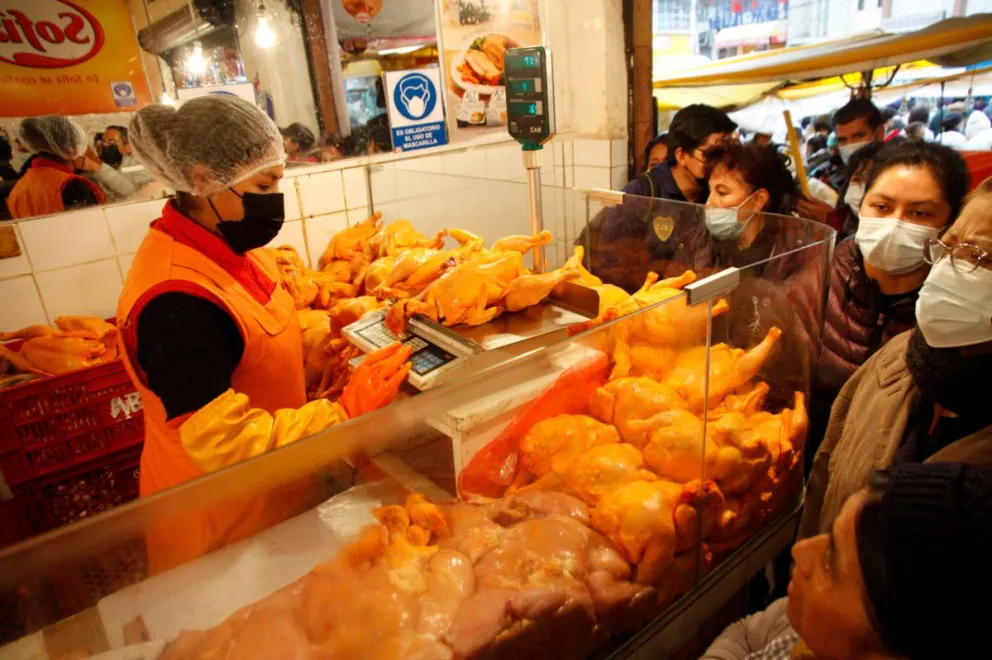
People see the rising prices of goods as a risk. Photo: ABI
A survey conducted using the qualitative Delphi questionnaire, published by the Friedrich Ebert Foundation Bolivia, reveals that most respondents attribute the current economic situation to the mismanagement of President Luis Arce and the failure of the social and community economic model promoted by the MAS since 2006.
The Foundation explained that the report included two types of data. On one hand, the data obtained through the Delphi method is qualitative, as it is limited to the responses provided by questionnaire participants and does not aim to be representative of a broader population. On the other hand, the public opinion survey data is quantitative and seeks to achieve a level of representativeness.
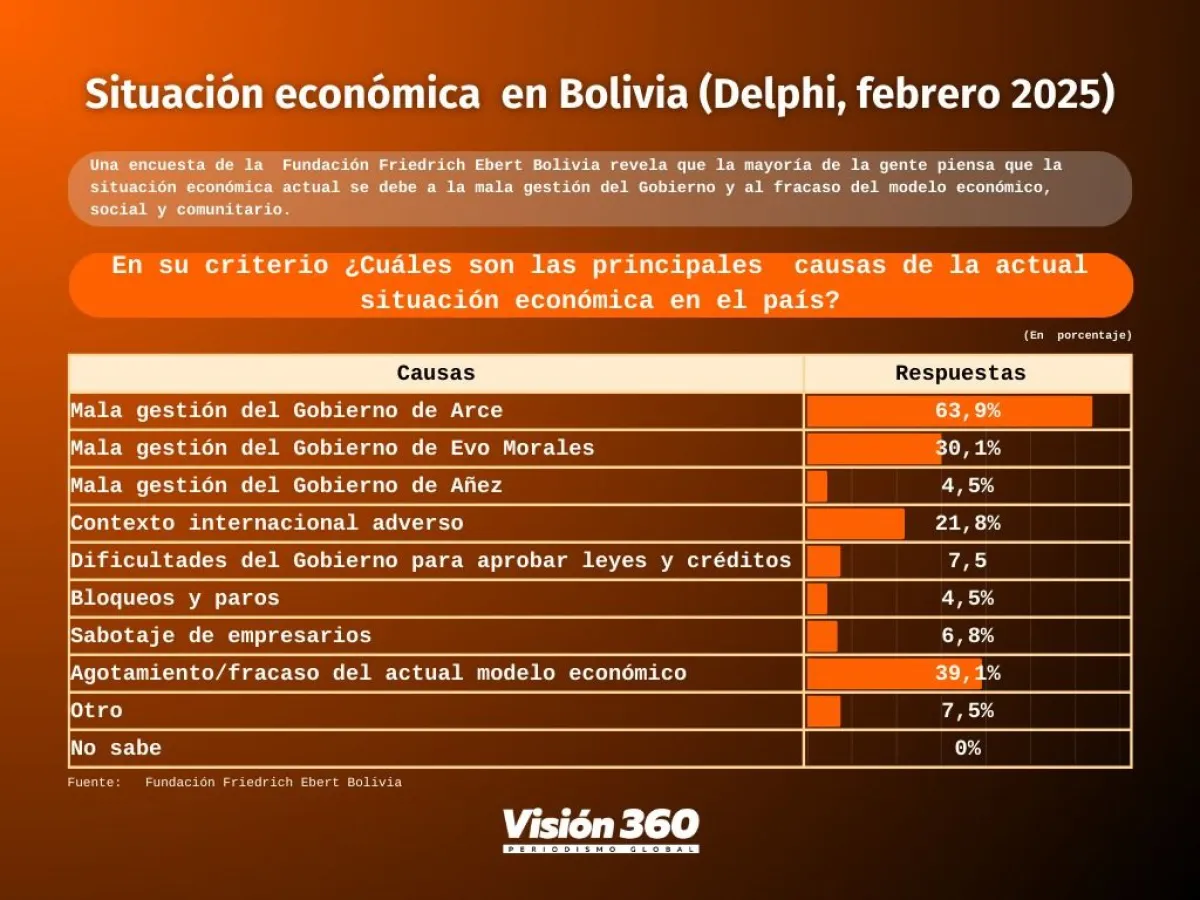
On the current economic situation, the question was asked: In your opinion, what are the main causes of the country’s current economic situation?
63.9% responded that it is due to the poor management of President Luis Arce; 39.1% see it as the exhaustion or failure of the current economic model; 30.1% indicated it is due to the poor management of Evo Morales’ government; 21.8% cited an adverse international context; 7.5% pointed to the government’s difficulties in approving laws and credits; 6.8% blamed sabotage by business owners; 7.5% see other reasons; and 4.5% attributed it to blockades and strikes.
To the question: Would you say the country is on the right or wrong path? 89.6% answered that it is on the wrong path, 5.2% said the right path, and 5.2% did not know.
Future Economic Risks
The question was: In your opinion, how much risk is there this year that: the Bolivian currency will devalue? 49% responded that there is a high risk, 33% see some risk, and 17% perceive little risk. Regarding the shortage of imported products and/or supplies, 57% perceive a high risk, 31% some risk, and 17% little risk. Another question referred to the perception of economic growth and recession, with 45% responding that there is a high risk, 40% some risk, and 14% little risk.
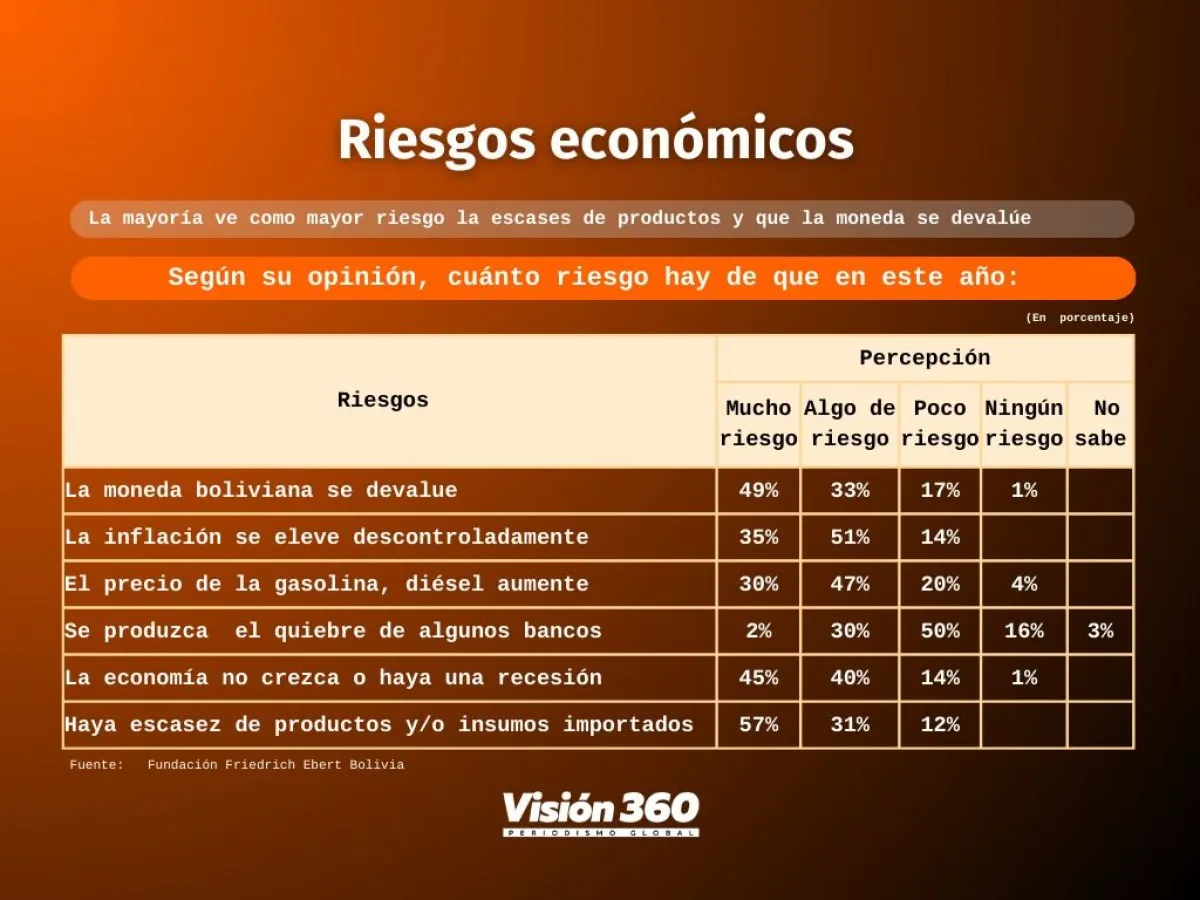
The survey also asked about inflation and whether people believe it could rise uncontrollably. Only 35% responded that the risk is high, 51% saw some risk, and 14% perceived little risk.
Por Marco Antonio Belmonte, Vision 360:
Encuesta de percepción
Un 63,9% respondió que es por la mala gestión del presidente del Estado, Luis Arce; un 39,1% ve que es por el agotamiento o el fracaso del actual modelo económico
La gente ve como un riesgo que los precios de productos sigan al alza . Foto. ABI
Una encuesta obtenida mediante el cuestionario Delphi de carácter cualitativo publicado por la Fundación Friedrich Ebert Bolivia, revela que una mayoría de la gente consultada atribuye la situación económica actual a la mala gestión del presidente del Estado, Luis Arce y al fracaso del modelo económico social y comunitario, impulsado por el MAS desde 2006.
La Fundación explicó que el informe incluyó dos tipos de datos. Por un lado, los datos obtenidos mediante el método Delphi tienen un carácter cualitativo, ya que se limitan a las respuestas proporcionadas por los participantes del cuestionario y no pretenden ser representativos de una población más amplia. Por otro lado, los datos de la encuesta de opinión pública tienen un carácter cuantitativo y buscan alcanzar un nivel de representatividad.
Sobre la situación económica actual se preguntó: en sus criterio ¿cuáles son las principales causas de la actual situación económica en el país?
Un 63,9% respondió que es por la mala gestión del presidente del Estado, Luis Arce; un 39,1% ve que es por el agotamiento o fracaso del actual modelo económico; un 30,1% indicó que es por la mala gestión del gobierno de Evo Morales; un 21,8% por el contexto internacional adverso; un 7,5% por las dificultades del Gobierno para aprobar leyes y créditos; un 6,8% por el sabotaje de los empresarios; un 7,5% ve otros motivos; un 4,5% por los bloqueos y paros.
A la pregunta. ¿usted diría que el país va por buen camino o por mal camino?, un 89,6% respondió que por mal camino, un 5,2% por el buen camino y un 5,2% no sabe.
Riesgos económicos futuros
La pregunta fue: según su opinión, cuánto riesgo hay de que este año: la moneda boliviana se devalúe y un 49% respondió que hay mucho riesgo, un 33% algo de riesgo, un 17% poco riesgo. En cuanto a la escasez de productos y/o insumos importados, un 57 % percibe que hay mucho riesgo, un 31% algo de riesgo, y un 17% poco riesgo. Otra pregunta hacía referencia a la percepción sobre el crecimiento económico y la recesión, un 45% respondió que hay mucho riego, un 40% algo de riesgo y un 14% poco riesgo.
También se preguntó sobre la inflación y si creen que es posible que se eleve descontroladamente, pero solo un 35% contestó que el riesgo es alto, un 51% algo de riesgo, un 14% poco riesgo.

 Bolivian Thoughts | Pensamientos Bolivianos (Bilingual/Bilingüe)