
By Andres Gomez, Vision 360:
Lithium Contracts and Distrust
Evidence shows that MAS governments have failed in the lithium industry for 18 years.
He rode a bicycle. But it wasn’t just any bike—it had a lithium-ion battery. And he wasn’t just any cyclist—he was the President. Camera flashes lit up the moment (February 17, 2014), immortalizing Bolivia’s supposed entry into lithium industrialization. Amazing! Later, we learned it was a lie. That plant, located in Palca, Potosí, never produced a single battery.
Five years later (October 2, 2019), the same man appeared driving a buggy. “We are launching the first vehicle assembled with Bolivian lithium in Potosí, powered by batteries from the Palca plant,” he tweeted. Dozens of phones went up, cameras clicked, and another scam was recorded. How many of those vehicles are on the roads today? Not a single one.
Media reports revealed that the Palca pilot plant was built by the Chinese company LinYiDake Co. for about $4 million. It was supposed to produce 1,000 lithium phone batteries and 40 vehicle batteries daily. Does anyone use a battery from the Palca plant? Not MAS loyalists, not Arce supporters, not Andrónico’s followers—no one.
Between 2012 and 2021, the Bolivian government allocated $1.231 billion to the lithium industry. However, execution reached only 48%, and sales revenue was a mere 7%, according to a report by journalist Madeleyne Aguilar from La Nube.
These figures come from calculations by Gonzalo Mondaca, a researcher at Bolivia’s Center for Research and Information (CEDIB), who analyzed official documents and reports from the former National Evaporite Resources Management (GNRE), now Yacimientos de Litio Bolivianos (YLB).
On August 10, 2012, La Razón reported: “President Evo Morales Ayma inaugurated the lithium industrialization process on Thursday with the launch of a semi-industrial potassium chloride plant in Uyuni, Potosí, with an $18 million investment.”
On January 3, 2013, Opinión announced that the Bolivian government had inaugurated “the first pilot lithium industrialization plant in Llipi, southeast of Uyuni, Potosí, with an annual production capacity of 480 tons of lithium carbonate.” The project cost $19 million.
“We have 90% of the world’s lithium, and soon we will control the global lithium market,” then-Vice President Álvaro García declared that day. Twelve years have passed since that demagogic statement—are we controlling the global lithium market?
In December 2023, La Nube verified that only 90 out of 160 evaporation ponds were operational, as the remaining 70 were never sealed. After ten years and a billion dollars wasted, “MAS visionaries” realized that the evaporation method doesn’t work. In 2021, they switched to the direct lithium extraction method.
On March 5, 2023, Los Tiempos compiled a list of failures in Bolivia’s so-called lithium industrialization:
- The pilot cathode materials plant cost approximately $4 million and was inaugurated in 2017. Its construction was entrusted to the French company Greentech. It was projected to produce 82 kilograms of lithium manganese oxide and 100 kilograms of lithium nickel manganese cobalt.
- In 2018, the industrial potassium chloride plant was inaugurated at a cost of $188 million, installed by the Chinese company CAMC Engineering Co. It was initially announced that production would reach 700,000 tons per year, later revised to 350,000 tons. By mid-last year, it had not exceeded 25% of its capacity.
- By 2019, the industrial lithium carbonate plant was scheduled for inauguration, built for $115 million by the Chinese company Maison Engineering. It was designed to produce 15,000 tons, but completion has been delayed for over three years.
- In 2021, the Research Center for Science and Technology of Evaporite Materials and Resources was inaugurated. The project cost $14 million and was awarded to the Chinese company TBEA Group.
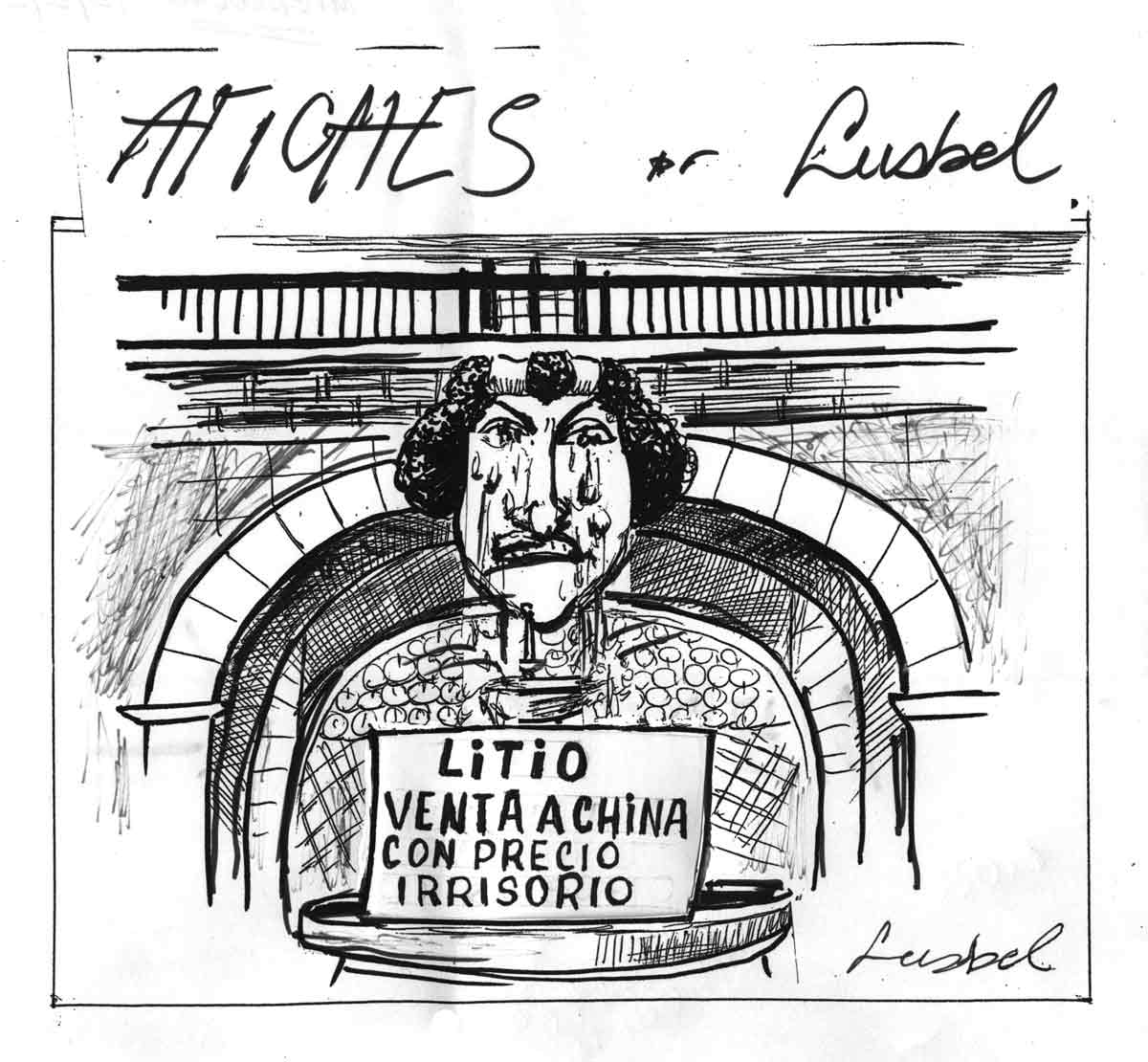
After this chain of ineptitude, the government of Luis Arce signed contracts with a Russian company and a Chinese company. Amid this scenario of corruption and incompetence, the squanderer Evo Morales linked one of Luis Arce’s sons to a family lithium business. The accused rejected the allegation and demanded evidence.
The two lithium contracts are awaiting approval in the Legislative Assembly by senators and deputies. Representatives from Potosí have denounced these contracts as unfavorable to the country, claiming that all costs are borne by Bolivians while all profits go to the two transnational corporations. The government is trying to reverse public distrust. To that end, it controls the media agenda, though few people believe, watch, read, or listen to it.
Evidence shows that MAS governments failed for 18 years in the lithium industry. They squandered over $1.5 billion during those 18 years. They proved MAS corruption in the name of lithium for 18 years. Why should we now believe Luis Arce when he says the contracts with the Chinese and Russians are favorable to Bolivia and transparent?
The day the tyrant Evo Morales fell (11/10/19), MAS supporters tried to incite unrest in El Alto by falsely claiming that the “sellout” right had staged a “coup” to hand lithium over to transnationals. Six years later, people are pointing the finger at the real “sellouts.”
Por Andres Gomez, Vision 360:
Los contratos de litio y la desconfianza
Las evidencias demuestran que los gobiernos masistas fracasaron durante 18 años en la industria del litio.
Montó una bicicleta y manejó. No era una “bici” cualquiera, tenía una batería de Ión litio. No era un ciclista cualquiera, era el Presidente. Estallaron los flashes de la propaganda y el momento (17/02/2014) quedó registrado para la historia: Bolivia entraba a la era de la industrialización del litio. ¡Bárbaro! Luego nos enteramos que fue una mentira. Esa planta, ubicada en Palca, Potosí, no produjo ni una batería.
Cinco años después (02/10/2019), el mismo personaje apareció conduciendo un buggy. “Estrenamos el primer vehículo ensamblado con litio boliviano en Potosí que usará energía de las baterías de litio de Palca”, dijo en un tuit. Decenas de celulares se elevaron sobre otra decena de manos, activaron sus cámaras fotográficas y registraron otra mamada. ¿Cuántos de esos vehículos circulan hoy en el país? Ni uno.
Los medios de comunicación informaron que la planta piloto de Palca fue construida por la empresa china LinYiDake Co. con unos 4 millones de dólares. Debía producir 1.000 baterías de litio para celular y 40 para vehículos al día. ¿Alguien usa una batería producida en la planta de Palca? Ni evistas ni arcistas ni androniquistas.
Entre 2012 a 2021, el Estado boliviano asignó un presupuesto de 1.231 millones de dólares para la industria del litio en Bolivia. Sin embargo, la ejecución no pasó del 48% y el retorno en ventas llegó apenas a un 7%, señala un reportaje de la periodista Madeleyne Aguilar de La Nube.
Los datos se desprenden de un cálculo realizado por Gonzalo Mondaca, investigador del Centro de Investigación e Información de Bolivia (CEDIB) que estudió los documentos oficiales y memorias de la entonces Gerencia Nacional de Recursos Evaporíticos (GNRE), hoy Yacimientos de Litio Bolivianos (YLB).
El 10 de agosto de 2012, el periódico La Razón informó que “el presidente Evo Morales Ayma dio inicio el jueves al proceso de industrialización del litio, con la inauguración de la planta semiindustrial de cloruro de potasio, ubicada en Uyuni, departamento de Potosí, con una inversión de $us18 millones”.
El 3 de enero de 2013, el diario Opinión difundió que el Gobierno boliviano “inauguró este jueves la primera planta piloto de industrialización de Litio en la localidad de Llipi, ubicada al sureste del municipio de Uyuni, departamento de Potosí, con capacidad para producir 480 toneladas de carbonato de litio anuales”. La obra costó 19 millones de dólares.
“Aquí tenemos el 90 por ciento de litio del mundo y de aquí a un tiempo vamos a controlar el mercado de litio del mundo”, dijo aquel día el vicepresidente de entonces Álvaro García. Ya pasaron 12 años de ese anuncio demagógico, ¿controlamos el mercado de litio del mundo?
El periódico digital La Nube constató en diciembre de 2023 que de 160 piscinas de evaporación solo funcionan 90 porque las otras 70 no fueron permeabilizadas. Diez años y mil millones despilfarrados después, “los iluminados del MAS” se dieron cuenta que el método de evaporación no sirve. En 2021, cambiaron al método extradición directa del litio.
El periódico Los Tiempos realizó el 5 de marzo de 2023 una lista de fracasos en la “industrialización del litio”:
- La planta piloto de materiales catódicos costó alrededor de 4 millones de dólares y fue inaugurada en 2017. La construcción fue encargada a la francesa Greentech. Se había proyectado que produciría 82 kilos de litio manganeso óxido y 100 kilos de litio níquel manganeso cobalto.
- En 2018 se inauguró la planta industrial de cloruro de potasio que costó 188 millones de dólares y fue instalada por la china CAMC Engineering Co. Se había anunciado que alcanzaría una producción de 700 mil toneladas al año, después se indicó que serían 350 mil toneladas. A mediados del año pasado, no superó el 25 por ciento de su capacidad.
- Para 2019, se tenía previsto la inauguración de la planta industrial de carbonato de litio, construida con 115 millones de dólares por la empresa china Maison Engineering. Esta tendría una capacidad de producir 15.000 toneladas; sin embargo, lleva más de tres años de retraso en su conclusión.
- En 2021, se inauguró el Centro de Investigación en Ciencia y Tecnología de Materias y Recursos Evaporíticos. La obra costó 14 millones de dólares y fue adjudicada a la china TBEA Group.
Tras esta cadena de ineptitud, el gobierno de Luis Arce firmó contratos con una empresa rusa y otra china. En medio de este escenario de corrupción e incapacidad, el despilfarrador Evo Morales vinculó a uno de los hijos de Luis Arce en un negocio familiar del litio. El sindicado rechazó la acusación y pidió pruebas.
Los dos contratos de litio están en la Asamblea Legislativa esperando ser aprobados por senadores y diputados. Representantes potosinos han denunciado que esos contratos son desfavorables al país porque cargan todos los gastos a los bolivianos y entregan todas las ganancias a las dos transnacionales. El gobierno intenta revertir la desconfianza de la gente. Con ese fin, controla la agenda de medios que poca gente cree, ve, lee o escucha.
Las evidencias demuestran que los gobiernos masistas fracasaron durante 18 años en la industria del litio. Reflejan que despilfarraron durante 18 años más de 1.5 mil millones de dólares. Prueban corrupción masista en nombre del litio durante 18 años. ¿Por qué tendríamos que creer ahora a Luis Arce que los contratos con chinos y rusos son favorables a Bolivia y transparentes?
El día que cayó el tirano Evo Morales (10/11/19), los masistas intentaron convulsionar El Alto mintiendo que la derecha “vendepatria” dio un “golpe” para entregar el litio a las transnacionales. Seis años después, la gente levanta el índice contra los verdaderos “vendepatrias”.
https://www.vision360.bo/noticias/2025/02/16/20184-los-contratos-de-litio-y-la-desconfianza

 Bolivian Thoughts | Pensamientos Bolivianos (Bilingual/Bilingüe)