
By Juan Carlos Torrejón/EFE, Brujula Digital:
According to Bloomberg analysis, Bolivia is at risk of devaluation and default
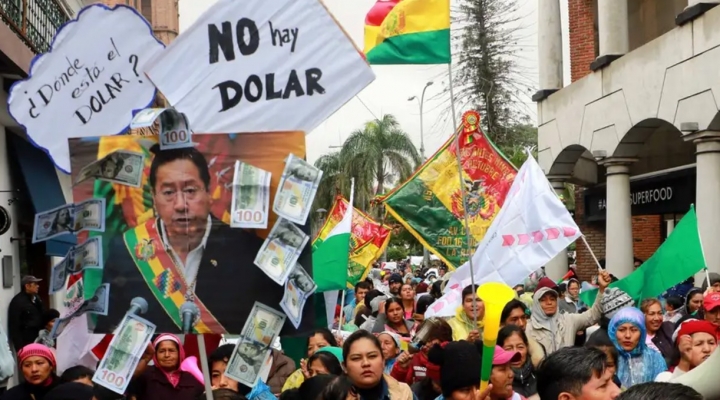
The Bolivian economy is on the brink of an unprecedented crisis, with imminent risks of devaluation and default on its external debt, according to a recent analysis by Juan Pablo Spinetto published on the prestigious economic news portal Bloomberg.
The article states that “the socialist economic model” that once showed signs of success in Bolivia has collapsed, and that “the worst is yet to come.”
The latest sign of this crisis was evident when the aviation industry urgently requested government intervention to meet the dollar payment demands from its suppliers.
Without this help, the country could face the suspension of flights, further isolating itself in an already economically complicated region.
This incident is just one example of the classic balance of payments crisis facing Bolivia, triggered by the shortage of international reserves needed to maintain the fixed exchange rate of 6.9 bolivianos per dollar, established since 2011.
Bolivia’s international reserves, which reached a high of 15,000 million dollars in 2014, have dramatically decreased to less than a tenth of that figure.
In an attempt to conserve every available dollar and gram of gold, President Luis Arce’s government has implemented measures that have depressed economic activity, caused fuel shortages, and fueled social discontent, according to the publication.
As a result, the annual inflation rate surged to nearly 8% in October, the highest level since the establishment of the fixed exchange rate.
The lack of foreign currency has led to parallel exchange rates, speculation on the currency, and suppliers demanding payments in foreign currency, which amounts to an informal dollarization of the economy.
These factors reflect the unsustainability of the current economic model, which can no longer support the structural imbalances accumulated over the years.
Late measures
In an attempt to mitigate the crisis, President Arce has taken steps to reverse the decline in hydrocarbon production, offering incentives to foreign oil and gas companies and liberalizing the fuel market last week to try to alleviate the gasoline shortage. However, experts warn that these actions come too late and are insufficient to resolve the structural imbalances that have led Bolivia to its current situation.
Spinetto notes that these imbalances are the result of poorly managed policies during the golden era of Evo Morales’ socialist government between 2006 and 2019, a period during which Arce served as his economy minister. A more sensible approach would have moderated public spending, invested in ensuring the country’s natural gas boom continued to finance national finances for decades, and slowly devalued the currency.
Adjustment and devaluation
According to Bloomberg’s analysis, “the gradual strategy” is no longer viable. What Bolivia urgently needs is a major fiscal adjustment, a devaluation of its currency, and the refinancing of its external debt with the support of the IMF.
Implementing these measures could mean political suicide for the government, but the longer Arce waits, the higher the cost will be for the Bolivians.
His confrontation with Evo Morales over leadership of the MAS party has intensified political tensions, bringing the country to the brink of collapse. Despite being legally barred, Morales is determined to run again and has mobilized his followers, who took military bases last month.
Despite the gravity of the situation, bond investors have remained strangely silent, with Bolivian bonds gaining value recently thanks to the government’s more pro-market measures.
However, according to Débora Reyna García of Oxford Economics, devaluation is only a matter of time and could occur by the end of 2025 or early 2026. “We don’t see it happening before the elections because the political and social costs are too high,” Reyna García commented. “Something that keeps investors calm is that Bolivia does not have much debt, and its major maturities are scheduled for the second half of 2026.”
The inevitable devaluation represents a painful end to the unusual combination of populism and economic strength that characterized Bolivia during the last super cycle of commodities. The poorest country in Latin America grew an average of 5% annually for more than a decade, eliminating inflation, significantly reducing poverty, and increasing income.
However, the days of prosperity under Morales are behind, and Bolivia now faces a deeply challenging economic and political reality.
BD/RPU
Por Juan Carlos Torrejón/EFE, Brújula Digital:
Según análisis de Bloomberg, Bolivia está en riesgo de devaluación y default
La economía boliviana se encuentra al borde de una crisis sin precedentes, con riesgos inminentes de devaluación y default de su deuda externa, según un análisis reciente de Juan Pablo Spinetto publicado en el prestigioso portal de noticias económicas Bloomberg.
El artículo señala que “el modelo económico socialista” que alguna vez mostró signos de éxito en Bolivia, ha colapsado y que “lo peor aún está por venir”.
El último indicio de esta crisis se evidenció cuando la industria de la aviación solicitó urgentemente la intervención del gobierno para cumplir con las demandas de pagos en dólares de sus proveedores.
Sin esta ayuda, el país podría enfrentar la suspensión de vuelos, aislándose aún más en una región ya complicada económicamente.
Este incidente es solo una muestra de la clásica crisis de balanza de pagos que enfrenta Bolivia, desencadenada por la escasez de reservas internacionales necesarias para mantener el tipo de cambio fijo de 6,9 bolivianos por dólar, establecido desde 2011.
Las reservas internacionales de Bolivia, que alcanzaron un máximo de 15.000 millones de dólares en 2014, han disminuido drásticamente a menos de una décima parte de esa cifra.
En un intento por conservar cada dólar y gramo de oro disponible, el gobierno del presidente Luis Arce ha implementado medidas que han deprimido la actividad económica, generado escasez de combustible y alimentado el descontento social, dice la publicación.
Como resultado, la inflación anual se disparó a casi el 8% en octubre, el nivel más alto desde la instauración del tipo de cambio fijo.
La falta de divisas ha dado lugar a tasas de cambio paralelas, especulación sobre la moneda y proveedores que exigen pagos en divisas, lo que equivale a una dolarización informal de la economía.
Estos factores reflejan la inviabilidad del modelo económico actual, que ya no puede sostenerse frente a los desequilibrios estructurales acumulados a lo largo de los años.
Medidas tardías
En un intento por mitigar la crisis, el presidente Arce ha tomado medidas para revertir la caída en la producción de hidrocarburos, ofreciendo incentivos a empresas extranjeras de petróleo y gas y liberalizando el mercado de combustibles la semana pasada para intentar aliviar la escasez de gasolina. Sin embargo, expertos advierten que estas acciones llegan demasiado tarde y son insuficientes para resolver los desequilibrios estructurales que han llevado a Bolivia a su situación actual.
Spinetto señala que estos desequilibrios son el resultado de políticas mal manejadas durante la era dorada del gobierno socialista de Evo Morales entre 2006 y 2019, periodo en el cual Arce se desempeñó como su ministro de Economía. Un enfoque más sensato habría moderado el gasto público, invertido en asegurar que la bonanza del gas natural del país continuara financiando las finanzas nacionales durante décadas y devaluado lentamente la moneda.
Ajuste y devaluación
Según el análisis de Bloomberg, “la estrategia gradual” ya no es viable. Lo que Bolivia necesita urgentemente es un gran ajuste fiscal, una devaluación de su moneda y la refinanciación de su deuda externa con el apoyo del FMI.
Implementar estas medidas podría significar un suicidio político para el gobierno, pero cuanto más tiempo espere Arce, mayor será el costo para los bolivianos.
Su enfrentamiento con Evo Morales por el liderazgo del partido MAS ha intensificado las tensiones políticas, llevando al país al borde del colapso. Morales, a pesar de estar legalmente impedido, está decidido a postularse nuevamente y ha movilizado a sus seguidores, quienes tomaron bases militares el mes pasado.
A pesar de la gravedad de la situación, los inversionistas en bonos han mantenido un silencio extraño, con los títulos bolivianos ganando valor recientemente gracias a las medidas más promercado del gobierno.
No obstante, según Débora Reyna García, de Oxford Economics, la devaluación es solo cuestión de tiempo y podría ocurrir a finales de 2025 o principios de 2026. “No vemos que ocurra antes de las elecciones porque los costos políticos y sociales son demasiado altos”, comentó Reyna García. “Algo que mantiene tranquilos a los inversionistas es que Bolivia no tiene mucha deuda y sus mayores vencimientos están programados para la segunda mitad de 2026”.
La inevitable devaluación representa un penoso final para la combinación inusual de populismo y fortaleza económica que caracterizó a Bolivia durante el último súper ciclo de materias primas. El país más pobre de América Latina creció en promedio un 5% anual durante más de una década, eliminando la inflación, reduciendo significativamente la pobreza y aumentando los ingresos.
Sin embargo, los días de prosperidad bajo Morales han quedado atrás, y ahora Bolivia enfrenta una realidad económica y política profundamente desafiante.
BD/RPU

 Bolivian Thoughts | Pensamientos Bolivianos (Bilingual/Bilingüe)