
By El Diario, Melvy Ruiz, Eju.tv:
The government, out of money, can no longer suppress the rise in product prices
Product prices have increased by 7.26% up to October, and the population feels a 50% loss in the purchasing power of the national currency.
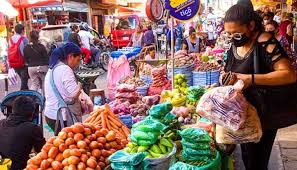
Bolivia never had low inflation but rather suppressed it through a fixed exchange rate and subsidies for essential goods, especially fuels. However, after losing much of its international reserves and gas exports, the country ran out of resources. Now, cheap products have reached their end, and the official dollar rate has been surpassed by the parallel rate, leading to a diesel and gasoline crisis along with rising food prices, according to economists’ analysis.
Economic analyst Gonzalo Chávez stated that Bolivia never had low inflation but rather suppressed it with a low exchange rate and fuel subsidies.
The “boom” of high prices and significant gas production until 2014 allowed the government to achieve $15 billion in Net International Reserves (RIN), maintaining an exchange rate of 6.96 bolivianos per dollar. This robust hydrocarbon production reduced fuel imports and the subsidy costs.
However, the boom ended in late 2014, and by the following year, revenues and production began to decline, although public spending did not, reducing RIN to just over $1.9 billion in the current administration.
Economic analyst and former Hydrocarbons Ministry official Álvaro Ríos pointed out that Bolivia faces a lack of foreign currency, causing a fuel shortage in the domestic market for the past 18 months.
Inflation data from the National Institute of Statistics (INE) showed 1.64% inflation in October, with a cumulative 7.25% from January to October, surpassing the government’s 3.6% projection.
During a press conference earlier this month, Development Planning Minister Sergio Cusicanqui attributed 1.45% of inflation to 24 days of blockades.
“They’re leeches. Before the blockade, there was already a fuel shortage, increasing costs for several companies, with the parallel dollar at Bs 10.5. Import costs rose by 50%. Half of Bolivia burned, and this ‘angel’ of the Ministry tells us inflation is just due to the blockade,” wrote @GonzaloCHavezA on November 7, referencing the Ministry’s explanation. Food inflation alone was noted at around 8%.
Fernando Romero, president of the Tarija Departmental College of Economists, remarked that Bolivia’s economy exists in a fictional, “Matrix-like” state where inflation is artificial and does not reflect actual prices.
Romero estimated inflation between 10% and 12%, partly due to blockades but also because of dollar and fuel shortages. Added to this is the free import and commercialization policy, which will raise gasoline and diesel prices.
The former Central Bank of Bolivia (BCB) director estimated fuel prices could reach Bs 12 per liter, with others predicting Bs 14.
Gary Rodríguez, general manager of the Bolivian Institute of Foreign Trade (IBCE), said the decree allowing free fuel imports and commercialization must operate with zero bureaucracy and zero taxes.
Ríos added that the National Hydrocarbons Agency (ANH) should not set prices but only establish reference values.
Eastern agricultural producers welcomed the fuel policy and support letting the market determine fuel prices.
Romero stated that Bolivia’s low inflation was artificially achieved through fixed exchange rates in neighboring countries, smuggling, and fuel subsidies. Additionally, there was a significant flow of foreign currency from natural gas sales.
That context has ended, with no resources left, leading to a 12-year fiscal deficit. Now, contraband goods are expensive, though currency devaluations in neighboring countries somewhat mitigate Bolivia’s economic crisis.
The International Monetary Fund (IMF) estimated a fiscal deficit of 10% for this year and similar figures for 2025, with 2023 closing at almost 11%.
Bolivia’s economy has become increasingly costly due to currency devaluation against the dollar and rising prices of basic goods. Romero added that a repressed economy does not function normally, encouraging informality, reducing employment, and increasing poverty as people struggle to meet their needs.
Fiscal Crisis
Bolivia faces a structural fiscal crisis affecting trade, currency, and fuel supply, requiring structural solutions instead of temporary measures like the decree for duty-free fuel imports.
Chávez argued that unless public spending is reduced, no measure will have an impact. He criticized ongoing government overspending as if the country were still in an economic boom and suggested reviewing the operations of state-owned companies contributing to the fiscal deficit.
Espinoza previously told this outlet that aligning the exchange rate with the parallel market or relaxing it is unfeasible since the BCB lacks dollars to sustain any potential rate.
Although the official exchange rate remains at 6.96 bolivianos, the parallel market rate exceeds Bs 10 per dollar, increasing import costs for products and industrial inputs.
Growth
The World Bank forecasts 1.4% economic growth for Bolivia, while the IMF projects 1.6%, far below the government’s 3.71% projection.
Bolivia has re-entered an economic slowdown, similar to 2014-2019, with an average decline from 5% to 2.2%, and a repeat of this pattern from 2021-2023.
Romero expects 2024 growth between 1.5% and 2.5%, possibly lower due to the 24-day blockades.
Por El Diario, Melvy Ruiz, Eju.tv:
Gobierno sin dinero ya no puede reprimir el incremento de precios de los productos
Los precios de los productos registraron un incremento de 7,26% hasta octubre y la población siente una pérdida del poder adquisitivo del 50% de la moneda nacional.
Bolivia nunca tuvo una inflación baja, sino fue una reprimida, a través del tipo de cambio fijo y la subvención de los productos de primera necesidad, en especial de los carburantes; pero al haber perdido gran parte de las reservas internacionales y la venta de gas al exterior, se quedó sin recursos, ahora los productos baratos terminaron su ciclo y el dólar oficial fue superado por el paralelo, lo que derivó en una crisis de diésel y gasolina, más un alza de los valores de los alimentos, de acuerdo con el análisis de economistas.
El analista económico Gonzalo Chávez indicó que nunca Bolivia tuvo una inflación baja, sino fue reprimida, con la implementación de un tipo de cambio bajo y la subvención a los combustibles.
El “boom” de los precios altos y la importante producción de gas hasta el 2014, permitió al Gobierno alcanzar unas Reservas Internacionales Netas (RIN) de 15.000 millones de dólares, que le permitió mantener un tipo de cambio de 6,96 bolivianos por dólar, y la importante producción de hidrocarburos reducía la importación de combustibles, así como el costo bajo del monto de la subvención.
Sin embargo, el auge terminó a finales del 2014 y al año siguiente los ingresos empezaron a caer, así como la producción, aunque no el gasto público, por ello las RIN fueron reduciendo hasta un poco más de 1.900 millones de dólares en la presente gestión.
Por su parte, el analista y exautoridad del Ministerio de Hidrocarburos, Álvaro Ríos, dijo que el problema que enfrenta Bolivia, es la falta de divisas, lo que provoca el desabastecimiento de carburantes en el mercado nacional, desde hace 18 meses.
Inflación
Según los datos del Instituto Nacional de Estadística (INE), la inflación en octubre alcanzó 1,64%, mientras que el acumulado de enero a este mes, la cifra fue de 7,25%, porcentaje por encima del estimado por el Gobierno de 3,6%.
En una conferencia de prensa brindada por el ministro de Planificación del Desarrollo, Sergio Cusicanqui, a principios de mes, los bloqueos por 24 días, provocaron 1,45% de inflación.
“Son unos mamones. Antes del bloqueo había escasez de hidrocarburos, lo que subió costos de varias empresas, el dólar paralelo = Bs 10.5. El costo de las importaciones subió en 50%. Quemaron media Bolivia y este angelito de Dios nos dice que la inflación es solo un problema del bloqueo”, escribió en su cuenta @GonzaloCHavezA, el pasado 7 de noviembre, en referencia a la explicación de la autoridad del Ministerio de Planificación. Como referencia indicó que la inflación sólo en alimentos bordea el 8%.
Para el presidente del Colegio Departamental de Economistas de Tarija, Fernando Romero, la economía boliviana vive en un mundo ficticio, tipo matriz, donde la inflación es ficticia e irreal, ya que no refleja el verdadero nivel de precios.
Romero explicó que la inflación estará entre 10% a 12%, debido en parte a los bloqueos, pero también por la falta de dólares y carburantes en el mercado nacional, ahora se suma la libre importación y comercialización que elevará el valor de la gasolina y el diésel.
El exdirector del Banco Central de Bolivia (BCB), en entrevista con medios de comunicación, estimó que el valor de los combustibles podría llegar a los 12 bolivianos por litro, mientras otros estiman 14 bolivianos.
El gerente general del Instituto Boliviano de Comercio Exterior (IBCE), Gary Rodríguez, dijo que para que el Decreto que autoriza la libre importación y comercialización funcione, debe haber cero burocracia y cero impuestos.
A eso se sumó Ríos, sostuvo que la Agencia Nacional de Hidrocarburos (ANH), no debe fijar precio si no establecer solamente el valor de referencia.
En tanto, los agropecuarios del oriente destacan la normativa sobre los combustibles y son partidarios de que el mercado ponga el precio de los combustibles.
Inflación
Romero indicó que la inflación artificial baja que registró Bolivia, se explica por una devaluación del tipo de cambio en países vecinos, por el contrabando y la subvención a los hidrocarburos, además, había un flujo importante de divisas al país por la venta de gas natural.
Ese contexto terminó, ya no hay recursos, lo que derivó en un déficit fiscal de 12 años y ahora los productos de contrabando son caros; sin embargo, en algo sigue ayudando las devaluaciones en los países, pues frena la agudización de la crisis económica de Bolivia.
El Fondo Monetario Internacional (FMI) estimó un déficit fiscal de 10% para la presente gestión y similar cifra para el 2025. Mientras el 2023 cerró con casi 11%.
Dijo que la economía boliviana es cada vez más costosa, debido a que la moneda se devaluó frente al dólar y por el incremento de precios de productos de la canasta familiar.
Agregó que una economía reprimida no opera con normalidad y más bien alienta a una mayor informalidad y provoca menor empleo, y por consiguiente, la pobreza va en aumento debido a que la gente no tiene trabajo y no puede satisfacer sus necesidades.
Fiscal
La economía boliviana registra una crisis estructural de origen fiscal, que provoca problemas en temas comerciales, cambiarios y desabastecimiento de carburantes, que requiere una solución también estructural y no medidas paliativas como el decreto para la libre importación y comercialización de combustibles o arancel cero para productos importados.
Mientras tanto, Chávez sostiene que si no se baja el gasto público, ninguna medida tendrá su efecto, ya que el gobierno sigue con el despilfarro como si estuviera en la bonanza económica. Además, sugiere revisar el funcionamiento de empresas estatales, que son una de las causas del déficit fiscal.
Modificar
En su momento, Espinoza indicó a este medio, que nivelar el tipo de cambio con el que se maneja en el mercado paralelo o flexibilizar el mismo, no será viable, pues el BCB no cuenta con dólares para mantener la cotización que se pueda manejar.
Como se recordará, si bien el tipo de cambio oficial continúa en 6,96 bolivianos, en el mercado paralelo está por encima de los 10 bolivianos por dólar, lo que encarece la importación de productos, así como de insumos para la industria nacional.
Crecimiento
Entretanto, el Banco Mundial estima un crecimiento económico para Bolivia de 1,4%, mientras que el FMI proyecta 1,6%, cifras que están lejos de la proyectada por el Gobierno, de 3,71%.
Bolivia ingresó nuevamente en una desaceleración de su economía, tal como sucedió del 2014 al 2019, de 5% a 2,2%, en promedio; y en el período 2021 al 2023, también se repite la misma situación.
Romero estima que el país cerrará el 2024 entre 1,5% a 2,5%, tal vez sea menor, debido a los bloqueos registrados durante 24 días.

 Bolivian Thoughts | Pensamientos Bolivianos (Bilingual/Bilingüe)