
By Vision 360:
Annually, five new colonies are established in Bolivia
The number of Mennonite colonies in the country has increased since 2015. They no longer only target the forests of Santa Cruz but are also expanding into less common areas for their settlement.
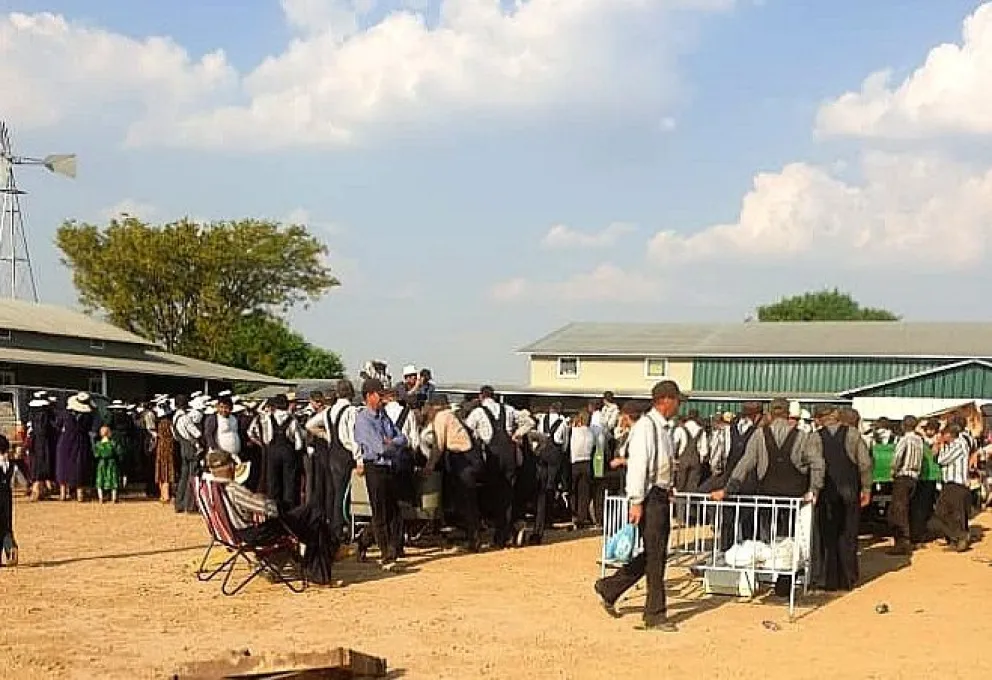
Meeting at a Mennonite colony in Santa Cruz. Photo: Mayra Peñaloza
“Silent and brutal,” is how the advance of Mennonite deforestation in Santa Cruz is described. For their crops, they do not use already worked lands but rather new, forested areas with high fertility—essentially the forest itself.
Since 2001, in just three areas of Santa Cruz where their colonies are established, they have cleared 304,308 hectares of the region’s forest. But their expansion goes beyond that; it is estimated that up to five new colonies are created annually across the country, now reaching less common areas such as Beni and the northern part of La Paz.
“The government does not have an up-to-date registry, providing very little information to understand this problem. But in reality, Mennonite colonies are always enormous, with a productive system that is not very eco-friendly, aiming to clear as much land as possible. In other words, they have a highly productivist vision that seeks to extract the maximum possible benefit from their land,” said environmental economist Stasiek Czaplicki Cabezas, the main researcher of the report “A fuego y mercurio,” published by Oxfam.
Moving into the Forest
According to German researcher Adalberto J. Kopp, deforestation by Mennonite colonies follows a similar pattern.
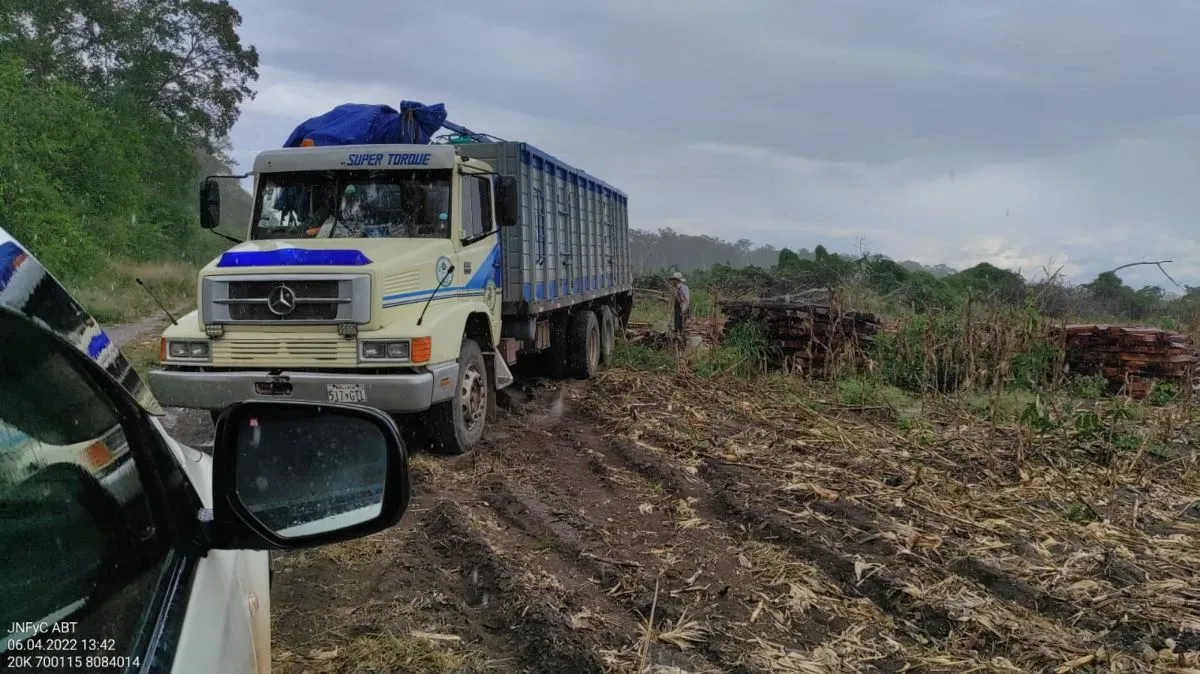
They select forested areas with highly fertile soils, clear and prepare the land using mechanical methods or burning to remove native vegetation. Then, they engage in extensive farming, characterized by monocultures of soybeans, corn, and wheat.
Part of their trademark approach is the intensive use of agrochemicals and the continuous expansion of the agricultural frontier.
When the soil’s fertility is exhausted or they encounter environmental or social restrictions, the colonies seek new forest areas to repeat the process.
The same development is occurring in Bolivia. In fact, their participation in the oilseed business is significant. According to research conducted by Kopp for Fundación Tierra (2015), Mennonite colonies produced 16% of the national soybean crop. The revenue generated then amounted to $127 million. If that percentage has remained constant, it should have exceeded $261 million in 2022.
Despite this contribution, their impact is visible, but there are no official data on the number of Mennonite colonies in the country. Some studies have identified 90, 100, and even 120 colonies. Although the exact number is unknown, their locations are well-known.
Most of the settlements are found in three of the main deforestation zones identified by Fundación Tierra in Santa Cruz: the soy nucleus, the Integrated North, and the Chaco region.
“Between 2001 and the present date, a loss of 304,308 hectares of forest has been recorded within the areas occupied by Mennonite colonies up to 2019, representing more than a third of their total extent. Notably, 44% of this forest loss occurred between 2016 and 2022, demonstrating a significant acceleration in the contribution of Mennonite colonies to deforestation in recent years,” states the report A fuego y mercurio.
The report explains that during the period from 2016 to 2021, deforestation within Mennonite colonies accounted for 7.3% of the national total. This figure does not include the estimated expansion of five new colonies per year from 2019 to 2021.
Out of the 304,308 hectares of forest lost, 11,642 hectares were located in areas whose forest function prohibits deforestation, including national or departmental parks, protected forests, limited-use forest areas, rivers, and lagoons.
Although these figures do not represent a majority of the total, the fact that deforestation occurred in 16 colonies and, in most cases, took place over several years, indicates non-compliance with the land-use guidelines established by the departmental Land Use Plan (Plus).
Increasing Presence
Mennonites have been in Bolivia since 1954. Their presence is noticeable, even from a satellite view, due to the linear pattern of their crops.
Since their arrival, their main settlements have been consolidated across the “expansion cruceña” zone. This region concentrates more than two-thirds of the cultivated land, dominated by the large-scale agroindustrial model oriented towards export.
As of 2019, the most recent data available, a total of 90 Mennonite colonies were identified in Bolivia. These colonies managed to cover an area of over one million hectares, making it the second largest extension after Paraguay, according to Yann le Polain de Waroux (2021).
“If one reviews the figures of new colonies that have been identified over five-year periods, based on the study by Yann le Polain de Waroux, between 2015 and 2019, 16 new colonies were established, which is more than three colonies per year. But at the same time, we know that this mapping is incomplete; there is already data undergoing verification that indicates many more colonies, which are already above 120,” Czaplicki detailed.
According to the data from Le Polain de Waroux, in the 1960s, a Mennonite colony was created in the country, while from 1964 to 1969, there were four new colonies. Between 1989 and 1994, the number of new colonies reached seven, and for the five-year period from 2004 to 2009, there were 15. Between 2014 and 2019, new settlements totaled 16.
Looking at this data, it can be established that colonies are being created at a rate of three to five new ones, especially in recent years. This information shows us that there is a demographic shift.
“The children of the members of the colonies established several years ago are now reaching maturity and, as adults, they need and seek new lands. This leads to the formation of new colonies. Furthermore, these may have smaller land areas than in the early years, but that does not mean they are few,” the researcher added.
Due to their agricultural vocation and high fertility rate, to establish a new colony, Mennonites seek contiguous lands, preferably in remote and predominantly forested locations. These areas vary in size, ranging from 4,000 to 16,000 hectares.
However, the colonies established in the last decade tend to be smaller compared to previous periods, suggesting a trend toward the formation of smaller colonies. This could be due to the increasing difficulty in acquiring land that meets their desired requirements.
“This may have to do not so much with the absence of land for them, but rather with the lack of legal land over 10,000 hectares that is forested. Because Mennonites always buy forest land and they deforest it themselves,” Czaplicki noted.
While Bolivia continues to be a preferred destination for migrant Mennonites from other nations, in recent years it has also become a country of origin. From Bolivia, various groups have departed to countries like Peru and Suriname, according to research by journalist Fernando Soria (2024) and Brehaut, I. (2023).
Additionally, due to this need for land, they also migrate within the country. They are no longer only moving within Santa Cruz; there is now data on colonies in Beni and northern La Paz, two regions that are unusual for their settlements.
A contentious relationship with Mennonites
Last Tuesday, an indigenous march departed from Chiquitania, Alto and Bajo Paraguá, in rejection of illegal settlements, not only from intercultural communities but also from Mennonite colonies. They stated that for years they have been in conflict over land invasions, deforestation, and damage to wildlife in protected areas perpetrated by these sectors.
“We are not against private productive activity; they are a source of economic dynamism. However, it is important that their activities adapt and consider environmental and social criteria so that they do not harm the ecosystem and biodiversity, water, and the health of communities; that agroecology, sustainable livestock, grazing, and other nature-friendly activities are adopted,” stated Lordy Suárez, chief of the San Simón community.
In 2022, the construction of a bridge over the Parapetí River benefited the Mennonite colonies. This project, uncovered by a report from Nómadas magazine, broke the natural barrier of Kaa Iya National Park, where sightings of uncontacted tribes had occurred.
In another conflict, the colonies began to dig wells and deforest the area surrounding Laguna Concepción. It didn’t matter that the wetlands in the area were crucial for the survival of the entire natural lagoon.
But the dispute is not only with indigenous people. In 2022, there was an attempt to recover land from a Mennonite community that was settled on state land. However, the action was driven by a group of intercultural individuals (aligned with the MAS government) who were requesting the land to establish their community.
They have also been caught up in allegations of land trafficking and even as victims of extortion by Bolivian authorities.
In 2010, the then Deputy Minister of Interior was accused by a group of Mennonites, along with the Minister of the Presidency, of forming an extortion network targeting this population. In 2013, a Mennonite citizen claimed to have evidence to report a prosecutor who had previously worked at INRA and demanded thousands of dollars from several Mennonites. He stated that multiple government officials were involved.
In 2018, Senator Yerko Núñez denounced that three ministers failed to comply with an order to recover lands that were in the hands of Mennonites. That same year, the brother of a minister was sent to prison for defrauding one of these colonies.
Por Vision 360:
Anualmente, en Bolivia, se crean cinco colonias nuevas
El número de colonias menonitas en el país aumentó desde 2015. Ya no solo toman el bosque cruceño, sino que van hacia zonas poco habituales para su expansión.
Reunión en una colonia menonita en Santa Cruz. Foto: Mayra Peñaloza
“Silenciosa y brutal”, así describen al avance de la deforestación menonita en Santa Cruz. Y es que para sus cultivos, ellos no ocupan tierras ya trabajadas, sino áreas nuevas, boscosas y con alta fertilidad, es decir el bosque.
Desde 2001, solo en tres áreas de Santa Cruz donde se instalan sus colonias, han arrasado con 304.308 hectáreas de bosque cruceño. Pero su expansión va más allá, se estima que en el país, anualmente se crean hasta cinco nuevas colonias, que ya empiezan a tomar zonas poco habituales, como Beni y el Norte de La Paz.
“El Gobierno no tiene un registro actualizado, trae muy poca información para entender este problema. Pero en los hechos, las colonias menonitas siempre son gigantescas, tienen un sistema productivo que es muy poco amigable con los ecosistemas naturales, que busca desmontar todo lo que pueden. En otras palabras, tienen una visión altamente productivista que busca sacarle todo el provecho posible a su tierra”, dijo el economista ambiental Stasiek Czaplicki Cabezas, principal investigador del informe “A fuego y mercurio”, publicado por Oxfam.
Avanzar hacia el bosque
De acuerdo con el investigador alemán Adalberto J. Kopp, la deforestación por parte de las colonias menonitas se caracteriza por seguir un patrón similar.
Seleccionan áreas boscosas con alta fertilidad de suelos; desmontan y preparan el terreno con métodos mecánicos o quemas para eliminar la vegetación nativa. Luego proceden a los cultivos extensivos que se caracterizan por ser monocultivos de soya, maíz y trigo.
Parte de su marca es el uso intensivo de agroquímicos y la expansión continua de la frontera agrícola.
Cuando ya está agotada la fertilidad del suelo o al enfrentar restricciones ambientales o sociales, las colonias buscan nuevas áreas de bosque para repetir el proceso.
En Bolivia ocurre el mismo desarrollo. De hecho, su participación en el negocio de las oleaginosas no es menor. Según una investigación realizada por Kopp, para la Fundación Tierra (2015), estas producían el 16% de la soya nacional. Lo generado, entonces, equivalía a 127 millones de dólares. Si ese porcentaje se mantiene, en 2022 debió haber superado los 261 millones.
Pese a que para este aporte su huella es visible, no existen datos oficiales sobre la cantidad de colonias menonitas en el territorio nacional. Algunas investigaciones identificaron 90, 100 y hasta 120. Aunque se desconoce el número exacto, lo que sí se conoce es su ubicación.
La mayoría de los asentamientos se localizan en tres de las principales zonas de deforestación, identificadas por la Fundación Tierra, en Santa Cruz. Estas son: el núcleo soyero, el Norte Integrado y la región del Chaco.
“Entre 2001 y la fecha actual, se ha registrado una pérdida de 304.308 hectáreas de bosque dentro de las áreas ocupadas por las colonias menonitas hasta 2019, representando más de un tercio del total de su extensión. Notablemente, el 44% de esta pérdida forestal ocurrió entre 2016 y 2022, lo que demuestra una aceleración significativa en la contribución de las colonias menonitas a la deforestación en los últimos años”, sostiene el informe “A fuego y mercurio”.
Explica que durante el período de 2016 a 2021, la deforestación en las colonias menonitas constituyó el 7,3% del total nacional. Esto sin incluir la expansión estimada de cinco nuevas colonias por año desde 2019 hasta 2021.
Dentro de las 304.308 hectáreas de bosque perdidas, 11.642 hectáreas se encontraban en zonas cuya función forestal las excluye de la deforestación, incluyendo parques nacionales o departamentales, bosques de protección, de uso forestal limitado, ríos y lagunas.
Aunque estas cifras no representan una proporción mayoritaria del total, el hecho de que la deforestación se haya producido en 16 colonias y que, en la mayoría de los casos, estas pérdidas se produjeron a lo largo de varios años, señalan un incumplimiento de las directrices de uso del suelo establecidas por el Plan de Uso del Suelo (Plus) departamental.
Cada vez son más
Los menonitas están en Bolivia desde 1954. Su presencia es notable, incluso desde una vista satelital, por la forma lineal de sus cultivos.
Desde su llegada, sus principales asentamientos se consolidaron en toda la zona destinada a la “expansión cruceña”. Esta es región que concentra más de dos tercios de las tierras cultivadas y donde predomina el modelo agroindustrial a gran escala destinada a la exportación.
Hasta 2019, dato más reciente, se identificó un total de 90 colonias menonitas en Bolivia. Estas lograron abarcar una extensión total de más de un millón de hectáreas, lo que representa la segunda mayor extensión después de Paraguay, según Yann le Polain de Waroux (2021).
“Si uno revisa las cifras de nuevas colonias que se han podido identificar, en períodos de cinco años, en base al estudio de Yann le Polain de Waroux, entre 2015 y 2019 se establecieron 16 nuevas colonias, por encima de tres colonias por año. Pero al mismo tiempo sabemos que ese mapeo está incompleto; ya hay una data que está en proceso de verificación que nos habla de muchas más colonias, que ya están por encima de las 120”, detalló Czaplicki.
De acuerdo con los datos de Le Polain de Waroux, en los años 60, en el país se creó una colonia menonita, mientras que para el quinquenio del 64 al 69, hubo cuatro nuevas. Entre el 89 y 94, el número de colonias nuevas llegó a siete y para el quinquenio de 2004 a 2009, fueron 15. Entre el 2014 y el 2019, los nuevos asentamientos llegaron a 16.
Al ver estos datos se establece que las colonias se van creando a razón de tres a cinco nuevas, especialmente en los últimos años. Esa información nos muestra que hay un recambio demográfico.
“Los hijos de los miembros de las colonias establecidas hace varios años ya están llegando a la madurez y, como adultos, necesitan y buscan nuevos predios. Esto hace que se formen nuevas colonias. Además, posiblemente, estas ya tengan tierras con extensiones menores que en los primeros años, pero eso no quiere decir que sean pocas”, añadió el investigador.
Por su vocación agraria y su alta tasa de fecundidad, para constituir una nueva colonia, los menonitas buscan terrenos contiguos, preferentemente en ubicaciones alejadas y predominantemente forestales. Estas áreas varían en tamaño, entre las 4.000 y 16.000 hectáreas.
Sin embargo, las colonias establecidas en la última década tienden a ser más pequeñas en comparación con períodos anteriores, lo que sugiere una tendencia hacia la formación de colonias de menor extensión. Esto podría deberse a la creciente dificultad para adquirir terrenos que cumplan con los requisitos deseados.
“Posiblemente esto tenga que ver, no tanto con la ausencia para ellos, sino, con la ausencia de tierras legales con superficies mayores a las 10 mil hectáreas y que sean forestales. Porque los menonitas siempre compran bosque y ellos mismos deforestan”, acotó Czaplicki.
Si bien Bolivia continúa como un destino preferente para los menonitas migrantes, procedentes de otras naciones, en los últimos años se ha convertido en país de origen. Desde Bolivia diferentes grupos han partido hacia países como el Perú o Surinam, según las investigaciones del periodista Fernando Soria (2024) y Brehaut, I. (2023).
Asimismo, debido a esta necesidad de tierras, también migran dentro del país. Ya no solo se mueven dentro de Santa Cruz, ya se tienen datos de colonias en Beni y en el Norte de La Paz, dos regiones poco habituales para sus asentamientos.
Una conflictiva relación con los menonitas
El pasado martes, una marcha indígena salió de la Chiquitania, Alto y Bajo Paraguá, en rechazo a los asentamientos ilegales, no solo de las comunidades interculturales, sino de las colonias menonitas. Afirmaron que desde hace años sostienen un conflicto por los avasallamientos, desmontes y daño a la fauna en áreas protegidas que protagonizan estos sectores.
“No estamos en contra de la actividad productiva privada, son una fuente de dinamismo económico, pero es importante que sus actividades se adecúen y consideren criterios ambientales y sociales, de tal manera que no generen daño al ecosistema y a la biodiversidad, al agua, a la salud de las comunidades; que se adopten criterios de agroecología, ganadería sostenible, pastoreos y otras actividades sostenibles con la naturaleza”, afirmó Lordy Suárez, cacique de la comunidad San Simón.
En 2022, la construcción de un puente sobre el río Parapetí fue para beneficio de las colonias menonitas. Esta obra, descubierta por un reportaje de la revista Nómadas, rompió la barrera natural del parque Kaa Iya en la que había avistamientos de pueblos no contactados.
En otro conflicto, las colonias empezaron a construir pozos y a deforestar en todo el entorno de la laguna Concepción. No importó que los bofedales del lugar fueran importantes para la subsistencia de todo el espejo natural.
Pero la disputa no solo es con los indígenas. En 2022 se intentó la recuperación de tierras de una comunidad menonita que estaba asentada en un predio fiscal. Sin embargo, la acción estaba impulsada por un grupo de interculturales (afines al Gobierno del MAS) que solicitaban la tierra para establecer su comunidad.
También se han visto en medio de denuncias de tráfico de tierras y hasta como víctimas de extorsión por parte de las autoridades bolivianas.
En 2010, el entonces viceministro de Régimen Interior fue acusado por un grupo de menonitas, y por el Ministro de la Presidencia, de conformar una red de extorsión a esta población. En 2013, un ciudadano menonita afirmó tener las pruebas para denunciar a una fiscal, que años antes trabajó en el Inra y que pidió a varios menonitas miles de dólares. Dijo que había varias autoridades del Ejecutivo involucradas.
En 2018, el senador Yerko Núñez denunció que tres ministros incumplieron la orden de recuperación de tierras que estaban en manos de menonitas. Ese mismo año, el hermano de un ministro fue enviado a la cárcel por estafar a una de estas colonias.

 Bolivian Thoughts | Pensamientos Bolivianos (Bilingual/Bilingüe)