
By El Deber:
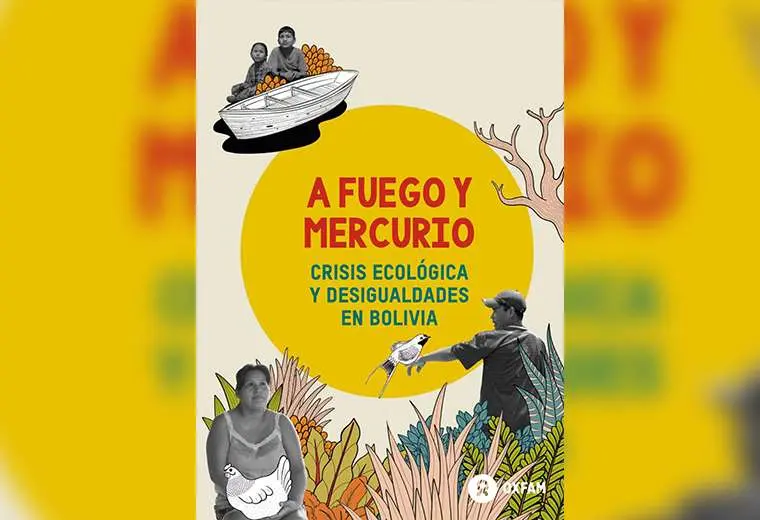
The study highlights how Indigenous and rural communities are the most affected by deforestation, water pollution, and climate change.
A recent investigation by OXFAM Bolivia, titled A Fuego y Mercurio. Crisis Ecológica y Desigualdades en Bolivia, reveals the deep connection between environmental degradation and the increase in social inequalities in the country. The study emphasizes how Indigenous and rural communities are the hardest hit by deforestation, water contamination, and climate change. Meanwhile, economic elites, concentrated in sectors such as agribusiness and mining, disproportionately benefit, significantly contributing to greenhouse gas emissions.
Eighty-seven percent of the emissions come from deforestation, and the wealthiest 1% of the country is responsible for more than half of the emission increases. These dynamics expose an extractivist system that perpetuates inequality, particularly affecting the most vulnerable populations.
“This study invites reflection on how the development model based on an extractivist economy has been and continues to be a vector of inequalities and vulnerabilities. We aim to answer the question: How and to what extent do the forms of production and exploitation, supported by both legal and illegal frameworks, generate ecological crises and widen inequality gaps?” explains Oxfam’s Country Director in Bolivia, Lourdes Montero Justiniano.
OXFAM calls for rethinking the development model, advocating for inclusive policies that promote environmental and social justice. Social and environmental organizations are demanding greater environmental justice, including urgent measures to curb deforestation, strengthen the climate resilience of vulnerable communities, and reconfigure development policies in the country to ensure that the benefits of natural resource exploitation are equitably distributed.
Por El Deber:
El estudio destaca cómo las comunidades indígenas y campesinas son las más afectadas por la deforestación, la contaminación del agua y el cambio climático.
Una reciente investigación de OXFAM Bolivia, titulada A Fuego y Mercurio. Crisis Ecológica y Desigualdades en Bolivia, revela la profunda relación entre la degradación ambiental y el aumento de las desigualdades sociales en el país. El estudio destaca cómo las comunidades indígenas y campesinas son las más afectadas por la deforestación, la contaminación del agua y el cambio climático. Mientras tanto, las élites económicas, concentradas en sectores como la agroindustria y la minería, se benefician desproporcionadamente, contribuyendo en gran medida a la emisión de gases de efecto invernadero.
El 87% de las emisiones de gases provienen de la deforestación, y el 1% más rico del país es responsable de más de la mitad del aumento de las emisiones. Estas dinámicas evidencian un sistema extractivista que perpetúa la desigualdad, afectando especialmente a las poblaciones más vulnerables.
“Este estudio invita a reflexionar sobre cómo el modelo de desarrollo basado en una economía extractivista ha sido y sigue siendo un vector de desigualdades y vulnerabilidades. Buscamos responder en especial a la pregunta: ¿Cómo y en qué medida las formas de producción y explotación, sustentadas por marcos legales e ilegales, generan crisis ecológica y amplían las brechas de desigualdad?”, explica la directora país de Oxfam en Bolivia, Lourdes Montero Justiniano.
OXFAM hace un llamado a repensar el modelo de desarrollo, buscando políticas inclusivas que promuevan la justicia ambiental y social. Organizaciones sociales y ambientales están exigiendo una mayor justicia ambiental, que incluya medidas urgentes para frenar la deforestación, fortalecer la resiliencia climática de las comunidades vulnerables y reconfigurar las políticas de desarrollo en el país para garantizar que los beneficios de la explotación de los recursos naturales sean distribuidos equitativamente.

 Bolivian Thoughts | Pensamientos Bolivianos (Bilingual/Bilingüe)