
By Marco Antonio Belmonte, Vision 360:
External Analysis
S&P Global Ratings warns that limited access to external financing and the challenges faced by the private sector in accessing foreign currency at the official exchange rate have led to depreciation in currency exchange markets.
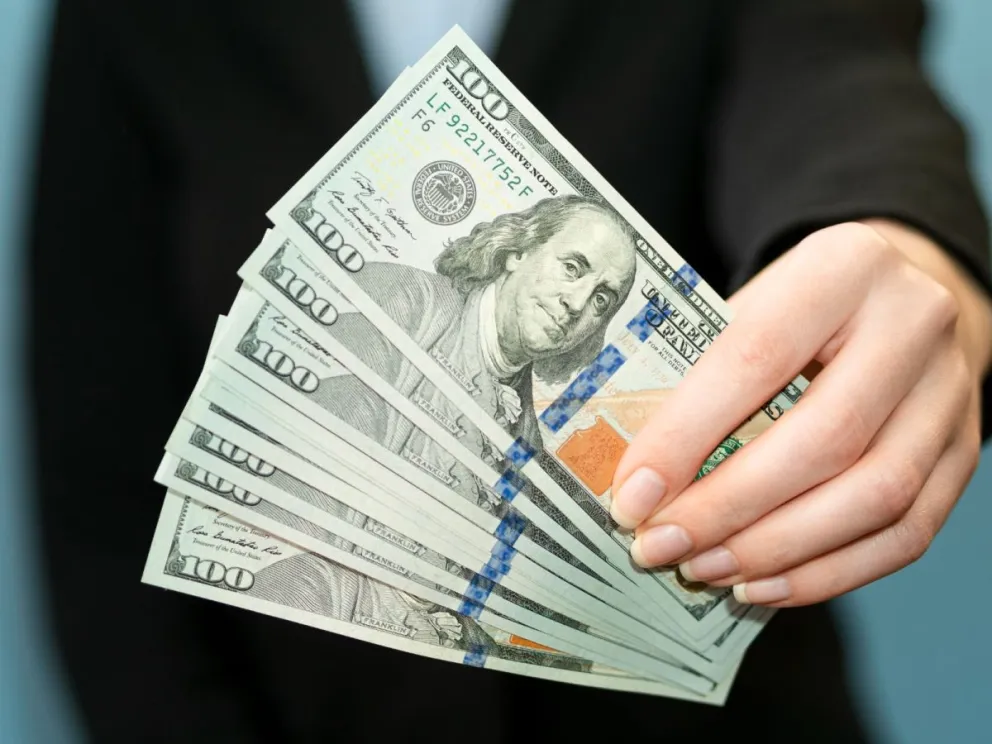
The Bolivian currency loses value against the dollar in the parallel market, according to external analysis. Photo: ABI
The Bolivian currency has lost value against the dollar in the parallel market by 40% to 70%, according to various external analyses, implying a de facto devaluation, even though the official exchange rate set by the Central Bank of Bolivia (BCB) remains at 6.97 bolivianos.
The credit rating agency Standard & Poor’s (S&P Global Ratings), in its latest report, warns that limited access to external financing and the difficulties the private sector faces in obtaining foreign currency at the official exchange rate have led to a de facto depreciation in the currency markets (in August 2024, the gap between the official and parallel exchange rates widened to 70%).
According to the company, this situation has caused a downward adjustment in imports. Imports through July 2024 decreased by 14% compared to the same period in 2023. “However, the reduction in imports is not enough to counter the 21% drop in overall exports; the reductions were mainly in natural gas (18%), gold (70%), and soybeans (38%), three items that together represented 58% of total exports in 2023,” the report points out.
Another analysis from the Peruvian Institute of Economics, published in the Peruvian newspaper El Comercio, indicates that the Bolivian currency has lost 40% of its value since 2023.
“Efforts to maintain a fixed exchange rate for nearly 15 years have eroded international reserves and seriously weakened the Bolivian currency. Thus, using the parallel exchange rate, it is estimated that the boliviano has lost about 40% of its value since 2023,” the analysis states.
The Minister of Economy, Marcelo Montenegro, when asked about the issue, noted that if the discussion is about the loss of purchasing power in relation to the dollar, that 40% figure may have some basis.
He emphasized that for several years, the country has maintained stability in the cost of living, but there are now pressures due to global events or the climate crisis, which also has its impact.
The president of the Departmental Association of Economists of Tarija, Fernando Romero, explained that a devaluation affects everyone, as it increases the cost of purchasing assets and conducting transactions because importers have to resort to the parallel market. “For example, buying an appliance becomes more expensive because I have to spend more bolivianos to obtain foreign currency. This, in turn, generates inflation and loss of purchasing power. We need more bolivianos to buy the same amount of dollars,” he explained.
He recalled that a few weeks ago, the parallel dollar was even quoted at 15 bolivianos, which implied a 100% devaluation of the currency.
Data from the website “dolarboliviahoy,” which shows the parallel exchange rate for the U.S. dollar, reports that this Monday the selling price of the dollar is 10.68 bolivianos, and the buying price is 10.45 bolivianos.
Por Marco Antonio Belmonte, Vision 360:
Análisis en el exterior
S&P Global Ratings advierte que el acceso limitado al financiamiento externo y las limitaciones que afronta el sector privado para acceder a moneda extranjera al tipo de cambio oficial han llevado a una depreciación en los mercados cambiarios.
El boliviano pierde valor frente al dólar en el mercado paralelo, según análisis en el exterior. Foto. ABI
La moneda boliviana perdió valor frente al dólar en el mercado paralelo entre un 40% a un 70%, según diversos análisis en el exterior, lo que implica en los hechos una devaluación de facto, aunque la cotización oficial del tipo de cambio fijada por el Banco Central de Bolivia (BCB) se mantiene en 6,97 bolivianos.
La Calificadora de Riesgo Standard & Poors (S&P Global Ratings), en su último informe, advierte que el acceso limitado al financiamiento externo y las limitaciones que afronta el sector privado para acceder a moneda extranjera al tipo de cambio oficial han llevado a una depreciación de facto en los mercados cambiarios (en agosto de 2024, la brecha entre el tipo de cambio oficial y el paralelo aumentó al 70%).
Esto, según la compañía, está ajustando las importaciones a la baja. Las importaciones hasta julio de 2024 disminuyeron un 14% en comparación con el mismo período de 2023. “Sin embargo, la disminución de las importaciones no es suficiente para contrarrestar la reducción del 21% de las exportaciones en general; las reducciones se dieron principalmente en gas natural (18%), oro (70%) y soja (38%), tres artículos que en conjunto representaron el 58% de las exportaciones totales en 2023”, puntualiza en su reporte.
Según otro análisis del Instituto Peruano de Economía publicado en el diario El Comercio de Perú, la moneda boliviana habría perdido un 40% de su valor desde 2023.
“Los esfuerzos por mantener un tipo de cambio fijo por casi 15 años han erosionado las reservas internacionales y debilitado seriamente la moneda boliviana. Así, usando el tipo de cambio paralelo, se estima que esta habría perdido cerca del 40% de su valor desde el 2023”, señala el análisis.
El ministro de Economía, Marcelo Montenegro, al ser consultado sobre el tema, señaló que si el tema tiene que ver con la pérdida del poder adquisitivo respecto al dólar, ese porcentaje de 40% puede tener algún parangón.
Remarcó que por varios años, el país ha mantenido estabilidad en el costo de vida, pero ahora hay presiones por lo que ocurre a nivel mundial o la crisis climática que también tiene sus impacto.
El presidente del Colegio Departamental de Economistas de Tarija, Fernando Romero, explicó que una devaluación afecta a todos, porque encarece la compra de activos, hacer transacciones porque los importadores deben recurrir al mercado paralelo. “Por ejemplo comprar un electrodoméstico es más caro porque debo gastar más bolivianos para obtener la divisa. Esto genera a su vez inflación y pérdida de poder adquisitivo. Necesitamos más bolivianos para comprar la misma cantidad de dólares”, precisó.
Recordó que hace algunas semanas el dólar paralelo se cotizaba incluso en 15 bolivianos, que implicó una devaluación de la moneda en el 100%.
Datos de la página “dolarboliviahoy” que muestra la cotización paralela de la divisa de Estados Unidos, da cuenta que este lunes el precio de venta del dólar es de 10,68 bolivianos y la compra es a 10,45 bolivianos.

 Bolivian Thoughts | Pensamientos Bolivianos (Bilingual/Bilingüe)