
By José Gabriel Espinoza, Brujula Digital:
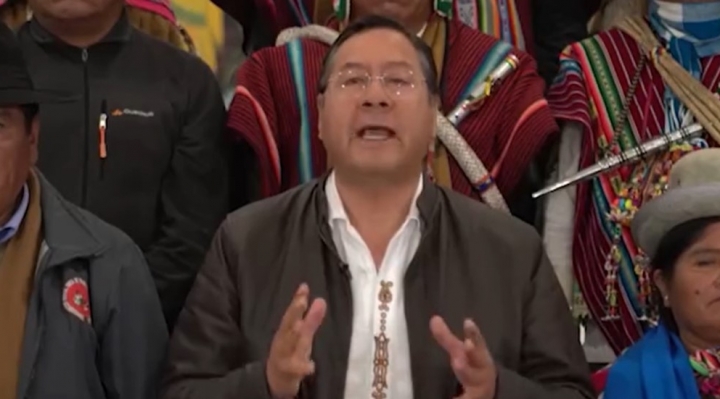
As expected, Luis Arce has linked the cycle of mobilizations that began this week to the political aspirations of Evo Morales. According to President Arce, the blockades and marches have a single objective: securing Morales’ candidacy for the 2025 presidential elections.
First fact: Arce is willing to strengthen Morales’ image in order to deny the popular discontent regarding the economic situation.
For his part, Morales has initiated a march toward La Paz under the pretext of the economic crisis. Morales argues that Arce has mismanaged the situation, which is increasingly affecting household economies, as reflected by the sustained rise in the prices of basic goods. However, Morales has also included issues related to his potential 2025 candidacy in his demands.
Second fact: Morales is attempting to capitalize on the economic discontent to push forward his new candidacy.
The common denominator in both positions is the popular dissatisfaction with the economy. While Arce tries to hide it, Morales uses it as a political tool; however, both confirm its existence with their stances. This is no small matter.
Before the mobilizations, concerns about the dollar shortage mainly came from the more formal sectors of the economy. Representatives from the financial system, international transportation, and especially importer unions, were experiencing rising costs as the foreign exchange generated by the export sector was no longer sufficient to cover their operations. Arce’s government responded with agreements and measures to calm the discontent of importers or, in most cases, simply buy time without making key decisions to address the crisis.
It’s true that, in the last 20 months, sectors of the popular economy also protested. Like large importing companies, the popular economy, which is heavily integrated into the international market, requires foreign currency to operate. However, the protests were sporadic since this sector has been able to partially mitigate the effects of the crisis through its own adaptation mechanisms.
So, what has changed? Well, in August, we observed a significant shift in inflation trends. Even in the official indicators, which have been harshly criticized, the price increase was 1.58% monthly, four times more than the average of the first seven months of the year. If this trend continues, we could end 2024 with double-digit inflation, something we haven’t seen in many years.
But it’s not just inflation; there’s also the drop in household income. As predicted at the beginning of the year (see the Milenio Foundation Report, for example), the post-pandemic labor market has become even more precarious. With the decline in main incomes, households have increasingly relied on informal activities, leading to higher employment but with lower earnings.
If we add to this sustained price increase the growing scarcity of fuels and foreign currency, it’s evident that the popular economy has deteriorated as much or more than the formal sectors.
Third fact: It is now the popular economy that is protesting.
In short, reducing the mobilizations to a simple party dispute would be a mistake. At its core, the motivation of many of the mobilizing sectors is real and cannot be ignored. The economy at the grassroots level has deteriorated to levels not seen in decades, and without effective government action, social unrest is likely to increase, surpassing even the internal disputes within MAS.
José Gabriel Espinoza is an economist, and a former director of the Central Bank of Bolivia.
Por José Gabriel Espinoza, Brújula Digital:
Como era de esperarse, Luis Arce ha vinculado el ciclo de movilizaciones que comenzó esta semana con las aspiraciones políticas de Evo Morales. Según el presidente Arce, los bloqueos y las marchas tienen un solo objetivo: lograr la nueva postulación de Morales a la presidencia en 2025.
Primer hecho: Arce está dispuesto a fortalecer la figura de Morales con tal de negar el malestar popular respecto a la situación económica.
Por su parte, Morales ha iniciado una marcha hacia La Paz con el argumento de la crisis económica. Morales sostiene que Arce no ha sabido gestionar la situación, que cada día tiene un impacto más profundo en la economía familiar, reflejado, entre otros indicadores, en el incremento sostenido de los precios de la canasta básica. No obstante, Morales también ha incluido en su pliego aspectos relacionados con su posible candidatura en 2025.
Segundo hecho: Morales intenta capitalizar el descontento económico para impulsar su nueva postulación.
El común denominador en ambas posiciones es el malestar popular con la economía. Mientras Arce intenta ocultarlo, Morales lo utiliza como herramienta política; sin embargo, con esas posturas, ambos confirman su existencia. Este no es un detalle menor.
Hasta antes de las movilizaciones, las preocupaciones sobre la escasez de dólares provenían principalmente de los sectores más formales de la economía. Representantes del sistema financiero, del transporte internacional y, sobre todo, de gremios de importadores, experimentaban un aumento en sus costos a medida que las divisas generadas por el sector exportador dejaban de ser suficientes para cubrir sus operaciones. El gobierno de Arce respondió con acuerdos y medidas para apaciguar el malestar de los importadores o, en la mayoría de los casos, solamente ganar tiempo sin tomar decisiones clave para enfrentar la crisis.
Es cierto que, en los últimos 20 meses, los sectores de la economía popular también protestaron. Al igual que las grandes empresas importadoras, la economía popular, que está fuertemente integrada al mercado internacional, requiere divisas para operar. Sin embargo, las protestas eran esporádicas ya que este sector ha podido mitigar en parte los efectos de la crisis gracias a sus propios mecanismos de adaptación.
Entonces, ¿qué ha cambiado? Pues bien, en agosto ya hemos observado un cambio significativo en la evolución de la inflación. Incluso en los indicadores oficiales, que han sido duramente cuestionados, el aumento de precios fue del 1,58% mensual, cuatro veces más que el promedio de los primeros siete meses del año. De continuar esta tendencia, podríamos cerrar 2024 con una inflación de dos dígitos, algo que no hemos visto en muchos años.
Pero no es solo la inflación, también está la caída en los ingresos familiares. Como ya se anticipaba a principios de año (véase el Informe de la Fundación Milenio, por ejemplo), el mercado laboral pospandemia se ha precarizado aún más. Con la caída de los ingresos principales, los hogares han comenzado a depender en mayor medida de actividades informales, lo que ha llevado a una mayor ocupación, pero con ingresos menores.
Si a este panorama de aumento sostenido de precios le sumamos la creciente escasez de combustibles y divisas, es evidente que la economía popular se ha deteriorado tanto o más que la de los sectores formales.
Tercer hecho: Ahora es la economía popular la que está protestando.
En definitiva, reducir las movilizaciones a una simple disputa partidaria, sería un error. En el fondo, la motivación de muchos sectores que se movilizarán es real y no puede ser ignorada. La economía en la base popular se ha deteriorado a niveles que no se veían en décadas y sin acciones efectivas por parte del Gobierno, es probable que la conflictividad social aumente, superando incluso las disputas internas del masismo.
José Gabriel Espinoza es economista, fue director del Banco Central de Bolivia.
https://brujuladigital.net/economia/-opinionevo-lucho-es-la-economia-estupidosjose-gabriel-espinoza

 Bolivian Thoughts | Pensamientos Bolivianos (Bilingual/Bilingüe)