
By Unitel; Omar Pereyra, Eju.tv:
Fires in Santa Cruz: A urina, a honey anteater, lizards, and birds among the survivors of the fire
Due to the forest fires, some animals perish in the flames while others manage to escape but are left with injuries. These are some of the animals rescued by the Santa Cruz government
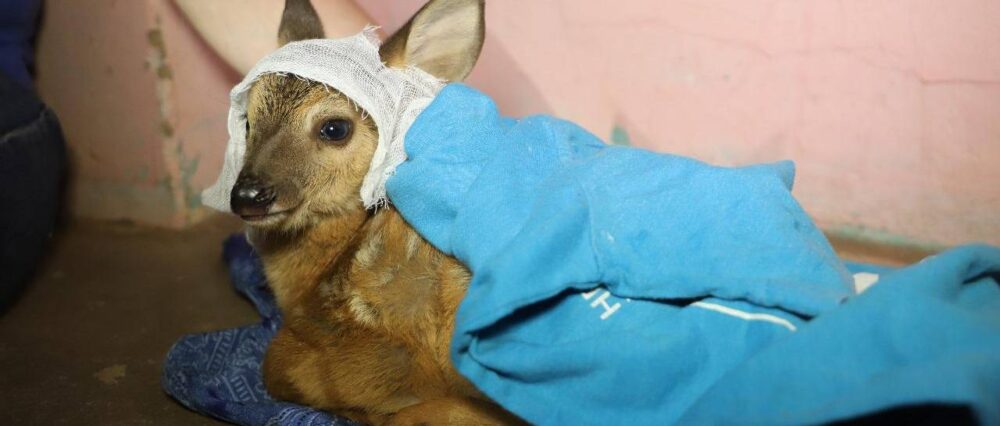
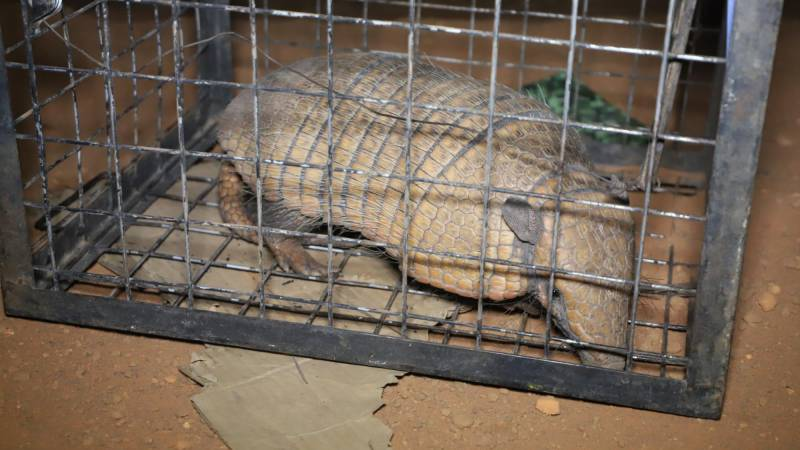
[Photo: GADSC] / This urina is another survivor of the fire
The flames are consuming forests in Santa Cruz and directly or indirectly affecting wildlife. The department has been declared a disaster zone due to the fires, and animals are among those impacted.
Eliamme Gutiérrez, a biologist from the Biodiversity Program of the Santa Cruz Government, stated that this year, interventions took place in the municipalities of Roboré and San Matías, both in Santa Cruz, to care for or rescue animals after the fires.

[Photo: GADSC] One of the rescued birds
She explained that more than 80 animals were treated in the forest for dehydration, malnutrition, and disorientation after the fires. Among them are animals that had to be moved to the custody center of the Santa Cruz Government for ongoing treatment.
In this group is a urina with burned ears from the fire, and also Pulgarcito, a small honey anteater, whose four paws are burned.
Lizards, armadillos, and birds are also among the animals rescued in recent weeks.
“Some were rescued with injuries covering 70% of their bodies, and others with third-degree burns,” she lamented.
The indirect victims of the fire
Gutiérrez pointed out that fires also create indirect victims, animals fleeing the flames that end up on roads, where they are hit by cars or captured by humans for illegal wildlife trade.
Among the indirect victims of the fires are two wildcats, found just days after birth next to their mother, who had been hit by a car while escaping the flames.

[Photo: GADSC] One of the rescued lizards
She added that the two wildcat cubs were found by Quebracho firefighters on the highway near Roboré. These two animals are currently under the custody of the Santa Cruz Government, and a care protocol is being implemented to enable their return to their natural habitat, the forest.
The specialist mentioned that both wildcats are expected to be released in two months.
Most vulnerable animals
Gutiérrez explained that the animals most vulnerable to forest fires are turtles, lizards, snakes, and among mammals, sloths.
“Last year, in San Carlos, Portachuelo, and Yapacaní, I saw that every 20 meters, there were two or three dead sloths because they are animals that can’t escape. The same goes for tamandua anteaters, opossums, and small parrots,” she said.
“We really can’t quantify the damage forest fires cause to wildlife,” she concluded.

[Photo: GADSC]
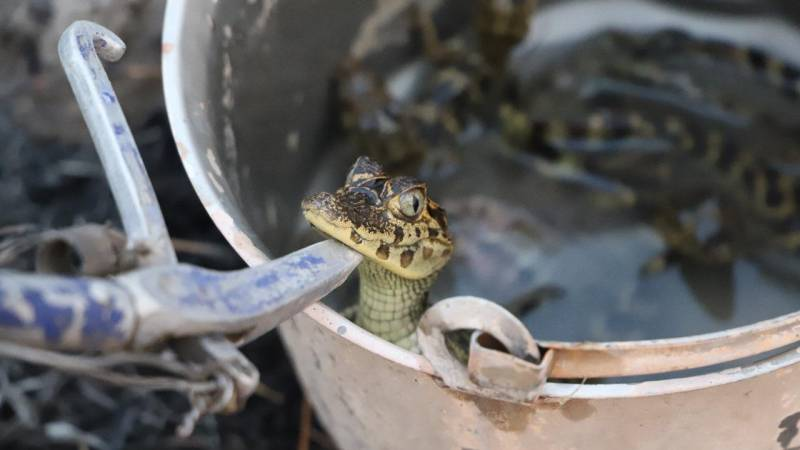
Pulgarcito, the anteater, is one of the animals rescued from the flames, and he is responding well to treatment.

[Photo: GADSC]
Por Unitel; Omar Pereyra, Eju.tv:
Incendios en Santa Cruz: Una urina, un oso hormiguero melero, lagartos y aves, entre los sobrevivientes del fuego
Debido a los incendios forestales hay animales que mueren entre las llamas mientras que otros logran escapar, pero quedan con heridas. Estos son algunos de los animales rescatados por la Gobernación cruceña
[Foto: GADSC] / Esta urina es otra de las sobrevivientes del fuego
Las llamas consumen los bosques en Santa Cruz y también afectan de forma directa o indirecta a la fauna. El departamento está declarado en desastre por el fuego por los incendios y los animales son algunos de los afectados.
Eliamme Gutiérrez, bióloga del Programa de Biodiversidad de la Gobernación Cruceña, señaló que este año se intervino en los municipios de Roboré y San Matías, ambos en Santa Cruz, para atender o rescatar a animales tras las llamas.
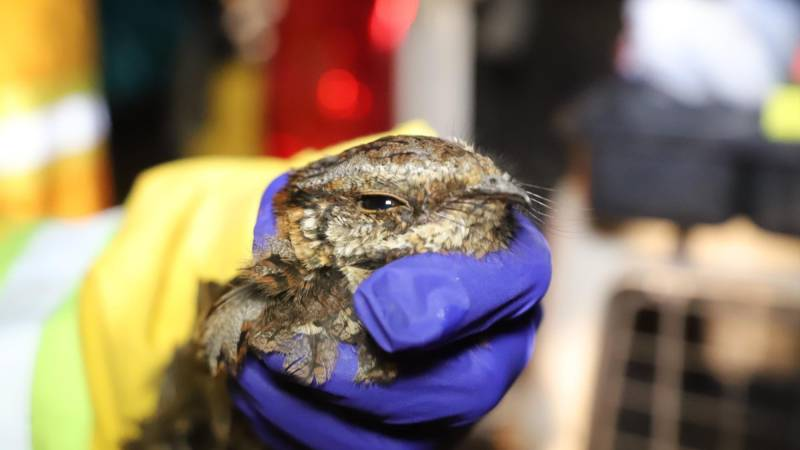
[Foto: GADSC] Una de las aves rescatadas
Detalló que más de 80 animales fueron atendidos en medio del bosque por deshidratacíon, desnutrición y desorientación tras los incendios. Sostuvo que en este grupo también están animales que tuvieron que ser trasladados al centro de custodia de la Gobernación mientras se les sigue tratamiento.
En este último grupo hay una urina que tiene las orejas quemadas por el fuego y también está Pulgarcito, un pequeño oso hormiguero melero, que tiene las cuatro patitas quemadas.
Lagartos, tatús y aves son también algunos de los animales que fueron también rescatados en las últimas semanas.
“Algunos fueron rescatados con heridas en el 70% de su cuerpo y otros con quemaduras de tercer grado”, lamentó.
Las víctimas indirectas del fuego
Gutiérrez indicó que el fuego tambien deja víctimas indirectas, se trata de los animales que huyen de los incendios y en su camino llegan a las carreteras y son atropellados o son encontrados por humanos que los capturan para la trata silvestre.
Detalló qué entre las víctimas indirectas de las llamas están dos gatos de monte que a solo días de nacidos fueron hallados junto a su madre atropellada cuando escapaba del fuego.
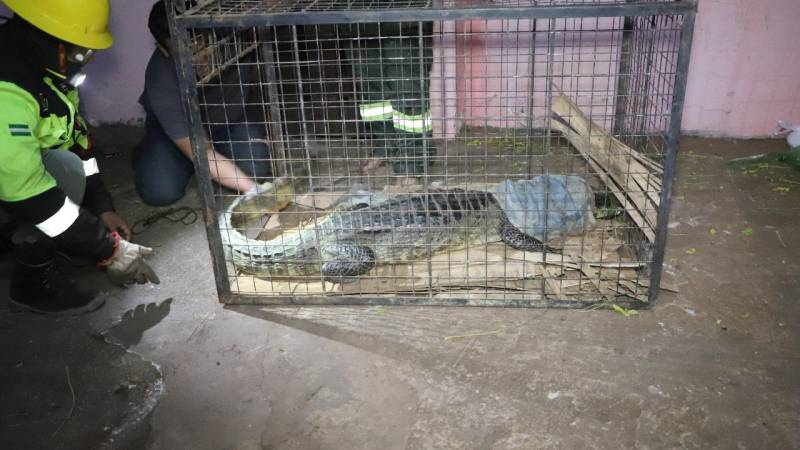
[Foto: GADSC] Uno de los lagartos rescatados
Agregó que estos dos cachorros fueron hallados por personal de Bomberos Quebracho en la carretera en la zona de Roboré. Señaló que estos dos animales actualmente están bajo custodia de la Gobernación Cruceña y se está trabajando con un protocolo de atención qué permita que retornen a su hogar, el bosque.
La especialista detalló que se espera que ambos gatos sean liberados en dos meses.
Animales más vulnerables
Gutiérrez explicó que los animales más vulnerables de sufrir por los incendios forestales son las tortugas, lagartijas, serpientes y en el caso de los mamíferos, los perezosos.
“El año pasado estuve en San Carlos, Portachuelo y Yapacaní y observé que cada 20 metros había dos o tres perezosos muertos porque son animales que no logran escapar. Lo mismo con los osos tamandúas, carachupas y monos pequeños loro.
“Realmente no podemos cuantificar el daño que le hacen los incendios forestales a la fauna silvestre”, sostuvo.
[Foto: GADSC]
El Oso Pulgarcito es uno de los rescatados de las llamas, él está reaccionando favorablemente al tratamiento.
[Foto: GADSC]

 Bolivian Thoughts | Pensamientos Bolivianos (Bilingual/Bilingüe)