
By German Huanca Luna, Urgente.bo:
The proposals put forward in meetings with the business sector and previously with mayors and governors will not solve Bolivia’s economic crisis. These are agreements that lead nowhere, and the government is not taking responsibility for implementing economic measures to address the root of the problem.
The current economic crisis in Bolivia originates from the fiscal deficit since 2014, where expenses have exceeded income, and it has been deepened by the balance of payments deficit, where imports surpass exports, making access to dollars impossible. Therefore, it is the current “social, community, and productive economic model” implemented by MAS that is in crisis, does not work, and needs to be changed.
In the meeting with governors and mayors last June, the government’s main objective was to create a list of projects, credit rescheduling, and price controls, which, in general, project more debt. At no point did governors and mayors object to the projects funded by external financing, and the government used this to generate pressure on the Plurinational Legislative Assembly for the approval of more credits.
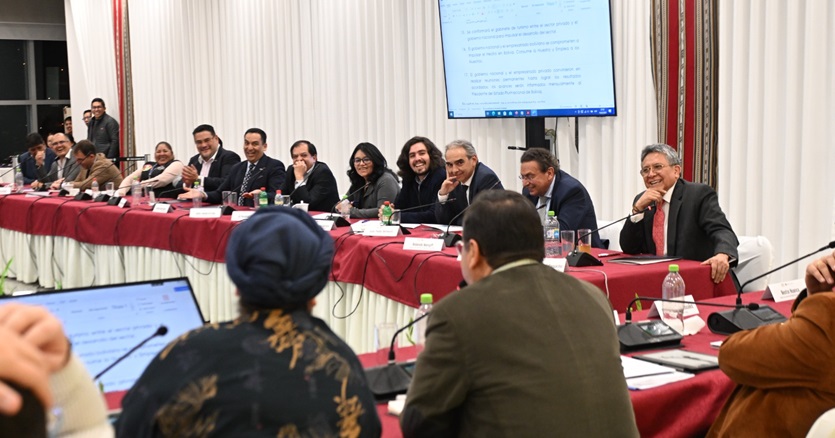
Similarly, the agreements reached in the latest economic dialogue between the government and business sectors aim to maintain business contracts with the state and, indirectly, to obtain some dollars by pressuring the Plurinational Legislative Assembly for more loans to address fuel purchases. However, they do not address the crisis in a structural way. This 17-point agreement mainly focuses on providing dollars via international credit, which means dollars will be provided and made available in the BCB’s international accounts, helping YPFB pay for fuel purchases. This immediately raises the question: How will those dollars be introduced into the Bolivian economy for the projects to be approved? These projects will be executed in Bolivianos, meaning they will necessarily be financed with monetary issuance, which implies higher price inflation. This indicates that both businessmen and politicians have only prioritized their interests—the former to maintain state contracts and the latter to reach the 2025 elections.
To resolve the crisis, an IMF loan is necessary, aimed at addressing the Balance of Payments crisis. With this, Bolivia would have a provision of dollars not only in the BCB’s international accounts but also for a cash transfer (by plane) to provide the financial system with a stock of cash dollars. This loan could range from $5 billion to $10 billion. Unfortunately, this type of loan requires high expertise in its management, openness to foreign investment, modification of the labor regulatory framework, and a plan for managing specialized financing, and this government lacks the human resources to do so. This necessarily implies a change in the economic model.
Finally, there have already been several meetings between social, business, and government sectors, but the country has not witnessed a technical meeting where solutions are presented to solve the problem at its root. The agreements were simply a “token gesture” while Bolivians get used to fuel queues and the search for dollars for international trade. Bolivia needs a change in its economic model, one that attracts foreign investment, generates decent employment, and integrates national businesses into the international dynamics, which today are driven by information technology, IT, and data. Simply acquiring more debt to buy fuel will not solve the economic crisis, which deepens with each passing day.
(*) Master in Financial Economics
Por German Huanca Luna, Urgente.bo:
Las propuestas planteadas en los encuentros con el sector empresarial y anteriormente con alcaldes y gobernadores no solucionarán la crisis económica de Bolivia, son acuerdos que no llevan a nada, y el gobierno no asume la responsabilidad de tomar medidas económicas para resolver de raíz el problema.
La actual crisis económica en Bolivia es una crisis que se origina en el Déficit Fiscal desde el año 2014, porque los gastos son mayores a los ingresos y se profundizaron con el Déficit en la Balanza de Pagos donde las importaciones son mayores a las exportaciones, lo que imposibilita el acceso a los dólares. Por lo tanto, es el actual “modelo económico social, comunitario y productivo” implementado por MAS que está en crisis, no funciona y debe ser cambiado.
En la reunión con gobernadores y alcaldes, del pasado mes junio, el principal objetivo del gobierno fue generar una lista de proyectos, reprogramación de créditos, y control de precios, misma que en su concepción general proyecta mayor endeudamiento. De ninguna manera gobernadores y alcaldes objetaron las obras con financiamiento externo, y el gobierno generó con ello un frente de presión hacia la Asamblea Legislativa Plurinacional para la aprobación de más créditos.
De la misma manera, los acuerdos llegados en el último diálogo por la economía entre el gobierno con los sectores empresariales apuntan a mantener los contratos del sector empresarial con el estado, y de rebote, obtener algunos dólares presionando con más créditos a la Asamblea Legislativa Plurinacional y así, hacer frente a la compra de combustible, pero de ninguna manera apunta a resolver la crisis de manera estructural. Este acuerdo de 17 puntos apunta en su gran mayoría a la provisión de dólares vía crédito internacional, esto es, se proveerán dólares y se dispondrán dólares en las cuentas internacionales del BCB, lo que ayudará a que YPFB pague por la compra de combustible. Inmediatamente nace la pregunta. ¿Cómo se introducirán esos dólares a la economía boliviana para los proyectos a aprobarse? Estos proyectos serán ejecutados en bolivianos, por lo que necesariamente se financiarán con emisión monetaria y eso significa mayor inflación de precios. Lo que nos indica que los empresarios y políticos solo han privilegiado sus intereses, los unos para mantener los contratos con el estado y los otros para llegar a las elecciones del 2025.
Para resolver la crisis es necesario un crédito del FMI que esté dirigido a resolver la crisis en la Balanza de Pagos, con ello Bolivia tendrá una provisión de dólares no solo en las cuentas internacionales del BCB sino también para realizar un traslado en efectivo (por avión) para dosificar con stock de dólares en efectivo al sistema financiero, este crédito puede llegar entre 5.000 a 10.000 millones de dólares. Lamentablemente este tipo de créditos suponen alta especialización en su manejo, una apertura a la inversión extranjera, modificación del marco normativo laboral, y un plan para la gestión de un financiamiento especializado y este gobierno carece de RRHH que puedan hacerlo. Esto necesariamente implica un cambio de modelo económico.
Finalmente, ya son varias reuniones entre sectores sociales, empresariales y gobierno, el país no ha presenciado una reunión técnica donde se presenten soluciones que vayan a resolver el problema de raíz. Los acuerdos simplemente fueron ¡un saludo a la bandera! mientras los bolivianos vamos acostumbrándonos a las colas por combustible y una búsqueda de dólares para el comercio internacional. Bolivia necesita un cambio de modelo económico, que atraiga la inversión extranjera, que genere empleo digno, que los negocios nacionales se encadenen a la dinámica internacional que hoy por hoy va de la mano de tecnología de información, informática, datos y con solo adquirir mayor deuda para comprar combustible no se resolverá la crisis económica que cada día se profundiza más.
(*) Máster en Economía Financiera
https://www.urgente.bo/noticia/acuerdos-que-no-resuelven-la-crisis

 Bolivian Thoughts | Pensamientos Bolivianos (Bilingual/Bilingüe)