
By Raúl Domínguez, El Deber:
Cainco Forum: Fiscal adjustment is proposed to avoid contagion to the banking sector and the deepening of the economic crisis in the country
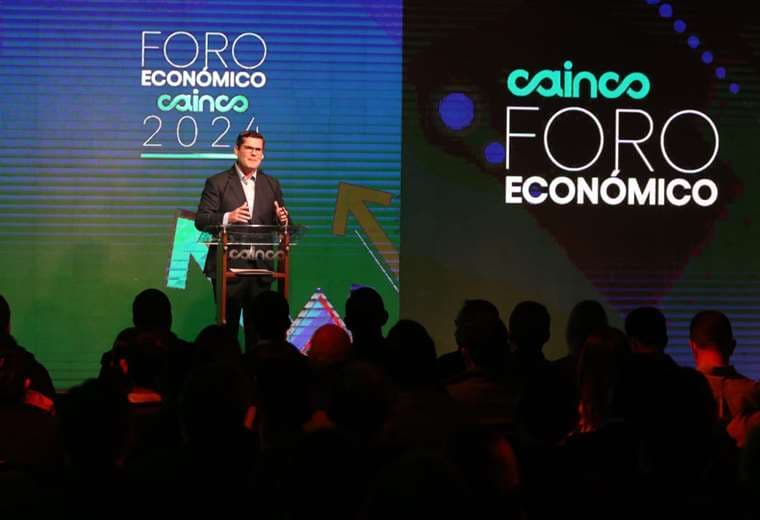
Cainco observes a crisis in the balance of payments and that companies are shrinking and being “strangled.” It proposes fiscal spending adjustments, which could result in a balance of over Bs 11,000 million.
The Bolivian economic situation is in clear deterioration but can still recover, although the solutions may be painful. This was the almost unanimous sentiment among attendees at the Economic Forum organized annually by the Santa Cruz Chamber of Industry, Commerce, Services, and Tourism (Cainco), titled “Proposals that Add Up” in 2024.
All the invited speakers dedicated this Tuesday to sharing their experiences and providing proposals to prevent the current state fiscal deficit from destabilizing the national financial system, potentially triggering a deep economic crisis.
The president of Cainco, Jean Pierre Antelo, was incisive in his speech, criticizing how the Government manages the economy from its ideological perspective.
“What the Government calls speculation, shortages, or temporary difficulties has a name and surname: a balance of payments crisis, and the cause has a common denominator: fiscal irresponsibility,” he asserted.
He also clarified that Cainco did not sign the “10 points” agreed with the national business representatives in February and urged the Government to “abandon its failed experiment and prioritize the country’s development.”
Proposals
The person in charge of providing the proposals was Pablo Mendieta, director of the Bolivian Center for Economics (Cebec) at Cainco, who proposed a series of fiscal adjustments that could lead to a fiscal balance of over Bs 11,000 million.
One of the first measures would be to depreciate the Bolivian currency against the dollar and address four aspects of fiscal policy. Cebec estimated the fiscal deficit in 2023 at Bs 34,000 million, but eliminating investments in certain public companies could free up Bs 8,000 million.
Providing examples, he also suggested eliminating the gasoline subsidy and subsidizing diesel only for heavy vehicles and reducing the inefficiency of the Dignity Income, currently paid to 1.2 million beneficiaries.
He also pointed out the need to reduce the large number of 431,000 public employees paid with TGN resources, without affecting the education, health, and law enforcement sectors. Eliminating the Transaction Tax (IT) would be another solution, leading to Bs 13,100 million more in revenue, less Bs 9,400 million in expenses, resulting in a fiscal balance of over Bs 11,000 million.
“Conclusion: an adjustment can be made; let’s not limit ourselves to thinking that adjustments cannot be made,” Mendieta said, noting that these measures would reduce deficit financing and allow entities like the Public Manager to free up Bs 12,000 million for long-term loans by the financial system.
International Recipes
Alejandro Werner, former director of the International Monetary Fund (IMF), warned that a balance of payments crisis could spread to the country’s financial system.
“Because a bank can have its liabilities, or debts, in dollars and its assets, its loans, in local currency. When the exchange rate depreciates, its debts increase, but its assets, its loans, do not increase in value, creating an imbalance. So, clearly, we must ensure these vulnerabilities do not arise in the banking sector, and we have already seen some of them,” he stressed.
Similarly, he explained that “when the Central Bank, through a ‘swap,’ appropriates foreign exchange reserves and spends them, it leaves the system with fewer foreign currencies, and we are already seeing that weakness in Bolivia.”
Meanwhile, Eduardo Levy, former advisor to the World Bank and the IMF, considered that monetary and exchange rate policies must be adjusted to correct the imbalances. A panel of experts also addressed some global experiences in correcting macroeconomic imbalances. Cainco announced it would publish the forum’s conclusions in the coming days.
Por Raúl Domínguez, El Deber:
Foro Cainco: Plantean ajuste fiscal para evitar contagio a la banca y que se profundice la crisis económica en el país
Cainco observa crisis en la balanza de pagos y que las empresas están achicándose y siendo “estranguladas”. Plantea ajustes en los gastos fiscales, que podrían contar con un balance de más de Bs 11.000 millones
La situación económica boliviana está en franco deterioro, pero está a tiempo de recuperarse, aunque las soluciones pueden ser dolorosas. Ese fue el sentir casi generalizado de los asistentes al Foro Económico que organiza cada año la Cámara de Industria, Comercio, Servicios y Turismo de Santa Cruz (Cainco) y que en 2024 tuvo como título: “Propuestas que suman”.
Precisamente, todos los exponentes invitados, este martes se dedicaron a compartir sus experiencias y a brindar sus propuestas para evitar que el actual déficit fiscal del Estado desequilibre al sistema financiero nacional, con lo que se puede desencadenar una profunda crisis económica.
El presidente de Cainco, Jean Pierre Antelo, fue incisivo en su discurso al criticar la forma en que el Gobierno maneja la economía desde su punto de vista ideológico.
“Lo que el Gobierno llama especulación, escasez o dificultades temporales tiene nombre y apellido: crisis de la balanza de pagos, y la causa tiene un común denominador: irresponsabilidad fiscal”, aseveró.
Al mismo tiempo aclaró que la Cainco no firmó “los 10 puntos” acordados con los prepresentantes del empresariado nacional en febrero y exhortó al Gobierno a que “abandone su experimento fallido y priorice el desarrollo del país”.
Propuestas
El encargado de brindar las propuestas fue Pablo Mendieta, director del Centro Boliviano de Economía (Cebec), de Cainco, que planteó una serie de ajustes fiscales, que pueden llevar a contar con un balance fiscal de más de Bs 11.000 millones.
Una de las primeras medidas sería depreciar la moneda boliviana frente al dólar y arreglar cuatro aspectos de la parte fiscal. El Cebec estimó que el déficit fiscal en 2023 fue de Bs 34.000 millones, pero que, eliminando inversiones en ciertas empresas públicas, se pueden liberar Bs 8.000 millones.
Brindando ejemplos, sugirió también que en lo relativo a subsidios y subvenciones, se debe eliminar el subsidio a la gasolina y subvencionar el diésel solo a los vehículos pesados y, a la vez, restar la ineficiencia de la Renta Dignidad, que actualmente se paga a 1,2 millones de beneficiarios.
También apuntó que se debe reducir la abultada cifra de 431 mil empleados públicos que se pagan con recursos del TGN, pero sin tocar los sectores de educación, salud y fuerzas del orden. Eliminar el Impuesto a las Transacciones (IT) sería otra de las coluciones que llevarían a contar con Bs 13.100 millones más de ingresos, menos Bs 9.400 millones de gastos, se tendría un balance fiscal de más de Bs 11.000 millones.
“Conclusión: se puede hacer un ajuste, no nos limitemos a pensar que no se puede hacer ajustes”, expresó Mendieta, al mencionar que estas medidas disminuirán el financiamiento del déficit y permitirá a entidades como la Gestora Pública liberar Bs 12.000 millones para que el sistema financiero pueda ofrecerlos como créditos a largo plazo.
Recetas internacionales
Alejandro Werner, ex director del Fondo Monetario Internacional (FMI), advirtió que una crisis de balanza de pagos puede contagiar al sistema financiero del país.
“Porque un banco puede tener sus pasivos, o sea, sus deudas en dólares y sus activos, sus préstamos, en moneda local. Cuando se deprecia el tipo de cambio, sus deudas aumentan, pero sus activos, sus créditos no aumentan de valor y esto genera un desbalance. Entonces, claramente hay que cuidar que no se generen estas vulnerabilidades en el sector bancario y algunas de ellas ya las hemos visto”, resaltó.
Del mismo modo, explicó que “cuando el Banco Central, a través de un ‘swap’, se apropia de las reservas en moneda extranjera y las gasta, hace que el sistema se quede con menos divisas y esa debilidad ya la estamos viendo en Bolivia”.
Por su parte, Eduardo Levy, ex asesor del Banco Mundial y del FMI, consideró que se deben ajustar las políticas monetarias y cambiaria para corregir los desequilibrios. Un panel de expertos también abordó algunas experiencias mundiales en la corrección de desequilibrios macroeconómicos. La Cainco anunció que en los próximos días publicará las conclusiones del foro.

 Bolivian Thoughts | Pensamientos Bolivianos (Bilingual/Bilingüe)