
By Juan Carlos Salinas, El Deber:
With the dollar at Bs 12.50 and no diesel, the heavy transport sector initiates an indefinite blockade in the country
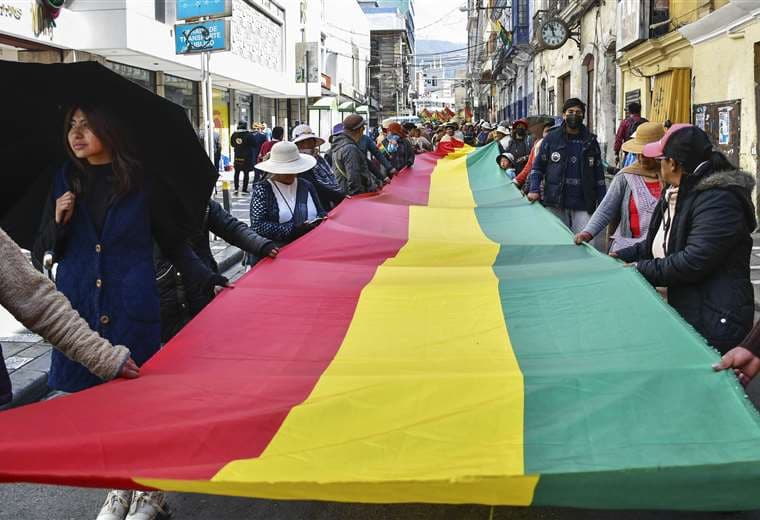
At their national assembly, the transporters also set a 72-hour deadline for solutions, or they will demand early presidential elections. There are already three regions with roadblocks.
In a scenario where the parallel dollar price increases to Bs 12.50 and the diesel shortage frustrates transporters and producers, the heavy transport sector decided to start an indefinite road blockade from today.
Héctor Mercado, president of the Bolivian Chamber of Heavy Transport, indicated that after four hours of debate, four points were determined.
Regarding this, Marcelo Montenegro, Minister of Economy and Public Finance, invited the sector to dialogue again to avoid the pressure measures.
However, in a conversation with EL DEBER, Mercado ruled out that possibility, indicating that it is no longer time for meetings, but for concrete solutions, “so they will not attend any meeting with government authorities, reiterating that one of the measures is the indefinite strike with roadblocks nationwide. Another point agreed upon is to give the Arce government a 72-hour deadline to solve the diesel shortage; if not, they will call for early general elections,” Mercado emphasized.
The petition also details: “The immediate resignation of the Ministers of Hydrocarbons and Public Works is requested, along with their operational (YPFB) and supervisory (ANH) arms, for having lied about fuel supply and not fully complying with the agreements reached in various meetings. (…) Guarantees are also requested for all our national leaders leading our movement, to prevent them from being persecuted either legally or politically.”
Regarding this, Juan Yujra, a heavy transport leader in Santa Cruz, indicated they would respect what was agreed by the Confederation in Sucre.
“The points to be blocked will be the Friendship Bridge; there is already a blockade in San Julián. Due to the lack of diesel, the bases exceeded us, and as leaders, we must fulfill what was determined in our national assembly,” said the leader.
First blockades
Early yesterday, several blockade points set up by transporters were reported in cities like Oruro, Sucre, and even Cochabamba in protest against the persistent diesel shortage.
In La Paz, there was also a protest march by the trade unions led by leader Toño Siñani.
“The trade unions are ready to fight; the government lies by saying the dollar is at Bs 6.96 when it is over Bs 12 in the parallel market. This is the first pressure measure; if the government continues to lie, there will be more after August 6,” said Siñani.
The leader added that the rising cost of the basic food basket is another concern for the trade unions, who, according to him, do not rule out joining the transporters’ demonstrations due to the diesel shortage.
Regarding the issue, the Vice Minister of Citizen Security, Roberto Ríos, urged the sectors mobilized due to the dollar and diesel shortage to cease their pressure measures.
“As you know, we are a government of dialogue and consensus, and we have demonstrated this in all our interventions and meetings. We are a government that works for all the Bolivian people, regardless of political affiliation when it comes to solving the country’s problems. (…) we hope they can cease these measures,” he said.
He emphasized that the government is aware of the underlying issues the trade unions and transporters are raising, such as the dollar and diesel shortage, but “these blockades will not allow these problems to be solved.”
The National Hydrocarbons Agency (ANH) informed through a statement that fuel tankers are unable to leave the YPFB distribution plant in Oruro to supply fuel stations, and therefore, “logistics are currently interrupted.”
In light of this situation, the ANH requested the transporters in Oruro to allow the fuel tankers to leave.
Meanwhile, the leadership of the Bolivian Confederation of Unionized Drivers confirmed their announced national strike with roadblocks for August 1.
The dollar skyrockets
The exchange rate situation is worsening. In the streets of the country’s central axis, the parallel dollar increased by 80%, reaching Bs 12.50, far from the official rate of Bs 6.96. This has caused unrest in several social sectors, like the trade unions, who staged a massive march yesterday demanding the government to tell the truth.
“First, we must tell the Minister of Economy (Marcelo Montenegro) not to be a lying Pinocchio, that the dollar is at Bs 12 and not Bs 6.96,” Siñani sarcastically commented, referring to the official exchange rate figures.
The government maintains that the exchange rate remains at Bs 6.96. However, the foreign currency exceeded this threshold. In the streets of Santa Cruz, in the area of exchange houses, it is sold at Bs 12.50 and bought at Bs 11.60. The same price is handled in the Cristo area and the Mutualista market.
In La Paz, the situation is similar. That is why the merchants took to the streets in protest against this situation, which the government continuously denies. It insists there is no crisis due to the low inflation rate and stable prices in the basic food basket.
In this context, Siñani denied the claims about stability: “The basic food basket is not stable as they say. Today, everything has gone up, pasta, sugar, and everything else.”
“We, as a trade union sector, are ready to fight and do not rule out supporting different sectors,” said Siñani.
A transport leader in Oruro reported that the dollar is being traded at up to Bs 13. The region borders Chile, where informal trade flourishes.
On this issue, the Minister of Labor, Verónica Nava, assured that the government is subsidizing the dollar price and that it should be at Bs 14, but it is only Bs 6.96.
“The dollar is frozen. In the Bolivian state, the dollar has been frozen at Bs 6.96 for a long time. If the dollar were at the free market, it would cost at least Bs 14,” she said.
Ticket prices rise
At the Santa Cruz Bimodal Terminal, passengers seek not only a better bus but also the one available, despite the fare imposed by operators.
According to the transporters, this situation is due to the diesel shortage, which has resulted in not all buses being enabled for trips, limiting the number of units and departure frequencies.
From testimonies gathered by EL DEBER, interdepartmental tickets at the Bimodal Terminal have increased by 50% to 100%, depending on the destination.
To Cochabamba and the border area with Brazil and Argentina, the fares have risen from Bs 80 to Bs 130, and to Yacuiba from Bs 70 to Bs 190, passengers told EL DEBER.
“I am returning to Yacuiba, but we were surprised; we know the diesel shortage is affecting. To come to Santa Cruz, we paid between Bs 70 and 80, but now it is between Bs 180 and 190,” complained a passenger.
“They say the fare is high due to the diesel shortage. Traveling to Puerto Quijarro used to cost Bs 80, now I found it at Bs 130, and the buses are not full. They say it is more expensive at night,” complained a woman who had to travel to the border area.
Por Juan Carlos Salinas, El Deber:
Con dólar a Bs 12,50 y sin diésel, el transporte pesado activa bloqueo indefinido en el país
En su ampliado nacional los transportistas también dan un plazo de 72 horas para tener soluciones, sino pedirán el adelanto de las elecciones presidenciales. Ya hay tres regiones con bloqueo en sus carreteras
En un escenario donde el precio del dólar paralelo se incrementa a Bs 12,50 y la escasez de diésel saca de quicio a los transportistas y productores, en un ampliado nacional el transporte pesado determinó iniciar el bloqueo indefinido de carreteras, a partir de hoy.
Héctor Mercado, presidente de la Cámara Boliviana del Transporte Pesado, una vez finalizada la reunión sectorial, indicó que tras cuatro horas de debate se determinaron cuatro puntos.
Al respecto, Marcelo Montenegro, ministro de Economía y Finanzas Públicas invitó al sector a nuevamente dialogar para evitar las medidas de presión.
Sin embargo, en conversación con EL DEBER, Mercado descartó esa posibilidad, al indicar que ya no es tiempo de reuniones, sino de soluciones concretas, “por lo que no asistirán a ningún encuentro con autoridades del Gobierno, a tiempo de reiterar que una de las medidas “es el paro indefinido con bloqueo de carreteras a escala nacional y otro punto que se acordó es dar al Gobierno de Arce un plazo de 72 horas para que solucione la escasez de diésel, de no hacerlo se pedirá un adelanto de las elecciones generales”, puntualizó Mercado.
En el pliego petitorio también se detalla: “Se pide la renuncia inmediata de los ministros de Hidrocarburos y del de Obras Públicas, más sus brazos operativos (YPFB) y fiscalizadores (ANH), por haber mentido sobre el abastecimiento de combustible, por no haber cumplido en su integridad con los acuerdos arribados dentro de las actas tratadas en diferentes reuniones. (…) A su vez, se solicita las garantías respectivas para todos nuestros dirigentes a nivel nacional a la cabeza de nuestro movimiento a objeto de no ser perseguidos ni legal ni políticamente”.
Al respecto, Juan Yujra, dirigente del transporte pesado de Santa Cruz, indicó que van respetar lo acordado por la Confederación en Sucre.
“Los puntos a bloquear serán el Puente de la Amistad, ya hay un bloqueo en San Julián. Ante la falta de diésel las bases nos superaron y como dirigentes debemos cumplir lo que se determinó en nuestro ampliado nacional”, sostuvo el dirigente.
Primeros bloqueos
Muy temprano, ayer se conoció de varios de puntos de bloqueo instalados por transportistas en algunas ciudades del país como Oruro, Sucre y hasta en Cochabamba en protesta por la persistente escasez del diésel.
También en La Paz hubo una marcha de protesta de los gremiales liderados por el dirigente Toño Siñani.
“Los gremiales estamos en pie de lucha, el Gobierno miente al decir que el dólar está a Bs 6,96 cuando en el mercado paralelo está hasta en más de Bs 12. Esta es la primera medida de presión, si es que el Gobierno sigue mintiendo habrá mucho más después del 6 de agosto”, señaló Siñani.
El dirigente agregó que el aumento del costo de la canasta familiar es otra preocupación de los gremiales, quienes incluso, según su versión, no descartan la posibilidad de sumarse a las manifestaciones de los transportistas por la falta de diésel.
Sobre el tema, el viceministro de Seguridad Ciudadana, Roberto Ríos, instó a los sectores movilizados por la escasez de dólares y diésel a deponer sus medidas de presión.
“Como ustedes conocen, somos un Gobierno del diálogo, de la concertación y lo hemos demostrado en todas nuestras intervenciones, en todas las reuniones que hemos tenido. Somos un gobierno que trabaja por todo el pueblo boliviano, que no conoce de bandera política cuando se trata de resolver los problemas del país y en ese sentido, (…) esperamos que puedan deponer estas medidas”, dijo.
A tiempo de remarcar el Ejecutivo conoce los temas de fondo que reclaman los gremialistas y los transportistas como la falta de dólares y la escasez de combustible, “pero estos bloqueos no van a permitir que estos problemas sean solucionados”.
La Agencia Nacional de Hidrocarburos (ANH), mediante un comunicado, informó que las cisternas con combustibles están imposibilitadas de salir desde la planta de comercialización de YPFB en Oruro para distribuir líquidos en las estaciones de servicio y, por tanto, “la logística se encuentra interrumpida” por el momento.
Frente a esa situación, la ANH pidió a los transportistas de Oruro permitir la salida de las cisternas con combustible.
Entretanto, la dirigencia de la Confederación Sindical de Choferes de Bolivia ratificó su anunciado paro nacional con bloqueos para el 1 de agosto.
El dólar se dispara
La situación cambiaria empeora. En las calles del eje central del país, el dólar paralelo se incrementó en un 80%, y llegó a Bs 12,50, lejos de la cotización oficial de Bs 6,96. Esto ha generado malestar en varios sectores sociales, como el gremialista, que ayer protagonizó una marcha multitudinaria en la que exigió al Gobierno decir la verdad.
“Primero hay que decirle al ministro de Economía (Marcelo Montenegro) que no sea un Pinocho mentiroso, que el dólar está a Bs 12 y no está a Bs 6,96”, expresó Siñani, refiriéndose de manera sarcástica a las cifras oficiales sobre el tipo de cambio.
El Gobierno mantiene que el tipo de cambio se mantiene en Bs 6,96. Sin embargo, la moneda extranjera superó este umbral. En las calles de Santa Cruz, en la zona de las casas de cambio, se vende a Bs 12,50 y se compra a Bs 11,60. El mismo precio se maneja en la zona del Cristo y en el mercado Mutualista.
En La Paz, la situación es similar. Por eso los comerciantes salieron a las calles, en un acto de protesta contra esta situación, que es negada de forma continua por el Gobierno. Este asegura que no existe crisis, debido al bajo índice de inflación y estabilidad de precios en la canasta familiar.
En este contexto, Siñani desmintió las declaraciones sobre la estabilidad: “El tema de la canasta familiar no está estable como dicen. Hoy en día se ha subido todo, el fideo, el azúcar y todo lo demás“.
“Nosotros, como (sector) gremial, estamos en pie de lucha y no vamos a descartar apoyar a distintos sectores“, afirmó Siñani.
Un dirigente del transporte de Oruro denunció que el dólar se cotiza hasta en Bs 13. La región es fronteriza con Chile, donde aflora la actividad comercial informal
Sobre el tema, la ministra de Trabajo, Verónica Nava aseguró que el Gobierno está subvencionando el precio del dólar y que este debería estar en Bs 14, pero que solo cuesta Bs 6,96.
“El dólar está congelado. En el Estado Boliviano el dólar está congelado a Bs 6,96 desde hace mucho tiempo en el país. Si el dólar estuviera a libre mercado estaría costando, por lo menos Bs14”, señaló.
Sube el precio de los pasajes
En la Terminal Bimodal de Santa Cruz, los pasajeros buscan no solo un mejor bus, esta vez optan por el que esté disponible, pese a la tarifa que imponen los operadores.
Esta situación se debe, según los transportistas, por la escasez de diésel, hecho que llevó a que no todos los buses estén habilitados para emprender viajes, limitándose la cantidad de unidades y frecuencia de salidas.
Por testimonios recogidos por EL DEBER, los pasajes interdepartamentales en la terminal Bimodal subieron entre un 50 y un 100%, según el destino.
A Cochabamba y zona fronteriza con Brasil y Argentina, los pasajes se elevaron de Bs 80 a Bs 130, a Yacuiba de Bs 70 a Bs 190, señalaron los pasajeros consultados por EL DEBER.
“Estoy retornando a Yacuiba, pero nos topamos con sorpresas, sabemos que la falta de diésel está afectando. Para venir a Santa Cruz pagamos entre Bs 70 y 80, pero ahora está entre Bs 180 y 190″, denunció una pasajera.
“Nos dicen que el pasaje está elevado por la escasez del diésel. Viajar a Puerto Quijarro costaba 80 bolivianos, ahora lo pillé a Bs 130, y no salen los buses completos. Dicen que por la noche el precio está mucho más caro”, reclamó una mujer que tenía que viajar hacia la zona fronteriza.

 Bolivian Thoughts | Pensamientos Bolivianos (Bilingual/Bilingüe)