
Editorial, El Dia:
As the government runs out of money, its defects begin to become more clearly visible: there is no diesel, debts increase, there is a shortage of dollars, the inability to attend to emergencies such as drought, lack of water, serious fires and political discrepancies also arise that in the past were resolved with a few bank notes.
The government had five times more financial resources between 2006 and 2014 and the situation of Bolivians did not improve in that proportion. There were some advances as a result of the repartija, but insignificant compared to the damage caused by waste, the lack of a productive model and the absence of people who can lead true public policies that help overcome real problems.
In other words, the government does not work in good times or in bad times, it does not work in good times and much less in periods of scarcity, so… what is it good for?
The Swedish writer, author of the famous best-seller “Economy for All” demonstrates in great detail that government interference makes people poorer and the greater the intervention, the greater the poverty, as demonstrated by regimes that promote a massive concentration of economic activities in the hands of the state. García Linera, the brain of the “process of change” dreamed of 70 percent, the closest thing to Cuba, where there is practically no private property and the citizen cannot even satisfy his hunger by throwing a hook into the river, because he risks getting imprisoned.
But there is no need to talk about extremes to observe the pernicious role of government in people’s lives. Public administration, whatever it may be, discourages production, since it alters the productive structure, negatively influencing creativity and innovation. Regulations orient businesses towards sectors that bureaucrats decide capriciously and market information is discarded, which translates into the waste of valuable opportunities for the generation of wealth.
The government has a wrong concept of value, which is almost never oriented towards satisfying consumer needs. The result is useless or low-quality products, as can be seen in the dozens of state companies created by the MAS, which produce poorly, expensively and without any sense of benefit to the public.
Governments often place barriers to the most competitive and in-demand activities, which creates obstacles to continuous improvement. The regulations create an environment conducive to complacency and mediocrity, since there is no measurement of costs and benefits, personal satisfaction or the quality of life of the people affected by the prohibitions and the establishment of environments of privileges and monopolies that are very expensive for the citizen.
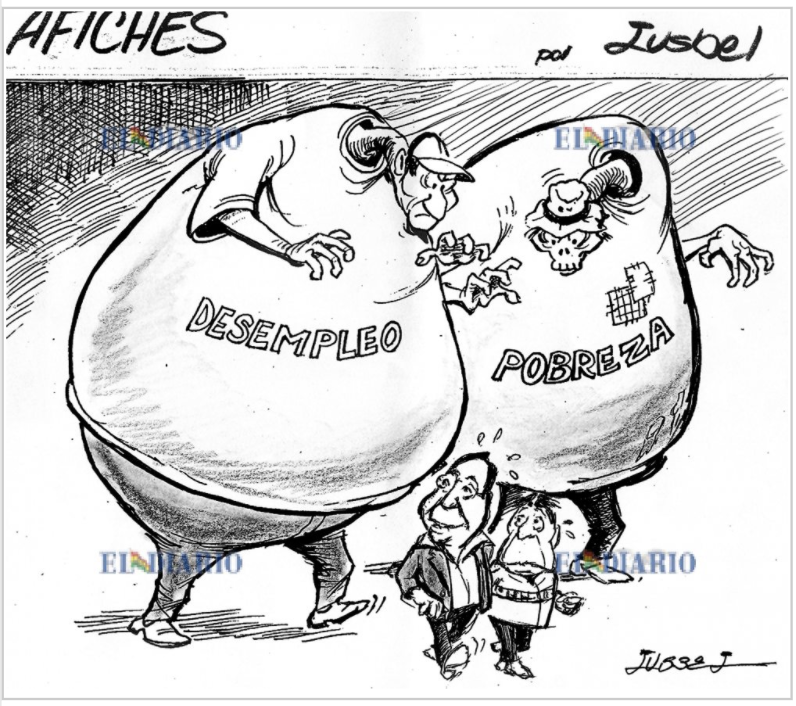
Where the government gets involved, the search for excellence is eliminated, meritocracy is killed, the space for the creative, the productive is restricted and, by seeking a false balance, to combat inequality or seek social justice, the only result achieved is the multiplication of poverty.
A medida que el gobierno se queda sin plata, comienzan a notarse más nítidamente sus defectos: no hay diésel, aumentan las deudas, hay escasez de dólares, crece la incapacidad para atender emergencias como la sequía, la carencia de agua, los graves incendios y también surgen las discrepancias políticas que en el pasado se subsanaban con unos cuántos billetes.
El gobierno tuvo cinco veces más recursos financieros entre el 2006 y el 2006 y la situación de los bolivianos no mejoró en esa proporción. Hubo algunos avances producto de la repartija, pero insignificantes en comparación con el daño causado por el despilfarro, la falta de un modelo productivo y la ausencia de gente que pueda conducir verdaderas políticas públicas que ayuden a superar problemas reales.
En otras palabras, el gobierno no sirve en las buenas y tampoco en las malas, no funciona en épocas de vacas gordas y mucho menos en periodos de escasez, entonces… ¿para qué sirve?
El escritor sueco, autor de famoso best seller “Economía para todos” demuestra con lujo de detalles que la intromisión del gobierno hace más pobres a los pueblos y a mayor intervención, mayor pobreza, tal como lo demuestran los regímenes que promueven una masiva concentración de las actividades económicas en manos del estado. García Linera, el cerebro del “proceso de cambio” soñaba con un 70 por ciento, lo más parecido a Cuba, donde prácticamente no existe propiedad privada y el ciudadano ni siquiera puede saciar su hambre lanzando un anzuelo al río, pues se arriesga a caer preso.
Pero no hace falta hablar de los extremos para observar el papel pernicioso del gobierno en la vida de la gente. La administración pública, cualquiera que sea, desincentiva la producción, pues altera la estructura productiva, al influir negativamente en la creatividad y la innovación. Las regulaciones orientan los negocios hacia sectores que deciden caprichosamente los burócratas y se desecha la información del mercado, lo que se traduce en el desaprovechamiento de valiosas oportunidades para la generación de riqueza.
El gobierno tiene un concepto errado de valor, que casi nunca está orientado hacia la satisfacción de las necesidades del consumidor. El resultado es productos inservibles o de baja calidad, como se puede ver en las decenas de empresas estatales creadas por el MAS, que producen mal, caro y sin ningún sentido del beneficio para el público.
Los gobiernos suelen poner barreras a aquellas actividades más competitivas y de mayor demanda, lo que pone obstáculos a la mejora continua. Las regulaciones crean un entorno propicio para la complacencia y la mediocridad, pues no existe la medición de los costos y beneficios, no se contempla la satisfacción personal ni la calidad de vida de las personas afectadas por las prohibiciones y la instauración de entornos de privilegios y monopolios que resultan muy caros para el ciudadano.
Donde se mete el gobierno, se elimina la búsqueda de la excelencia, se mata la meritocracia, se restringe el espacio para los creativos, los productivos y, por buscar un falso equilibrio, por combatir la desigualdad o procurar la justicia social, el único resultado alcanzado es la multiplicación de la pobreza.

 Bolivian Thoughts | Pensamientos Bolivianos (Bilingual/Bilingüe)