
Editorial, Los Tiempos:
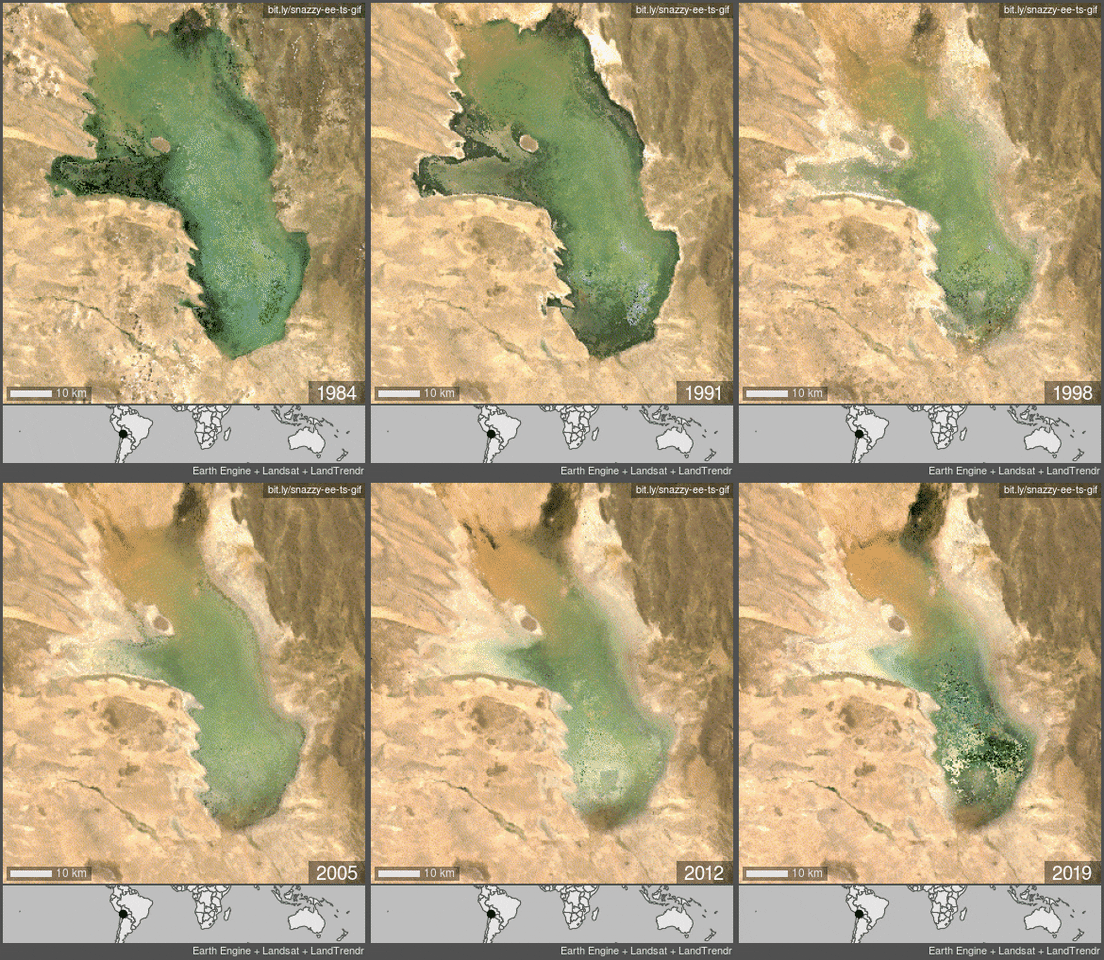
The current water shortage in much of the country requires urgent actions to mitigate its consequences; these would also have to serve to define long-range programs, since water insecurity will not disappear with the arrival of the rainy season.
Indeed, except for the humid plain region: essentially Beni, Pando and the north of La Paz, Bolivia faces a lack of sufficient water for human, livestock and agricultural consumption that affects seven of the nine departments.
According to information released by Ministry of Economy and Civil Defense authorities, of the 340 Bolivian municipalities, 290 (85.3%) are suffering the effects of the water crisis.
In some, such as in Potosí, in the department of the same name, they are already preparing a rationing plan that will be implemented in the coming days and will last three months, until December. In the high areas of the Tarija municipality of El Puente, the reduced supply of drinking water has been in effect for two weeks.
In the highlands, eight out of every 10 municipalities lack water, denounced yesterday the director for that region of the Center for Research and Promotion of Peasants (Cipca).
“Surely, potatoes will rise (in price) in the next agricultural cycle. In the highlands, the time is dry, so the main problem is for livestock. Families reduce their herds because there is not enough forage due to lack of water,” warned the executive of that NGO.
Cattle also suffer from this deficiency in Tarija communities in the high areas and Chaco.
Immediately, the Executive Branch is allocating additional resources to address this emergency, and the most affected municipalities are resorting to cisterns to provide water to residents of localities whose water sources have dried up or are close to drying up.
State officials and also some experts on the subject attribute this crisis to climatic phenomena and global warming that melts the glaciers that feed cities like La Paz with fresh water.
They are right, in part, because the country’s population and industrial growth has not been accompanied by a State policy for better management of water resources, nor by the provision of sufficient infrastructure to ensure coverage of an increasingly greater consumption of water. water.
It is not a circumstance exclusive to the country, water insecurity affects 80% of the world’s population, according to a recent UN report. And in Bolivia, river pollution is another factor that aggravates the crisis.
All of this requires efficient actions by the State and lasting changes in water consumption habits; it is urgent and necessary because the water crisis is increasing.
La actual escasez de agua en buena parte del país exige acciones urgentes para mitigar sus consecuencias, éstas tendrían que servir también para definir programas de largo alcance, pues la inseguridad hídrica no desaparecerá con la llegada de la época de lluvias.
En efecto, exceptuando la región del llano húmedo: esencialmente Beni, Pando y el norte paceño, Bolivia enfrenta una falta de agua suficiente para el consumo humano, pecuario y agrícola que afecta a siete de los nueve departamentos.
De acuerdo con las informaciones difundidas por autoridades ministeriales de Economía y de Defensa Civil, de los 340 municipios bolivianos, 290 (el 85,3%) sufren los efectos de la crisis hídrica.
En algunos, como en Potosí, en el departamento del mismo nombre, ya alistan un plan de racionamiento que se pondrá en ejecución los próximos días y se extenderá tres meses, hasta diciembre. En las zonas altas del municipio tarijeño de El Puente, el suministro reducido de agua potable está vigente desde hace dos semanas.
En el altiplano, ocho de cada 10 municipios carecen de agua, denunciaba ayer el director para esa región del Centro de Investigación y Promoción del Campesinado (Cipca).
“Con seguridad, la papa va a subir (de precio) en el próximo ciclo agrícola. En el altiplano, el momento es de estiaje, entonces el problema principal es para el ganado. Las familias reducen sus rebaños porque no hay suficiente forraje debido a la falta de agua”, alertaba el ejecutivo de esa ONG.
El ganado vacuno también sufre esa carencia en comunidades tarijeñas de las zonas altas y del Chaco.
En lo inmediato, el Órgano Ejecutivo está destinando recursos adicionales para atender esta emergencia, y los municipios más afectados recurren a cisternas para dotar de agua a los pobladores de localidades cuyas fuentes de agua se han secado o están cerca de secarse.
Funcionarios estatales y también algunos expertos en el tema atribuyen esta crisis a fenómenos climáticos y al calentamiento global que derrite los glaciares que alimentan de agua dulce ciudades como La Paz.
Tienen razón, en parte, pues el crecimiento poblacional e industrial del país no ha sido acompañado por una política de Estado para una mejor gestión de los recursos hídricos, ni por la dotación de infraestructura suficiente que asegure la cobertura de un consumo cada vez mayor de agua.
No es una circunstancia exclusiva del país, la inseguridad hídrica afecta al 80% de la población mundial, según un reciente informe de la ONU. Y en Bolivia, la contaminación de los ríos es otro factor que agrava la crisis.
Todo esto exige acciones eficientes del Estado y cambios duraderos en los hábitos del consumo de agua, es urgente y necesario porque la crisis hídrica se acrecienta.
https://www.lostiempos.com/actualidad/opinion/20231010/editorial/creciente-crisis-hidrica

 Bolivian Thoughts | Pensamientos Bolivianos (Bilingual/Bilingüe)