
By Germán Huanca, Urgente.bo:
The controversy generated by the rejection of the appointment of Zvonko Matkovic as Chairman of the Board of ENDE—reprehensible from every point of view—goes far beyond a simple disagreement over a nomination. The reactions of Cochabamba Mayor Manfred Reyes Villa, Governor Leonardo Loza, and various political actors reveal a deeper phenomenon: Bolivia is undergoing a shift in the center of its political, economic, and demographic leadership.
For decades, the regional debate was shaped by Santa Cruz’s demands that the growth of its population and economy be reflected in the distribution of national power. However, that recognition was repeatedly postponed. The 2012 and 2024 censuses were surrounded by controversy precisely because, for broad sectors of society, they delayed acknowledgment of an evident reality: Santa Cruz had long ceased to be an emerging region and had become one of the country’s principal engines of growth.
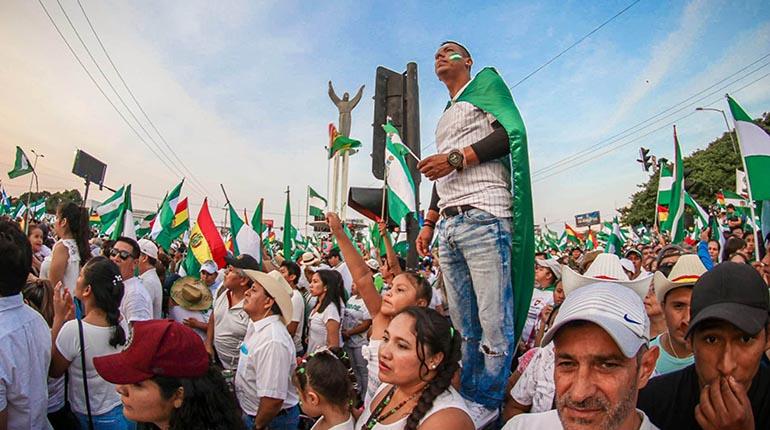
The change is not limited to population size. Today, Santa Cruz accounts for a significant share of national production, receives the largest volume of private investment in the country, hosts Bolivia’s most important industrial park, organizes the nation’s most successful business fair, and continues to attract both domestic and international ventures. Intermediate cities such as Warnes are already beginning to draw industrial investments, such as the recent agreement to establish bus and truck assembly plants with Chinese capital. These are signs of an economy that continues to expand while other regions face greater difficulties in attracting new investment.
The transformation also extends to the academic and cultural spheres. Universities in Santa Cruz have increased their research capacity, expanded their infrastructure, and strengthened their international presence. The Santa Cruz International Book Fair has become one of the country’s most important cultural events, reflecting an intellectual dynamism that accompanies its economic growth.
Perhaps the most significant change is demographic. Santa Cruz has become the department that best represents Bolivia’s diversity. Thousands of Bolivians from every corner of the country have found opportunities there for employment, education, and entrepreneurship. This diversity also presents enormous challenges in education, healthcare, transportation, and urban planning, but at the same time it constitutes a strength that few regions possess.
It is precisely within this context that the controversy surrounding Matkovic’s appointment should be understood. More than a debate about one individual, it reflects the discomfort generated by the gradual shift in the country’s political center of gravity. Paradoxically, those who for years criticized regionalism are now resorting to it in order to defend traditional spheres of influence. Both Manfred Reyes Villa and Leonardo Loza respond, to a large extent, to regional electorates and strengthen their leadership within those territorial frameworks.
The key question is: How will Santa Cruz respond? If its leaders choose to replicate the same regionalist discourse, they will have squandered the historic opportunity before them. Economic growth does not guarantee political leadership. Such leadership is consolidated only when there is the capacity to build a vision that transcends one’s own territory.
For that reason, the message expressed by Mayor Mamen Saavedra is particularly noteworthy when he stated that “the law of the people of Santa Cruz is hospitality, productivity, and work.” Beyond the political context, that idea contains a powerful principle: Santa Cruz can build national leadership not through confrontation, but through integration. Rather than closing its doors, it can continue presenting itself as the region that welcomes those seeking opportunities to prosper, regardless of their place of origin.
The concerns currently voiced by departments such as Beni regarding the appointment of public officials from other regions respond to different realities. Santa Cruz, by contrast, has reached a different stage of development. Its responsibility is no longer limited to defending regional interests; it must also offer the country a national proposal for growth based on production, industrialization, investment, innovation, and inclusion.
Every leadership transition generates resistance. It has occurred in the economy, in demographics, and now it is beginning to be seen in politics. The ENDE episode will likely be remembered less for the name of its central figure than for symbolizing the moment when the country began openly debating who will exercise national leadership over the coming decades.
If Santa Cruz aspires to lead that process, it must understand that leadership is not imposed; it is built by bringing people together. It is not enough to be the country’s principal economic engine. It must also become the place where all Bolivians feel represented. When that happens, the transition from regional leadership to national leadership will cease to be an aspiration and become a natural consequence of history. The country awaits it, and the new generations throughout Bolivia already understand this perfectly.
(*) Economist; former Vice Minister of Strategic State Planning.
Por Germán Huanca Luna, Urgente.bo:
La controversia generada por el rechazo al nombramiento de Zvonko Matkovic como presidente del Directorio de ENDE, detestable desde todo punto de vista, trasciende ampliamente un simple desacuerdo sobre una designación. Las reacciones del alcalde de Cochabamba, Manfred Reyes Villa, del gobernador Leonardo Loza y de diversos actores políticos revelan un fenómeno más profundo: Bolivia está atravesando un cambio en el eje de su liderazgo político, económico y demográfico.
Durante décadas, el debate regional estuvo marcado por las demandas de Santa Cruz para que el crecimiento de su población y de su economía se reflejaran en la distribución del poder nacional. Sin embargo, ese reconocimiento fue postergado. Los censos de 2012 y 2024 estuvieron rodeados de cuestionamientos precisamente porque, para amplios sectores, retrasaron el reconocimiento de una realidad evidente: Santa Cruz dejó hace mucho de ser una región emergente para convertirse en uno de los principales motores del país.
El cambio no se limita a la cantidad de habitantes. Santa Cruz concentra hoy buena parte de la producción nacional, recibe la mayor inversión privada del país, tiene el parque industrial más importante del país, organiza la feria empresarial más exitosa de Bolivia y continúa atrayendo emprendimientos nacionales e internacionales. Ciudades intermedias como Warnes ya comienzan a captar inversiones industriales, como el reciente acuerdo para la instalación de plantas de ensamblaje de buses y camiones con capital chino. Son señales de una economía que continúa expandiéndose mientras otras regiones enfrentan mayores dificultades para atraer nuevas inversiones.
La transformación también alcanza al ámbito académico y cultural. Las universidades cruceñas han incrementado su capacidad de investigación, ampliado su infraestructura y fortalecido su presencia internacional. La Feria Internacional del Libro de Santa Cruz se ha consolidado como uno de los eventos culturales más importantes del país, reflejando una dinámica intelectual que acompaña su crecimiento económico.
Quizá el cambio más importante sea el demográfico. Santa Cruz se ha convertido en el departamento que mejor representa la diversidad de Bolivia. Miles de bolivianos provenientes de todos los rincones del país han encontrado allí oportunidades de trabajo, educación y emprendimiento. Esa diversidad también supone enormes desafíos en educación, salud, transporte y planificación urbana, pero al mismo tiempo constituye una fortaleza que pocas regiones poseen.
Es precisamente en ese contexto donde debe interpretarse la polémica por la designación de Matkovic. Más que un debate sobre una persona, refleja la incomodidad que genera el desplazamiento gradual del centro de gravedad político del país. Paradójicamente, quienes durante años criticaron el regionalismo hoy recurren a él para defender espacios tradicionales de influencia. Tanto Manfred Reyes Villa como Leonardo Loza responden, en buena medida, a electorados regionales y fortalecen sus liderazgos dentro de esos ámbitos territoriales.
La gran pregunta es ¿cómo responderá Santa Cruz?. Si sus dirigentes optan por reproducir el mismo discurso regionalista, habrán desperdiciado la oportunidad histórica que tienen frente a sí. El crecimiento económico no garantiza liderazgo político. Este solo se consolida cuando existe la capacidad de construir una visión que trascienda el propio territorio.
Por ello resulta particularmente interesante el mensaje expresado por el Alcalde Mamen Saavedra al afirmar que “la ley del cruceño es la hospitalidad, la productividad y el trabajo”. Más allá del contexto político, esa idea contiene un principio poderoso: Santa Cruz puede construir liderazgo nacional no desde la confrontación, sino desde la integración. En lugar de cerrar sus puertas, puede seguir presentándose como la región que recibe a quienes buscan oportunidades para progresar, sin importar su lugar de origen.
Las preocupaciones que hoy expresan departamentos como Beni respecto a la ocupación de cargos públicos por profesionales provenientes de otras regiones responden a realidades distintas. Santa Cruz, en cambio, ha alcanzado una etapa diferente de desarrollo. Su responsabilidad ya no consiste únicamente en defender intereses regionales, sino en ofrecer al país una propuesta nacional de crecimiento basada en la producción, la industrialización, la inversión, la innovación y la inclusión.
Toda transición de liderazgo genera resistencias. Ha ocurrido en la economía, en la demografía y ahora comienza a observarse en la política. El episodio de ENDE probablemente sea recordado menos por el nombre de su protagonista que por simbolizar el momento en que el país empezó a debatir, de manera abierta, quién ejercerá el liderazgo nacional durante las próximas décadas.
Si Santa Cruz aspira a conducir ese proceso, deberá comprender que el liderazgo no se impone; se construye convocando. No basta con ser el principal motor económico del país. También debe convertirse en el espacio donde todos los bolivianos se sientan representados. Cuando eso ocurra, el paso de un liderazgo regional a un liderazgo nacional dejará de ser una aspiración para convertirse en una consecuencia natural de la historia, el país lo espera y las nuevas generaciones en todo el país lo entienden perfectamente.
(*) Economista, fue viceministro de Planificación Estratégica del Estado
https://www.urgente.bo/noticia/santa-cruz-del-liderazgo-regional-al-liderazgo-nacional


Leave a Reply