By El Diario:
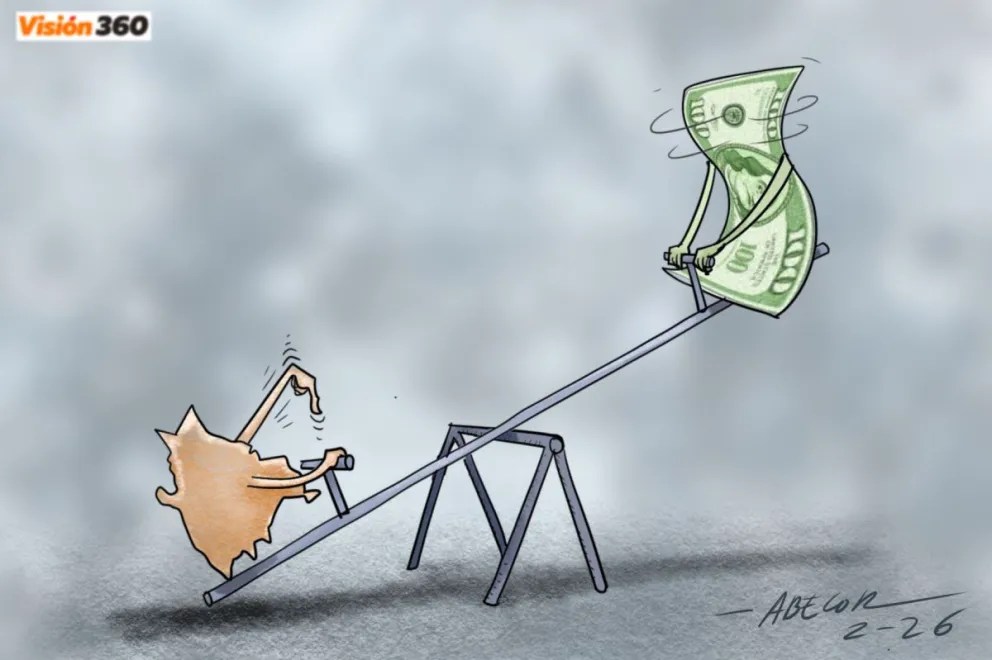
- The Central Bank of Bolivia (BCB) still does not have the conditions needed to intervene and curb the rise of the U.S. dollar.
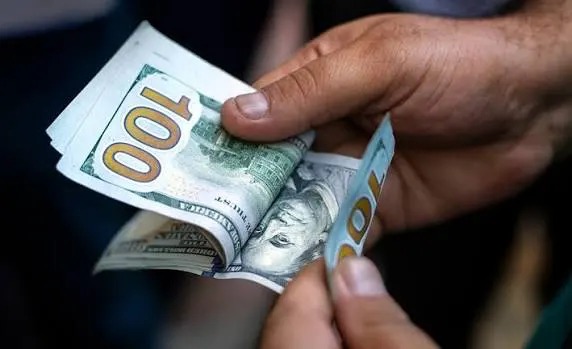
Despite the new flexible exchange rate regime and the new official exchange rate implemented just over a week ago, the dollar continues to trade at different rates in the market. The parallel market remains active, with the selling price exceeding 11 bolivianos per dollar, while the rate published by the Central Bank of Bolivia (BCB) stands at 10.24 bolivianos.
Meanwhile, USDT was trading at 10.62 bolivianos per dollar on the parallel market, and informal currency traders were offering U.S. dollars at 11.20 bolivianos. According to economic analysts, this situation is driven by a shortage of dollars and strong demand.
During a survey in downtown La Paz, EL DIARIO found that some exchange houses had no dollars available, while street traders were selling the currency at prices above the official rate, exceeding 11 bolivianos.
Minister of Economy and Public Finance Gabriel Espinoza said concerns are focused only on daily fluctuations. Looking back 12 months, he noted that the dollar had traded between 14 and 20 bolivianos.
In that context, he argued that current values are under control. “How can the price be regulated? With dollars supplied to the market. Where will those dollars come from? From various sources, such as exports,” he explained.
He noted that the mining sector resumed normal operations after 50 days of road blockades. During that period, export payments were delayed because of the conflicts, reducing the inflow of foreign currency.
Despite the continued gradual increase in the dollar’s value in the domestic market, the minister expressed confidence that prices would stabilize within two to three weeks.
He also announced that Bolivia will sign several agreements to strengthen the Central Bank’s international reserves. Any funds entering the country would be deposited with the BCB, giving it greater capacity to buy or sell foreign currency.
Espinoza emphasized that there is no explicit exchange-rate control and that the dollar will gradually float. Social conflicts and strikes, he said, reduce the inflow of dollars into the country.
Demand and Scarcity
Economic analyst Gustavo Machicado said the modest increase in the dollar’s value reflects a combination of strong demand, limited supply, and public expectations that the exchange rate will continue rising, leading people to hold onto their dollars.
According to Machicado, the minister expects individuals, companies, and banks holding dollars to release them into the market to help stabilize conditions. “That will be difficult,” he said.
“The dollar will continue to rise, and people will wait before selling their holdings. Demand keeps growing. The Central Bank should do what central banks in other countries do and intervene in the market. The question is whether the BCB is able to do so,” he reflected.
IMF Funding
Machicado also highlighted the government’s announcement regarding the International Monetary Fund (IMF), noting that incoming funds could play an important role in stabilizing the foreign exchange market.
International financing totaling around $5 billion would provide significant support to Bolivia’s economy, he said.
He argued that those resources should first be used to intervene in the currency market to prevent the exchange rate from rising continuously under the new flexible regime, similar to interventions previously conducted through the “Bolsín” mechanism.
Another unresolved issue is the return of dollars owed by the BCB to the financial system. In addition, banks still maintain restrictions, as customers generally cannot withdraw dollar deposits freely or open new accounts in U.S. currency.
Espinoza confirmed that beginning July 15, repayments of dollar deposits ranging from $1,001 to $3,000 will begin, following the established schedule.
Historical Background
According to a BCB statement, exchange rates above 10 bolivianos per dollar were common between December 1, 2025, and June 26, 2026, during the period when the U.S. currency was quoted under the “Reference Value” system. That system was replaced by the Official Exchange Rate (TCO) on June 29.
The Reference Value was set on 148 occasions. Of those, 29 times—19.5% of the total—the dollar traded above 10 bolivianos. On only one occasion, June 10, 2026, it was quoted at exactly 10 bolivianos.
“The highest value reached during that period was 10.39 bolivianos on May 12, 2026. The first time the dollar entered double digits was on May 4, 2026, when the Reference Value was set at 10.01 bolivianos,” the Central Bank stated.
From that date until June 2, it consistently remained above 10 bolivianos. On June 3, it dropped to 9.92. From June 8 to 15, it was once again above 10, except on June 10, when it stood at exactly 10. On June 16, the dollar fell to 9.94. On June 17 and 18, it rose above 10, while between June 19 and 26 (the last day of the Reference Value), it fell to levels below 10.
Por El Diario:
- El BCB todavía no tiene condiciones para intervenir y frenar los incrementos de la divisa.
A pesar del nuevo régimen cambiario flexible, con un nuevo tipo de cambio oficial, implementado hace más de una semana atrás, el valor varía en el mercado ya que el paralelo continúa su curso y el valor es superior a los 11 bolivianos para la venta, mientras el comunicado publicado por el Banco Central de Bolivia (BCB) está en 10,24.
Sin embargo, el USDT se cotizó en 10,62 bolivianos por dólar en el mercado paralelo, el libre cambista oferta la moneda estadounidense en 11,20 bolivianos y de acuerdo con analistas económicos obedece a la escasez de dólares y la demanda.
En un recorrido por el centro paceño, EL DIARIO verificó que en algunas casas de cambio no hay dólares, mientras que en la calle el precio subió más que el oficial, pasando los 11 bolivianos.
El ministro de Economía y Finanzas Públicas, Gabriel Espinoza, dijo que la preocupación sólo se enfoca a la variación diaria; si se retrocede 12 meses, el dólar llegó a cotizarse entre 14 a 20 bolivianos.
En ese contexto, aseguró que los valores están controlados. “Cómo regular (el precio)?, con dólares del mercado. ¿De dónde saldrán los dólares?, de distintas fuentes como de las exportaciones”, explicó.
Mencionó que el sector minero regularizó su trabajo tras los 50 días de bloqueos, además en este período las exportaciones dejaron de recibir los pagos ante los conflictos, que frenó el ingreso de divisas.
A pesar del contexto del lento incremento del valor del dólar en el mercado nacional, la autoridad confía en que en dos a tres semanas se estabilizará el precio.
Asimismo, anunció que Bolivia firmará varios acuerdos para reforzar las reservas internacionales del Banco Central, es decir que los recursos que lleguen al país, entrarán a la entidad emisora y tendrá la capacidad de comprar o vender.
Aseguró que no hay regulación explícita, el dólar va flotar poco a poco, por ello los conflictos sociales y los paros provocan que lleguen menos ingresos de dólares al país.
Demanda y escasez
Para el analista económico Gustavo Machicado, el leve incremento del dólar en el mercado cambiario es una combinación entre la demanda y la escasez, pero también obedece a la expectativa de la gente, que espera que el valor suba para sacar sus divisas.
El ministro (Espinoza) espera que la gente que acumuló (dólares) o los que tienen las empresas o bancos saquen para estabilizar el mercado. “Esto es difícil (que se cumpla)”, apuntó.
El dólar va seguir subiendo y la gente esperará para sacar sus recursos. “La demanda sigue creciendo. Se debería hacer lo que se hace en otros países, en donde el Banco Central interviene. La pregunta es que si el BCB podrá hacerlo?”, reflexionó.
Fondo
También destacó el anuncio con el Fondo (Monetario Internacional), realizado por el Gobierno, ya que los ingresos serán importantes para estabilizar la moneda extranjera.
El financiamiento de organismos internacionales, que bordea los 5.000 millones de dólares, ayudaría mucho a la economía nacional, según Machicado.
Indicó que los recursos primero deberían ser destinado a intervenir en el mercado cambiario, con el objetivo de que la flexibilidad de la moneda no registre incrementos continuos, similar a lo que se hacía en el Bolsín.
El otro tema pendiente está la devolución de los dólares del BCB al sistema financiero. A esto hay que sumar las restricciones que todavía presentan los bancos, al no permitir todavía retirar los depósitos ni abrir cuentas en moneda estadounidense.
Al respecto, Espinoza confirmó que a partir del 15 de julio empezará la devolución de dólares de 1.001 hasta 3.000 y se continuará con el cronograma elaborado.
Historial
Por otra parte, la cotización del dólar por encima de los 10 bolivianos fue frecuente en el período comprendido entre el 1 de diciembre de 2025 y el 26 de junio de 2026, en el que estuvo vigente el Valor Referencial de la divisa estadounidense, que desapareció para convertirse en el Tipo de Cambio Oficial (TCO) a partir del 29 de junio, señala la nota del BCB.
El Valor Referencial fue fijado en 148 oportunidades, de las cuales 29, es decir el 19,5% del total, el dólar tuvo un valor superior a 10 bolivianos. En una sola oportunidad, el 10 de junio de 2026, la unidad de la divisa estadounidense tuvo un valor exacto de 10, indica la nota.
“En el período mencionado, el valor más alto que alcanzó el dólar llegó a 10,39 bolivianos, registrado el 12 de mayo de 2026. La primera vez que el dólar llegó a los dos dígitos fue el 4 de mayo de 2026, cuando en el Valor Referencial se cotizó en 10,01”, sostiene el Ente Emisor.
Desde esa fecha hasta el 2 de junio siempre estuvo por encima de los 10 bolivianos. El 3 de junio descendió a 9,92. Del 8 al 15 de junio volvió a estar por encima de los 10, salvo el 10 de junio, con 10 exactos. El 16 de junio el dólar cayó a 9,94. El 17 y 18 de junio subió a más de 10, entre el 19 y el 26 de junio (último día del Valor Referencial) cayó a valores menores a 10.


Leave a Reply